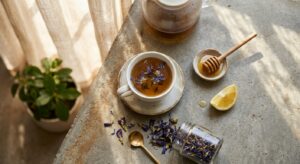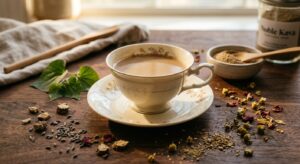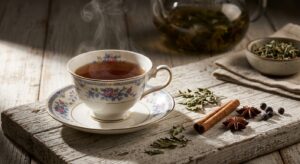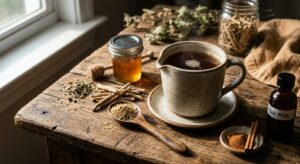
Few herbs carry as long a lineage of calm as lemon balm. Cultivated in the Mediterranean for more than 2,000 years, Melissa officinalis was treasured by ancient Greek and Roman physicians who associated it with longevity and mental clarity. The 11th-century Persian physician Avicenna wrote of its power to make the heart merry and drive away dark thoughts, while medieval European monasteries grew it in physic gardens specifically for its nerve-calming virtues. The very name Melissa is derived from the Greek word for honeybee, a nod to the plant’s irresistible appeal to pollinators and to people alike.
What sets lemon balm apart from other relaxing herbs is its dual personality. It is simultaneously uplifting and calming, offering a gentle lift in mood while smoothing the jagged edges of anxiety and tension. Unlike valerian, which can feel heavy and sedating, lemon balm brings a lightness to relaxation. Its bright, lemony fragrance alone is enough to shift the atmosphere of a difficult afternoon, and steeping a handful of fresh leaves or a measured spoon of dried herb releases a wave of citrus and green that signals to the nervous system that it is time to slow down.
Modern herbalism and clinical research have both taken note of lemon balm’s impressive profile. Studies have confirmed what traditional healers observed for millennia: that regular consumption of lemon balm preparations can reduce perceived stress, ease mild anxiety, improve sleep quality, and even support cognitive performance. Whether you drink it as a warm, honey-kissed nightcap or a chilled afternoon refresher, lemon balm tea is one of the most versatile and well-loved brews in the herbal pharmacy.
2
cups
Ingredients
- 2 tbspdried lemon balm leaves (or 4 tbsp fresh leaves, bruised)
- 480 mlwater (85 to 90°C / 185 to 194°F)
- —raw honey or lemon slice to taste (optional)
How to Brew
Click on an item below to shop for the recommended items for this recipe on Amazon.
As an Amazon Associate, we earn from qualifying purchases.
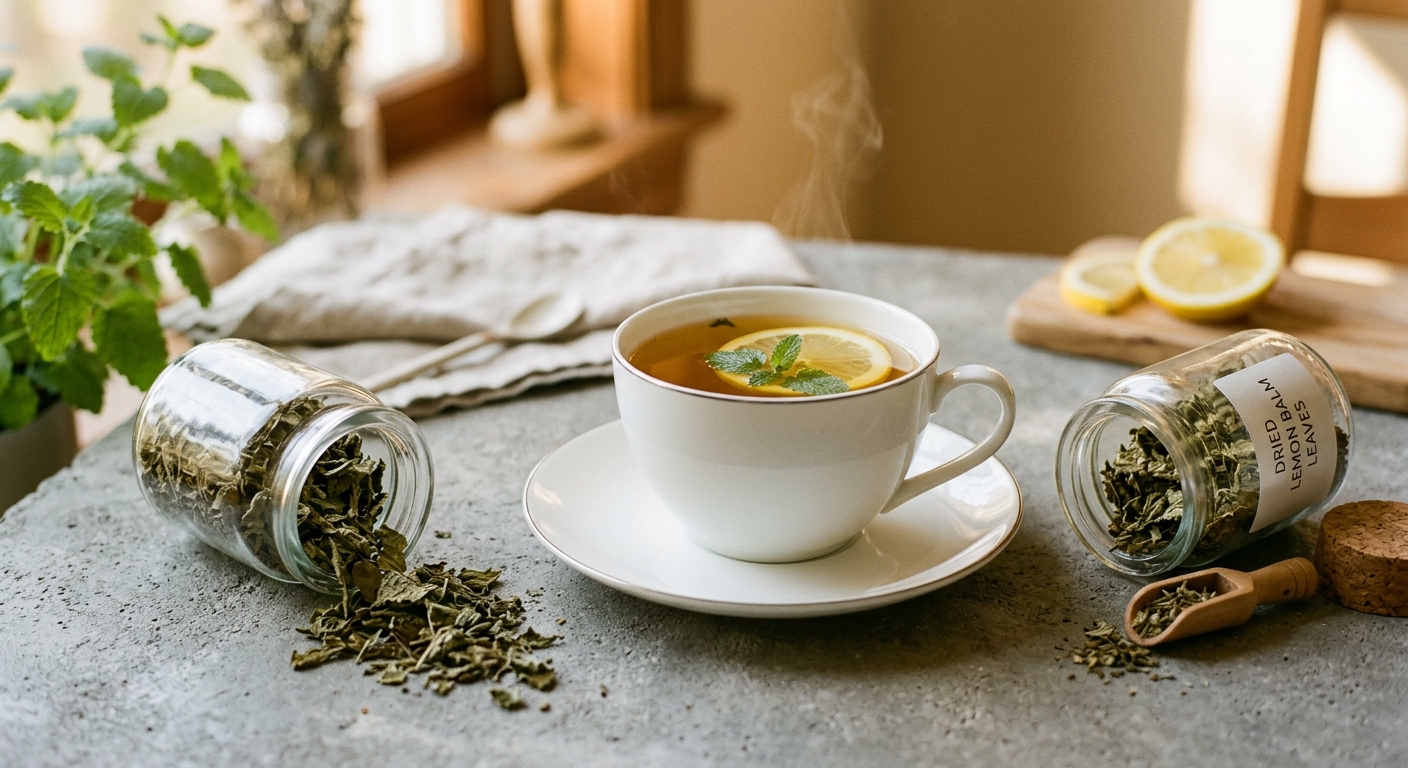
- Heat filtered water to 85 to 90°C (185 to 194°F). If you do not have a temperature-controlled kettle, bring water to a full boil and allow it to rest for 2 to 3 minutes before pouring.
- Measure 1 tablespoon of dried lemon balm leaves per cup (or 2 tablespoons of fresh leaves, gently crushed between your palms to release the aromatic oils) into a tea infuser or teapot.
- Pour the hot water directly over the leaves and cover the cup or pot immediately with a lid or a small saucer. This traps the volatile aromatic compounds that would otherwise escape as steam.
- Steep for 5 to 7 minutes. Taste at the 5-minute mark: a shorter steep produces a lighter, more delicately citrusy cup, while a longer steep yields a fuller, more herbal flavor.
- Remove the infuser or strain the leaves, then sweeten with raw honey if desired. For an evening sleep ritual, add a thin slice of fresh lemon to amplify the citrus brightness before sipping.
- Measure 3 tablespoons of dried lemon balm leaves (or 5 to 6 tablespoons of fresh, bruised leaves) per 480 ml of water. Cold brewing requires a higher herb-to-water ratio because the slow, low-temperature extraction is less efficient than hot water.
- Place the lemon balm leaves directly into a clean glass jar or a cold brew pitcher. Pour cold, filtered water over the leaves and stir gently to ensure all the herb is saturated.
- Seal the jar or cover the pitcher and allow it to rest at room temperature for 30 minutes so the initial extraction begins, then transfer to the refrigerator.
- Steep in the refrigerator for 8 to 12 hours, or overnight. The longer the steep, the more rounded and complex the flavor becomes without turning bitter.
- Strain the liquid through a fine mesh strainer or cheesecloth into a clean pitcher or bottle. Serve over ice in tall glasses, garnished with a fresh sprig of lemon balm or a thin wheel of lemon. The cold brew keeps refrigerated for up to 3 days.
- Measure 3 tablespoons of dried lemon balm leaves or a generous handful of fresh, lightly bruised leaves and place them into a large, clean glass jar with a lid. If using fresh herb, combine with a few thin slices of lemon for an especially vibrant brew.
- Fill the jar with 480 ml of cold, filtered water. Stir briefly to submerge the leaves, then seal the lid tightly.
- Place the sealed jar in a sunny outdoor spot or a sunny windowsill where it will receive at least 2 to 4 hours of direct sunlight. The warmth of the sun gently heats the water to roughly 30 to 40°C (86 to 104°F), creating a gradual, aromatic infusion.
- Check the tea at the 2-hour mark. It should be a soft golden-green color with a pronounced lemony fragrance. Continue steeping up to 4 hours for a more developed herbal flavor.
- Strain the tea through a fine mesh strainer into a clean pitcher. Taste and sweeten lightly with honey or agave syrup if desired. Serve immediately over ice or refrigerate and consume within 24 hours for best freshness and safety.
Health Benefits
Multiple clinical trials have demonstrated that lemon balm extract significantly reduces self-reported anxiety, stress, and mood disturbance in healthy volunteers. A landmark 2004 study published in Psychosomatic Medicine found that a single dose of lemon balm increased calmness and reduced alertness in healthy adults, with effects measurable within hours.
Lemon balm is particularly effective when combined with valerian for sleep, though it also shows meaningful benefit on its own. Its rosmarinic acid content raises brain GABA levels, the primary inhibitory neurotransmitter that promotes the transition into restful sleep, without the grogginess associated with pharmaceutical sleep aids.
Lemon balm has a long tradition as a carminative and antispasmodic herb used specifically for stress-related digestive symptoms. Clinical evidence supports its use for functional dyspepsia, bloating, and irritable bowel symptoms, with the herb’s eugenol content relaxing smooth muscle and reducing intestinal spasm.
Research published in Nutrients (2014) found that lemon balm extract improved memory, attention, and processing speed in healthy young adults. The herb’s inhibition of acetylcholinesterase preserves acetylcholine in the brain, a neurotransmitter critical for learning, memory, and focused attention.
Lemon balm has well-documented antiviral activity against herpes simplex virus types 1 and 2, attributed primarily to its polyphenol and rosmarinic acid content. Topical preparations are widely used in Germany for cold sores, and drinking lemon balm tea may offer supportive antiviral benefits alongside any topical treatment.
🧪 Key Bioactive Compounds
The Science Behind Lemon Balm
The calming power of lemon balm is not folklore dressed up as science; it has a clearly understood biochemical mechanism rooted in the brain’s own inhibitory chemistry. The herb’s most pharmacologically significant compound, rosmarinic acid, works by inhibiting GABA transaminase, the enzyme responsible for breaking down gamma-aminobutyric acid in the brain. GABA is the central nervous system’s primary inhibitory neurotransmitter, and when its levels are elevated, neurons fire less rapidly, producing the physiological experience of calm, reduced rumination, and easier sleep onset. This is the same broad mechanism targeted by benzodiazepine drugs, though lemon balm achieves it through enzymatic inhibition rather than direct receptor binding, which is why its effects are gentler and carry no dependency risk.
The flavonoids apigenin and luteolin add further pharmacological depth to lemon balm’s profile. Apigenin, which is also found in chamomile, binds directly to benzodiazepine receptor sites on the GABA-A receptor complex, potentiating the receptor’s response to GABA without activating it independently. Luteolin, meanwhile, modulates serotonergic signaling and exhibits potent antioxidant activity that reduces neuroinflammation, a factor increasingly linked to anxiety and depression. Together, these compounds produce a synergistic calming effect that operates across multiple neurotransmitter pathways simultaneously, which may explain why lemon balm tends to produce broader improvements in mood and well-being rather than simple sedation alone.
Lemon balm’s cognitive-supportive effects arise from a separate but complementary mechanism. The herb contains compounds that inhibit acetylcholinesterase, the enzyme that degrades acetylcholine in synaptic junctions. Acetylcholine is critical for attention, working memory, and learning, and preserving its availability in the brain supports mental sharpness and recall. This dual action, calming the stress response while simultaneously protecting cognitive function, makes lemon balm unusually well-suited to the demands of modern life, where anxiety and cognitive fatigue so often arrive together. Clinical trials have confirmed both effects, with participants showing improvements in calmness, mood, memory, and attention speed following standardized lemon balm preparations.
Brewing Tips
- Always cover your cup or teapot while steeping lemon balm. The volatile oils responsible for its bright lemony aroma and much of its therapeutic activity are highly susceptible to evaporation, and a simple saucer or lid can preserve a significant portion of these compounds.
- Fresh lemon balm leaves produce a more vivid, vibrant cup than dried, but they require roughly double the quantity. If you have access to a garden or farmers market, try bruising a small handful of fresh leaves between your palms before steeping to maximize oil release.
- For the best sleep results, drink your lemon balm tea 30 to 45 minutes before bed rather than right at bedtime. This allows the herb’s anxiolytic compounds to be absorbed and begin modulating GABA pathways before you lie down, making the transition to sleep noticeably smoother.