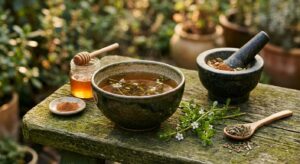
Long before nutmeg became a staple of holiday baking, it was treasured as a powerful medicinal spice across ancient trade routes. In Ayurvedic medicine, nutmeg has been prescribed for centuries as a nidrajanana, a sleep-inducing remedy, ground into warm milk or steeped in water to calm an overactive mind before bed. Arab physicians of the medieval period wrote extensively about its sedative and digestive properties, and Caribbean folk healers passed down nutmeg remedies for insomnia and anxiety through generations of oral tradition. This humble seed, encased in its vivid mace shell and prized above gold by 17th-century spice traders, carries one of the richest medicinal histories in the plant world.
What makes nutmeg so compelling as a sleep tea is the unique combination of volatile oils and compounds locked inside each seed. Unlike chamomile or lavender, which work primarily through flavonoids and terpenoids, nutmeg contains a suite of phenylpropanoids and myristicin-related compounds that interact with the central nervous system in genuinely distinctive ways. The result is a tea that warms you from within, quiets a restless mind, and eases the digestive discomfort that so often keeps people awake at night. It is a cup that feels medicinal in the best possible sense: purposeful, grounding, and deeply soothing.
A note on preparation sets this spice apart from most herbal teas. Nutmeg is potent, and using the right amount matters enormously. The traditional therapeutic dose is small, typically one quarter to one half teaspoon of freshly grated or finely ground nutmeg per cup, and that restraint is both practical and wise. Within that range, nutmeg tea delivers warmth, a faintly sweet and bittersweet spice note, and a gentle sedative effect that makes it one of the most effective single-herb sleep teas in the herbal pharmacopoeia. Brewed correctly and enjoyed in the hour before bed, it is a ritual worth adopting.
1
cups
Ingredients
- 0.25 tspfreshly grated or finely ground nutmeg
- 240 mlwater (90°C / 194°F)
- —1 small cinnamon stick (optional, enhances warmth)
- —raw honey or maple syrup to taste (optional)
- —splash of warm oat milk or almond milk (optional, for a creamier cup)
How to Brew
Click on an item below to shop for the recommended items for this recipe on Amazon.
As an Amazon Associate, we earn from qualifying purchases.
- Grate one quarter teaspoon of whole nutmeg directly into a mug or small teapot using a fine microplane grater. If using pre-ground nutmeg, measure carefully and ensure it is fresh, as ground nutmeg loses its volatile oils quickly after opening.
- Heat filtered water to 90 to 95°C (194 to 203°F). Avoid a full rolling boil, as excessive heat can degrade delicate aromatic compounds and push the bitterness of the spice forward.
- Pour 240 ml of hot water over the grated nutmeg. Add a small cinnamon stick now if using, which rounds out the bittersweet edge of the nutmeg and adds complementary warmth.
- Cover the mug with a small plate or saucer to trap the volatile oils and steep for 10 to 15 minutes. The longer steep extracts more of the sedative compounds, so aim for the full 15 minutes on nights when sleep support is the priority.
- Strain through a fine mesh strainer into a fresh mug, pressing gently on the solids to release the last of the infused liquid. Stir in honey or maple syrup to taste, and add a splash of warm oat milk for a creamier, more soothing nightcap.
- Add one quarter teaspoon of finely ground or freshly grated nutmeg to a clean glass jar with a tight-fitting lid. Because cold water extracts more slowly, the compound balance shifts toward aromatic sweetness rather than resinous bitterness.
- Pour 300 ml of cold filtered water over the nutmeg. Use slightly more water than the hot brew ratio to compensate for the less efficient cold extraction and the small amount lost to the grounds during straining.
- Stir well to disperse the nutmeg, then leave the jar uncovered at room temperature for 1 hour to allow initial aromatic extraction. Seal the lid and transfer to the refrigerator.
- Cold steep for 8 to 12 hours, or overnight. A full 12-hour steep brings out the most complete flavor without tipping into bitterness, which cold brewing largely prevents regardless of steep time.
- Strain the cold brew through a fine mesh strainer lined with a small piece of cheesecloth or a coffee filter to catch the fine nutmeg sediment. Pour over ice, sweeten with a light drizzle of honey dissolved in a little warm water, and serve in a tall glass. A thin slice of fresh orange adds a bright, complementary citrus note.
- Measure one quarter teaspoon of freshly grated nutmeg into a small saucepan. Add one optional pinch of ground cardamom and half a cinnamon stick if desired. These traditional Ayurvedic additions complement nutmeg and add their own mild calming properties.
- Pour 240 ml of whole dairy milk or your preferred plant-based milk (oat milk works especially well for its natural creaminess) into the saucepan with the spices.
- Place the saucepan over low to medium-low heat. Warm gently, stirring occasionally, until the milk reaches a low simmer at around 80 to 85°C (176 to 185°F). Do not allow the milk to boil, as boiling destroys some aromatic compounds and creates an unpleasant skin on dairy milk.
- Maintain the gentle simmer for 8 to 10 minutes, stirring regularly. The milk will deepen slightly in color and take on a warm, fragrant aroma as the nutmeg’s volatile oils infuse into the fat.
- Remove from heat and strain through a fine mesh strainer into a warmed mug. Stir in one teaspoon of raw honey after straining (adding honey to hot liquid above 60°C / 140°F degrades its beneficial enzymes). Drink slowly in the 30 to 45 minutes before bed.
Health Benefits
Myristicin and elemicin in nutmeg interact with serotonergic pathways and exhibit mild MAO-inhibiting activity, supporting the neurochemical conditions for restful sleep. Traditional Ayurvedic use as a sleep aid is reinforced by preclinical studies showing reduced sleep latency and extended sleep duration in animal models.
Eugenol and elemicin have demonstrated anxiolytic effects in pharmacological studies, with mechanisms that may include modulation of GABA and serotonin receptor activity. At traditional culinary doses, nutmeg tea produces a noticeably calming effect on an overactive or worried mind.
Nutmeg has long been used as a carminative and digestive tonic in both Ayurvedic and European herbal traditions. Eugenol and isoeugenol relax smooth muscle in the gastrointestinal tract, easing bloating, gas, and the digestive restlessness that often delays sleep onset.
Nutmeg is rich in phenolic compounds, including isoeugenol and various flavonoids, that scavenge free radicals and reduce oxidative stress. Regular moderate consumption has been associated with measurable antioxidant activity in both in vitro and animal studies.
Eugenol, also the active compound in clove oil, is a well-documented natural analgesic and COX inhibitor. This makes nutmeg tea useful for those whose difficulty sleeping is compounded by mild bodily aches, tension headaches, or chronic low-level inflammation.
🧪 Key Bioactive Compounds
The Science Behind Nutmeg
The sedative reputation of nutmeg is rooted in its remarkable concentration of phenylpropanoid compounds, particularly myristicin, elemicin, and safrole, which are found in the seed’s volatile oil fraction. Myristicin is the most pharmacologically significant of these: it inhibits monoamine oxidase (MAO), the enzyme responsible for breaking down serotonin, dopamine, and norepinephrine in the brain. By slowing MAO activity at low doses, myristicin allows monoamine neurotransmitters to remain active longer in the synaptic cleft, producing a mild mood-lifting and calming effect. Preclinical research has demonstrated that myristicin reduces locomotor activity in animal models and significantly shortens the time it takes subjects to fall asleep, providing a mechanistic basis for its ancient reputation as a sleep remedy.
Eugenol, the same compound responsible for clove’s analgesic and anesthetic properties, contributes meaningfully to nutmeg’s health profile. It acts as a natural COX-2 inhibitor, reducing the production of pro-inflammatory prostaglandins, and has demonstrated anxiolytic activity in rodent studies using standardized anxiety models such as the elevated plus maze. Elemicin, a close structural relative of myristicin, is believed to enhance the sedative effect through synergistic action rather than a single dominant mechanism, a pattern common in whole-plant medicine where multiple compounds at low individual concentrations produce a combined effect that neither achieves alone. This synergy is one reason why nutmeg tea, prepared from whole ground seed, performs differently than any isolated nutmeg compound studied in isolation.
The fat-soluble nature of nutmeg’s most active compounds, particularly trimyristin and the volatile phenylpropanoids, has an important practical implication: bioavailability improves meaningfully when nutmeg is prepared in a fat-containing medium such as milk. Research on lipid-soluble plant compounds consistently shows that absorption through the gut wall is enhanced in the presence of dietary fat. This provides a scientific rationale for the Ayurvedic practice of simmering nutmeg in milk rather than water, a preparation method that traditional healers arrived at empirically over centuries long before the pharmacokinetics were understood. For those seeking maximum therapeutic effect, the spiced milk decoction method is therefore not merely traditional preference but also the most pharmacologically sound preparation.
Brewing Tips
- Always grate nutmeg fresh from the whole seed immediately before brewing. Ground nutmeg from a jar loses up to 70 percent of its volatile oil content within months of opening, significantly reducing both flavor and therapeutic potency.
- Use a fine mesh strainer lined with cheesecloth for any water-based preparation. Ground nutmeg does not dissolve and fine sediment at the bottom of the cup, while harmless in small quantities, creates a gritty texture that detracts from the experience.
- Drink your nutmeg tea 30 to 45 minutes before your intended sleep time for best effect. This timing allows myristicin and eugenol to reach meaningful plasma concentrations in the window when they are most useful, rather than brewing and drinking it immediately before lying down.