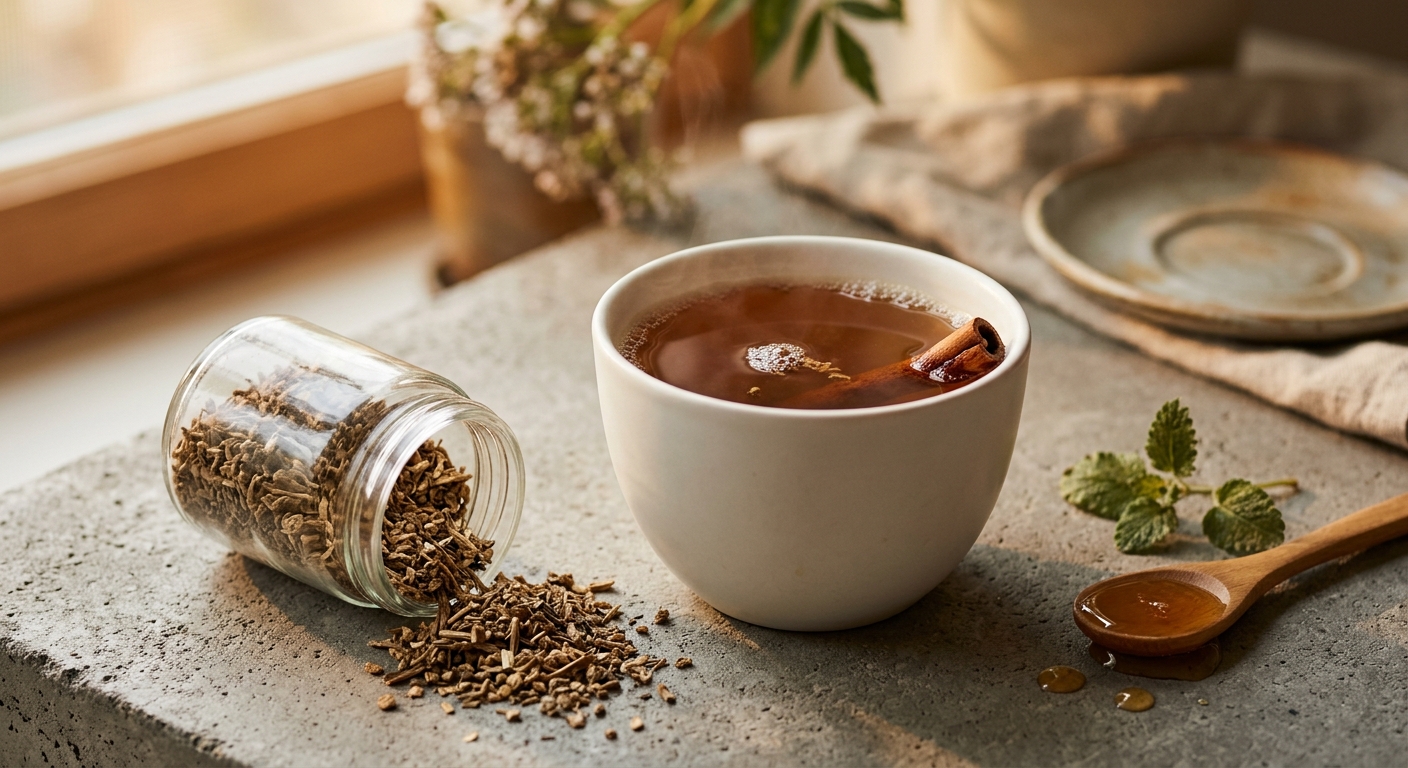
Long before modern sleep aids lined pharmacy shelves, healers across ancient Greece, Rome, and medieval Europe turned to the gnarled, pungent root of Valeriana officinalis to quiet restless minds and coax weary bodies into sleep. The Roman physician Galen prescribed it for insomnia, and during the Middle Ages, European apothecaries dispensed it widely under the name ‘all-heal,’ believing it capable of treating everything from nervous tremors to heart palpitations. The name ‘valerian’ itself likely derives from the Latin valere, meaning ‘to be strong’ or ‘to be well,’ a testament to the reverence ancient cultures held for this unassuming plant.
What makes valerian root so distinctive, and so immediately recognizable, is its bold, earthy aroma. The dried root produces a smell that can be described as musty, woody, and faintly reminiscent of aged cheese or damp forest soil. This intensity comes from the volatile compounds formed as the root dries and ages, particularly isovaleric acid and a complex array of valerenic acids. While the scent may surprise first-time brewers, the brewed tea mellows considerably, taking on a warm, woody character that many find grounding and comforting after a few cups.
Today, valerian root is one of the most extensively studied herbal sleep aids in clinical herbalism. Research has explored its interaction with the brain’s GABA system, its anxiolytic potential, and its role as a gentle alternative for those seeking non-pharmaceutical support for sleep and stress. Whether you are navigating a season of poor sleep, managing mild anxiety, or simply building an evening ritual that signals to your body it is time to wind down, a cup of valerian root tea may be one of the oldest and most effective tools in the herbal apothecary.
2
cups
Ingredients
- 2 tspdried valerian root (cut and sifted)
- 480 mlwater (90°C / 194°F)
- —raw honey or maple syrup to taste (optional)
- —cinnamon stick or dried lemon balm (optional, to soften flavor)
How to Brew
Click on an item below to shop for the recommended items for this recipe on Amazon.
As an Amazon Associate, we earn from qualifying purchases.
- Heat filtered water to 90 to 95°C (194 to 203°F). Avoid a full rolling boil, as temperatures above 100°C can degrade some of valerian’s more volatile beneficial compounds.
- Place 1 teaspoon of dried cut and sifted valerian root per cup into a tea infuser, strainer, or teapot with a built-in filter.
- Pour the hot water directly over the valerian root and cover your mug or teapot immediately with a lid or small saucer. This traps the steam and prevents volatile aromatic compounds from escaping.
- Steep for 10 to 15 minutes. A longer steep draws out more of the sedative valerenic acids, so if you prefer a stronger effect, lean toward the 15-minute mark.
- Remove the infuser and strain the tea thoroughly to remove all root particles. Sweeten with raw honey or add a small piece of cinnamon stick to balance the earthy bitterness if desired.
- Drink 30 to 45 minutes before bedtime for best results. Sip slowly as part of a calming evening ritual.
- Measure 1 teaspoon of dried valerian root per cup directly into a clean glass jar or cold brew pitcher. Use filtered water for the cleanest flavor.
- Add cold or room-temperature filtered water at a ratio of 240 ml per teaspoon of root. Stir gently to ensure all the root material is submerged.
- Cover the jar tightly and leave it at room temperature for the first 30 minutes to allow the initial extraction to begin, then transfer to the refrigerator.
- Steep in the refrigerator for 8 to 12 hours, or overnight. The cold extraction produces a noticeably mellower, earthy-sweet flavor compared to hot brew, with less of the sharp, pungent bitterness.
- Strain the liquid through a fine mesh strainer or cheesecloth into a glass, pressing the root material gently to extract all the liquid. Discard the spent root.
- Serve over ice or gently warmed on the stovetop if you prefer a warm cup. Add a squeeze of lemon or a drizzle of honey to brighten the flavor. Consume within 24 hours for freshness.
- Combine 2 teaspoons of dried valerian root per cup with cold filtered water in a small saucepan. Starting with cold water allows a more gradual, thorough extraction as the temperature rises.
- Place the saucepan over medium heat and bring the water slowly up to a gentle simmer. Do not allow the liquid to reach a full rolling boil, as excessive heat above 100°C can break down some heat-sensitive valerenic compounds.
- Reduce the heat to low and maintain a steady, gentle simmer for 20 to 30 minutes. Keep the saucepan partially covered to retain some of the volatile aromatic compounds while still allowing slight evaporation to concentrate the brew.
- Remove from heat and allow the decoction to rest off the heat, covered, for an additional 5 minutes. This final rest period allows additional extraction as the temperature gradually drops.
- Strain the decoction through a fine mesh strainer into a mug, pressing the root material firmly to recover all the liquid. The resulting brew will be noticeably darker and more concentrated than a standard hot steep.
- Dilute with a small amount of hot water if the flavor is too intense. Add honey, a cinnamon stick, or a sprig of dried lemon balm to complement the earthiness. Drink one cup 45 to 60 minutes before sleep.
Health Benefits
Multiple clinical trials and a 2020 systematic review published in PLOS ONE found that valerian root significantly reduced the time it took participants to fall asleep and improved overall sleep quality ratings compared to placebo. Its valerenic acid content is thought to modulate GABA-A receptors similarly to benzodiazepines, but without the dependency risk associated with pharmaceutical options.
Several randomized controlled trials have found valerian root to reduce anxiety scores, particularly in people experiencing generalized anxiety and situational stress. Its GABA-modulating activity, combined with its flavonoid content, appears to calm the central nervous system without causing significant daytime sedation at standard doses.
A double-blind trial published in the Journal of Alternative and Complementary Medicine found that valerian root significantly reduced the severity of dysmenorrhea (painful menstrual cramps) compared to placebo, likely due to its antispasmodic effect on smooth muscle tissue.
Valerian root has traditionally been used as an adaptogenic nerve tonic during periods of chronic stress and nervous exhaustion, a condition known in traditional herbalism as ‘nervous debility.’ Its combination of GABA-supportive compounds and muscle-relaxing sesquiterpenes helps regulate the physiological stress response.
A pilot study published in Holistic Nursing Practice found that valerian supplementation over eight weeks significantly reduced restless leg syndrome symptoms and improved sleep quality in affected participants, suggesting a role for its muscle-relaxing and GABAergic properties beyond simple sleep induction.
🧪 Key Bioactive Compounds
The Science Behind Valerian Root
The science behind valerian root’s sleep-promoting effects centers primarily on its interaction with gamma-aminobutyric acid, or GABA, the brain’s primary inhibitory neurotransmitter. GABA works by reducing neuronal excitability throughout the nervous system, and low GABA activity is strongly associated with anxiety, insomnia, and nervous tension. Valerenic acid, the most well-studied compound in valerian root, has been shown in multiple in vitro and animal studies to inhibit the enzyme GABA transaminase, which is responsible for breaking down GABA in the synapse. By slowing this breakdown, valerenic acid effectively increases the availability and activity of GABA in the brain, producing a calming, sedative effect through a mechanism broadly similar to that of benzodiazepine medications, though considerably milder and without the same dependency risk.
Beyond valerenic acid, valerian root contains a rich array of synergistic compounds that contribute to its overall therapeutic profile. The flavonoid glycosides linarin and hesperidin have both demonstrated sedative activity in animal models, with some research suggesting they may bind directly to GABA-A receptor subunits. Valeranone and other sesquiterpene ketones exhibit smooth muscle relaxation and anxiolytic activity, while the iridoid compounds known as valepotriates, though largely unstable in dried root material and finished tea, have shown sedative properties in their fresh form. This multi-compound synergy is a hallmark of why whole-herb preparations like tea tend to be more effective than isolated extracts in clinical observation.
Clinical research on valerian root, while sometimes limited by small sample sizes and variable preparations, has produced encouraging results across several domains. A meta-analysis published in the American Journal of Medicine reviewed sixteen randomized clinical trials and concluded that valerian root may improve sleep quality without producing side effects in the majority of users. More recent systematic reviews have supported its use for sleep onset latency, particularly in perimenopausal women and individuals with stress-related insomnia. Importantly, unlike many pharmaceutical sedatives, valerian root does not appear to suppress REM sleep at standard doses, meaning users can achieve the restorative deep sleep stages their bodies need without the fragmented sleep architecture associated with some sleep medications.
Brewing Tips
- Always cover your mug or teapot while steeping valerian root tea. The most therapeutically active volatile compounds, including valerenic acid derivatives and sesquiterpene oils, will escape in the steam if left uncovered, reducing both potency and the subtle aromatic complexity of the brew.
- Start with a shorter steep time of 5 to 8 minutes if you are new to valerian root. The flavor is quite assertive and the sedative effect can be stronger than expected for first-time users. Gradually increase your steep time over several days as your palate and body adjust.
- For best results, drink valerian root tea consistently for 2 to 4 weeks rather than relying on a single cup for immediate effect. Like many herbal nervines, valerian root tends to build its sleep-promoting benefits cumulatively in the nervous system over time, with most clinical trials observing greatest improvement after two to four weeks of nightly use.