Elderberry (Sambucus nigra) has been gathered from hedgerows across Europe for thousands of years. Hippocrates reportedly called the elder tree his medicine chest, and by the Middle Ages the dark berries were being cooked into syrups, wines, and cordials to ward off winter chills and fevers. English folk tradition held the elder tree sacred, believed to shelter a protective spirit called the Elder Mother, and country households kept a bottle of elderberry cordial in the pantry as a first line of defense against coughs and colds.
Cinnamon has an equally storied past. True cinnamon (Cinnamomum verum) was once so prized in the ancient world that it was reserved for royalty and religious offerings. In Traditional Chinese Medicine, cassia cinnamon (rou gui and gui zhi) has long been used to warm the body and ease the shivering, achy onset of a cold. Together, the tart, jammy berries and the sweet, woody spice make a natural pairing that has appeared in winter drinks for centuries.
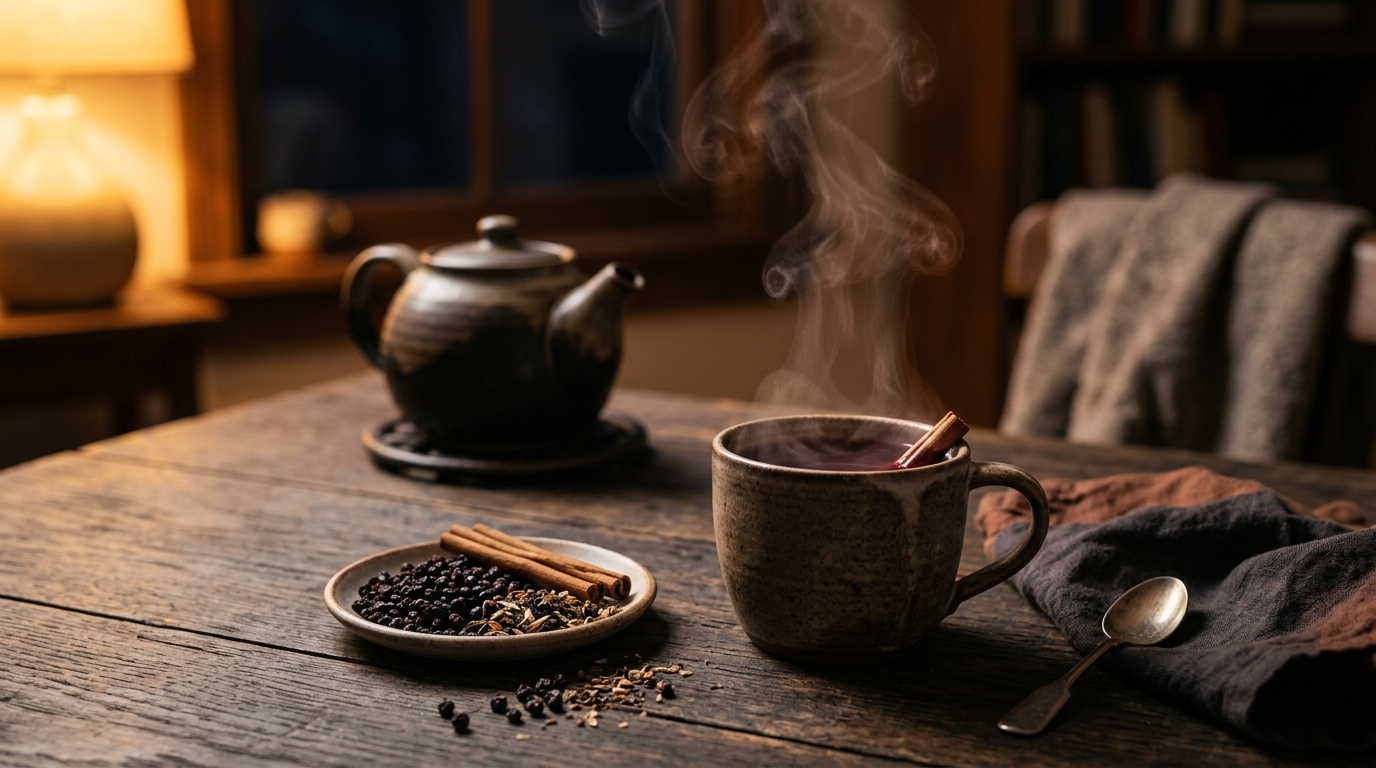
What makes this tea special as an evening drink is its comfort. The berries bring a bright, wine-like tartness and a rich purple color, while cinnamon rounds it out with gentle sweetness and warmth. It is naturally caffeine-free, so it suits the hour before bed, when a cozy ritual matters as much as the herbs themselves. Note that elderberries must always be dried or cooked before drinking, as raw berries and the leaves, stems, and bark of the plant contain compounds that can cause nausea.
2
cups
Ingredients
- 2 tbspdried elderberries
- 1 stickcinnamon bark (about 3 inches)
- 480 mlfiltered water
- 2 slicesfresh ginger (optional)
- —raw honey or maple syrup to taste (optional)
- —a squeeze of fresh lemon juice (optional)
How to Brew
Click on an item below to shop for the recommended items for this recipe on Amazon.
As an Amazon Associate, we earn from qualifying purchases.
- Add the dried elderberries, cinnamon stick, and filtered water to a small saucepan. If using ginger, add the slices now.
- Bring the water to a boil over medium-high heat, then immediately reduce to a gentle simmer.
- Partially cover the pan and simmer for 15 minutes, until the liquid turns a deep, opaque purple and the berries have softened and plumped.
- Remove the pan from the heat and let it steep, covered, for 5 more minutes so the cinnamon can fully perfume the tea.
- Strain through a fine mesh sieve into mugs, gently pressing the berries with the back of a spoon to release their juices.
- Stir in honey or maple syrup once the tea has cooled slightly, and add a squeeze of lemon if you like a brighter finish.
- Place the dried elderberries and 240 ml of water in a small saucepan and bring to a boil, then simmer for 10 minutes to make the berries safe to consume.
- Pour the hot berry liquid, berries included, into a glass jar and add the cinnamon stick. Let it cool to room temperature, about 30 minutes.
- Top up the jar with 240 ml of cold filtered water and stir gently.
- Seal the jar and refrigerate for 10 to 12 hours, or overnight, allowing the cinnamon to slowly infuse.
- Strain out the berries and cinnamon, pressing lightly on the fruit, then pour the tea over ice in tall glasses.
- Sweeten lightly with honey stirred in before chilling, since honey dissolves poorly in cold liquid.
- Combine 1/2 cup dried elderberries, 2 cinnamon sticks, 3 to 4 slices of fresh ginger, and 720 ml of water in a medium saucepan.
- Bring to a boil, reduce the heat to low, and cover with the lid slightly ajar.
- Simmer for 30 to 40 minutes, stirring occasionally, until the liquid has reduced by about one third and looks thick and syrupy.
- Mash the berries lightly with a spoon in the last 5 minutes to extract the remaining color and flavor.
- Strain through a fine mesh sieve or cheesecloth, pressing firmly to extract every drop.
- Let the concentrate cool to just warm, then stir in honey if desired (never add honey to a hot liquid, as high heat degrades its delicate compounds).
- Pour into a clean glass jar, seal, and refrigerate. To serve, mix 1/3 cup concentrate with 240 ml of hot water.
Health Benefits
Several small clinical trials, including studies on air travelers and flu patients, suggest standardized elderberry extract may reduce the length and severity of respiratory symptoms. Evidence is promising but not definitive, and tea is gentler than concentrated extracts.
Elderberries are among the highest anthocyanin-containing fruits, and these pigments help protect cells from oxidative stress. This antioxidant load supports general immune function through the cold season.
Cinnamon has a traditional warming action that eases the chills and body aches associated with colds. A hot, spiced drink also helps relieve throat irritation and loosen congestion through steam inhalation.
Cinnamon polyphenols have been shown in several trials to modestly improve insulin sensitivity. This makes the tea a comforting evening drink that does not require heavy sweetening.
As a caffeine-free, aromatic tea, the ritual of sipping a warm, fragrant cup signals the body to wind down, which supports the quality of rest that the immune system relies on.
🧪 Key Bioactive Compounds
The Science Behind Elderberry
The deep purple color of elderberries comes from anthocyanins, a class of flavonoid pigments that act as powerful antioxidants. The two most abundant in Sambucus nigra, cyanidin-3-glucoside and cyanidin-3-sambubioside, have attracted research interest because laboratory studies suggest they may inhibit the ability of certain influenza viruses to attach to and enter cells. A handful of small human trials have found that standardized elderberry preparations reduced the duration of flu and cold symptoms by a few days, though the studies are limited in size and most used concentrated extracts or syrups rather than tea.
Cinnamon contributes a different set of actions. Its signature compound, cinnamaldehyde, gives the bark its heat and fragrance and shows antimicrobial activity in laboratory work. Cinnamon polyphenols have also been studied for their effect on glucose metabolism, with some trials showing modest improvements in fasting blood sugar. The warming sensation of cinnamon is partly due to its action on temperature-sensing receptors, which is why it has been used traditionally to ease the chilled, shivery feeling of an oncoming cold.
It is worth being honest about the limits of the evidence. Elderberry research is encouraging but not conclusive, and a cup of tea delivers a smaller dose of active compounds than a standardized extract. Think of this tea as a nourishing, antioxidant-rich supportive ritual during cold season rather than a treatment. The simmering step is also scientifically meaningful, as heat breaks down the mildly toxic lectins and cyanogenic compounds found in raw berries, making the fruit safe to enjoy.
Brewing Tips
- Buy whole dried elderberries from a reputable herb supplier and check that they are Sambucus nigra, as other elder species can differ in safety.
- Choose Ceylon cinnamon sticks, which are lighter, thinner, and lower in coumarin than the more common cassia variety, especially if you drink this tea daily.
- Store dried elderberries in an airtight glass jar away from light and heat, where they will keep their potency for up to a year.
- Reuse the simmered berries for a second, lighter cup by adding fresh water and simmering again for 10 minutes.
- Stir in honey only after the tea has cooled slightly, as very high heat can diminish its subtle flavor and beneficial compounds.