Long before moringa became a fixture in health food stores, communities across South Asia, East Africa, and the Caribbean were relying on the Moringa oleifera tree for food, medicine, and vitality. Known by dozens of names, including ‘drumstick tree’ in India and ‘miracle tree’ across sub-Saharan Africa, moringa has been cultivated for over 4,000 years. Its leaves were prized in ancient Ayurvedic texts as a remedy for more than 300 conditions, from fatigue and poor vision to inflammation and malnutrition. Mauryan warriors of ancient India were reportedly given moringa leaf extracts to sustain their energy during long campaigns, a tradition that speaks to the plant’s enduring reputation as a source of natural strength.
What makes moringa truly remarkable is its nutritional density. Gram for gram, the dried leaves contain more protein than yogurt, more iron than spinach, more vitamin C than oranges, and more potassium than bananas. Unlike caffeine-driven energy boosters that spike and crash, moringa supports energy production at a cellular level by supplying the vitamins, minerals, and amino acids your body needs to generate ATP naturally. This makes moringa tea a genuinely functional beverage, offering focus and stamina that feels clean, steady, and grounded rather than jittery.
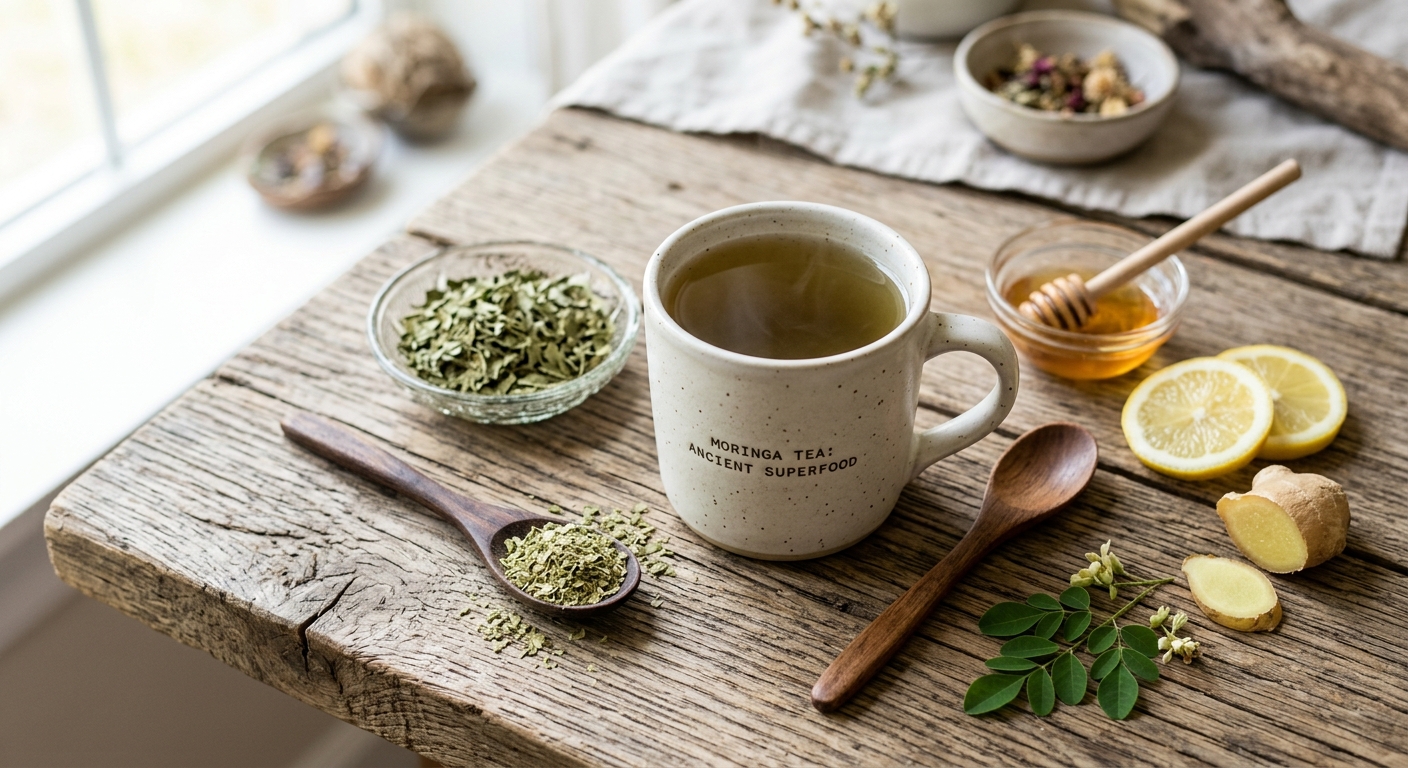
As a tea, moringa presents a mild, grassy flavor that sits somewhere between green tea and spinach, with a subtle sweetness and a fresh, herbaceous quality. Dried moringa leaf brews to a beautiful pale to medium green liquor that signals its chlorophyll richness. Whether you are looking for a morning ritual to replace your second cup of coffee, a midday pick-me-up that will not disrupt your sleep, or a nourishing addition to your wellness routine, moringa tea offers one of the most compelling nutritional profiles in the entire herbal tea world.
2
cups
Ingredients
- 2 tspdried moringa leaf (loose or crushed)
- 480 mlwater (80°C / 176°F)
- —raw honey or lemon juice to taste (optional)
- —fresh ginger slice (optional, for warmth and flavor)
How to Brew
Click on an item below to shop for the recommended items for this recipe on Amazon.
As an Amazon Associate, we earn from qualifying purchases.
- Heat filtered water to 75 to 85°C (167 to 185°F). If you don’t have a temperature-controlled kettle, bring water to a full boil and let it rest uncovered for 3 to 4 minutes before using.
- Place 1 teaspoon of dried moringa leaf per cup into a fine-mesh tea infuser or strainer. Moringa leaf particles are small, so use a fine infuser to prevent sediment in your cup.
- Place the infuser in your mug and pour the hot water over the leaves slowly, ensuring full saturation. Cover your mug with a small lid or saucer to retain aromatic volatile compounds during steeping.
- Steep for 3 to 5 minutes. At 3 minutes you will get a lighter, more delicate cup; at 5 minutes the flavor deepens and becomes earthier. Do not exceed 6 minutes or the tea may turn bitter.
- Remove the infuser and discard or compost the spent leaves. Stir in raw honey or a squeeze of lemon juice if desired, as both enhance the flavor and the honey adds complementary antimicrobial properties.
- Sip immediately while hot. Moringa tea is best enjoyed fresh to preserve its nutritional potency.
- Add 2 teaspoons of dried moringa leaf per 480 ml of filtered water into a clean glass jar or pitcher. There is no need to heat the water. Room temperature or cold filtered water works well for starting the infusion.
- Stir the moringa leaves gently into the water to ensure they are fully submerged and hydrated. Loosely cover the jar with a lid or clean cloth to prevent contamination.
- Place the jar in the refrigerator and allow the moringa to cold-steep for 8 to 12 hours. Eight hours produces a light, delicate infusion, while 12 hours yields a fuller, more nutrient-rich brew. Overnight steeping is the most convenient approach.
- After steeping, strain the liquid through a fine-mesh strainer or cheesecloth into a clean pitcher or directly into glasses. Moringa leaf particles are fine, so take care to strain thoroughly.
- Taste the cold brew before adding anything. Cold brewing naturally reduces bitterness, so many people enjoy it plain. Add a squeeze of lime juice or a few drops of liquid honey if desired, stirring well to incorporate.
- Serve over ice for maximum refreshment. Cold-brewed moringa keeps refrigerated for up to 48 hours. Give it a gentle stir before each serving as natural sediment may settle.
- Add 2 teaspoons of dried moringa leaf to 120 ml of water heated to 75 to 80°C (167 to 176°F). This creates a concentrated moringa infusion. Steep for 4 to 5 minutes, covered.
- While the moringa concentrates steeps, warm 240 ml of your chosen milk, whether dairy, oat, or coconut, in a small saucepan over low to medium heat until it reaches approximately 60 to 65°C (140 to 149°F). Do not boil the milk.
- Froth the warmed milk using a handheld frother, whisk, or by shaking vigorously in a sealed jar for 30 seconds. Oat milk and whole dairy milk froth particularly well for this application.
- Strain the concentrated moringa infusion through a fine-mesh strainer into a large mug. Press gently on the leaves to extract the full concentrate.
- Pour the warm frothed milk into the mug over the moringa concentrate. Add a drizzle of raw honey and a pinch of cinnamon or ground cardamom on top of the froth for added complexity and flavor.
- Stir gently from the bottom before sipping to integrate the concentrate and milk. Enjoy immediately for the best texture and temperature.
Health Benefits
Moringa provides iron, B vitamins, magnesium, and all nine essential amino acids, supplying the raw materials for mitochondrial ATP production. Unlike stimulant-based energy, this nutritional support creates a steady, crash-free lift in vitality that is especially notable for those with iron-deficiency fatigue.
Animal and early human studies suggest moringa leaf extracts support neurotransmitter balance, particularly dopamine and serotonin pathways, which underlie motivation and concentration. Its antioxidant compounds also protect neurons from oxidative stress, a key contributor to cognitive fatigue.
Moringa leaves carry one of the highest ORAC (oxygen radical absorbance capacity) scores among leafy herbs. The combined activity of quercetin, chlorogenic acid, and isothiocyanates makes a cup of moringa tea a potent anti-inflammatory intervention supported by multiple in vitro and animal studies.
Chlorogenic acid in moringa slows the rate at which glucose enters the bloodstream after meals, helping to prevent energy-draining blood sugar spikes and crashes. A 2016 study in the Journal of Food Science and Technology found moringa leaf powder significantly reduced postprandial blood glucose in human participants.
A single cup of moringa tea delivers meaningful amounts of vitamin C, vitamin A (as beta-carotene), calcium, potassium, and iron, making it one of the few herbal teas that functions as a genuine nutritional supplement alongside its role as a pleasant beverage.
🧪 Key Bioactive Compounds
The Science Behind Moringa
Moringa’s reputation as a nutritional powerhouse is well-supported by phytochemical analysis. The leaves contain over 90 documented nutrients and 46 antioxidants, but the compounds most relevant to energy and focus are its isothiocyanates, flavonoids, and micronutrient profile. Isothiocyanates, particularly moringin and 4-(alpha-L-rhamnosyloxy)-benzyl isothiocyanate, are formed when moringa leaf cells are damaged during drying or chewing, triggering an enzymatic conversion from inactive glucosinolates. These compounds activate the Nrf2 pathway in human cells, a master regulator of antioxidant defenses and mitochondrial efficiency, directly supporting cellular energy production and reducing the chronic inflammation that underlies fatigue.
The flavonoid quercetin, present in high concentrations in moringa leaves, plays a dual role in energy metabolism. First, it acts as a direct free-radical scavenger, protecting mitochondrial membranes from oxidative damage that impairs ATP synthesis. Second, research published in the International Journal of Sports Nutrition found that quercetin supplementation increased mitochondrial biogenesis in muscle tissue, meaning it may help the body build more energy-producing capacity over time. Moringa’s chlorogenic acid complements this by moderating blood glucose dynamics. By inhibiting glucose-6-phosphatase and reducing intestinal glucose absorption, chlorogenic acid prevents the sharp glycemic oscillations that create the familiar energy peaks and crashes associated with high-carbohydrate meals and caffeinated beverages.
From a micronutrient perspective, moringa tea is unusual among herbal teas in that it delivers bioavailable iron alongside naturally occurring vitamin C, a pairing that converts non-heme plant iron into a more absorbable form. Iron deficiency is among the most common nutritional causes of fatigue and poor concentration worldwide, and moringa’s dual provision of iron and its absorption enhancer makes it genuinely therapeutic in this regard. Additionally, the presence of all nine essential amino acids, including tryptophan, provides precursor materials for serotonin and dopamine synthesis, the neurotransmitters most closely tied to mood stability, motivation, and focused attention. This broad-spectrum nutritional action is what distinguishes moringa’s energy support from that of a simple stimulant herb.
Brewing Tips
- Store dried moringa leaves in an airtight, dark glass container away from heat and light. Moringa’s chlorophyll and vitamin C are photosensitive and degrade quickly when exposed to light, significantly reducing both flavor and nutritional value within weeks.
- Start with a shorter steep time of 3 minutes if you are new to moringa. The flavor intensifies quickly and some people find longer steeps too grassy or earthy. You can gradually increase steeping time as your palate adjusts.
- Combine moringa with complementary herbs to enhance its focus-supporting properties. Peppermint brightens the flavor and adds mental clarity, tulsi (holy basil) adds adaptogenic stress support, and lemon verbena rounds out the grassy notes with a citrusy lift.