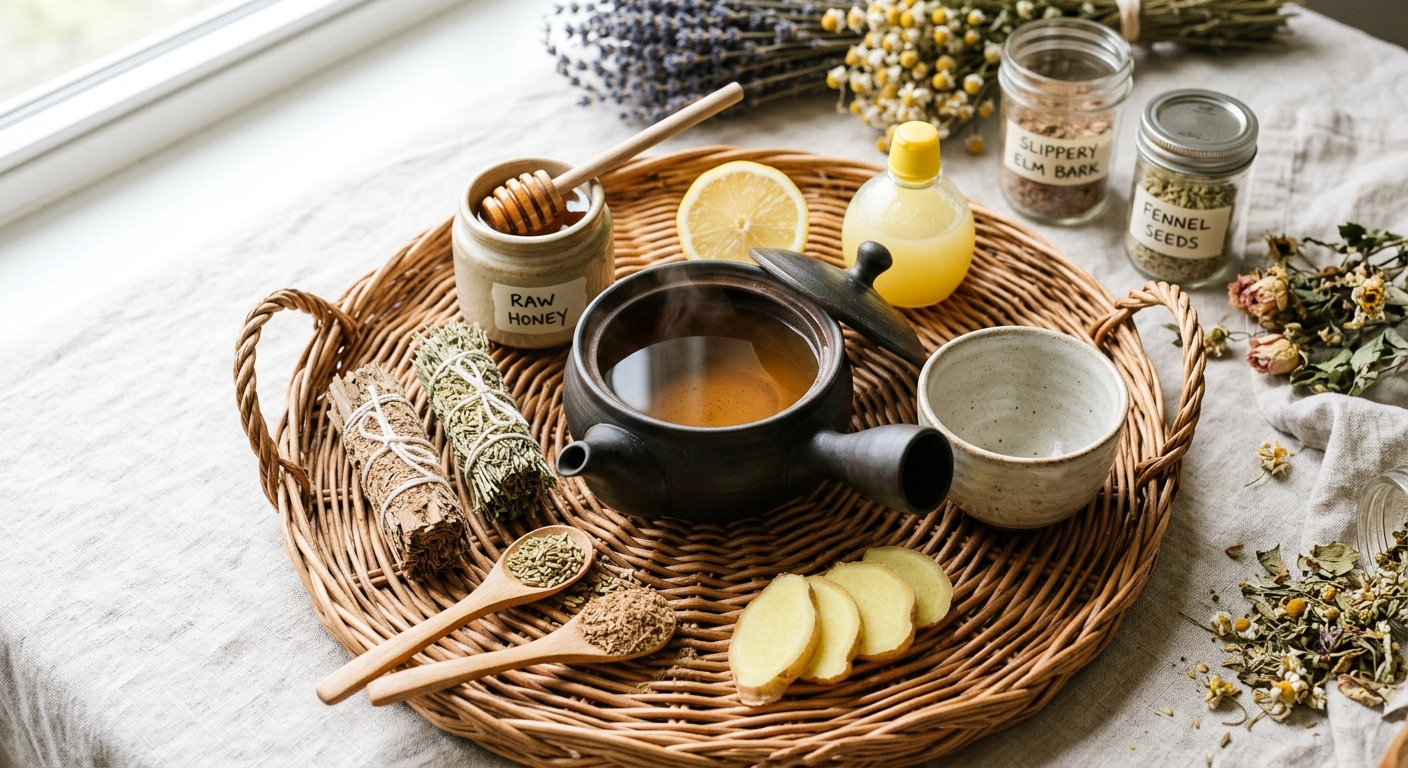
Long before the word ‘probiotic’ entered the wellness lexicon, healers across North America, Europe, and Asia were reaching for the same small group of plants to calm troubled digestion, restore gut balance, and build resilience after illness. Slippery elm bark, the anchor of this blend, was a staple of Native American medicine, used by the Ojibwe, Cherokee, and other nations to soothe inflamed mucous membranes and ease dysentery. Fennel seed traveled along ancient Silk Road trade routes as both a culinary spice and a remedy for colic, bloating, and sluggish digestion. Ginger root, perhaps the most universally revered digestive herb on the planet, has been documented in Ayurvedic, Traditional Chinese, and Greek medicine for well over 2,000 years.
What makes this particular combination so compelling from a modern gut-health perspective is the way each herb contributes a distinct mechanism. Slippery elm’s inner bark is extraordinarily rich in mucilage, a soluble fiber that forms a gel-like coating along the gastrointestinal tract. This coating does two things at once: it protects irritated tissue from acid and pathogens, and it acts as a prebiotic substrate, feeding the beneficial bacterial colonies that constitute a healthy microbiome. Fennel seed contributes anethole and fenchone, volatile oils that relax intestinal smooth muscle, reduce gas-producing fermentation, and gently stimulate bile flow. Fresh or dried ginger adds gingerols and shogaols, compounds that accelerate gastric emptying and reduce intestinal inflammation.
Together, these three herbs produce a tea that is simultaneously protective and stimulating, a rare quality in herbal medicine. The flavor is warm, mildly anise-like from the fennel, with an earthy depth from the elm and a clean, spiced heat from the ginger. It is a tea that feels purposeful in the cup, and the science increasingly supports what traditional healers have known intuitively for centuries: tending the gut lining and its microbial ecosystem is foundational to overall health.
2
cups
Ingredients
- 2 tspslippery elm bark powder or cut-and-sifted bark
- 1 tspfennel seeds, lightly crushed
- 4 slicesfresh ginger root (about 3mm thick) or 1 tsp dried ginger
- 480 mlfiltered water
- —raw honey or maple syrup to taste (optional)
- —a squeeze of fresh lemon juice (optional)
How to Brew
Click on an item below to shop for the recommended items for this recipe on Amazon.
As an Amazon Associate, we earn from qualifying purchases.
- Lightly crush the fennel seeds using the back of a spoon or a mortar and pestle to open the seed coat and release the volatile oils. Slice the fresh ginger root into thin rounds if using fresh.
- Combine the crushed fennel seeds, ginger slices, and slippery elm bark in your tea infuser or directly into a small saucepan. If using slippery elm powder, a fine-mesh infuser or tea sock works best to prevent cloudiness.
- Heat filtered water to 90 to 95°C (194 to 203°F). Avoid a rolling boil, which can diminish some volatile aromatic compounds in the fennel and ginger. Pour the hot water directly over the herbs in your infuser or saucepan.
- Steep for 10 to 15 minutes, covered. Covering the vessel traps the essential oils that would otherwise evaporate and concentrates the mucilaginous compounds from the slippery elm.
- Strain thoroughly into two warmed mugs. Stir well, as the elm mucilage tends to settle. Sweeten with raw honey and add a squeeze of lemon if desired. Drink while warm for the fullest gut-soothing effect.
- Lightly crush the fennel seeds and slice the fresh ginger as you would for the hot brew. Place all three herbs into a clean glass jar with a lid. If using slippery elm powder, expect the finished cold brew to be noticeably thicker and slightly opaque – this is desirable.
- Pour 480 ml of room-temperature filtered water over the herbs. Stir briefly to combine and ensure the slippery elm is evenly distributed and not clumping at the bottom.
- Seal the jar and leave it at room temperature for 1 hour to allow initial extraction to begin, then transfer to the refrigerator. Steep for a further 9 to 11 hours, for a total of 10 to 12 hours overnight.
- In the morning, strain the cold brew through a fine-mesh strainer lined with a coffee filter or muslin cloth. The liquid will be viscous and amber-tinted. Press the spent herbs gently to release remaining liquid.
- Pour into glasses over ice or enjoy straight from the refrigerator. Stir in honey or maple syrup if using, as the cold brew has a gentler, less spiced edge than the hot version. Consume within 48 hours and keep refrigerated.
- Place the slippery elm bark, crushed fennel seeds, and sliced ginger directly into a small saucepan. Use cut-and-sifted bark rather than powder for a decoction, as the powder can make straining difficult and the liquid very thick.
- Add 600 ml of cold filtered water to the saucepan. Starting with cold water and bringing the heat up gradually allows the plant materials to release their compounds incrementally, producing a more complete extraction.
- Bring the water to a gentle simmer over medium-low heat. Once bubbles begin appearing (around 85 to 90°C), reduce the heat to maintain a gentle simmer without reaching a full boil. Cover the saucepan with a lid.
- Simmer covered for 20 minutes, stirring occasionally. The liquid will reduce slightly and deepen in color to a rich amber-brown. The mucilage from the slippery elm will give the brew a noticeably thicker, almost broth-like consistency.
- Remove from heat and allow to rest, covered, for 5 minutes. Strain through a fine-mesh strainer into two warmed mugs, pressing the herbs to extract remaining liquid. The decoction should yield approximately 480 ml after reduction. Add honey and lemon to taste and drink warm.
Health Benefits
The mucilaginous polysaccharides in slippery elm form a physical protective layer over the gastrointestinal mucosa, shielding it from acid, digestive enzymes, and pathogens. This is particularly relevant for conditions like leaky gut, gastritis, and irritable bowel syndrome, where mucosal integrity is compromised.
Slippery elm’s arabinogalactans and soluble fibers are fermented by colonic bacteria, selectively increasing populations of Bifidobacterium and Lactobacillus species. A 2010 study published in the journal Molecular Nutrition and Food Research found that arabinogalactan-rich fibers significantly enhanced beneficial microbiome activity in human gut models.
Fennel seed’s volatile oils, particularly anethole and fenchone, have well-documented antispasmodic and carminative effects on intestinal smooth muscle. Clinical trials have shown fennel preparations to be effective in reducing colic in infants and functional bloating in adults, making it one of the most evidence-backed carminatives in herbal medicine.
Ginger root’s gingerols and shogaols act on 5-HT4 receptors in the gut to accelerate gastric emptying and improve peristaltic movement. Multiple randomized controlled trials have confirmed ginger’s effectiveness for nausea and delayed gastric emptying, conditions commonly associated with dysbiosis and poor gut motility.
Both ginger and slippery elm have demonstrated anti-inflammatory activity in the gut, with ginger’s shogaols inhibiting NF-kB signaling pathways that drive intestinal inflammation. This creates a less inflammatory environment in the colon, which is conducive to a more diverse and balanced microbiome.
🧪 Key Bioactive Compounds
The Science Behind Slippery Elm Bark
The gut-supporting properties of this blend are grounded in distinct and well-studied biochemical mechanisms. Slippery elm bark’s mucilage, composed primarily of arabinose, galactose, and rhamnose polysaccharides, creates a viscous gel when it contacts water. This gel adheres to the intestinal epithelium, forming a temporary but meaningful barrier against irritants, acid reflux, and small intestinal permeability. Beyond its protective coating function, these same polysaccharides are classified as prebiotic dietary fibers. Research published in peer-reviewed gastroenterology journals confirms that arabinogalactan-type fibers increase the production of short-chain fatty acids (SCFAs), particularly butyrate, in the colon. Butyrate is the primary energy source for colonocytes (the cells lining the colon) and is strongly associated with reduced colorectal inflammation, improved gut barrier integrity, and a more diverse microbiome.
Fennel seed’s key active compounds operate through a complementary pathway. Anethole has been shown in both in vitro and in vivo studies to exert significant antispasmodic effects by competitively antagonizing muscarinic receptors on intestinal smooth muscle, reducing the cramping and irregular contractions that accompany dysbiosis and irritable bowel syndrome. Fenchone contributes to bile acid stimulation, which directly enhances the emulsification and absorption of dietary fats and fat-soluble vitamins – a benefit often overlooked in gut health discussions. Together, these fennel compounds help regulate the speed and efficiency of digestion, reducing the substrate available for gas-producing bacterial overgrowth in the small intestine.
Ginger’s contribution to gut health is perhaps the most extensively studied of the three herbs. The gingerol and shogaol compounds in ginger are potent inhibitors of cyclooxygenase (COX) and lipoxygenase (LOX) enzymes, the same pathways targeted by NSAIDs, but without the associated gastrointestinal side effects. By reducing prostaglandin synthesis in the gut wall, these compounds lower baseline intestinal inflammation, creating a tissue environment more hospitable to beneficial microorganisms. Additionally, ginger activates the 5-HT4 receptor pathway in the enteric nervous system, which directly stimulates prokinetic motility, the coordinated muscular contractions that move food efficiently through the gastrointestinal tract. A 2015 systematic review in the European Journal of Gastroenterology and Hepatology confirmed ginger’s efficacy in reducing gastric emptying time, making it a clinically meaningful addition to any gut-supportive herbal protocol.
Brewing Tips
- For the most active prebiotic effect, use cut-and-sifted slippery elm bark rather than powder in the hot brew, as it is easier to strain cleanly while still releasing ample mucilage over a longer steep.
- Toast the fennel seeds in a dry pan for 30 to 60 seconds before crushing them to deepen their flavor and enhance the release of volatile oils, particularly fenchone, which becomes more bioavailable with gentle heat.
- Drink this tea 20 to 30 minutes before meals to prime the gut lining and stimulate digestive secretions, or sip it slowly after meals to ease bloating and support the transit phase of digestion.