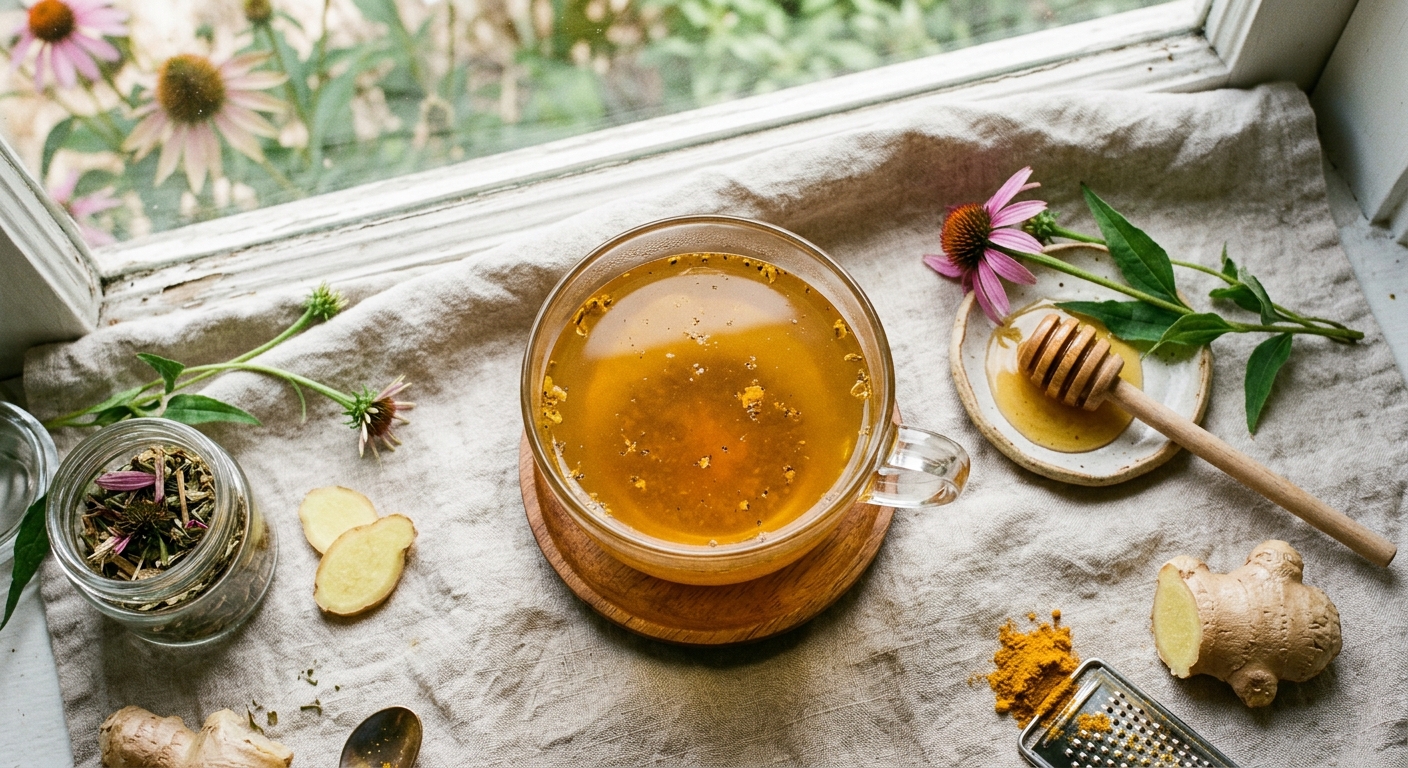
Long before pharmaceutical anti-inflammatories existed, healers across South Asia, the Americas, and Europe were reaching for the same three plants: turmeric root, ginger rhizome, and echinacea flower. Turmeric has been a cornerstone of Ayurvedic medicine for over 4,000 years, prized for its golden color and its ability to calm heat and swelling in the body. Ginger traveled from Southeast Asian kitchens into ancient Greek and Roman apothecaries, valued as much for its warming digestive fire as for its ability to ease sore throats and feverish chills. Echinacea, native to the North American prairies, was the most widely used medicinal plant among many Indigenous nations, employed to treat snake bites, infections, toothaches, and any condition involving inflammation or immune challenge.
What unites these three herbs across such different traditions is a shared mechanism: each one modulates the body’s inflammatory response rather than simply suppressing it. Modern phytochemistry has validated this overlap in remarkable ways. Curcumin in turmeric inhibits key inflammatory signaling molecules, gingerols in ginger block the same enzymes targeted by ibuprofen, and echinacea’s alkylamides and polysaccharides prime macrophages and natural killer cells to act faster and more effectively. Brewed together, they create a tea that is greater than the sum of its parts, with each compound working on a slightly different pathway of the immune and inflammatory cascade.
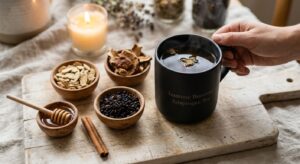
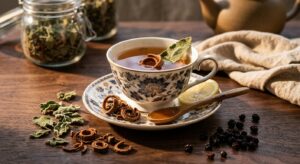
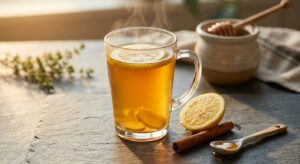
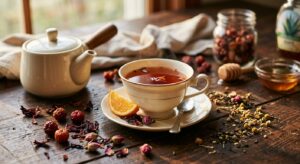
This blend is as sensory as it is medicinal. The tea pours a deep amber gold, with an aroma that moves from sharp and spicy to earthy and floral as it steeps. The first sip brings immediate warmth from the ginger, followed by the subtle bitterness of turmeric and a soft, pleasantly numbing tingle from the echinacea that signals the alkylamides are active and present. A curl of black pepper is not just a culinary addition here: piperine increases curcumin absorption by up to 2,000 percent, making it one of the most important ingredient pairings in all of herbal medicine.
2
cups
Ingredients
- 1.5 tspdried turmeric root, ground or grated fresh
- 1 tspdried ginger root, ground or 3 to 4 thin slices fresh
- 1.5 tspdried echinacea root or purpurea herb
- 0.25 tspfreshly ground black pepper
- 480 mlfiltered water (95°C / 203°F)
- —raw honey or maple syrup to taste (optional)
- —splash of full-fat milk or coconut milk (optional, increases curcumin absorption)
How to Brew
Click on an item below to shop for the recommended items for this recipe on Amazon.
As an Amazon Associate, we earn from qualifying purchases.
- Bring 480 ml of filtered water to just below a rolling boil, around 95°C (203°F). Avoid a full boil, which can degrade some of the more delicate volatile compounds in ginger and echinacea.
- Add the turmeric, ginger, echinacea, and black pepper directly to a small saucepan or a warmed teapot fitted with a fine-mesh infuser. If using a saucepan, a brief gentle simmer of 2 to 3 minutes before removing from heat helps unlock curcuminoids from dried turmeric root.
- Pour the hot water over the herbs, cover the vessel immediately to trap volatile aromatic compounds, and steep for 10 to 15 minutes. The longer end of this range will produce a stronger, more medicinal brew.
- Strain through a fine-mesh sieve or cheesecloth into two warmed mugs. Turmeric will stain cloth and some metals, so rinse equipment quickly after use.
- Stir in raw honey or maple syrup if desired. Add a small splash of warm milk or coconut milk to further support curcumin absorption and soften the bitterness. Serve immediately while hot.
- Combine the turmeric, ginger, echinacea, and black pepper in a clean glass jar. Use slightly increased quantities compared to hot brew: approximately 2 teaspoons each of turmeric and echinacea and 1.5 teaspoons of ginger to compensate for slower cold extraction.
- Pour 500 ml of cold filtered water over the herbs. Stir briefly to ensure all dried plant material is submerged. Do not use boiling water at any stage, as this defeats the purpose of cold extraction.
- Seal the jar with a lid and leave it at room temperature for the first hour, then transfer to the refrigerator and steep for a total of 12 to 16 hours, preferably overnight.
- The next morning, strain the brew through a fine-mesh sieve lined with cheesecloth or a nut milk bag, pressing the herbs gently to extract the remaining liquid. The cold brew will have a softer golden color and a noticeably milder, less sharp flavor than the hot version.
- Serve over ice or lightly chilled. Stir in a small drizzle of honey and a splash of coconut milk to emulsify the curcuminoids and add creaminess. Refrigerate any remainder and consume within 48 hours.
- Combine the turmeric, ginger, echinacea, and black pepper in a small stainless steel or ceramic saucepan. For a decoction intended as a therapeutic concentrate, double the herb quantities: 3 teaspoons turmeric, 2 teaspoons ginger, 3 teaspoons echinacea root, and 0.5 teaspoon black pepper.
- Add 600 ml of cold filtered water to the saucepan. Starting with cold water and bringing the herbs up to temperature together produces a more gradual, thorough extraction than pouring boiling water over the herbs.
- Bring the mixture to a gentle simmer over medium heat, then reduce to low. Maintain a steady, gentle simmer, with small bubbles but not a rolling boil, for 20 to 25 minutes. Cover the pot with a lid slightly ajar to allow some steam to escape while retaining most of the aromatic compounds.
- Remove from heat and allow to rest covered for an additional 5 minutes. This post-simmer infusion phase captures volatile compounds that are released as the brew cools slightly.
- Strain through a fine-mesh sieve into two mugs or a glass measuring jug. You should have approximately 350 to 400 ml of richly colored, concentrated decoction after evaporation. Top each mug with a small amount of hot water if the flavor is too intense, or drink as-is for full potency. Finish with honey and a splash of warm coconut milk.
Health Benefits
Curcumin from turmeric and 6-gingerol from ginger both inhibit the NF-kB transcription factor and COX-2 enzyme, two of the most central regulators of the inflammatory cascade. Multiple randomized controlled trials have shown curcumin supplementation significantly reduces circulating markers of inflammation including CRP and IL-6.
Meta-analyses of echinacea preparations have found consistent evidence that echinacea reduces the duration of the common cold by approximately one to two days and reduces the likelihood of recurrence. The alkylamides and polysaccharides work synergistically to prime both innate and adaptive immune responses before a pathogen takes hold.
Curcumin upregulates the Nrf2 pathway, which switches on the body’s own antioxidant enzyme production including superoxide dismutase and glutathione peroxidase. This endogenous antioxidant activation is considered more potent and sustained than the direct antioxidant action of vitamin C or E supplementation.
Both turmeric and ginger have long traditional use for inflammatory digestive conditions, and clinical studies support this application. Ginger reduces nausea and intestinal cramping by acting on serotonin receptors in the gut, while curcumin has shown measurable benefit in studies of irritable bowel syndrome and inflammatory bowel conditions.
Several clinical trials comparing curcumin to ibuprofen in patients with knee osteoarthritis found equivalent pain relief with fewer gastrointestinal side effects. Ginger extract has also demonstrated significant reduction in knee pain scores in clinical settings, making this blend particularly relevant for those with inflammatory joint conditions.
🧪 Key Bioactive Compounds
The Science Behind Turmeric
The scientific case for this three-herb blend rests on decades of converging research into their respective bioactive compounds and how those compounds interact with human immune and inflammatory biology. Curcumin, the primary curcuminoid in turmeric, has been the subject of over 3,000 peer-reviewed studies. Its primary mechanism involves inhibition of the NF-kB transcription factor, a master regulatory protein that, when activated, switches on the genes for dozens of pro-inflammatory cytokines including TNF-alpha, IL-1 beta, and IL-6. By blocking NF-kB activation, curcumin effectively turns down the volume on the inflammatory signal before it amplifies. Critically, curcumin also inhibits both COX-2 and 5-LOX enzymes, meaning it targets two separate branches of the arachidonic acid inflammatory pathway simultaneously, something most single pharmaceutical anti-inflammatories do not achieve.
Ginger’s 6-gingerol and its heat-transformed cousin 6-shogaol (more prevalent in dried ginger) contribute to the anti-inflammatory action through overlapping but distinct mechanisms. Like curcumin, they inhibit COX-2 and LOX enzymes, but gingerols also suppress the synthesis of pro-inflammatory prostaglandins at the level of the cell membrane and interact with serotonin receptors in the gastrointestinal tract, explaining ginger’s well-documented effectiveness for nausea. A 2015 study published in Osteoarthritis and Cartilage found that standardized ginger extract produced statistically significant reductions in knee pain comparable to low-dose ibuprofen, with the mechanism confirmed to be COX-2 and TNF-alpha suppression in synovial tissue.
Echinacea’s immunological activity operates by a fundamentally different mechanism: rather than suppressing inflammation, it enhances immune readiness. The alkylamides in echinacea purpurea, particularly the dodeca-2E,4E,8Z,10Z-tetraenoic acid isobutylamides, have been shown to bind selectively to cannabinoid CB2 receptors on immune cells, including macrophages and dendritic cells, upregulating their activity without triggering psychoactive effects. The high-molecular-weight polysaccharides arabinogalactan and heteroxylan activate macrophages, increase interferon production, and enhance natural killer cell cytotoxicity, effects that are most relevant in the early innate immune response to a respiratory virus. A 2015 Cochrane review of 24 randomized trials concluded that some echinacea preparations were significantly better than placebo at reducing the incidence and duration of the common cold, with greatest effect size observed in studies using whole-plant preparations rather than isolated extracts.
Brewing Tips
- Fresh turmeric root, grated on a microplane, produces a brighter, more aromatic flavor than ground dried turmeric and contains higher concentrations of volatile oils. If using fresh root, increase the quantity to approximately 1 tablespoon of grated root per serving.
- Turmeric will stain everything it touches, including fingernails, cutting boards, light-colored mugs, and cloth infusers. Use stainless steel or silicone infusers and rinse all equipment immediately after use with cold water before washing with soap.
- For acute immune support during the early days of a cold or infection, traditional herbalists recommend drinking two to three cups daily for up to five days, then reducing to one cup daily for a further week before taking a break from the echinacea component to maintain its immunostimulating effectiveness.