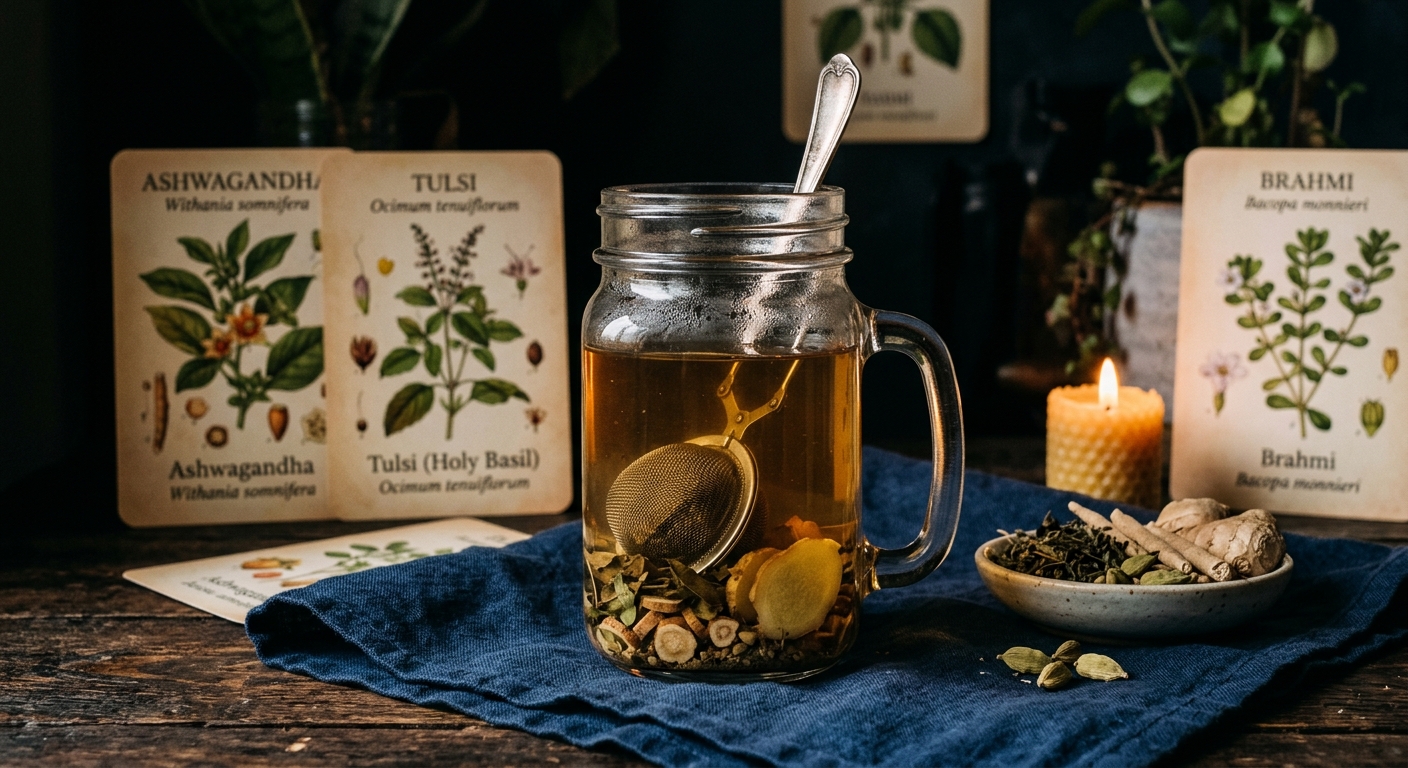
Long before modern sleep aids lined pharmacy shelves, Ayurvedic physicians in ancient India were crafting precise herbal formulas to address the root causes of sleeplessness. Known as nidra in Sanskrit, sleep was considered one of the three pillars of good health alongside proper diet and a balanced life force. The herbs used to support it were chosen not merely for their sedative qualities, but for their ability to nourish the nervous system, reduce the mental chatter Ayurveda calls vata imbalance, and restore a deep sense of inner calm. This tradition has been refined over more than 3,000 years in texts like the Charaka Samhita and the Ashtanga Hridayam.
The foundation of this blend rests on three celebrated Ayurvedic botanicals. Ashwagandha (Withania somnifera), often called Indian ginseng, is one of the most studied adaptogens in the world, prized for reducing cortisol and calming an overstimulated mind. Brahmi (Bacopa monnieri), named after the Hindu creator god Brahma, has been used for centuries to quiet mental restlessness and support cognitive clarity. Holy basil (Ocimum tenuiflorum), or tulsi, is considered sacred in Indian households and revered for its ability to ease stress, harmonize mood, and prepare the body and mind for rest. Together, these three herbs create a synergistic formula that addresses sleeplessness at its source rather than simply forcing sedation.
What makes this tea genuinely special is its dual action: it does not knock you out, but instead unwinds the tension that keeps you awake. The flavor is warm, earthy, and gently spiced, with a faint sweetness from the tulsi and a grounding depth from the ashwagandha root. A cup an hour before bed becomes a ritual in itself, signaling to your nervous system that the day is done. Whether you follow Ayurvedic principles closely or are simply seeking a more natural path to restful nights, this blend offers a beautiful, evidence-backed starting point.
2
cups
Ingredients
- 1 tspashwagandha root powder or sliced dried root
- 1 tspdried tulsi (holy basil) leaves
- 0.5 tspdried brahmi (bacopa) leaf
- 0.25 tspground cardamom
- 1 small piecefresh ginger (about 1 cm), sliced
- 480 mlwater (95°C / 203°F)
- —raw honey or jaggery to taste (optional)
- —a splash of warm whole milk or oat milk (optional, Ayurvedic tradition)
How to Brew
Click on an item below to shop for the recommended items for this recipe on Amazon.
As an Amazon Associate, we earn from qualifying purchases.
- Bring 480 ml of filtered water to 90 to 95°C. If using a kettle without temperature control, bring to a full boil then let it rest for 60 seconds.
- Add the ashwagandha root (powder or sliced) and sliced fresh ginger directly to the water in a small saucepan. Allow them to gently simmer on low heat for 5 minutes to begin extracting the root compounds.
- Remove from heat and add the dried tulsi leaves, dried brahmi leaf, and ground cardamom to the saucepan. Cover with a lid to trap the volatile aromatic oils.
- Steep covered for a further 8 to 10 minutes. The lid is important: tulsi and brahmi contain delicate volatile compounds that evaporate quickly in open air.
- Strain through a fine mesh strainer into two warmed mugs. Press the herbs gently with the back of a spoon to extract the last of the liquid.
- Stir in raw honey or jaggery if desired, and add a small splash of warm milk if following traditional Ayurvedic practice. Serve immediately and drink 45 to 60 minutes before bed.
- Combine the ashwagandha root (use sliced dried root rather than powder for cold brew, as powder clouds the liquid and is harder to strain), dried tulsi leaves, dried brahmi leaf, and cardamom in a clean glass jar.
- Add 480 ml of room-temperature filtered water. Stir gently to ensure the herbs are fully submerged, then cover the jar with a lid or cloth secured with a rubber band.
- Leave the jar at room temperature for the first 2 hours to allow initial extraction, then transfer to the refrigerator.
- Steep in the refrigerator for a further 6 to 10 hours, or overnight. The total extraction time should be 8 to 12 hours.
- Strain through a fine mesh strainer lined with a small piece of cheesecloth to remove fine particles, especially if the ashwagandha root has shed any powder during soaking.
- Pour into mugs and gently warm on the stovetop over low heat until the tea reaches a comfortable drinking temperature. Do not boil. Sweeten with honey and serve as a pre-bedtime drink.
- Combine 960 ml of cold filtered water with the ashwagandha root, sliced ginger, and cardamom in a medium saucepan. These woody, dense ingredients need extended heat to release their full medicinal profile.
- Bring the water to a full boil over medium-high heat, then immediately reduce the heat to a low, steady simmer. The surface should bubble gently but not roll.
- Simmer uncovered for 15 minutes, allowing the liquid to reduce. You should see the volume beginning to decrease visibly. Stir occasionally to prevent anything from sticking to the bottom.
- Add the dried tulsi leaves and brahmi leaf to the simmering liquid. Cover the saucepan with a lid and continue to simmer on the lowest possible heat for a further 8 to 10 minutes.
- Remove from heat and allow the decoction to rest covered for 5 minutes. The total liquid should have reduced to approximately 480 ml, yielding a concentrated, deeply flavorful brew.
- Strain through a fine mesh strainer into two mugs, pressing the herbs firmly to extract every drop of the concentrated liquid. Stir in a small amount of raw honey, a pinch of nutmeg, and warm milk if desired. Drink slowly 30 to 45 minutes before sleep.
Health Benefits
Multiple randomized controlled trials have found that ashwagandha root extract significantly reduces serum cortisol levels in adults with chronic stress. A landmark 2012 study published in the Indian Journal of Psychological Medicine found a 27.9% reduction in cortisol in participants who received ashwagandha extract compared to placebo, directly targeting the hormonal mechanism behind stress-driven insomnia.
A double-blind, randomized, placebo-controlled study published in PLOS ONE in 2019 demonstrated that ashwagandha root extract significantly improved sleep quality, sleep onset latency, and total sleep time in adults with insomnia. The effect was attributed to both withanolides and triethylene glycol acting on sleep-regulating pathways in the brain.
Brahmi’s bacosides modulate levels of serotonin, dopamine, and GABA in the brain, producing a measurable anxiolytic effect. Clinical studies have shown that regular brahmi supplementation reduces anxiety scores and cognitive fatigue, addressing the racing-mind pattern that is one of the most common barriers to falling asleep.
Both ashwagandha and tulsi are classified as adaptogens, meaning they help the body resist physiological and psychological stress by normalizing cortisol, adrenaline, and inflammatory cytokine levels. This bidirectional regulation is particularly valuable for sleep because it does not cause sedation during the day but supports natural sleepiness when the body’s circadian cues call for it.
Tulsi (holy basil) contains compounds including eugenol, rosmarinic acid, and various flavonoids that collectively protect neurons from oxidative stress and support parasympathetic nervous system activity, the rest-and-digest state that is physiologically required for deep, restorative sleep.
🧪 Key Bioactive Compounds
The Science Behind Ashwagandha
The sleep-supporting power of this Ayurvedic blend is rooted in its multi-target action on the body’s stress and sleep regulation systems. Ashwagandha’s withanolides interact directly with the hypothalamic-pituitary-adrenal (HPA) axis, the central command system governing the body’s stress response. By down-regulating cortisol and adrenocorticotropic hormone (ACTH) secretion, ashwagandha effectively lowers the physiological state of alertness that elevated cortisol maintains. A separate compound in ashwagandha, triethylene glycol, has been shown in mouse models to specifically promote non-REM sleep by acting on sleep-regulatory regions of the brain, making it one of the few plant compounds with a clearly identified sleep-specific mechanism of action.
Brahmi’s bacosides operate primarily within the GABAergic and serotonergic neurotransmitter systems. GABA (gamma-aminobutyric acid) is the brain’s primary inhibitory neurotransmitter, responsible for reducing neural excitability and producing the mental quieting that precedes sleep. By enhancing GABA-A receptor sensitivity and modulating serotonin reuptake, brahmi creates a calming neurological environment without the dependency risk associated with pharmaceutical GABAergic agents. Research also shows that bacosides reduce the activity of acetylcholinesterase, the enzyme that breaks down acetylcholine, maintaining balanced cognitive function and reducing the anxious overthinking that keeps many people awake.
Tulsi contributes to this synergy through its rich array of phenylpropanoids, particularly eugenol and rosmarinic acid. Eugenol has been shown to bind to GABA-A receptors in a manner structurally similar to benzodiazepines, producing anxiety relief and mild sedation without the pharmacological risks of synthetic drugs. Rosmarinic acid additionally inhibits the enzyme that breaks down GABA in the brain, extending and amplifying the herb’s calming effect. Together, these three botanicals create a comprehensive neurological and hormonal environment that supports natural, physiologically normal sleep rather than imposing artificial sedation.
Brewing Tips
- Use ashwagandha root powder for the hot brew and decoction methods to maximize surface area and compound extraction, but switch to sliced dried root for cold brew to keep the liquid clear and easier to strain cleanly.
- Always cover your saucepan or mug while steeping tulsi and brahmi: the volatile aromatic oils responsible for both flavor and therapeutic action begin evaporating within minutes of exposure to open air, and a lid retains them in the liquid.
- Build a consistent pre-bed ritual around this tea by drinking it at the same time each evening. Ayurvedic practice emphasizes that regularity (called dinacharya) amplifies the effects of herbal tonics over time, and your nervous system will begin to associate the aroma and warmth of the cup with the transition into sleep.