Known as the “King of Bitters” across South and Southeast Asia, Andrographis paniculata has earned its throne through millennia of trusted use in Ayurvedic medicine, Traditional Chinese Medicine, and Scandinavian herbal practice. This slender annual herb, native to the Indian subcontinent and widely naturalized across tropical Asia, produces small, lance-shaped leaves packed with some of the most potent bitter compounds found in the plant kingdom. Long before pharmaceutical cold remedies existed, healers from Kerala to Guangdong turned to andrographis at the first sign of fever, sore throat, or respiratory infection, trusting its fierce bitterness as a signal of its medicinal power.
Andrographis rose to international prominence in the early 20th century when it was used extensively during the 1919 influenza pandemic in India, reportedly helping to limit the spread of illness in communities where it was widely consumed. In Scandinavia, a proprietary extract called Kan Jang, developed in Sweden, became one of the best-selling herbal cold remedies in the region after rigorous clinical trials demonstrated its ability to reduce the severity and duration of upper respiratory tract infections. Today, andrographis is one of the most clinically studied immune-support herbs in the world, bridging the gap between ancient tradition and modern evidence-based herbal medicine.
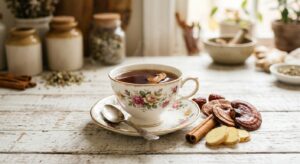
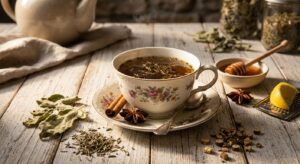
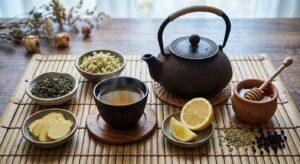
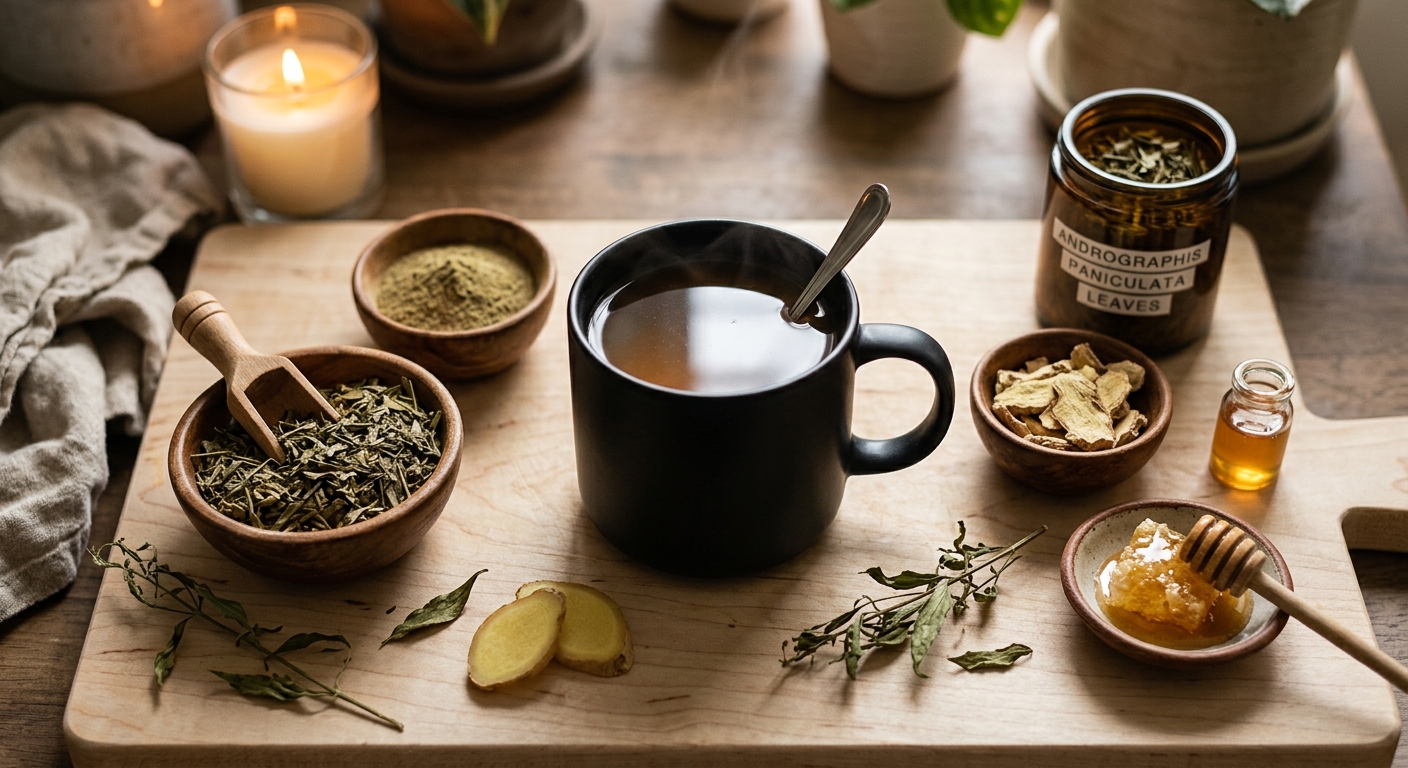
Drinking andrographis as a tea is one of the most traditional and direct ways to access its benefits. The tea is genuinely, uncompromisingly bitter – a flavor profile that seasoned herbal tea drinkers often come to appreciate as a sign of the herb’s potency. A small addition of raw honey, fresh ginger, or licorice root can round out the sharpness without masking the herb’s therapeutic character. Brewed at the right temperature and steeped with care, andrographis tea is a powerful ally during cold and flu season, a warming ritual that connects you to a healing tradition stretching back over two thousand years.
2
cups
Ingredients
- 2 tspdried andrographis leaves (or 1 tsp andrographis powder)
- 480 mlwater (90°C / 194°F)
- —raw honey to taste (optional)
- —1 to 2 slices fresh ginger (optional, to balance bitterness)
- —small piece of licorice root (optional, to sweeten naturally)
How to Brew
Click on an item below to shop for the recommended items for this recipe on Amazon.
As an Amazon Associate, we earn from qualifying purchases.
- Bring fresh filtered water to a boil, then remove from heat and allow it to rest for 2 minutes until it reaches approximately 90 to 95°C (194 to 203°F). This preserves the integrity of andrographis’s key bitter lactone compounds.
- Measure 1 teaspoon of dried andrographis leaves per cup (approximately 240 ml) into a tea infuser or fine mesh strainer placed inside your mug. If using powder, use half a teaspoon per cup and plan to strain carefully.
- If desired, add 1 to 2 thin slices of fresh ginger or a small piece of licorice root directly to the infuser alongside the andrographis. Both complement and soften the herb’s sharp bitterness.
- Pour the heated water slowly over the infuser, saturating all the plant material evenly. Cover the mug with a small plate or lid to trap volatile aromatic compounds and maintain brewing temperature.
- Steep for 5 minutes for a milder cup or up to 8 minutes for a more concentrated, therapeutic brew. Be aware that longer steeping intensifies the bitterness considerably.
- Remove the infuser, allow the tea to cool slightly, and stir in raw honey to taste if desired. Drink while warm for best immune-supportive effect. Consume one to two cups daily at the onset of cold symptoms.
- Measure 2 teaspoons of dried andrographis leaves per 480 ml of cold, filtered water. Because cold extraction is gentler, a slightly higher leaf-to-water ratio than hot brewing is recommended to achieve adequate therapeutic concentration.
- Combine the andrographis leaves and cold water in a clean glass jar. Add optional flavor balancers at this stage: a few thin slices of fresh ginger, a cinnamon stick, or a small piece of dried licorice root work particularly well in cold brew to add sweetness and warmth.
- Stir the mixture gently to ensure all plant material is fully submerged. Place a lid or cover over the jar and leave at room temperature for 1 hour to begin extraction, then transfer to the refrigerator.
- Allow the tea to cold brew in the refrigerator for 10 to 14 hours, or overnight. The slow, cool extraction draws out andrographolide and arabinogalactan polysaccharides with a notably mellower bitterness profile than hot brewing.
- When ready to serve, strain the liquid through a fine mesh strainer or cheesecloth into a clean glass or pitcher, pressing the leaves gently to recover the last of the brew. Stir in honey or a squeeze of fresh lemon juice if desired, then serve over ice or drink chilled. The cold brew keeps refrigerated for up to 48 hours.
- Combine 1 tablespoon of dried andrographis leaves with 480 ml of cold filtered water in a small stainless steel or ceramic saucepan. In traditional Ayurvedic kashayam preparation, the herb is always started in cold water to allow a full-spectrum extraction as the water heats.
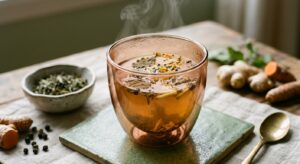
- Add supporting herbs according to traditional Ayurvedic formulation: 3 to 4 black peppercorns (to enhance bioavailability of andrographolides), a 2 cm piece of fresh ginger (to ease digestive discomfort and add warmth), and optionally a small piece of cinnamon bark for flavor and additional antimicrobial action.
- Place the saucepan over medium heat and bring the liquid slowly to a gentle simmer. Do not allow it to reach a rolling boil. Reduce heat to low once simmering begins and maintain a steady, gentle simmer.
- Simmer uncovered for 15 to 20 minutes, stirring occasionally. The liquid will reduce by roughly one quarter to one third and deepen to a rich olive-golden color. This reduction concentrates the active compounds significantly.
- Remove from heat and allow to cool for 3 to 5 minutes, then pour through a fine mesh strainer into a cup or small serving vessel. Press the spent herb material to extract every drop of the decoction.
- The traditional Ayurvedic serving is 60 to 120 ml of concentrated kashayam taken warm, twice daily during acute illness. Add a small amount of raw honey after straining if the bitterness is too intense. Do not sweeten with honey while the decoction is too hot, as heat above 40°C destroys beneficial enzymes in raw honey.
Health Benefits
Multiple randomized controlled trials, including a landmark 2004 Cochrane-reviewed study, found that andrographis supplementation significantly reduced the duration and severity of upper respiratory tract infections compared to placebo. Participants taking andrographis experienced faster resolution of sore throat, nasal congestion, and general malaise.
Andrographolide has been shown to activate macrophages and natural killer cells, increasing the body’s ability to identify and destroy pathogens before they establish infection. The arabinogalactan polysaccharides in andrographis leaves further enhance this innate immune priming effect.
Traditional use of andrographis as an antipyretic (fever reducer) is supported by modern research showing that andrographolide suppresses the NF-kB inflammatory signaling pathway, reducing production of prostaglandins and pro-inflammatory cytokines that drive fever and systemic discomfort during infection.
The compound 14-deoxyandrographolide has demonstrated bronchodilatory effects in animal studies, potentially explaining andrographis’s traditional use for relieving cough and chest congestion. Its anti-inflammatory action also helps reduce inflammation in the bronchial lining during respiratory infections.
Laboratory studies have demonstrated that andrographolide exhibits direct antiviral activity against influenza A, Epstein-Barr virus, and several respiratory viruses by interfering with viral replication machinery. Neoandrographolide shows additional antibacterial activity against organisms commonly responsible for secondary bacterial infections following colds.
🧪 Key Bioactive Compounds
The Science Behind Andrographis
The medicinal power of andrographis tea centers almost entirely on a family of compounds called diterpenoid lactones, with andrographolide being the star of the group. Andrographolide works through a sophisticated mechanism: it inhibits the activation of Nuclear Factor kappa B (NF-kB), a transcription factor that acts as a master switch for inflammation in the body. When NF-kB is suppressed, the downstream production of pro-inflammatory cytokines including interleukin-1 beta (IL-1b), interleukin-6 (IL-6), and tumor necrosis factor alpha (TNF-a) is significantly reduced. This is the molecular mechanism behind andrographis’s clinically observed ability to reduce fever, ease throat inflammation, and shorten the miserable systemic symptoms of a cold or flu.
Beyond inflammation control, andrographolide has demonstrated direct immunostimulatory activity. Research published in peer-reviewed pharmacology journals has shown that it enhances the proliferation and cytotoxic activity of natural killer (NK) cells and macrophages, two critical components of the innate immune system that act as first responders to viral and bacterial invasion. This dual action, both calming excessive inflammatory response and simultaneously boosting pathogen-clearing immune activity, is part of what makes andrographis so clinically interesting. It does not simply suppress symptoms; it actively supports the body’s capacity to resolve the infection faster. A 2017 meta-analysis of seven randomized controlled trials confirmed statistically significant reductions in cold duration and symptom severity across study populations taking andrographis preparations compared to placebo.
The arabinogalactan polysaccharides present in andrographis leaves add another layer of immune complexity. These long-chain sugars interact with toll-like receptors on immune cells, signaling the immune system to heighten surveillance and readiness. Importantly, research on andrographolide’s antiviral mechanisms has revealed that it can interfere with viral replication by blocking the virus’s ability to bind to and enter host cells, a property studied specifically in relation to influenza A. While andrographis tea should never be positioned as a replacement for medical treatment of serious infection, the convergence of traditional evidence spanning two thousand years and a growing body of rigorous clinical research makes it one of the most scientifically credible herbs in the immunity-support category.
Brewing Tips
- Start with a shorter steep time of 3 to 4 minutes if you are new to andrographis. The bitterness intensifies rapidly with steeping time and an overwhelming first cup may put you off this highly beneficial herb before you have given it a fair chance.
- Drink andrographis tea at the very first sign of cold symptoms for maximum effectiveness. Clinical trials consistently show the greatest benefit when the herb is taken within the first 24 to 48 hours of symptom onset, not after the illness is already fully established.
- Store dried andrographis leaves in an airtight glass container away from light and heat. Andrographolides are sensitive to prolonged light and humidity exposure, and degraded herb will produce a weaker brew. Properly stored, dried andrographis retains potency for up to 12 months.