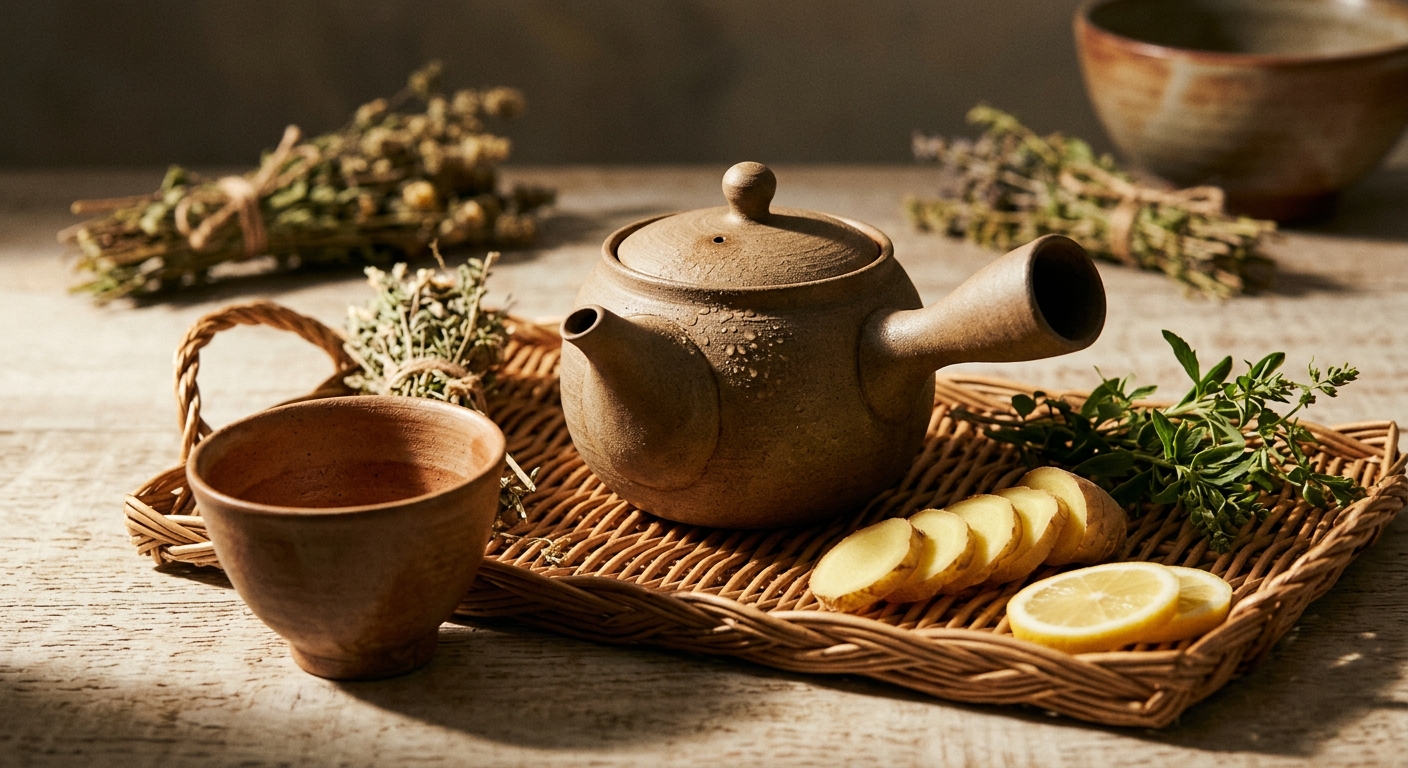
Few plants have earned as universal a reputation in traditional medicine as ginger (Zingiber officinale). From the ancient Ayurvedic texts of India, where it was called vishwabhesaj meaning “universal medicine,” to the apothecaries of medieval Europe and the warming kitchen remedies of Chinese herbalism, ginger has been a go-to remedy for cold, flu, and respiratory ailments for over 5,000 years. Sailors carried it on long voyages to stave off nausea and illness, and Greek physicians prescribed it wrapped in bread as a digestive cure. Its roots run as deep in human history as they do in the soil.
What makes ginger so remarkable as an immune herb is the synergy of its bioactive compounds. Fresh ginger root brims with gingerols, the pungent molecules responsible for its fiery heat, while dried ginger converts these into the equally potent shogaols. Together with zingerone, paradol, and a wealth of antioxidant polyphenols, these compounds work across multiple biological pathways: calming inflammatory cytokines, stimulating circulation, soothing irritated mucous membranes, and supporting the body’s natural defense mechanisms. This is not a gentle, passive herb. Ginger is assertive, warming, and purposeful.
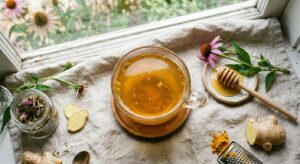
A cup of ginger immune tea offers more than health benefits. It is a sensory experience: the sharp, citrus-tinged heat that blooms on the palate, the golden steam rising from the mug, the almost immediate warmth that spreads through the chest. Whether you are warding off the first signs of a cold, recovering from illness, or simply seeking a robust daily tonic, ginger tea meets you exactly where you are and turns up the heat.
2
cups
Ingredients
- 30 gfresh ginger root, peeled and thinly sliced (about 8 to 10 slices)
- 500 mlwater (100°C / 212°F for decoction)
- 1 tbspfresh lemon juice
- —raw honey to taste (optional)
- —pinch of cayenne pepper (optional, for extra immune boost)
How to Brew
Click on an item below to shop for the recommended items for this recipe on Amazon.
As an Amazon Associate, we earn from qualifying purchases.
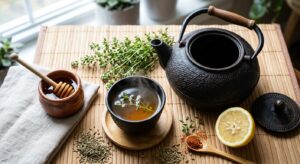
- Peel a 30 g (roughly 5 cm) piece of fresh ginger root and slice it thinly, about 3 to 4 mm per slice. Thinner slices dramatically increase the surface area and yield a stronger, more potent brew.
- Place the ginger slices into a small saucepan with 500 ml of cold, filtered water. Starting in cold water allows compounds to gradually release as the water heats, producing a more balanced extraction.
- Bring the water to a full rolling boil over medium-high heat, then reduce to a gentle simmer. Maintain this simmer uncovered for 10 to 15 minutes. For a milder brew, simmer 10 minutes. For a powerful immune-strength concentrate, push to 15 minutes.
- Remove from heat and allow the decoction to rest for 2 minutes. Strain through a fine mesh strainer into two mugs, pressing the ginger slices gently with the back of a spoon to release any remaining liquid.
- Add fresh lemon juice and raw honey to taste. If you want an extra immune kick, stir in a small pinch of cayenne pepper. Sip slowly while still hot.
- Peel and very thinly slice 25 g of fresh ginger root. Because cold water extracts more slowly, slicing as thin as possible, ideally 1 to 2 mm, is important for a flavorful result without requiring heat.
- Place the ginger slices into a clean glass jar with 500 ml of cold, filtered water. Add a 5 cm strip of lemon peel (avoiding the white pith) directly to the jar for a brighter, more aromatic cold brew.
- Stir gently, cover the jar with a lid or cloth, and leave at room temperature for 1 hour to begin the extraction process. Then transfer the jar to the refrigerator.
- Allow the ginger to cold brew in the refrigerator for a further 7 to 11 hours, or overnight. The longer it steeps, the more pronounced the heat and depth of flavor will become.
- When ready, strain the liquid through a fine mesh strainer into glasses over ice. Squeeze in fresh lemon juice and sweeten with honey stirred into a small amount of warm water first (to help it dissolve), then added to the cold brew. Serve chilled.
- Peel and roughly chop 100 g of fresh ginger root. For a concentrate, fine slicing is less critical than for a single cup, but smaller pieces still improve extraction efficiency.
- Combine the chopped ginger with 500 ml of filtered water in a medium saucepan. Add the juice of half a lemon and, if desired, two whole black peppercorns, which help activate and enhance the absorption of ginger’s active compounds.
- Bring to a full boil over high heat, then reduce to a vigorous simmer. Cook uncovered for 25 to 30 minutes, until the liquid has reduced by roughly half to approximately 250 ml. The resulting liquid should be deep amber and intensely fragrant.
- Remove from heat and strain through a fine mesh strainer into a heat-safe measuring jug, pressing the ginger firmly to extract every drop. While still warm, stir in 2 tablespoons of raw honey until fully dissolved to help preserve the concentrate and balance the heat.
- Pour the finished concentrate into a sterilized glass jar and allow to cool completely before sealing. Store in the refrigerator for up to 10 days. To serve, mix 2 to 3 tablespoons of concentrate with 200 ml of hot or cold water, adjusting to taste.
Health Benefits
Ginger’s gingerols and shogaols modulate immune activity by suppressing excessive inflammatory signaling while simultaneously activating white blood cell production. A 2019 review in the International Journal of Preventive Medicine confirmed ginger’s immunomodulatory potential, making it a well-supported choice for immune tonic use.
Fresh ginger has demonstrated antiviral activity against human respiratory syncytial virus (RSV) in laboratory studies, with researchers noting that it inhibits viral attachment to host cells. Traditionally, it has been used across Ayurvedic and Chinese medicine to reduce the duration and severity of colds, particularly by relieving congestion and soothing sore throats.
Gingerols inhibit the same inflammatory enzyme pathways (COX-1 and COX-2) as common non-steroidal anti-inflammatory drugs, reducing systemic inflammation that can impair immune function. This mechanism supports ginger’s traditional use for fever, body aches, and inflammatory respiratory conditions.
Ginger is one of the most rigorously studied natural remedies for nausea, with meta-analyses consistently showing it outperforms placebo for nausea related to motion sickness, pregnancy, and chemotherapy. It works by accelerating gastric emptying and interacting with serotonin receptors in the gut, making it especially helpful when illness disrupts digestion.
Ginger’s thermogenic properties stimulate peripheral circulation, helping to bring warming blood flow to the extremities and promote mild sweating, a traditional technique for breaking a fever and clearing toxins. This circulatory activation also ensures that immune cells are efficiently transported to sites of infection.
🧪 Key Bioactive Compounds
The Science Behind Ginger
The immune-supporting power of ginger comes from an unusually dense collection of bioactive phenolic compounds, with the gingerol family at the center. 6-Gingerol, the most abundant compound in fresh ginger, has been shown in cell and animal studies to suppress the production of pro-inflammatory cytokines including tumor necrosis factor alpha (TNF-alpha) and interleukins IL-1 beta and IL-6. These cytokines drive the inflammation and fever response during infection, and while some inflammation is necessary for healing, unchecked cytokine activity prolongs illness and depletes immune resources. By modulating this signaling, ginger helps calibrate the immune response rather than simply suppressing it.
When ginger is dried or exposed to heat, a significant portion of its gingerols undergo a dehydration reaction and convert to shogaols, which are structurally distinct but even more potent. Research published in the Journal of Agricultural and Food Chemistry found 6-shogaol to be significantly more effective than 6-gingerol at inhibiting nitric oxide production in activated macrophages, a key marker of inflammatory activity. This is one reason why a properly prepared hot decoction or dried ginger tea can be more therapeutically active than simply chewing raw ginger. The cooking process unlocks an upgraded chemical profile. Zingerone, another heat-generated compound, adds further antimicrobial and antioxidant value, particularly against bacterial pathogens implicated in respiratory infections.
Beyond its anti-inflammatory and antimicrobial effects, ginger demonstrably affects circulation and thermogenesis. Its pungent compounds activate transient receptor potential vanilloid (TRPV1) channels in sensory neurons, the same receptors stimulated by capsaicin in chili peppers. This activation produces the characteristic warming sensation and triggers mild vasodilation, increasing blood flow throughout the body. For immune purposes, this enhanced circulation means faster delivery of lymphocytes and natural killer cells to sites of infection. A 2020 study in the journal Nutrients also highlighted ginger’s ability to upregulate antioxidant enzymes including superoxide dismutase and catalase, providing systemic cellular protection that complements its direct antimicrobial and anti-inflammatory mechanisms.
Brewing Tips
- Always peel ginger before brewing. The skin contains little of value and can add an unpleasant bitterness, especially in longer decoctions.
- Fresh ginger produces a brighter, more citrusy heat, while dried ginger yields a deeper, more intense spice profile. For maximum immune benefit, combine both: use fresh ginger as your base and add a quarter teaspoon of ground dried ginger to the pot.
- Store unused fresh ginger root unpeeled in the freezer. Frozen ginger is actually easier to grate or slice than fresh, and freezing does not significantly degrade its active compounds.