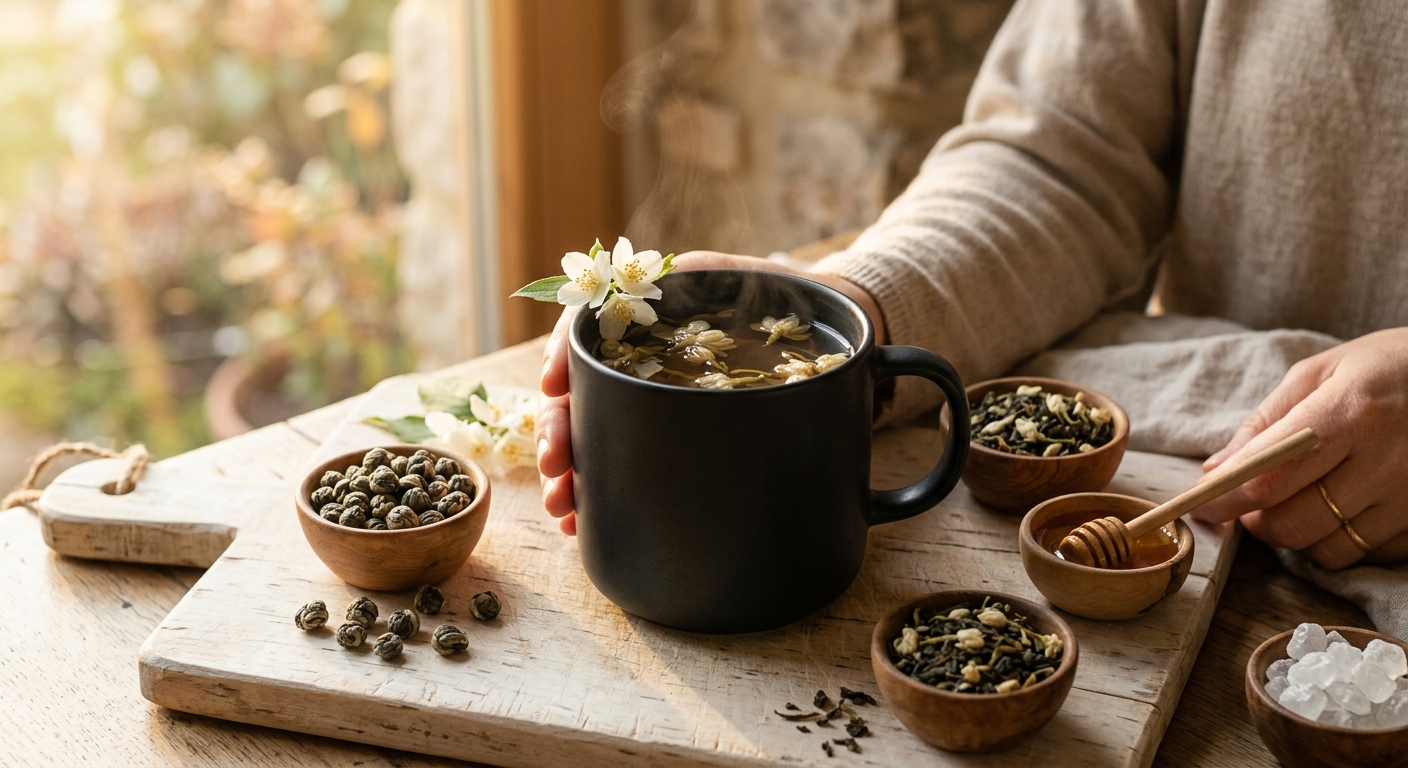
Few teas capture the imagination quite like jasmine tea. For over a thousand years, artisans in China’s Fujian province have practiced the delicate art of scenting green tea leaves with freshly harvested jasmine blossoms, a process repeated layer by layer across several nights until the leaves are saturated with the flower’s intoxicating perfume. The result is a tea that is both a sensory ritual and a gentle act of self-care, beloved by emperors, poets, and everyday tea drinkers alike. In traditional Chinese culture, jasmine symbolizes purity, grace, and feminine warmth, and gifting jasmine tea was considered an expression of deep respect and affection.
The tea’s roots stretch back to the Song Dynasty (960 to 1279 CE), when flower-scented teas became fashionable among the Chinese elite. By the Ming Dynasty, jasmine scenting had become a refined craft, with producers developing multi-stage scenting methods that preserved the fleeting fragrance of the bloom. Jasmine tea eventually traveled the Silk Road into Persia, the Middle East, and later into European drawing rooms, where it earned a devoted following among those seeking a softer, more aromatic alternative to plain green tea. Today, it remains one of the most widely consumed teas in the world, cherished equally for its taste and its therapeutic qualities.
What sets jasmine tea apart from other herbal and botanical blends is the beautiful synergy between its base and its botanical additions. Traditional jasmine tea uses a green tea base such as Dragon Well or Bai Hao Yinzhen, though modern versions may use white, oolong, or black tea as a carrier. The jasmine flowers themselves contribute linalool, a calming terpene also found in lavender, along with a constellation of aromatic compounds that work on the nervous system to ease tension and elevate mood. Whether you are winding down after a long day or seeking a mindful morning ritual, jasmine tea offers something rare: beauty and benefit in a single cup.
2
cups
Ingredients
- 2 tspjasmine tea pearls or loose jasmine green tea
- 480 mlwater (80°C / 176°F)
- —raw honey or rock sugar to taste (optional)
- —fresh jasmine blossoms for garnish (optional)
How to Brew
Click on an item below to shop for the recommended items for this recipe on Amazon.
As an Amazon Associate, we earn from qualifying purchases.
- Heat filtered water to 78 to 82°C (172 to 180°F). If using a standard kettle, bring water to a boil and allow it to rest uncovered for 4 to 5 minutes to reach the correct temperature. Avoid boiling water directly on the leaves.
- Warm your teapot or mug by rinsing it with a small amount of hot water, then discarding it. This stabilizes the vessel temperature and protects the delicate aromatics from dissipating too quickly on contact with a cold surface.
- Measure 1 teaspoon of jasmine tea pearls or loose jasmine green tea per 240 ml of water. Place the leaves in your infuser or directly into a gaiwan. If using pearls, watch them slowly unfurl as they steep – this is part of the ritual.
- Pour the heated water gently over the leaves in a slow, circular motion. Cover the vessel immediately to trap the volatile aromatic compounds released on contact with the water.
- Steep for 2 to 3 minutes. Begin tasting at the 2-minute mark. Remove the infuser or strain promptly, as jasmine green tea turns astringent quickly if left too long. Add honey or rock sugar if desired and sip immediately while the aroma is at its peak.
- Measure 3 teaspoons of jasmine tea pearls or loose jasmine green tea per 480 ml of cold, filtered water. Cold brewing requires a higher leaf-to-water ratio than hot brewing because the extraction rate is significantly slower at low temperatures.
- Combine the tea leaves and cold water in a clean glass jar or pitcher. Stir gently to ensure all leaves are fully submerged. Do not use warm or hot water at any stage, as this will accelerate extraction unevenly and introduce bitterness.
- Seal the jar or cover the pitcher loosely with a lid or plastic wrap. Place it in the refrigerator and allow the tea to steep for 8 to 12 hours, or overnight. For a lighter floral cup, check at 8 hours. For a more concentrated jasmine flavor, allow the full 12 hours.
- Once steeping is complete, strain the tea through a fine mesh strainer or cheesecloth into a clean serving vessel, removing all leaves. Pour over ice into glasses and garnish with fresh jasmine blossoms if available. This cold brew keeps well refrigerated for up to 48 hours.
- Fill a large, clean glass jar with 960 ml of cold filtered water. Add 4 teaspoons of jasmine tea pearls or loose jasmine green tea. If you have access to fresh or dried jasmine blossoms, add a small handful directly to the jar for an intensified floral character.
- Seal the jar with a lid and place it in a sunny outdoor spot or on a south-facing windowsill. The jar should receive direct sunlight for most of the steeping period. The goal is gentle warmth, not intense heat, which would cook the leaves and produce off-flavors.
- Allow the tea to steep in the sun for 2 to 4 hours. Check the color periodically. The brew should develop a soft golden hue. Avoid steeping beyond 4 hours, as warmer ambient temperatures can encourage bacterial growth and over-extraction.
- Once the tea has reached a pale amber color and the aroma is pleasingly floral, bring the jar inside. Strain through a fine mesh strainer into a clean pitcher. Taste for sweetness and add honey if desired. Serve immediately over ice, or refrigerate promptly and consume within 24 hours for both safety and peak flavor.
Health Benefits
The combination of linalool from jasmine blossoms and L-theanine from the green tea base creates a dual-action calming effect. Linalool modulates GABA receptors similarly to anti-anxiety compounds, while L-theanine raises serotonin and dopamine levels, easing psychological tension without causing drowsiness.
Inhaling jasmine’s aromatic volatile compounds, particularly benzyl acetate and linalool, activates the limbic system through olfactory pathways, producing a documented mood-lifting and mildly euphoric response. A study published in the European Journal of Applied Physiology found that jasmine aroma significantly increased positive emotional states and reduced feelings of low mood.
The catechins in jasmine green tea, particularly EGCG, have been associated with reduced LDL cholesterol oxidation, lower blood pressure, and improved endothelial function in multiple clinical studies. Regular consumption of green tea has been linked to a reduced risk of cardiovascular disease in large-scale epidemiological research.
Jasmine tea delivers a potent combination of catechins, quercetin, and other polyphenols that neutralize free radicals and reduce systemic oxidative stress. This antioxidant activity supports cellular health, healthy aging, and may reduce the risk of chronic inflammation-related conditions.
Traditional Chinese medicine has long used jasmine tea to soothe digestive discomfort, and modern research supports this use. The anti-inflammatory compounds in both jasmine and green tea can calm gut inflammation, reduce bloating, and support healthy gut microbiota diversity.
🧪 Key Bioactive Compounds
The Science Behind Jasmine
The calming properties of jasmine tea arise from a beautifully coordinated interplay between the aromatic compounds of the jasmine blossom and the bioactive molecules found in its green tea base. Linalool, the primary terpene responsible for jasmine’s signature scent, has been shown in multiple studies to interact with GABA-A receptors in the brain, producing anxiolytic effects that are comparable in mechanism, though far milder in magnitude, to pharmaceutical anxiolytics. Because linalool is absorbed both through inhalation via olfactory pathways and through oral ingestion, simply inhaling the steam from a freshly brewed cup can begin to activate calming neurological responses even before the first sip is taken.
The green tea base contributes one of the most well-researched calming compounds in the plant world: L-theanine. This unique amino acid, found almost exclusively in the Camellia sinensis plant, promotes alpha brain wave activity, the relaxed but alert mental state associated with meditation and focused calm. L-theanine achieves this by increasing levels of GABA, serotonin, and dopamine in the brain, effectively softening the nervous system’s stress response without impairing cognitive function. Importantly, L-theanine works synergistically with the moderate caffeine content in green tea to produce a state of calm alertness rather than either jitteriness or sedation, a balance that makes jasmine green tea particularly suitable for daytime stress management.
Beyond its immediate calming effects, jasmine tea’s rich polyphenol content, including EGCG, quercetin, and a broad spectrum of flavonoids, provides long-term neuroprotective and anti-inflammatory benefits. EGCG has demonstrated the ability to reduce the production of cortisol, the body’s primary stress hormone, by modulating hypothalamic-pituitary-adrenal axis activity. Chronic high cortisol is associated with anxiety disorders, poor sleep quality, and accelerated cognitive decline, making regular jasmine tea consumption a potentially meaningful lifestyle tool for managing the physiological impact of chronic stress. While jasmine tea is not a substitute for medical treatment of anxiety disorders, the convergence of its aromatic and polyphenolic compounds makes it one of the most scientifically coherent botanical options in the stress and anxiety category.
Brewing Tips
- Never use boiling water for jasmine green tea. Temperatures above 85°C scorch the tender green tea leaves, destroying delicate aromatic compounds and producing a harsh, bitter cup. Always let boiled water cool for 4 to 5 minutes or use a temperature-controlled kettle set to 80°C.
- High-quality jasmine tea pearls can be steeped 2 to 3 times, with each infusion revealing a slightly different aromatic and flavor profile. The second steep is often considered the most balanced, as the initial bitterness has been rinsed away and the full jasmine fragrance has time to fully express itself.
- Store your jasmine tea in an airtight, opaque container away from heat, light, and strong odors. Because jasmine tea’s appeal lies entirely in its volatile aromatic compounds, improper storage causes the fragrance to fade rapidly. A sealed tin in a cool cupboard will preserve the floral intensity for up to 12 months.