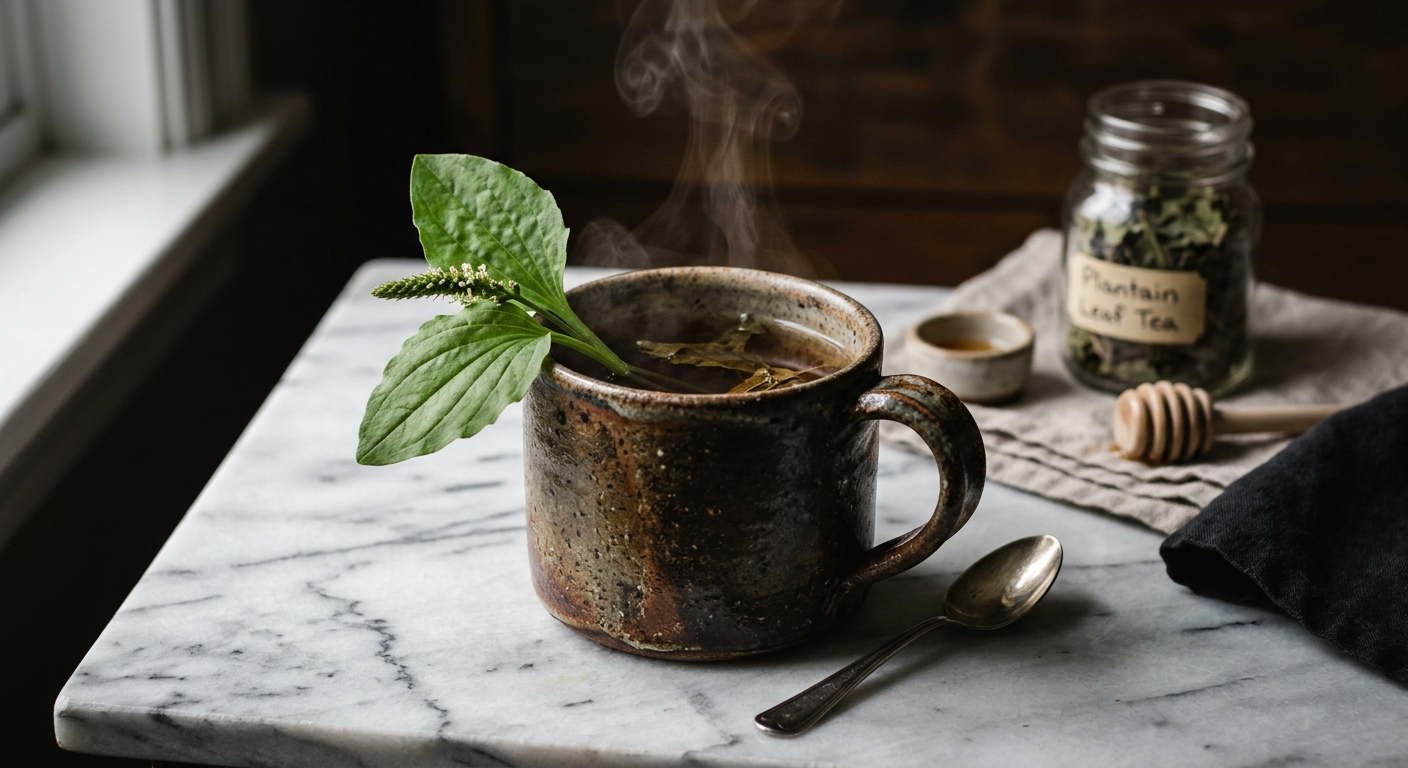
Long before modern medicine lined pharmacy shelves, plantain leaf was considered one of the most indispensable herbs in the healer’s toolkit. Known in Old English as waybread and celebrated in the Anglo-Saxon Nine Herbs Charm as one of the most powerful plants of all, Plantago major has traveled with human civilization for millennia. Because its seeds readily clung to the boots and wagon wheels of European settlers, Indigenous peoples of North America came to call it White Man’s Footprint, a name that speaks to both its resilience and its uncanny ability to appear wherever people have walked.
In traditional European herbalism, plantain leaf was applied topically to wounds, insect bites, and skin inflammation, and taken internally as a tea for coughs, digestive upset, and urinary complaints. Ayurvedic and Traditional Chinese Medicine practitioners similarly recognized its cooling, demulcent nature, using it to calm excess heat and soothe inflamed mucous membranes throughout the body. Its near-universal presence across folk medicine traditions on multiple continents is a testament to how accessible and effective this unassuming roadside plant truly is.
What makes plantain leaf tea so remarkable is its gentle versatility. Whether you are dealing with a nagging cough, a leaky gut, acid reflux, or a sluggish digestive system, plantain’s mucilaginous fiber coats and protects irritated tissue while its flavonoid content works to reduce underlying inflammation. The tea brews to a pale, slightly earthy cup with a mild grassy undertone, making it easy to drink daily without any of the bitterness associated with stronger medicinal herbs. For anyone looking to rebuild gut integrity or find natural respiratory support, plantain leaf tea is an excellent and time-honored starting point.
2
cups
Ingredients
- 2 tbspdried plantain leaf (Plantago major or Plantago lanceolata)
- 480 mlwater (95°C / 203°F)
- —raw honey to taste (optional)
- —fresh lemon slice (optional)
How to Brew
Click on an item below to shop for the recommended items for this recipe on Amazon.
As an Amazon Associate, we earn from qualifying purchases.
- Bring filtered water to 90 to 95°C (194 to 203°F). Avoid a full rolling boil, which can degrade some of plantain’s delicate flavonoids. An electric kettle with temperature control is ideal.
- Place 1 tablespoon of dried plantain leaf per 240 ml of water into a tea infuser, muslin bag, or directly into a teapot. For a standard two-serving pot, use 2 tablespoons of herb.
- Pour the hot water over the plantain leaf and cover the cup or teapot immediately with a lid or small plate. This traps the volatile aromatic compounds and retains heat for a more consistent steep.
- Steep for 10 to 15 minutes. The longer end of this range will extract more mucilage and produce a slightly thicker, more soothing texture. You may notice the liquid becomes marginally viscous, which is a sign of successful mucilage extraction.
- Strain the tea thoroughly, pressing gently on the spent leaves to release any remaining liquid. Serve in a warmed mug and add a drizzle of raw honey or a squeeze of lemon if desired. Drink while still warm for best digestive effect.
- Add 2 tablespoons of dried plantain leaf to a clean glass jar or pitcher. For a more concentrated brew suited to gut-soothing protocols, increase to 3 tablespoons per 480 ml of water.
- Pour room-temperature filtered water over the herbs. Do not use warm or hot water for this method, as the goal is a slow, cold extraction that maximizes mucilage content and minimizes any potential bitterness.
- Stir gently to ensure all the dried leaf is submerged and saturated. Secure the lid on the jar or cover the pitcher with a clean cloth or plastic wrap.
- Place the jar in the refrigerator and allow it to steep for 8 to 12 hours. Overnight is the most convenient schedule. The cold water will slowly draw out the mucilaginous polysaccharides and flavonoids without heat degradation.
- In the morning, strain the cold brew through a fine mesh strainer or cheesecloth, pressing gently on the leaf material. The resulting liquid should be pale golden green with a noticeably smooth, slightly coating texture. Drink chilled, over ice, or allow to come to room temperature before consuming.
- Add 2 to 3 tablespoons of dried plantain leaf to a small stainless steel or enamel saucepan. Avoid aluminum cookware, which can react with the tannins in the herb and introduce an off-flavor.
- Pour 600 ml of cold filtered water over the herb. Starting with cold water allows a gradual temperature increase that helps draw out a broader range of plant compounds compared to adding herb to already-hot water.
- Place the saucepan over medium-low heat and bring the water to a gentle simmer. Do not allow the liquid to reach a full rolling boil, as this will degrade the more delicate flavonoids and volatile aromatic compounds. Aim for small, lazy bubbles at the surface.
- Reduce heat to low and allow the decoction to simmer gently, uncovered, for 20 to 25 minutes. The liquid will reduce slightly and deepen to a warm amber-green color. Stir occasionally to prevent any herb from settling and scorching on the bottom of the pan.
- Remove from heat and allow to cool for 3 to 5 minutes. Strain through a fine mesh strainer into a mug, pressing firmly on the spent herb to recover all the thick, mucilage-rich liquid. Sweeten with raw honey if desired and sip slowly. The resulting tea will be noticeably fuller-bodied and more medicinally concentrated than a standard infusion.
Health Benefits
Plantain’s mucilaginous polysaccharides coat the gastrointestinal mucosa with a protective layer that reduces irritation from acid, pathogens, and inflammatory compounds. Combined with allantoin’s cell-proliferating activity, regular consumption may support repair of the gut lining in conditions like leaky gut syndrome, gastritis, and irritable bowel syndrome.
The flavonoids luteolin and aucubin both work through complementary anti-inflammatory pathways to reduce the production of pro-inflammatory cytokines in the gut. Several in vitro and animal studies have demonstrated plantain’s ability to downregulate NF-kB and COX-2 activity, two key drivers of chronic gut inflammation.
Plantain’s mucilage coats the bronchial and throat tissues just as it does the gut, reducing irritation and suppressing the cough reflex. Plantaginin has demonstrated expectorant properties in research, helping to thin and clear mucus from the airways, making plantain leaf tea a traditional and scientifically supported remedy for dry, irritating coughs and mild respiratory congestion.
Tannins and aucubin in plantain leaf have demonstrated inhibitory activity against a range of bacteria and viruses in laboratory studies, including some strains associated with gut infections and upper respiratory illness. While not a replacement for medical treatment, regular consumption may support the body’s defenses during cold and flu season.
The soluble fiber from plantain’s mucilage acts as a mild prebiotic, feeding beneficial gut bacteria and helping to regulate bowel motility. This makes plantain leaf tea useful for both constipation and loose stools, as the mucilage helps normalize gut transit and stool consistency over time.
🧪 Key Bioactive Compounds
The Science Behind Plantain Leaf
The therapeutic activity of plantain leaf tea is primarily driven by two complementary mechanisms: mucosal protection through mucilaginous polysaccharides and cellular anti-inflammation through iridoid glycosides and flavonoids. The mucilaginous compounds, which are best extracted through cold brew or long hot infusions, form a hydrophilic gel in contact with water and mucous membranes. This gel creates a physical barrier over irritated tissue in the esophagus, stomach, and intestines, reducing direct contact between damaged cells and irritants such as stomach acid, food antigens, and microbial toxins. This is the same mechanism that makes marshmallow root and slippery elm so effective for gut repair, and plantain occupies a similar category of demulcent herbs.
Aucubin, the primary iridoid glycoside in both Plantago major and Plantago lanceolata, has been the subject of growing scientific interest. Studies published in journals including the Journal of Ethnopharmacology and Phytomedicine have demonstrated aucubin’s capacity to suppress NF-kB activation, a master regulatory pathway that controls the expression of dozens of pro-inflammatory genes. By inhibiting this pathway, aucubin reduces the downstream production of TNF-alpha, IL-6, and IL-1beta, cytokines that play central roles in conditions ranging from inflammatory bowel disease to systemic inflammation. Luteolin, a flavonoid also present in meaningful quantities in plantain leaf, provides complementary antioxidant support by neutralizing reactive oxygen species that drive oxidative damage to gut epithelial cells.
The respiratory benefits of plantain leaf are supported by research into plantaginin, a flavonoid glycoside that has demonstrated bronchodilatory and expectorant properties in pharmacological studies. Plantaginin appears to relax bronchial smooth muscle and stimulate the movement of cilia lining the airway, facilitating the clearance of mucus and reducing the frequency of irritant-driven coughing. Allantoin, another notable compound in plantain, is well established in dermatological research for its ability to accelerate keratinocyte proliferation and tissue regeneration. Applied internally through tea consumption, allantoin may extend these regenerative properties to the gut mucosa, supporting the healing of microabrasions and erosions that can develop in conditions like leaky gut syndrome and mild gastric ulceration.
Brewing Tips
- Source your plantain leaf from a certified organic supplier or harvest your own from pesticide-free areas, as plantain readily absorbs soil contaminants and roadside pollutants. Avoid harvesting from roadsides, parks treated with herbicides, or lawns that receive chemical fertilizers.
- For gut-healing protocols, drink plantain leaf tea 20 to 30 minutes before meals. This timing allows the mucilaginous compounds to coat and protect the stomach lining before food and stomach acid arrive, maximizing the herb’s protective effect on the gut mucosa.
- Fresh plantain leaves can be used in place of dried at a ratio of roughly 3 tablespoons of fresh leaf to 1 tablespoon of dried. Bruise or roughly tear fresh leaves before steeping to help release their cellular compounds into the water.