Corydalis (Corydalis yanhusuo) has been treasured in Traditional Chinese Medicine since at least the eighth century, where it was classified as a herb to move the blood, dispel stagnation, and ease pain. Known in Chinese as Yan Hu Suo, it appears prominently in classical texts including the Bencao Gangmu, the great pharmacopoeia compiled by Li Shizhen during the Ming Dynasty. Practitioners prescribed it for everything from menstrual cramping and chest tightness to traumatic injury and insomnia rooted in chronic pain. Unlike many traditional herbs whose reputations outpace their pharmacology, corydalis has attracted serious scientific attention, and modern researchers have largely confirmed what Chinese physicians observed centuries ago.
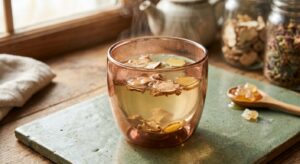
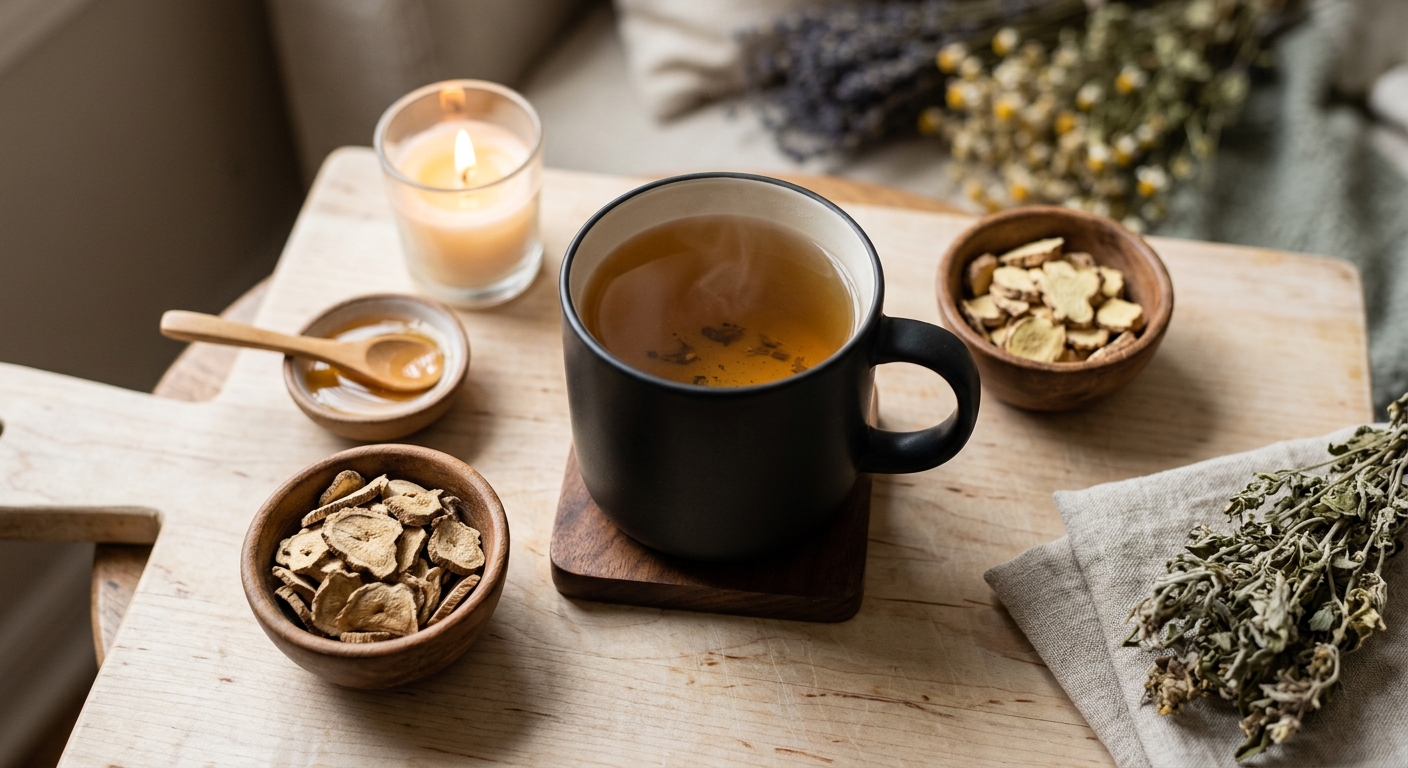
The medicine lives in the small, knotted tuber that grows just beneath the soil, harvested in spring or autumn when alkaloid concentrations peak. The root is typically dried and sliced, revealing a bright yellow-gold interior that hints at its rich alkaloid content. When steeped as a tea, those compounds dissolve readily into hot water, producing a drink that is unmistakably bitter and earthy, with a warm, slightly numbing quality on the tongue. This is not a tea for casual sipping the way chamomile might be. It is a purposeful, medicinal preparation best taken with clear intent: to calm a restless nervous system, ease physical discomfort, and invite genuine rest.
In contemporary Western herbalism, corydalis has gained a devoted following among people seeking plant-based alternatives for pain management and sleep difficulty, particularly those whose insomnia is driven by chronic discomfort rather than anxiety alone. It occupies a rare category among herbs, offering both analgesic and sedative action in a single preparation, qualities that make it especially valuable in the evening hours when body tension and a busy mind conspire against sleep. Brewed correctly and respected as the potent medicine it is, corydalis tea can be a profound ally for the body seeking rest and relief.
2
cups
Ingredients
- 6 gdried corydalis tuber slices (Yan Hu Suo)
- 480 mlwater
- 1 tspraw honey or coconut sugar (optional, to temper bitterness)
- —a few slices of fresh ginger (optional, to warm the preparation)
How to Brew
Click on an item below to shop for the recommended items for this recipe on Amazon.
As an Amazon Associate, we earn from qualifying purchases.
- Measure 6 grams of dried corydalis tuber slices per 480 ml of filtered water. If using whole slices, lightly crush them with the back of a spoon to increase surface area and improve alkaloid extraction.
- Combine the corydalis pieces and water in a small stainless steel or ceramic saucepan. If adding fresh ginger slices, place them in the pot now.
- Bring the water to a full boil over medium heat, then immediately reduce the flame to low so the liquid maintains a gentle, active simmer with small bubbles breaking the surface. Avoid a vigorous rolling boil, which can degrade heat-sensitive compounds.
- Simmer uncovered for 20 to 30 minutes. The liquid will reduce slightly and deepen to a rich amber color. Check occasionally and add a small splash of hot water if the liquid reduces below 350 ml total.
- Remove from heat and allow to cool for 3 to 5 minutes. Strain through a fine mesh strainer into a mug, pressing the solids gently to extract remaining liquid.
- Taste before sweetening. If bitterness is intense, stir in a small amount of raw honey or coconut sugar. Sip slowly and deliberately, ideally 30 to 60 minutes before sleep or when pain relief is needed.
- Grind or finely crush 8 grams of dried corydalis tuber slices using a mortar and pestle or the flat side of a heavy knife. Finer particles compensate for the lack of heat in the extraction process.
- Place the crushed corydalis into a clean glass jar with a tight-fitting lid. Pour in 500 ml of filtered water at room temperature. Do not use chilled water for this initial phase, as room temperature water begins extraction more effectively.
- Stir well to ensure all particles are fully submerged. Cover loosely and allow to sit at room temperature for 2 hours, stirring once at the one-hour mark.
- After the room-temperature phase, seal the jar and transfer it to the refrigerator. Allow to steep for a further 10 to 12 hours, or overnight.
- When ready to serve, strain the cold brew through a fine mesh strainer lined with cheesecloth or a coffee filter to remove fine particles. Press the solids firmly to recover all liquid.
- Pour over ice or serve chilled. Because the cold brew is less concentrated than the decoction, drink the full 480 to 500 ml serving as a single session. A small amount of honey or a squeeze of lemon brightens the flavor without masking the herb’s character.
- Combine 18 grams of dried corydalis tuber slices with 1 liter of filtered water in a medium stainless steel or clay saucepan. Optionally add 4 to 5 slices of fresh ginger for digestive support and flavor balance.
- Bring to a full boil over medium heat, then reduce to a steady low simmer. The goal is a slow, controlled reduction over 45 to 60 minutes that concentrates the alkaloid content into a smaller volume of liquid.
- Simmer uncovered, stirring occasionally. After 45 to 60 minutes, the liquid should have reduced to approximately 300 to 350 ml of a rich, dark amber concentrate. Adjust the heat as needed to prevent scorching on the bottom of the pot.
- Remove from heat and allow to cool to room temperature. Strain through a fine mesh strainer, pressing solids firmly to recover all liquid. Discard the spent root material.
- Transfer the concentrate to a clean glass jar with a lid. Store in the refrigerator for up to 5 days. Label with the preparation date.
- To serve, dilute one portion of approximately 50 to 60 ml of concentrate with 150 to 180 ml of hot water. Stir well and sweeten lightly if desired. One batch of concentrate yields approximately 5 to 6 servings, making nightly use highly convenient.
Health Benefits
Tetrahydropalmatine and dehydrocorydaline interact with opioid, dopamine, and adrenergic receptors to modulate pain perception. A 2014 study in Current Biology confirmed that l-THP activates GABA-A receptors in the brain to produce genuine analgesic effects, making corydalis one of the most pharmacologically credible herbal pain relievers available.
The sedative action of l-THP is well documented in both animal and early human studies, with the compound shown to reduce sleep latency, the time it takes to fall asleep, and increase total sleep duration without the grogginess associated with pharmaceutical sedatives. This makes corydalis tea particularly valuable for pain-disrupted sleep.
By modulating dopaminergic signaling and binding to GABA receptors, tetrahydropalmatine produces a calming effect on an overactive nervous system. Traditional Chinese Medicine specifically used corydalis for what it described as liver qi stagnation presenting as irritability, tension, and restless sleep.
Coptisine, berberine, and protopine collectively suppress pro-inflammatory cytokine production and inhibit cyclooxygenase activity, providing systemic anti-inflammatory effects that may support relief from conditions like arthritis, menstrual pain, and musculoskeletal tension.
Protopine’s calcium channel blocking activity and the collective smooth-muscle relaxant properties of the corydalis alkaloid complex help ease cramping, whether in the gastrointestinal tract, uterus, or skeletal muscle, making the tea useful for tension-related discomfort across the body.
🧪 Key Bioactive Compounds
The Science Behind Corydalis
The pharmacological story of corydalis centers on tetrahydropalmatine, more specifically its levorotatory form known as l-THP or levo-tetrahydropalmatine. Researchers at the University of California, Irvine, published a landmark 2014 study in the journal Current Biology demonstrating that l-THP simultaneously activates dopamine D1 receptors and GABA-A receptors while blocking D2 receptors, a combined mechanism that results in both analgesia and sedation. Crucially, it also showed partial agonism at mu-opioid receptors without triggering the same reward circuitry associated with opioid dependency. This multi-receptor engagement distinguishes corydalis from most herbal analgesics, which tend to work through a single pathway. The compound appears to be particularly effective for inflammatory and neuropathic pain, two categories poorly served by many plant medicines.
Berberine and coptisine, also present in meaningful concentrations in the dried root, contribute anti-inflammatory effects through inhibition of nuclear factor kappa B (NF-kB), a signaling protein central to the body’s inflammatory cascade. By suppressing NF-kB activity, these alkaloids reduce the production of prostaglandins and pro-inflammatory interleukins, explaining why corydalis has historically been applied to conditions involving heat, swelling, and chronic pain. Protopine adds another dimension by acting as a calcium channel modulator, reducing smooth muscle excitability and contributing to the herb’s antispasmodic reputation. The alkaloids appear to work synergistically, with the full root extract showing greater efficacy in some studies than isolated l-THP alone, supporting the traditional preference for whole-herb preparations over standardized extracts.
The sedative mechanism is also worth examining in detail because it differs fundamentally from herbs like valerian, which primarily work through GABA pathways, or melatonin, which works through circadian rhythm signaling. Corydalis modulates the dopaminergic system in a way that reduces arousal state and quiets the reward circuitry that often keeps pain-affected individuals in a state of hypervigilance. This is why the herb is particularly effective when sleep disruption is driven by chronic discomfort or tension rather than anxiety alone. Animal studies have shown reductions in sleep latency of up to 50 percent with l-THP administration, and increases in non-REM sleep duration, the restorative sleep phase most often disrupted by pain. While large-scale human clinical trials remain limited, the mechanistic evidence and long clinical history in TCM provide a compelling foundation for corydalis tea as a serious sleep and pain-relief intervention.
Brewing Tips
- Always use a kitchen scale rather than volume measures for corydalis root. Dense dried slices vary significantly in weight per tablespoon, and getting the dose right matters more with this herb than with milder teas.
- The bitterness of corydalis is a sign of its alkaloid content and should not be suppressed with excessive sweetener. A small amount of raw honey or a few slices of dried orange peel during simmering is sufficient to make the tea palatable without dulling its medicinal character.
- Drink corydalis tea on an empty stomach or at least one hour after a meal for optimal alkaloid absorption. Food, particularly high-fat meals, can slow the uptake of isoquinoline alkaloids and reduce the tea’s effectiveness.