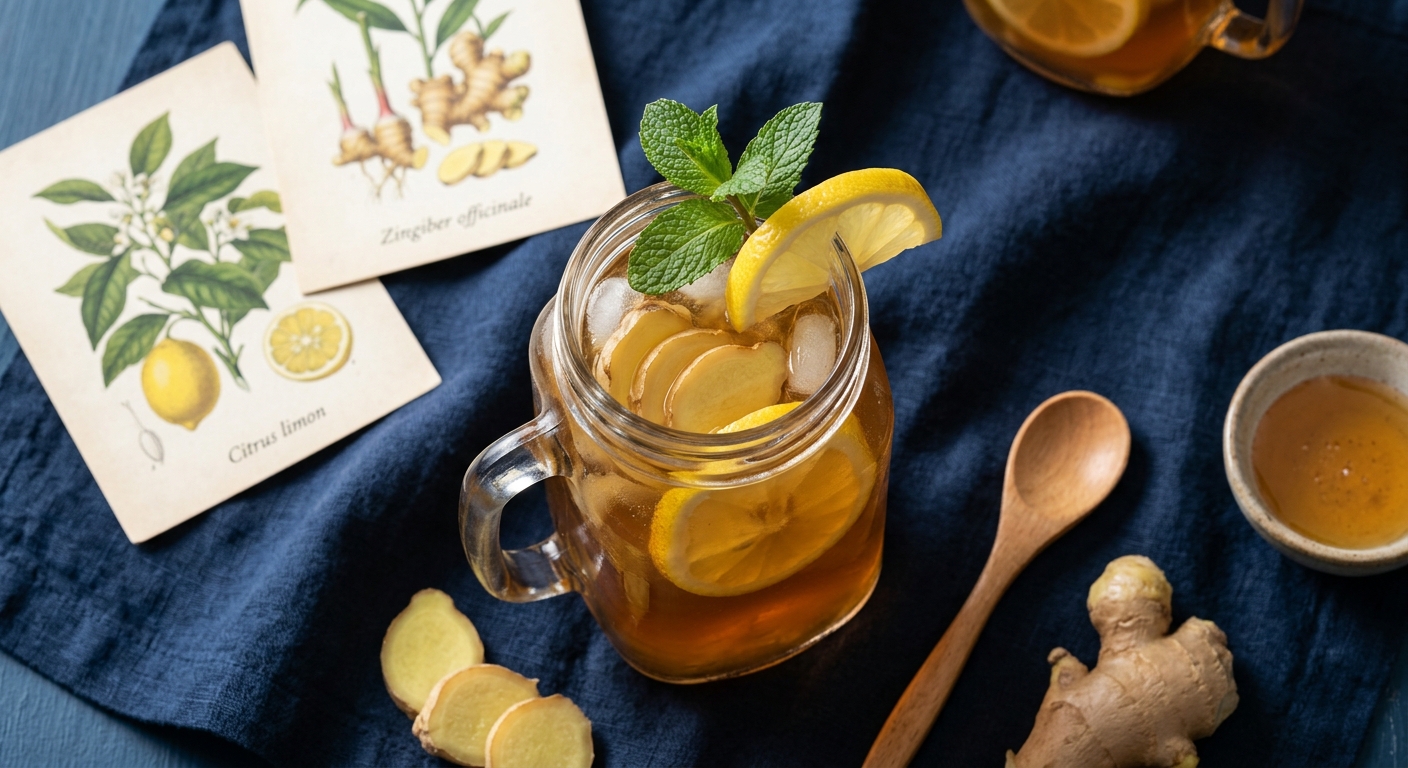
Few herbal combinations are as universally beloved or as deeply rooted in traditional medicine as lemon and ginger. Ginger (Zingiber officinale) has been cultivated and used medicinally for over 5,000 years, appearing in Ayurvedic, Chinese, and Greek healing traditions as a remedy for nausea, inflammation, and respiratory ailments. Lemon, prized since ancient times across the Mediterranean and Middle East, was carried by sailors to prevent scurvy and prescribed by physicians as a tonic for digestion and vitality. Together, they form a partnership that is greater than the sum of its parts.
The appeal of lemon and ginger tea goes beyond its impressive health credentials. There is something deeply comforting about the ritual of preparing it: the sharp, spicy fragrance of freshly sliced ginger filling your kitchen, the bright citrus oils releasing as you squeeze a wedge of lemon into a warm cup. It is the kind of drink that feels medicinal without tasting like medicine, offering a lively, warming heat from the ginger balanced by the clean tartness of lemon. Traditional Chinese medicine has long classified ginger as a warming herb that expels cold and dampness from the body, making it the quintessential cold-season companion.
Modern research has begun to validate what healers have known for millennia. Ginger’s key bioactive compounds, particularly gingerols and shogaols, demonstrate measurable anti-inflammatory and antiviral activity in clinical studies. Lemon contributes vitamin C and a suite of flavonoids that amplify immune response and protect cells from oxidative stress. Whether you are warding off a seasonal cold, recovering from one, or simply looking for a vibrant daily tonic, this tea delivers on both flavor and function.
2
cups
Ingredients
- 20 gfresh ginger root, peeled and thinly sliced (about 6 to 8 slices)
- 1 wholelemon, juice freshly squeezed (plus slices for garnish)
- 500 mlwater (95°C / 203°F)
- —raw honey or maple syrup to taste (optional)
- —pinch of cayenne pepper for extra heat (optional)
How to Brew
Click on an item below to shop for the recommended items for this recipe on Amazon.
As an Amazon Associate, we earn from qualifying purchases.
- Peel a 3 to 4 cm piece of fresh ginger root and slice it into thin coins, approximately 3 to 4 mm thick. Thinner slices increase the surface area and extract more flavor and active compounds.
- Place the ginger slices directly into a small saucepan or heat-resistant teapot. Pour 500 ml of water heated to just below boiling (95 to 100°C) over the ginger.
- Cover and steep for 8 to 10 minutes. For a more intense, medicinal brew, allow up to 15 minutes. The liquid will deepen slightly in color and the spice will become more pronounced.
- Strain the ginger from the liquid using a fine mesh strainer and pour into two mugs. Squeeze the juice of half a lemon into each mug and stir well.
- Taste before sweetening. If desired, stir in raw honey or maple syrup while the tea is still hot so it dissolves fully. Add a lemon slice to each mug as a garnish and serve immediately.
- Peel and slice 25 g of fresh ginger into thin rounds. Because cold water extracts more slowly, slightly more ginger is used than in the hot brew to achieve the same depth of flavor.
- Slice the entire lemon into rounds (do not juice it). Adding whole lemon slices rather than juice allows the pith and zest to slowly infuse the water with their oils and flavonoids over the long steep, producing a more complex citrus flavor.
- Combine the ginger slices and lemon rounds in a clean glass jar. Pour 500 ml of cold, filtered water over the ingredients and stir gently.
- Leave the jar at room temperature for 1 hour to begin extraction, then seal and transfer to the refrigerator. Steep for a total of 8 to 12 hours. Overnight steeping is ideal.
- Strain out the ginger and lemon slices through a fine mesh strainer. Taste and add honey or agave syrup, stirring well. Serve over ice in tall glasses with a fresh lemon slice.
- Peel and roughly chop or grate 30 g of fresh ginger root. Grating rather than slicing dramatically increases surface area and yields a stronger, more concentrated brew suited to this method.
- Combine the grated ginger with 600 ml of cold water in a small saucepan. Starting in cold water rather than hot allows the cell walls of the root to open gradually, releasing a fuller spectrum of compounds.
- Bring the water to a gentle simmer over medium heat, then reduce to low. Simmer uncovered for 15 to 20 minutes, allowing the liquid to reduce by roughly 15 to 20 percent and concentrate in flavor and potency.
- Remove from heat and allow to cool for 2 minutes. Strain through a fine mesh strainer into mugs, pressing the ginger pulp with the back of a spoon to extract every last drop.
- Stir in the freshly squeezed juice of one lemon and sweeten with raw honey to taste. Optionally, add a small pinch of cayenne pepper and a pinch of turmeric to create a full cold-relief tonic. Sip slowly while warm.
Health Benefits
The combination of vitamin C from lemon and gingerols from ginger works synergistically to stimulate white blood cell production and activity. A 2013 clinical study found that regular ginger consumption measurably enhanced immune response markers in healthy adults.
6-Gingerol and 6-shogaol inhibit the synthesis of pro-inflammatory prostaglandins and cytokines, including TNF-alpha and IL-1beta. Multiple human trials have demonstrated that consistent ginger intake produces clinically significant reductions in inflammatory biomarkers.
Ginger’s warming, antimicrobial compounds help relax the smooth muscle of the airways and reduce throat irritation, while the steam from a hot brew helps open nasal passages. Traditional Ayurvedic medicine has used ginger-lemon preparations specifically for this purpose for thousands of years.
Ginger accelerates gastric emptying and reduces intestinal cramping by acting on 5-HT3 receptors in the gut. It is one of the most rigorously studied natural remedies for nausea, with evidence supporting its effectiveness for morning sickness, motion sickness, and chemotherapy-induced nausea.
Both lemon and ginger are rich in antioxidants that neutralize free radicals and reduce oxidative stress, a key driver of chronic disease and immune suppression. Vitamin C from lemon also regenerates other antioxidants, including vitamin E, amplifying this protective effect.
🧪 Key Bioactive Compounds
The Science Behind Ginger
The therapeutic reputation of ginger and lemon tea is firmly grounded in phytochemistry. Ginger’s most studied bioactive compounds are the gingerols, particularly 6-gingerol, which are abundant in fresh root. These phenolic compounds inhibit the enzyme cyclooxygenase-2 (COX-2), the same target as ibuprofen, explaining ginger’s well-documented anti-inflammatory and analgesic effects. When ginger is heated or dried, gingerols dehydrate and transform into shogaols, which are structurally similar but measurably more potent in antiviral and antinausea activity. This chemistry is why a stovetop decoction using heated ginger produces a noticeably more intense medicinal effect than a cold brew.
Lemon’s contribution to this blend is more than acidic flavor. Vitamin C (ascorbic acid) is essential for the synthesis and function of neutrophils and lymphocytes, the frontline cells of the immune system. Deficiency in vitamin C directly impairs immune response, and supplementation during illness has been shown to reduce the duration and severity of common cold symptoms in multiple meta-analyses. Equally important is hesperidin, a flavonoid concentrated in the lemon’s white pith and zest. Hesperidin demonstrates antiviral activity against several respiratory viruses and enhances the stability of vitamin C, helping it perform its immune-supporting role more effectively. This is why using whole lemon slices in the cold brew, rather than just juice, produces a more nutritionally complete infusion.
The synergy between ginger and lemon is not accidental from a biochemical perspective. Ginger’s sesquiterpenes, including zingiberene and beta-sesquiphellandrene, have demonstrated direct antiviral activity against rhinoviruses (the primary cause of the common cold) in laboratory studies. When paired with lemon’s limonene and hesperidin, both of which support mucosal immune barriers, the combination addresses immunity at multiple levels simultaneously: reducing the inflammatory damage of illness, inhibiting viral replication, and stimulating the body’s own defensive cells. This is why traditional healers across so many cultures independently arrived at the same remedy long before the science existed to explain it.
Brewing Tips
- Use fresh ginger root rather than ground powder whenever possible. Fresh root contains higher concentrations of 6-gingerol, which partially converts to the more potent 6-shogaol during heating. Ground ginger has already undergone this conversion and lacks the bright, volatile aromatics of fresh root.
- Always add fresh lemon juice after brewing rather than steeping it in hot water. Prolonged heat degrades vitamin C significantly. For the hot brew and decoction methods, squeeze lemon directly into your mug just before drinking to preserve the most nutritional value.
- Store leftover cold brew in a sealed glass jar in the refrigerator for up to 3 days. The flavor actually improves after 24 hours as the ginger and lemon oils continue to meld. Give it a gentle shake and re-strain if you notice any cloudiness before serving.