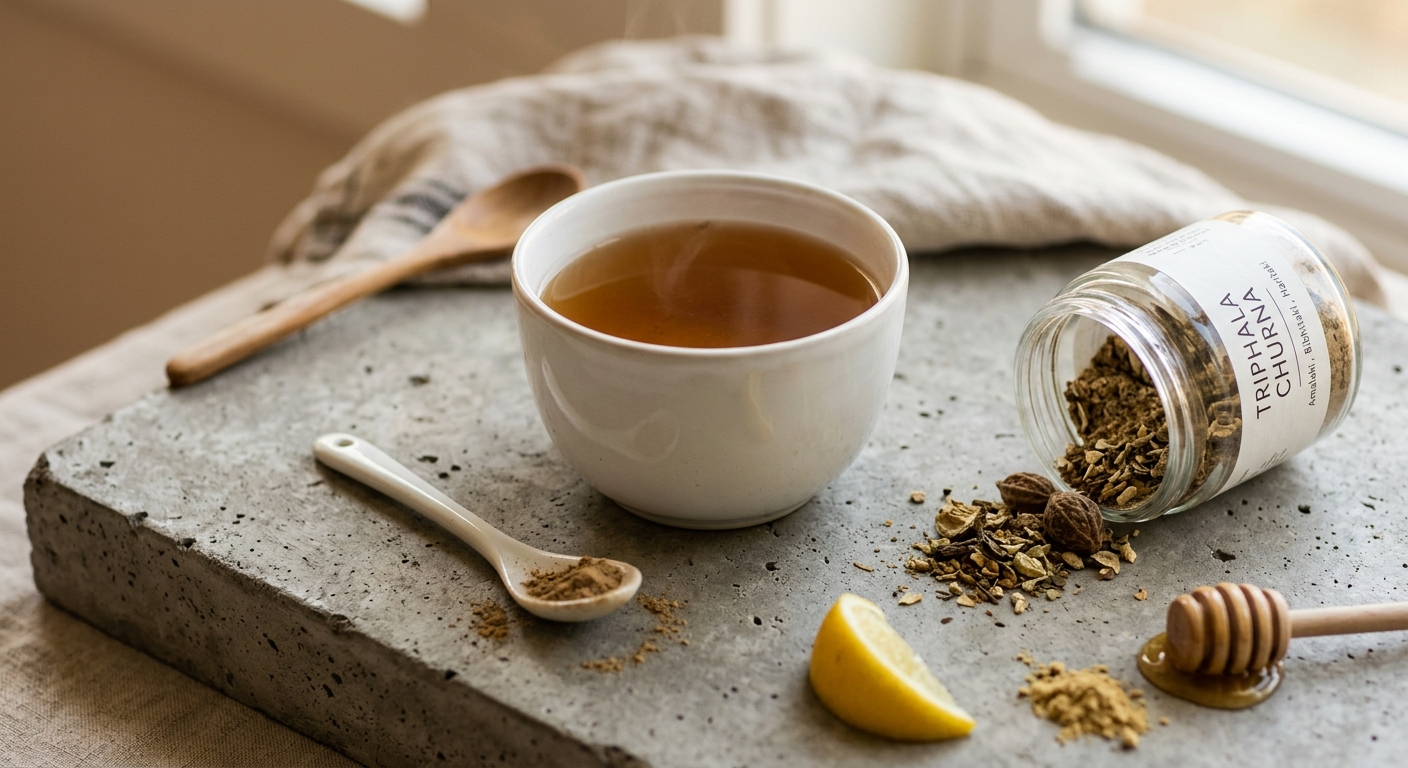
Few herbal preparations carry the depth of history and clinical curiosity that Triphala does. A cornerstone of Ayurvedic medicine for more than three millennia, Triphala literally translates from Sanskrit as ‘three fruits,’ referring to the dried powders of Amalaki (Emblica officinalis), Bibhitaki (Terminalia bellirica), and Haritaki (Terminalia chebula). Together, these three fruits form a synergistic blend that Ayurvedic practitioners have long prescribed to balance all three doshas, gently cleanse the digestive tract, and restore metabolic harmony. Ancient texts including the Charaka Samhita describe Triphala as a rasayana, a rejuvenating tonic capable of promoting longevity when taken consistently over time.
Each fruit in the trio brings its own character. Amalaki, one of the richest plant sources of vitamin C, is cooling and nourishing, traditionally used to calm inflammation and support liver function. Bibhitaki is considered the most astringent of the three, prized for its cleansing action on the respiratory and digestive systems. Haritaki, sometimes called the ‘king of medicines’ in Tibetan herbalism, is warming and mildly laxative, stimulating peristalsis and promoting thorough elimination. When brewed together as a tea, these three fruits produce a complex, layered cup that is simultaneously bitter, astringent, sour, and faintly sweet, a flavor profile that reflects its broad-spectrum action on the body.
Modern research has begun to validate what Ayurvedic physicians observed long ago. Studies have highlighted Triphala’s prebiotic properties, its ability to modulate the gut microbiome, and its impressive antioxidant load, largely driven by polyphenols like gallic acid, ellagic acid, and chebulinic acid. Unlike harsh herbal laxatives such as senna, Triphala works gently and progressively, supporting bowel regularity without dependency or cramping. Whether you are new to Ayurvedic herbs or returning to a long-standing practice, brewing Triphala as a tea is one of the most direct and effective ways to experience its benefits.
2
cups
Ingredients
- 1 tspTriphala powder (or 1.5 tsp crushed Triphala churna)
- 240 mlwater (95°C / 203°F)
- —raw honey to taste (optional, added after cooling slightly)
- —pinch of ground ginger (optional, to support digestion)
- —squeeze of fresh lemon juice (optional, enhances absorption of polyphenols)
How to Brew
Click on an item below to shop for the recommended items for this recipe on Amazon.
As an Amazon Associate, we earn from qualifying purchases.
- Bring filtered water to 90 to 95°C (194 to 203°F). Avoid a full rolling boil, which can degrade some of the heat-sensitive polyphenols and make the brew more harshly bitter.
- Measure 1 teaspoon of Triphala powder per 240 ml of water into a small saucepan or heatproof vessel. If using whole or coarsely crushed Triphala churna, increase to 1.5 teaspoons per cup.
- Pour the hot water directly over the Triphala powder and stir well to disperse. Because Triphala is a powder, it will not fully dissolve but will remain suspended in the water.
- Cover the vessel and allow to steep for 10 to 15 minutes. A longer steep extracts more bitter tannins and polyphenols, which enhances its gut-stimulating effect but intensifies bitterness.
- Strain through a fine-mesh sieve or a folded piece of muslin cloth into your mug, pressing gently to extract all liquid from the sediment.
- Allow to cool to around 60°C before adding raw honey, as high heat destroys honey’s beneficial enzymes. Add a pinch of ground ginger or a squeeze of lemon if desired, then drink slowly.
- Measure 1 teaspoon of Triphala powder per 240 ml of cold filtered water into a clean glass jar or pitcher. For a batch serving two, use 2 teaspoons in 480 ml of water.
- Stir the powder into the cold water vigorously for 30 to 60 seconds until as evenly dispersed as possible. The powder will settle over time, which is normal.
- Cover the jar with a lid or a piece of cloth secured with a rubber band. Leave it at room temperature for the first hour to allow initial extraction, then transfer to the refrigerator.
- Refrigerate for a total of 8 to 12 hours, or overnight. The slow, cool extraction gently draws out polyphenols and prebiotic compounds while leaving behind some of the harsher tannins that hot water rapidly dissolves.
- Before straining, stir or gently swirl the jar to redistribute the settled sediment. Strain through a fine-mesh sieve lined with muslin into a glass, pressing to extract all liquid.
- Serve chilled over ice or at room temperature. A slice of fresh lemon and a small drizzle of honey complement the smoother, fruitier notes of a cold-brewed Triphala well.
- Combine 2 teaspoons of coarse Triphala churna or roughly broken dried Triphala fruit pieces with 480 ml of cold filtered water in a small stainless steel or ceramic saucepan.
- Place the saucepan over medium heat and bring the mixture slowly to a gentle boil, stirring occasionally. Once boiling, reduce the heat to a low, steady simmer.
- Simmer uncovered for 15 to 20 minutes, stirring every few minutes. The liquid should reduce by roughly one third, concentrating to approximately 320 ml. This reduction is a hallmark of the kashayam method and intensifies both flavor and potency.
- Watch the heat carefully throughout. The liquid should simmer, not aggressively boil, to prevent scorching the powder and creating an excessively bitter brew.
- Remove from heat and allow to cool for 3 to 5 minutes. Strain through a fine-mesh sieve or muslin cloth into two small cups, pressing the spent herb material firmly to recover all liquid.
- Serve the decoction warm and plain, as Ayurvedic tradition recommends. If the bitterness is challenging, a small piece of rock candy (mishri) or a thin slice of fresh ginger root added during simmering can round out the flavor without undermining the therapeutic intention.
Health Benefits
Triphala’s tannins, particularly chebulinic acid from Haritaki, stimulate peristaltic movement without causing dependency or cramping, making it one of the few herbal laxatives considered safe for longer-term use. A 2011 randomized controlled trial published in the Journal of Ayurveda and Integrative Medicine found significant improvement in constipation symptoms compared to placebo after four weeks of Triphala use.
In vitro and animal studies have shown that Triphala polyphenols selectively promote the growth of beneficial gut bacteria, including Bifidobacterium and Lactobacillus species, while suppressing pathogenic organisms. This prebiotic activity positions Triphala as a gut microbiome modulator rather than simply a laxative.
Gallic acid, ellagic acid, and chebulagic acid work synergistically to reduce pro-inflammatory cytokines in the gut mucosa, which may benefit individuals with irritable bowel syndrome or mild inflammatory bowel conditions. Research published in Evidence-Based Complementary and Alternative Medicine highlights Triphala’s inhibition of NF-kB, a key driver of intestinal inflammation.
Triphala consistently ranks among the highest-scoring herbs in oxygen radical absorbance capacity (ORAC) testing, largely due to its dense concentration of hydrolysable tannins and Amalaki’s emblicanin compounds. This antioxidant load helps protect intestinal cells from oxidative damage associated with a poor diet, stress, and aging.
Multiple studies have found that Triphala slows the absorption of dietary sugars by inhibiting alpha-glucosidase and alpha-amylase enzymes in the digestive tract, a mechanism similar to certain pharmaceutical diabetes medications. A 2019 clinical study noted that Triphala supplementation improved fasting blood glucose and HbA1c levels in type 2 diabetic participants alongside standard care.
🧪 Key Bioactive Compounds
The Science Behind Triphala
Triphala’s therapeutic reputation rests on a remarkably dense concentration of hydrolysable tannins, a class of polyphenols that differ structurally from the condensed tannins found in green tea or grape skins. When these tannins, primarily gallic acid, ellagic acid, and their glycosidic precursors such as chebulagic acid and punicalagin, reach the large intestine, they are metabolized by resident gut bacteria into smaller bioactive molecules called urolithins. Urolithins have attracted significant scientific interest for their anti-inflammatory, antioxidant, and even anti-aging properties at the cellular level, and Triphala is one of the richest known dietary sources of their precursors.
The prebiotic dimension of Triphala is one of its most compelling and underappreciated properties. A 2017 study published in the journal Scientific Reports demonstrated that Triphala extract selectively enhanced the growth of Bifidobacterium and Lactobacillus species in simulated gut fermentation models while simultaneously reducing populations of pathogenic bacteria. This selectivity is thought to arise from the structural complexity of Triphala’s tannins, which beneficial bacteria can ferment but many harmful bacteria cannot metabolize efficiently. This makes Triphala fundamentally different from simple dietary fiber prebiotics, as it appears to exert a more targeted modulatory effect on microbial ecology.
Amalaki’s contribution of emblicanin A and B deserves particular attention. Unlike isolated ascorbic acid, these tannoid-vitamin C complexes appear to resist oxidation at elevated temperatures and in the acidic environment of the stomach, providing a more stable and sustained antioxidant effect. Research has shown that Amalaki extracts maintain measurable antioxidant activity even after heating, which is relevant to understanding why hot-brewed Triphala tea retains meaningful therapeutic value despite the presence of heat-labile compounds. Taken together, Triphala’s bioactivity is not the result of a single dominant compound but of a synergistic network of polyphenols acting across multiple pathways simultaneously, a complexity that makes it difficult to replicate with isolated supplements.
Brewing Tips
- Start with half a teaspoon of Triphala powder per cup if you are new to this herb. The astringency and mild laxative effect can be strong for first-time users, and building up gradually over one to two weeks allows your digestive system to adjust comfortably.
- For maximum gut benefit, drink Triphala tea on an empty stomach. The classical Ayurvedic timing is either 30 minutes before breakfast or at least two hours after your evening meal, when the digestive tract is clear and absorption of polyphenols is most efficient.
- Store your Triphala powder in an airtight glass container away from light and moisture. The tannins oxidize gradually upon exposure to air, and a noticeably bitter or stale smell compared to a freshly opened batch is a sign that potency has declined and the powder should be replaced.