Few plants hold as exalted a place in Ayurvedic medicine as Guduchi, botanically known as Tinospora cordifolia. Called ‘Amrita’ in Sanskrit, meaning divine nectar or the root of immortality, this climbing shrub has been woven into Indian healing traditions for more than three thousand years. Ancient Ayurvedic texts including the Charaka Samhita and Sushruta Samhita describe Guduchi as a tridoshic herb, meaning it harmonizes all three doshas, Vata, Pitta, and Kapha, making it one of the most versatile and celebrated plants in the entire Ayurvedic pharmacopeia. Healers have long prescribed it to combat fevers, support recovery from chronic illness, and restore vitality to a depleted constitution.
Guduchi is a tropical vine native to the Indian subcontinent, thriving across India, Myanmar, and Sri Lanka, where it often grows up the trunks of Neem and Mango trees. This relationship is more than botanical convenience. Ayurvedic practitioners believe Guduchi absorbs the medicinal properties of its host tree, and Guduchi grown on Neem is considered especially potent for its bitter, detoxifying qualities. The stems are the most commonly used part for tea, rich in starchy alkaloids and polysaccharides that give the brew its characteristic slightly bitter, earthy taste and its legendary therapeutic depth. The stems are often dried, powdered, or sliced for use, and even fresh stem pieces can be simmered into a warming decoction.
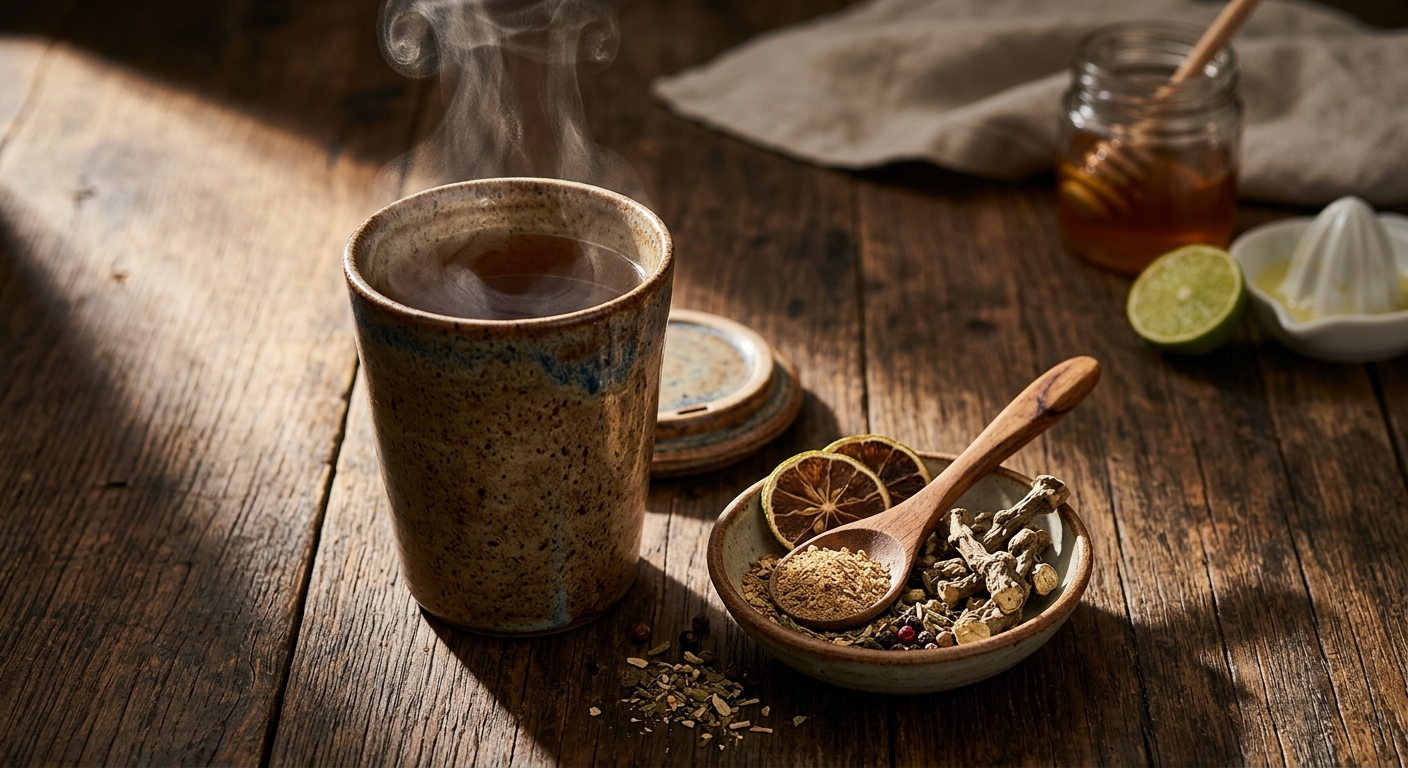
In modern herbalism, Guduchi has attracted considerable scientific attention, particularly for its immunomodulatory and adaptogenic properties. Research has explored how its bioactive compounds stimulate immune cell activity, moderate inflammatory pathways, and help the body adapt to physical and environmental stress. During cold and flu season, or simply as a daily tonic for sustained wellness, a cup of Guduchi tea offers a direct line to one of humanity’s oldest and most trusted plant medicines. Its flavor is earthy and gently bitter with a subtle sweetness, best appreciated alongside a touch of honey and a squeeze of lime.
2
cups
Ingredients
- 2 tspdried guduchi stem powder or crushed dried stem pieces
- 480 mlwater (95°C / 203°F)
- —raw honey to taste (optional)
- —squeeze of fresh lime juice (optional)
- —pinch of black pepper (optional, enhances absorption)
How to Brew
Click on an item below to shop for the recommended items for this recipe on Amazon.
As an Amazon Associate, we earn from qualifying purchases.
- Measure 1 teaspoon of dried guduchi stem powder or 2 to 3 small crushed stem pieces per cup. For two servings, use 2 teaspoons of powder or 4 to 5 stem pieces in a saucepan or teapot.
- Heat filtered water to just below a rolling boil, around 90 to 95°C (194 to 203°F). Avoid using a full boil for powdered guduchi as it can make the brew overly bitter, though stem pieces can tolerate a brief boil.
- Pour the hot water over the guduchi in your teapot or infuser, or add the guduchi directly to the hot water in a small saucepan. Cover with a lid to trap volatile compounds and steep for 10 to 15 minutes.
- Strain carefully through a fine mesh strainer or muslin cloth into your mug. Guduchi powder can be very fine, so a double strain is helpful for a clearer brew.
- Add raw honey and a squeeze of lime juice if desired. A small pinch of black pepper is a traditional addition that enhances the bioavailability of guduchi’s active compounds. Sip while warm.
- Use 1 tablespoon of dried guduchi stem pieces (roughly chopped or broken) per 480 ml of cold filtered water. For a more potent therapeutic brew, use up to 1.5 tablespoons. Place the stem pieces and cold water together in a small stainless steel or ceramic saucepan.
- Bring the mixture to a full boil over medium-high heat, stirring once or twice. Once boiling, reduce the heat to a gentle simmer.
- Simmer uncovered for 20 to 30 minutes, allowing the liquid to reduce by roughly one third. This concentration step is key to extracting the polysaccharides, alkaloids, and bitter glycosides locked within the woody stem fibers. The brew will deepen to a warm olive-amber color.
- If desired, add a small slice of fresh ginger and a 1-inch piece of cinnamon stick in the final 10 minutes of simmering. Both are traditional Ayurvedic additions that complement guduchi and support immune and digestive function.
- Remove from heat and allow to cool for 3 to 5 minutes. Strain through a fine mesh strainer or cheesecloth into mugs, pressing the stems gently to extract remaining liquid.
- Sweeten with raw honey only after the brew has cooled slightly (honey should not be added to boiling liquids in Ayurvedic tradition). Add lime juice if desired and drink warm as a morning or evening tonic.
- Use 1.5 teaspoons of fine guduchi stem powder per 240 ml of cold filtered water, or 3 teaspoons for two full servings. Place the powder directly into a clean glass jar with a lid.
- Add cold filtered water at room temperature (not iced). Stir the mixture thoroughly for 30 to 60 seconds to fully suspend the powder or rehydrate the stem pieces. This initial mixing at room temperature helps begin the extraction process before refrigeration.
- Cover the jar with its lid and leave at room temperature for 2 hours to begin extraction. Then transfer the jar to the refrigerator and allow to cold brew for an additional 8 to 12 hours, ideally overnight.
- Remove the jar from the refrigerator. Stir once more, then strain the liquid slowly through a fine mesh strainer lined with a cheesecloth or coffee filter into a pitcher or glasses. Cold-brewed guduchi powder requires patient straining as the fine particles settle slowly.
- Serve over ice in tall glasses. Squeeze in fresh lime juice and sweeten with a small amount of honey or agave syrup. A few fresh mint leaves make a pleasant garnish and add a cooling finish to the earthy, mellow brew.
Health Benefits
Guduchi is best known in both traditional and modern medicine as an immunomodulator. Multiple studies have shown that its polysaccharides and alkaloids activate macrophages, increase white blood cell counts, and stimulate natural killer cell activity, helping the body mount a more effective defense against infections while preventing excessive immune responses.
Guduchi has been used in Ayurveda as a powerful antipyretic for millennia, and modern pharmacological research supports this use. Tinosporine and other alkaloids inhibit prostaglandin-mediated fever pathways, helping to bring down high temperatures and reduce the systemic inflammation associated with acute infections and colds.
Classified as a Rasayana herb in Ayurveda, Guduchi helps the body adapt to physical, chemical, and psychological stressors. Animal studies and clinical observations suggest it normalizes cortisol levels and reduces stress-induced immunosuppression, making it particularly valuable during periods of high workload or seasonal illness vulnerability.
Guduchi has demonstrated hepatoprotective properties in several preclinical studies, with its antioxidant compounds helping to shield liver cells from toxin-induced damage. Traditional Ayurvedic medicine prescribed it specifically for liver ailments, jaundice, and supporting the body’s detoxification processes after illness or medication use.
The herb contains a broad spectrum of antioxidants including magnoflorine and beta-sitosterol that neutralize reactive oxygen species. Regular consumption may help reduce cumulative oxidative stress, which is linked to chronic inflammation, immune decline, and accelerated aging.
🧪 Key Bioactive Compounds
The Science Behind Guduchi
Guduchi’s most celebrated biological activity is its ability to modulate the immune system in a bidirectional way, meaning it can both stimulate an underactive immune response and temper an overactive one. This is largely attributed to its arabinogalactan polysaccharides, which bind to surface receptors on macrophages and dendritic cells, triggering increased production of cytokines such as interleukin-1 (IL-1), interleukin-6 (IL-6), and tumor necrosis factor-alpha (TNF-alpha). These signaling molecules amplify the recruitment and activation of immune cells at sites of infection or injury. Simultaneously, alkaloids like tinosporine appear to inhibit the excessive inflammatory cascade that can lead to tissue damage during severe illness, helping to explain Guduchi’s historical reputation for supporting recovery from both acute and chronic disease states.
The adaptogenic profile of Guduchi is supported by research into its effects on the hypothalamic-pituitary-adrenal (HPA) axis. Studies in animal models have shown that Guduchi extracts reduce stress-induced elevations in serum cortisol and prevent the associated decline in immune function. This normalization of the stress response places Guduchi in the company of other Rasayana herbs like Ashwagandha and Shatavari, all of which help preserve immune competence during periods of physiological or psychological strain. The presence of tinosporaside and other clerodane diterpenoids is believed to play a role in this adaptogenic mechanism, though full human clinical trials are still an active area of research.
Guduchi’s antioxidant capacity has also been quantified in laboratory settings, with methanol and water extracts of the stem demonstrating significant free radical scavenging activity comparable in some assays to well-known antioxidants. The alkaloid magnoflorine contributes meaningfully to this activity, as does beta-sitosterol through its inhibition of pro-inflammatory arachidonic acid pathways. These overlapping mechanisms, immune stimulation, anti-inflammation, antioxidant protection, and HPA modulation, collectively explain why Ayurvedic physicians have for centuries regarded Guduchi as a whole-body tonic rather than a single-action remedy. Modern integrative medicine is increasingly arriving at the same conclusion, with Guduchi now featured in clinical research exploring its applications in fever management, metabolic health, and post-infection recovery.
Brewing Tips
- Always source Guduchi from a reputable Ayurvedic herb supplier that provides botanical authentication. Tinospora cordifolia is occasionally confused with or adulterated by related species, and quality varies significantly between suppliers.
- If using dried stem pieces rather than powder, lightly crush them with a mortar and pestle before brewing to increase the surface area exposed to water, which significantly improves extraction of polysaccharides and alkaloids.
- Drink Guduchi tea on an empty stomach in the morning for maximum absorption of its bitter compounds and immunomodulatory polysaccharides. A 20 to 30 minute window before breakfast is the traditional Ayurvedic recommendation for Rasayana herbs.