As we age, the digestive system undergoes gradual but meaningful changes. Gastric acid production often declines, intestinal motility slows, and the microbiome shifts in ways that can make bloating, gas, constipation, and post-meal discomfort far more common than they were in younger years. For centuries, herbalists across Europe, Asia, and the Middle East have turned to a core trio of botanicals to address exactly these challenges: ginger root for warming stimulation, fennel seed for carminative relief, and chamomile flower for its antispasmodic and anti-inflammatory properties. This combination is not accidental – it reflects generations of careful observation and refinement in plant medicine traditions around the world.
Ginger has been a cornerstone of Ayurvedic and Traditional Chinese Medicine digestive protocols for over 2,000 years, prized for its ability to stimulate digestive enzymes and encourage gastric emptying. Fennel, revered in ancient Roman and Greek traditions, was commonly prescribed to elderly patients specifically because it gently softens the gut environment without harsh stimulation. Chamomile, cultivated in Egypt and used extensively in European folk medicine, became a staple remedy for the cramping and nervous stomach tension that so often accompanies digestive sluggishness in older adults. Together, these three herbs create a layered, full-spectrum digestive formula that is both gentle enough for daily use and effective enough to provide real relief.
What makes this blend particularly well suited to elderly drinkers is its gentleness. Unlike many commercial digestive aids, which can irritate the gut lining or interact with medications, this herbal trio works synergistically to support the body’s natural digestive processes rather than overriding them. The warming spice of ginger is balanced by the cool sweetness of fennel, while chamomile smooths the edges of both, producing a cup that is as pleasant to drink as it is beneficial. Whether enjoyed after a heavy meal, before bed to ease overnight bloating, or as a gentle morning digestive ritual, this tea offers older adults a trusted, time-honored tool for gut comfort and vitality.
2
cups
Ingredients
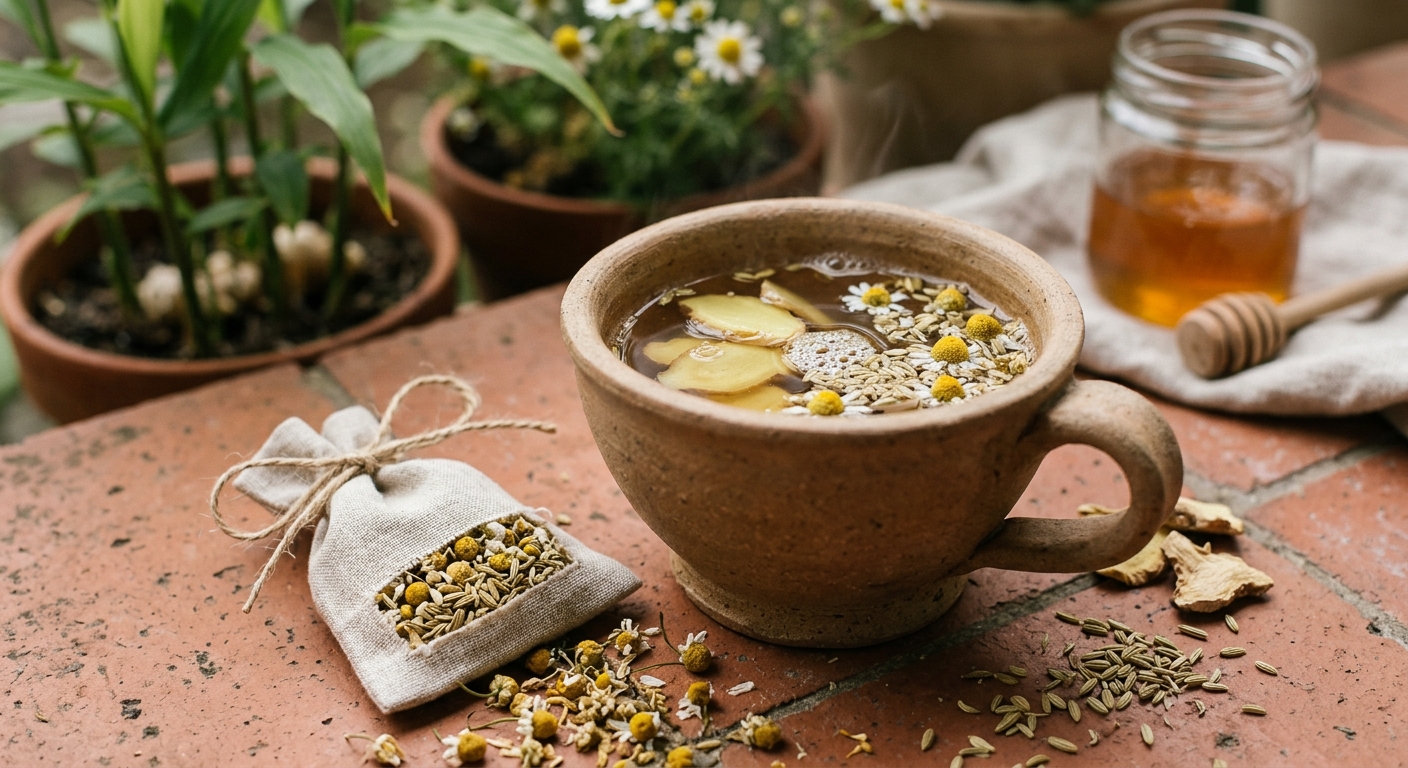
- 1 tspfresh ginger root, thinly sliced (or 0.5 tsp dried ginger)
- 1 tspdried fennel seeds, lightly crushed
- 1 tspdried chamomile flowers
- 480 mlwater (90 to 95°C / 194 to 203°F)
- —raw honey or a small slice of lemon to taste (optional)
How to Brew
Click on an item below to shop for the recommended items for this recipe on Amazon.
As an Amazon Associate, we earn from qualifying purchases.
- Place the fennel seeds in a mortar and pestle or between two spoons and crush them lightly – just enough to crack them open and release their aromatic oils. Do not grind them to a powder.
- If using fresh ginger root, slice it into thin coins, approximately 3 to 4 slices per serving. If using dried ginger, measure 0.5 tsp per serving.
- Add the crushed fennel seeds, ginger slices, and dried chamomile flowers to a tea infuser, a tea pot with a built-in strainer, or directly into a mug if you plan to strain afterward.
- Heat water to 90 to 95°C (194 to 203°F). If you do not have a temperature-controlled kettle, bring water to a full boil and allow it to rest for 60 to 90 seconds before pouring.
- Pour the hot water over the herbs and steep for 7 to 10 minutes. A longer steep (closer to 10 minutes) will produce a more intense, spicier cup with stronger ginger heat. A shorter steep (7 minutes) gives a milder, more floral result suitable for very sensitive stomachs.
- Remove the infuser or strain the tea into a mug. Allow it to cool for 1 to 2 minutes before drinking. Add honey or a squeeze of lemon if desired, and sip slowly with or after a meal.
- Lightly crush the fennel seeds using a mortar and pestle or the back of a spoon, then combine them with the ginger slices and chamomile flowers in a clean glass jar.
- Pour cold, filtered water (room temperature is fine) over the herbs, using approximately 500 ml of water for a two-serving batch. Stir gently to ensure all herbs are submerged.
- Place a lid or a small plate on top of the jar to prevent any absorption of refrigerator odors, and allow the jar to rest at room temperature for 30 minutes so the initial extraction can begin before chilling.
- Transfer the jar to the refrigerator and allow it to steep for 8 to 12 hours, or overnight. The cold extraction process draws out the sweeter, more delicate aromatic compounds while leaving behind much of the sharp spice that heat releases from ginger.
- After steeping, strain the tea through a fine mesh strainer or a piece of cheesecloth into a pitcher or directly into glasses. Discard the spent herbs.
- Serve over ice if desired, or drink chilled straight from the refrigerator. This cold-brewed version keeps well for up to 24 hours when stored in a sealed container in the refrigerator.
- Add 600 ml of cold, filtered water to a small saucepan. Place the ginger slices and lightly crushed fennel seeds directly into the cold water. Starting in cold water allows for a gradual, thorough extraction of the tougher plant materials as the water heats.
- Bring the water slowly to a low simmer over medium-low heat. Do not allow it to reach a rolling boil, as excessive heat can degrade some of the volatile aromatic compounds in fennel and reduce the overall flavor quality.
- Once the liquid reaches a gentle simmer with small bubbles forming at the surface, reduce the heat to low and allow the ginger and fennel to simmer uncovered for 15 to 20 minutes. You will notice the liquid deepening in color and the kitchen filling with a warm, fragrant spice aroma.
- Remove the saucepan from the heat. Add the dried chamomile flowers to the hot liquid, cover the saucepan with a lid to trap the volatile oils, and allow the chamomile to steep off the heat for an additional 5 minutes. Do not simmer the chamomile, as prolonged heat destroys its delicate apigenin content.
- Strain the finished decoction through a fine mesh strainer into a mug or teapot, pressing the spent herbs gently with the back of a spoon to extract the remaining liquid.
- Allow to cool slightly before drinking. This decoction will be noticeably stronger and more pungent than the hot brew or cold brew versions. A small amount of honey is particularly complementary here, rounding out the intensity of the ginger.
Health Benefits
Fennel’s anethole directly relaxes smooth muscle in the colon and small intestine, allowing trapped gas to pass and reducing the uncomfortable pressure and distension that many older adults experience after meals. Multiple clinical studies have confirmed fennel’s carminative efficacy, including use in infant colic research where its effects are well documented.
Ginger’s gingerols and shogaols have been shown in clinical trials to accelerate gastric emptying, addressing one of the primary age-related digestive changes: the slowing of food transit through the stomach and intestines. A 2008 study published in the European Journal of Gastroenterology and Hepatology found that ginger significantly accelerated gastric emptying compared to placebo.
Chamomile’s apigenin and bisabolol work as natural antispasmodics, reducing the involuntary muscle contractions in the intestinal wall that cause cramping, griping, and discomfort. This is particularly relevant for older adults who experience irritable bowel symptoms or post-meal cramping.
Alpha-bisabolol from chamomile, combined with the anti-inflammatory phenols in ginger, helps to calm low-grade gut inflammation. Chronic, low-level gut inflammation is increasingly recognized as a factor in age-related digestive decline, and both herbs address this at the tissue level.
Ginger has been shown to stimulate the production of saliva, bile, and gastric digestive enzymes, compensating for the natural reduction in these secretions that occurs with aging. This supports more complete nutrient absorption and reduces the undigested food residue that often contributes to gas and bloating in older adults.
🧪 Key Bioactive Compounds
The Science Behind Ginger Root
The digestive benefits of this blend are underpinned by a well-characterized set of bioactive compounds that work across multiple mechanisms simultaneously. Ginger root contains 6-gingerol as its primary active compound in fresh form, alongside shogaol in dried preparations. Both compounds interact with the 5-HT3 and NK1 receptors in the gastrointestinal tract, which govern nausea signaling and gut motility. In peer-reviewed clinical settings, ginger has consistently demonstrated the ability to accelerate gastric emptying by 25 to 50 percent compared to placebo, making it one of the most evidence-backed prokinetic herbs available. This effect directly addresses one of the primary mechanisms behind post-meal bloating and fullness in elderly individuals.
Fennel seed’s therapeutic action centers on anethole, the phenylpropanoid terpene responsible for its characteristic anise-like aroma. Anethole acts as a direct smooth muscle relaxant in the gastrointestinal tract, preventing and relieving the sustained contractions that cause gas retention and cramping. Research published in the Journal of Ethnopharmacology has confirmed fennel’s antispasmodic efficacy, and its carminative properties are among the best documented in European herbal medicine. The secondary compound fenchone adds an antimicrobial dimension, helping to manage imbalances in gut bacterial populations that can contribute to gas and fermentation-related discomfort.
Chamomile’s contribution to this blend operates primarily through apigenin, a flavonoid with a well-established affinity for the GABA-A benzodiazepine receptor. This binding produces a mild calming effect on both the central nervous system and the enteric nervous system, the complex network of neurons that governs gut function and is sometimes called the ‘second brain.’ When gut tension is reduced through GABA receptor modulation, intestinal cramping, urgency, and discomfort decrease measurably. Alpha-bisabolol, chamomile’s key terpene, adds a tissue-protective layer by reducing prostaglandin-mediated inflammation in the gut mucosa, making this blend not only symptom-relieving but also genuinely supportive of gut wall integrity over time.
Brewing Tips
- For the most effective therapeutic result, drink this tea 15 to 20 minutes after your main meal rather than during it, as this timing aligns best with the digestive phase when motility support and carminative action are most needed.
- If fresh ginger is unavailable, dried ground ginger works well but use roughly half the amount, as the drying and concentration process increases the potency of shogaols compared to fresh gingerols.
- Store any leftover cold-brewed or decocted tea in a sealed glass container in the refrigerator and consume within 24 hours for the best potency and flavor. The aromatic volatile compounds that provide much of the carminative benefit begin to dissipate after this window.