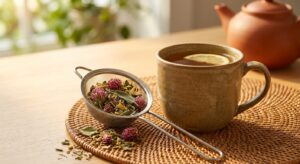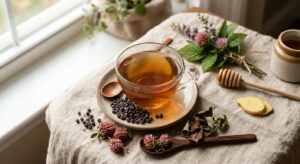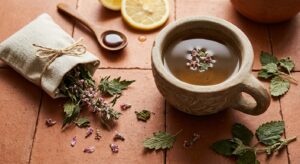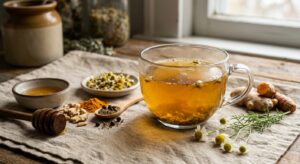
The years surrounding menopause bring profound shifts in hormonal chemistry, and one of the most significant, yet least visible, changes is the accelerated loss of bone density. Estrogen plays a critical role in regulating osteoclast activity, the cellular process that breaks down bone tissue. As estrogen levels fall, this process can outpace the body’s ability to rebuild, leaving bones more porous and fragile over time. Long before pharmaceutical interventions existed, herbalists across Europe, Asia, and the Americas turned to mineral-dense plants to nourish skeletal tissue from within.
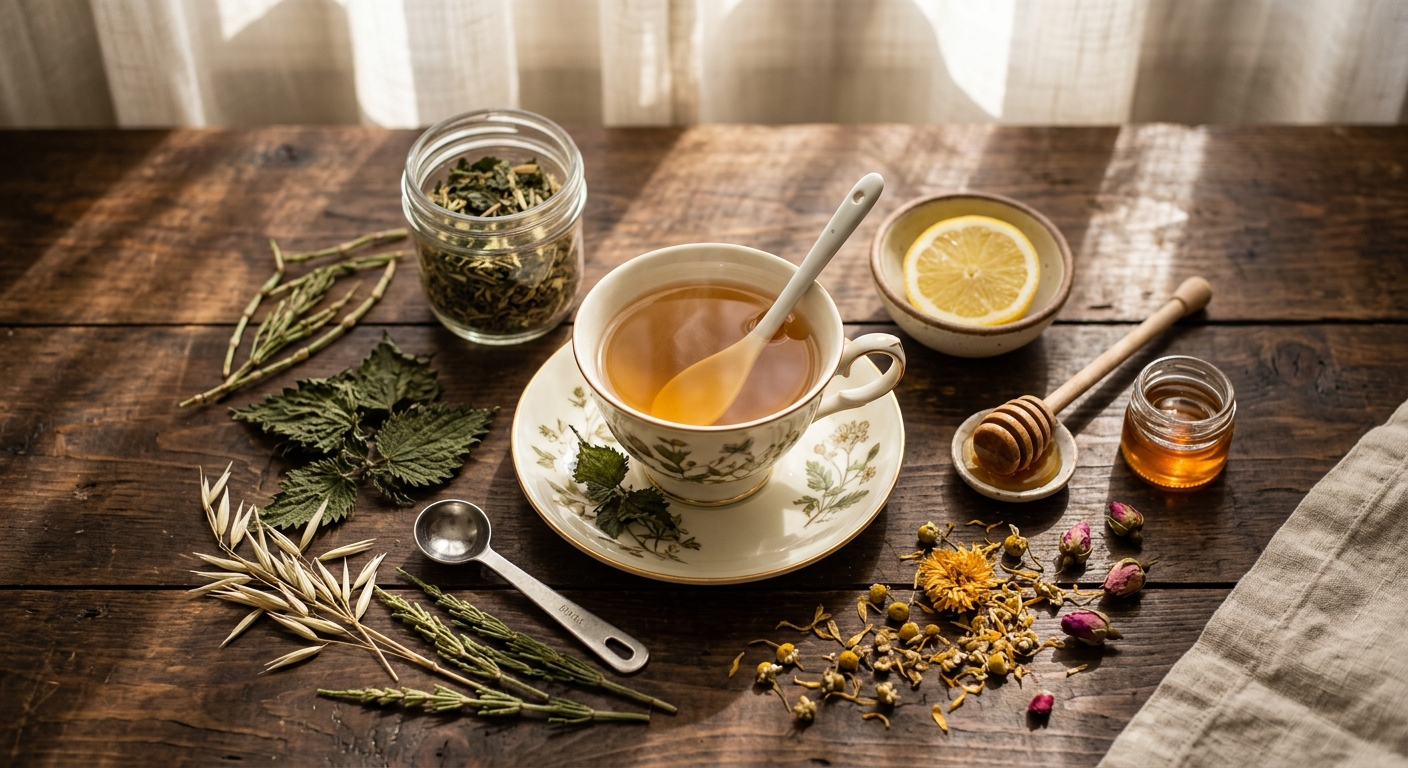
This restorative tea brings together three of the most time-honored botanicals in the Western herbal tradition for bone support: stinging nettle (Urtica dioica), oat straw (Avena sativa), and horsetail (Equisetum arvense). Nettle leaf is celebrated as one of the most bioavailable plant sources of calcium, magnesium, and vitamin K, nutrients essential for bone matrix formation. Oat straw has been used in European folk medicine for centuries as a nervous system tonic and restorative, contributing silica, flavonoids, and a gently calming quality that many menopausal women also find helpful for frayed nerves and disrupted sleep. Horsetail, a plant so ancient it predates the dinosaurs, contains some of the highest concentrations of silica found in any herb, a compound that research now links to collagen synthesis and the structural integrity of bone.
Together, these three herbs create a tea that is more than the sum of its parts. Their mineral profiles are complementary, their traditional uses are well-documented, and their combined flavor, earthy, grassy, and faintly sweet, is genuinely pleasant when prepared with care. Whether you are in perimenopause, post-menopause, or simply seeking a daily ritual that feeds your skeleton, this blend offers nourishment with deep botanical roots.
2
cups
Ingredients
- 2 tspdried nettle leaf
- 2 tspdried oat straw
- 1 tspdried horsetail herb
- 480 mlwater (95°C / 203°F)
- —raw honey or a slice of lemon to taste (optional)
How to Brew
Click on an item below to shop for the recommended items for this recipe on Amazon.
As an Amazon Associate, we earn from qualifying purchases.
- Bring 480 ml of filtered water to 95°C (203°F). Avoid a full rolling boil, as excessive heat can degrade some of the delicate flavonoids in the oat straw.
- Combine 2 tsp dried nettle leaf, 2 tsp dried oat straw, and 1 tsp dried horsetail in a tea infuser, strainer basket, or loose in a warmed teapot.
- Pour the hot water over the herbs, immediately cover the vessel with a lid or small plate to trap steam. This prevents the evaporation of volatile compounds and keeps the infusion temperature steady throughout the steep.
- Steep for a minimum of 15 minutes and up to 20 minutes. Do not rush this step. The silica, calcium, and magnesium in these herbs are released gradually, and a shorter steep will deliver a fraction of the mineral content.
- Strain thoroughly through a fine-mesh strainer into two mugs. Press the spent herbs gently with a spoon to extract any remaining liquid.
- Taste before adding anything. The tea has a pleasant mineral earthiness on its own. If desired, brighten with a squeeze of lemon, which also helps with mineral bioavailability, or sweeten lightly with raw honey.
- Measure 2 tsp dried nettle leaf, 2 tsp dried oat straw, and 1 tsp dried horsetail into a clean glass jar. For a cold brew, slightly increase the herb quantity by about 25 percent compared to the hot brew ratio, as cold water extracts more slowly.
- Pour 480 ml of cold or room-temperature filtered water directly over the herbs. Give the jar a gentle stir to ensure all plant material is submerged.
- Seal the jar with a lid and allow it to sit at room temperature for the first 1 to 2 hours, then transfer to the refrigerator for the remaining 6 to 10 hours, ideally overnight.
- After 8 to 12 hours, strain the infusion through a fine-mesh strainer or cheesecloth into a clean bottle or pitcher. Press the herbs firmly to extract all available liquid.
- Serve over ice in a tall glass. A few slices of fresh cucumber or a sprig of mint make a refreshing addition without masking the mineral character of the blend.
- Store any remaining cold brew in the refrigerator and consume within 24 hours for best flavor and potency.
- Bring 1 liter of filtered water to a full boil at 100°C (212°F). The higher temperature and larger volume are intentional here, as this method is designed to maximize mineral extraction from the tough plant cellulose of nettle and horsetail.
- Place 15 to 20 grams of dried herb into a 1-liter glass jar, using a ratio of roughly 3 parts nettle to 2 parts oat straw to 1 part horsetail. This larger herb quantity is standard for nourishing herbal infusions.
- Pour the boiling water over the herbs, filling the jar completely. Stir once to ensure all plant material is saturated, then seal tightly with a lid.
- Wrap the jar in a thick towel to insulate it and help it retain heat. Allow the infusion to steep at room temperature for a minimum of 4 hours, though 6 to 8 hours produces a richer, darker, and more mineral-dense result. Many practitioners prepare this before bed and strain it the following morning.
- Strain the infusion through a fine-mesh strainer or cheesecloth, pressing the spent herbs firmly. The resulting liquid will be a deep, dark green, noticeably thicker and more full-bodied than a standard hot brew.
- Drink 240 to 480 ml per day. The infusion can be consumed warm or at room temperature. Store any remaining liquid in the refrigerator and consume within 36 hours. The flavor is robust and deeply earthy; a small amount of apple cider vinegar or lemon juice, about half a teaspoon per cup, can enhance both the taste and the mineral bioavailability.
Health Benefits
Nettle leaf provides highly bioavailable calcium and magnesium while horsetail supplies silica, a mineral now recognized in multiple observational studies as positively associated with bone density in pre and post-menopausal women. Together, these herbs deliver a complementary mineral matrix that mirrors the nutritional needs of bone remodeling.
Silica from horsetail is a cofactor in the enzymatic processes that produce type I collagen, the primary protein scaffold of bone. Without adequate silica, collagen fibers become less organized and bone tissue loses structural integrity even when calcium levels are normal.
The quercetin and other flavonoids in nettle leaf have demonstrated inhibition of pro-inflammatory cytokines including interleukin-1 and TNF-alpha, both of which stimulate osteoclast activity. Chronic low-grade inflammation, common during menopause, is now understood to be a significant driver of bone resorption.
Oat straw has been used in Western herbalism since at least the 16th century as a nervous system restorative, helping ease the anxiety, emotional volatility, and disrupted sleep that frequently accompany the menopausal transition. Modern research on Avena sativa suggests it may mildly inhibit phosphodiesterase-4 (PDE4), an enzyme involved in cognitive and mood regulation.
Nettle is one of the richest plant sources of vitamin K1, which is required to carboxylate osteocalcin, the bone protein responsible for binding calcium into the hydroxyapatite mineral of bone. Low vitamin K status is associated with increased hip fracture risk and reduced bone mineral density in post-menopausal women.
🧪 Key Bioactive Compounds
The Science Behind Nettle Leaf
The connection between this herbal blend and bone health is not simply folkloric. Silica, the dominant mineral compound in horsetail (Equisetum arvense), has been the subject of increasing scientific attention since epidemiological data began linking higher dietary silicon intake with greater bone mineral density in women. A landmark study published in the journal Bone (2004) analyzed data from the Framingham Offspring cohort and found that silicon intake was positively correlated with cortical bone mineral density at multiple skeletal sites in pre-menopausal women and men under 40. The mechanism appears to involve silicon’s role as a structural cofactor in collagen synthesis: silicon-containing compounds stimulate the activity of prolyl hydroxylase, the enzyme responsible for stabilizing the triple-helix collagen structure that gives bone its tensile flexibility.
Nettle leaf (Urtica dioica) contributes to bone health through a different but equally important pathway. Its exceptionally high vitamin K1 content activates the gamma-carboxylation of osteocalcin, a bone-specific protein that recruits calcium ions into the hydroxyapatite crystal lattice of bone tissue. Without carboxylated osteocalcin, calcium circulates in the blood but cannot be effectively incorporated into bone. A 2017 meta-analysis in Osteoporosis International confirmed that higher vitamin K intake was significantly associated with reduced hip fracture risk, independent of calcium and vitamin D status. Nettle also supplies quercetin, a flavonoid that has demonstrated inhibition of RANKL-induced osteoclastogenesis in cell culture studies, meaning it may help slow the bone breakdown process that accelerates after menopause.
Oat straw (Avena sativa) rounds out the blend with magnesium, a mineral often overlooked in conventional bone health discussions but essential in multiple ways. Magnesium is required for the conversion of vitamin D into its active hormonal form (calcitriol), without which calcium absorption from the gut is severely impaired. Magnesium also regulates parathyroid hormone, which controls calcium release from bone stores. Research published in the American Journal of Clinical Nutrition has shown that low magnesium intake is independently associated with lower bone mineral density in older adults, and that dietary magnesium supplementation can improve bone density markers in post-menopausal women. When these three herbs are combined in a long infusion, their mineral profiles act synergistically, offering a whole-food matrix of bone-supportive nutrients that the body is well equipped to recognize and absorb.
Brewing Tips
- Use filtered or mineral water rather than softened water. Softened water has had calcium and magnesium removed and replaced with sodium, which not only dilutes the mineral content of your infusion but may actively work against bone health goals.
- Source your horsetail carefully. Equisetum arvense (common horsetail) is the correct medicinal species. Equisetum palustre (marsh horsetail) contains higher levels of alkaloids and is not suitable for consumption. Reputable certified organic suppliers will always specify the species.
- For maximum mineral extraction in the hot brew, cover your vessel during steeping. Minerals are not lost through evaporation the way aromatics are, but maintaining a steady temperature throughout the full 15 to 20 minute steep ensures the water remains hot enough to continue dissolving plant-bound calcium and silica from the cell walls.