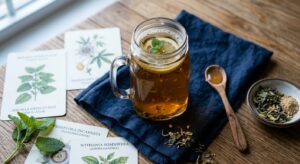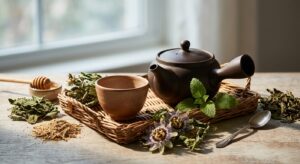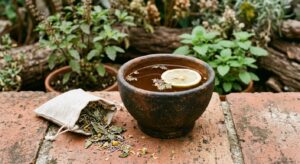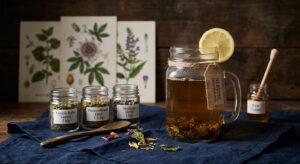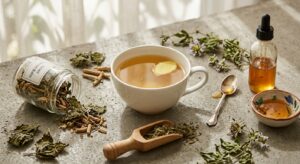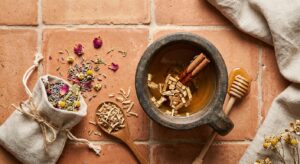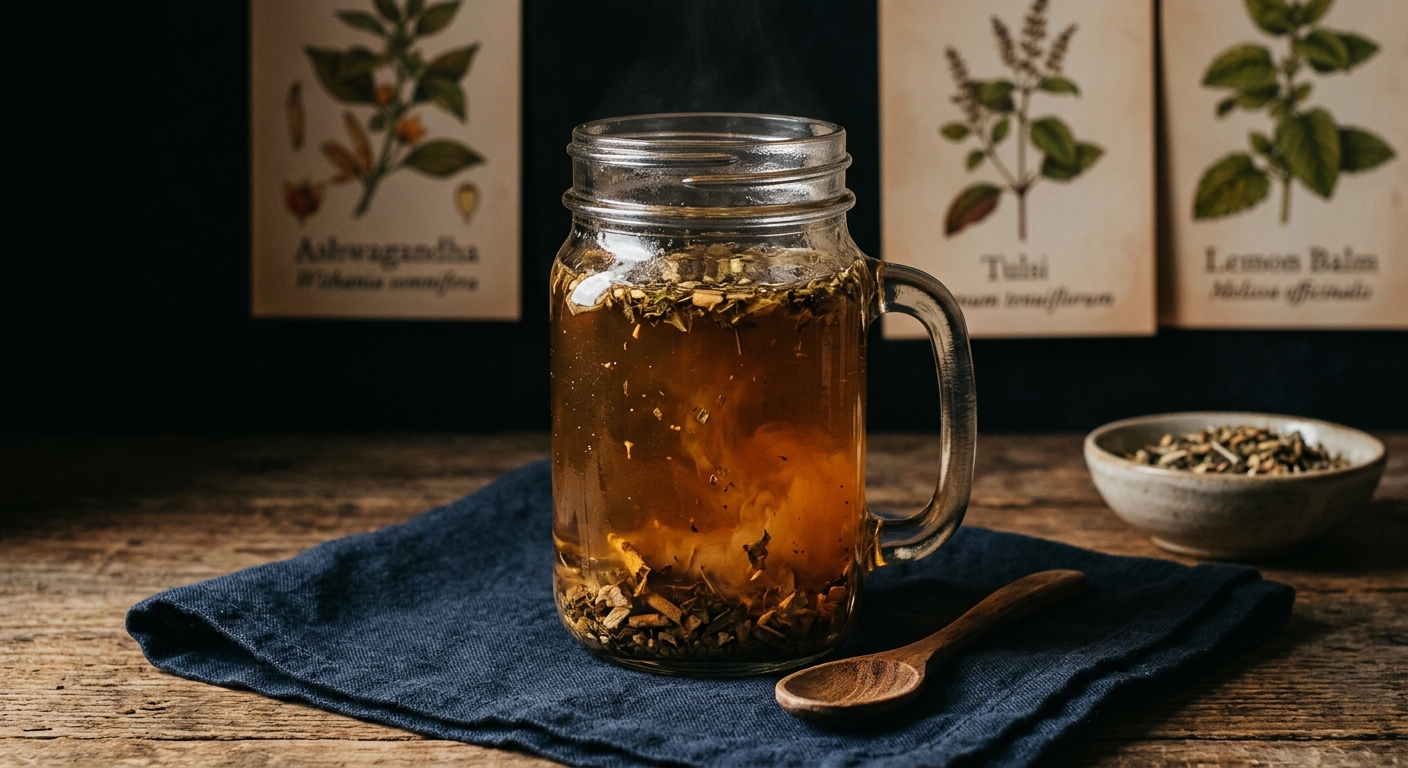
Caring for others is one of the most profound acts of love, but it comes with a cost that is rarely spoken about openly. Caregiver burnout is a state of chronic physical, emotional, and mental exhaustion that affects millions of family members, nurses, therapists, and anyone who dedicates themselves to supporting another person’s wellbeing. Long before the term had a clinical name, healers across Ayurvedic, European, and Chinese medicine traditions were crafting restorative tonics for exactly this kind of depletion, reaching for herbs that could both calm the overstimulated mind and rebuild the body’s depleted reserves at the same time.
This blend brings together three of the most trusted herbs in that tradition. Ashwagandha root, revered in Ayurvedic medicine for over 3,000 years as a Rasayana or rejuvenating tonic, forms the earthy, grounding backbone of the cup. Holy basil, known in Sanskrit as Tulsi or “the incomparable one,” has long been grown in Indian households as a sacred adaptogen that calms the spirit without dulling the mind. Lemon balm, a gentle European nervine used by Carmelite nuns since the 1600s in their famous Eau de Mélisse, softens the blend with its bright citrus warmth and melts away the anxious edge that so often accompanies exhaustion.
What makes this tea genuinely different from a simple “stress blend” is that it works on two levels simultaneously. The adaptogens in ashwagandha and holy basil address the root physiological cause of burnout by modulating cortisol and supporting adrenal function, while lemon balm provides immediate calming relief through its action on the GABA system. Drunk consistently over several weeks, this is a tea that does not just mask symptoms. It slowly refills the cup that caregiving empties.
2
cups
Ingredients
- 1 tspashwagandha root powder or dried root pieces
- 1 tspdried holy basil (tulsi) leaves
- 1 tspdried lemon balm leaves
- 480 mlwater (95°C / 203°F for hot brew)
- —raw honey or coconut sugar to taste (optional)
- —a small splash of full-fat milk or oat milk to round the earthiness (optional)
How to Brew
Click on an item below to shop for the recommended items for this recipe on Amazon.
As an Amazon Associate, we earn from qualifying purchases.
- Bring 480 ml of filtered water to 95°C (203°F). If using a whole dried ashwagandha root or root pieces rather than powder, add them to the water in a small saucepan and gently simmer for 5 minutes before proceeding to the next step.
- Place the holy basil and lemon balm into a tea infuser or teapot. If using ashwagandha powder, add it directly to the teapot or your mug now rather than in the infuser, as the fine powder passes through most strainers.
- Pour the hot water (or the strained ashwagandha decoction if you simmered root pieces) over the herbs in the teapot. Cover the pot with a lid to trap the volatile aromatic compounds from the tulsi and lemon balm.
- Steep for 10 to 15 minutes. The longer end of the range will deliver a stronger adaptogenic effect with a slightly more bitter, earthy flavor. Taste at 10 minutes and adjust to your preference.
- Strain into two warmed mugs. If you used ashwagandha powder, pour through a fine mesh strainer. Stir in honey or coconut sugar and a small splash of milk if desired. Drink slowly, ideally while seated away from screens.
- Combine the dried holy basil, lemon balm, and ashwagandha root pieces (not powder, as it clouds cold brew significantly and does not strain cleanly) in a glass jar. Use 1.5 times the standard herb quantity compared to hot brew, as cold water extracts more slowly: use 1.5 tsp ashwagandha root pieces, 1.5 tsp holy basil, and 1.5 tsp lemon balm per 480 ml.
- Pour 480 ml of cold, filtered room-temperature water over the herbs. Do not use chilled water straight from the refrigerator, as starting at room temperature encourages initial extraction before the jar cools down.
- Stir gently to ensure all herbs are submerged. Place a lid or cloth cover over the jar and leave it on the counter for 1 hour, then move it to the refrigerator.
- Allow the blend to cold brew for a total of 8 to 12 hours, or overnight. The extended cold steep gradually draws out the adaptogenic compounds and aromatic oils without the bitterness that hot water can amplify.
- In the morning, strain through a fine mesh strainer into two glasses filled with ice. Sweeten with a liquid sweetener such as honey dissolved in a small amount of warm water, as granulated sugar does not dissolve well in cold liquid. Serve immediately or keep refrigerated for up to 24 hours.
- Add 600 ml of cold, filtered water to a small saucepan along with the ashwagandha root pieces or powder. Bring to a gentle boil over medium heat, stirring occasionally if using powder to prevent clumping on the bottom of the pan.
- Once the water reaches a gentle boil, reduce the heat to a low simmer. Allow the ashwagandha to decoct uncovered for 15 minutes. The water will slowly reduce and deepen in color to a rich amber-brown. This extended simmering breaks down the tough cell walls of the root and releases compounds that a standard steep cannot fully access.
- After 15 minutes of simmering, remove the pan from the heat. Add the dried holy basil and lemon balm directly to the hot decoction liquid. Cover the pan with a lid immediately to prevent the delicate volatile oils in these two herbs from evaporating.
- Allow the covered pan to stand off the heat for 8 to 10 additional minutes. This two-stage process, decocting the root first and then infusing the leaves, ensures each herb is prepared by the method best suited to its plant structure.
- Strain the decoction through a fine mesh strainer into two mugs, pressing the herbs gently to release the last of the liquid. The yield will be approximately 400 ml after reduction. Sweeten with honey if desired and add a small pinch of black pepper, a traditional Ayurvedic addition believed to enhance the bioavailability of adaptogenic compounds. Drink one mug in the morning and one in the early afternoon, not close to bedtime due to ashwagandha’s energizing quality at higher doses.
Health Benefits
Multiple randomized controlled trials have found that ashwagandha supplementation significantly reduces serum cortisol levels and self-reported stress scores in chronically stressed adults. A landmark 2012 study published in the Indian Journal of Psychological Medicine found a 27.9% reduction in cortisol in the ashwagandha group compared to placebo, directly addressing the hormonal root of caregiver burnout.
Lemon balm’s rosmarinic acid content has been studied in multiple human trials for anxiety reduction. A 2014 study in Nutrients found that a single dose of lemon balm extract significantly improved mood and reduced anxiety in healthy volunteers, with effects measurable within one to three hours of consumption.
Holy basil has demonstrated nootropic activity in several human studies, improving cognitive flexibility, working memory, and reaction time. For caregivers whose mental fatigue manifests as difficulty concentrating or making decisions, tulsi’s combination of adaptogenic and anti-inflammatory action addresses both the neurological and stress-mediated causes of cognitive dulling.
Ashwagandha root contains the compound triethylene glycol, which has been identified as promoting sleep onset through non-GABA pathways. A 2019 study in PLOS ONE found that ashwagandha root extract improved sleep quality, sleep onset latency, and morning alertness in adults with insomnia, making this blend suitable for evening use when brewed lightly.
Chronic caregiving stress is strongly associated with immune suppression, as elevated cortisol downregulates key immune responses. Both ashwagandha and holy basil have demonstrated immunomodulatory effects in clinical research, helping to restore natural killer cell activity and improve immune responsiveness in people under sustained psychological pressure.
🧪 Key Bioactive Compounds
The Science Behind Ashwagandha
The science behind this blend centers on a concept called HPA axis dysregulation, which is the physiological engine of burnout. The hypothalamic-pituitary-adrenal (HPA) axis governs the body’s stress response by regulating the release of cortisol from the adrenal glands. In acute stress, this is adaptive. In the chronic, unrelenting stress of caregiving, the HPA axis becomes dysregulated, producing either persistently elevated cortisol or, in later-stage burnout, a flattened cortisol curve where the adrenals can no longer mount an adequate response. Ashwagandha’s withanolides work directly on this system by modulating glucocorticoid receptor sensitivity and normalizing the feedback loop that governs cortisol production. This is why the adaptogenic effects of ashwagandha tend to be bidirectional: they help bring an overactive stress response down while also supporting those who have moved into the exhausted, low-cortisol phase of burnout.
Lemon balm operates through a different but complementary pathway. Its key polyphenol, rosmarinic acid, inhibits the enzyme GABA transaminase, which is responsible for breaking down gamma-aminobutyric acid in the synaptic cleft. By slowing the degradation of GABA, lemon balm effectively increases the availability of this primary inhibitory neurotransmitter, producing calming and anxiolytic effects that are pharmacologically similar in mechanism to benzodiazepine drugs but far gentler in magnitude and without the dependency risk. This mechanism has been validated in human clinical trials, and rosmarinic acid’s effects are measurable within one to three hours of consumption, making lemon balm the fastest-acting component of this blend for acute moments of overwhelm.
Holy basil contributes a third, distinct layer of protection through its broad-spectrum anti-inflammatory and antioxidant activity. Chronic psychological stress drives systemic inflammation via the NF-kB pathway, and this neuroinflammation is increasingly recognized as a key driver of both mood disorders and cognitive impairment. Eugenol and ursolic acid, two of tulsi’s dominant bioactive compounds, have demonstrated significant NF-kB inhibitory activity in cell and animal studies. By damping this inflammatory cascade, holy basil helps protect neurons from the oxidative damage that accumulates during periods of prolonged caregiving stress, offering a kind of long-term neuroprotective insurance alongside the more immediate cortisol-modulating and GABA-enhancing effects of its blend partners.
Brewing Tips
- Consistency matters more than quantity with adaptogens: drink this blend daily for at least four to six weeks before evaluating its full effect on your energy and stress resilience, as adaptogenic compounds work cumulatively rather than acutely.
- If the earthiness of ashwagandha is off-putting at first, start with half a teaspoon of the root and gradually increase over two weeks. Cold brewing also significantly reduces the bitter, soil-like edge of the root and can be a gentler introduction to the flavor.
- Brew a large batch using the sustained decoction method on Sunday evening and refrigerate it in a sealed glass jar for up to four days. Reheat individual portions gently or drink chilled, so your restorative tea is always ready even on the most overwhelming caregiving days.