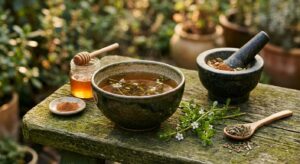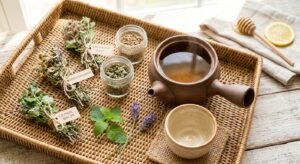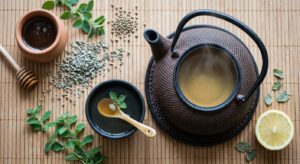

Few herbs carry as much mystique as mugwort. Known botanically as Artemisia vulgaris, this silvery-leafed perennial takes its genus name from Artemis, the Greek goddess of the moon and the hunt, a fitting tribute to a plant so deeply associated with the night. For thousands of years, mugwort has been burned as incense, tucked beneath pillows, and brewed into tea by healers, shamans, and wise women who regarded it as a gateway between the waking world and the realm of dreams. In Traditional Chinese Medicine, dried mugwort is still used in moxibustion therapy, burned near acupuncture points to stimulate healing energy. In European folk traditions, it was the herb of travelers and dreamers alike, said to protect the sleeper and illuminate the night mind.
What sets mugwort apart from other sleep herbs is its specific reputation as an oneirogenic herb, meaning one that promotes vivid, memorable, and sometimes lucid dreams. Unlike valerian or passionflower, which primarily sedate, mugwort appears to work on the quality and texture of sleep rather than simply inducing it. Herbalists across multiple traditions have used it to help people who rarely remember their dreams begin to recall them in striking detail, and to assist experienced lucid dreamers in achieving greater clarity and intention within the dream state. This quality has made it a staple in dreamwork practices, shamanic traditions, and modern herbal sleep formulas.
The taste of mugwort tea is earthy, slightly bitter, and pleasantly aromatic, with a warm, sage-like quality that signals to the body and mind that rest is near. A single cup brewed an hour before sleep is the traditional dose, and many dreamers keep a journal by the bed to capture what follows. Whether you are curious about your own dream life, working through a creative block, or simply drawn to the deep history of plant medicine, mugwort offers a compelling and accessible place to begin.
2
cups
Ingredients
- 2 tspdried mugwort leaves (Artemisia vulgaris)
- 480 mlwater (90°C / 194°F)
- —raw honey to taste (optional)
- —a pinch of dried lavender buds (optional, to soften bitterness)
How to Brew
Click on an item below to shop for the recommended items for this recipe on Amazon.
As an Amazon Associate, we earn from qualifying purchases.
- Bring filtered water to 90 to 95°C (194 to 203°F). If you do not have a temperature-controlled kettle, bring water to a full boil and let it rest for 2 minutes before pouring.
- Place 1 teaspoon of dried mugwort leaves per cup into a covered tea infuser or teapot. Covering the vessel during steeping is important, as it traps the aromatic essential oils that would otherwise escape as steam.
- Pour the hot water over the mugwort and immediately cover with a lid or a small saucer placed over the mug.
- Steep for 10 to 15 minutes. Shorter steeps yield a milder, grassier cup; the full 15 minutes produces a more intensely aromatic, slightly bitter brew with a deeper golden color.
- Remove the infuser and stir gently. Taste the tea before adding honey. The pleasant bitterness is part of the experience, but a small drizzle of raw honey rounds out the flavor nicely.
- Drink 45 minutes to 1 hour before bed and keep a dream journal on your nightstand.
- Add 2 teaspoons of dried mugwort leaves per 480 ml of cold, filtered water into a clean glass jar with a tight-fitting lid.
- Stir briefly to ensure all the herb is submerged, then seal the jar. Do not crush or muddle the leaves, as cold water extracts the softer flavors slowly and gently without needing agitation.
- Leave the jar at room temperature for 1 hour to allow initial extraction to begin, then transfer to the refrigerator.
- Steep in the refrigerator for a total of 8 to 12 hours. Overnight steeping is ideal. The resulting color will be a softer, pale green-gold compared to the deeper amber of a hot brew.
- Strain through a fine mesh strainer or cheesecloth into a glass, pressing the leaves gently to release the last of the infusion.
- Drink cold or allow to come to room temperature. You may warm it gently on the stovetop over very low heat without simmering if you prefer a warm evening drink. Sweeten lightly with honey or a few drops of liquid stevia.
- Combine 2 tablespoons of dried mugwort leaves with 240 ml of filtered water in a small saucepan. Use a saucepan with a lid, as keeping the vessel covered is critical to preserving the aromatic compounds.
- Warm the saucepan over the lowest possible heat setting until the water reaches approximately 85°C (185°F). You will see wisps of steam but no bubbling. Use a thermometer if available.
- Maintain this low-heat infusion, covered, for 30 to 45 minutes. Check occasionally to ensure the liquid is not simmering. The goal is a slow, gentle extraction, not a decoction.
- Remove from heat and allow to cool, still covered, for 10 minutes. This resting period lets the aromatic oils re-absorb into the liquid rather than evaporating.
- Strain carefully through a fine mesh strainer into a small glass or shot-sized vessel, pressing the herb to extract fully. You should yield approximately 60 to 120 ml of concentrated liquid.
- Take the concentrate 45 minutes before bed, either on its own or stirred into a small amount of warm water or chamomile tea. Store any unused concentrate in a sealed glass container in the refrigerator and use within 48 hours.
Health Benefits
Mugwort’s most celebrated property in herbalism is its oneirogenic effect, the ability to produce unusually vivid, detailed, and memorable dreams. While formal clinical trials are limited, centuries of consistent ethnobotanical use across unconnected cultures, including European, Chinese, Japanese, and Indigenous North American traditions, lend strong credibility to this effect. The mechanism may involve alpha-thujone’s interaction with GABA-A receptors, subtly altering REM sleep architecture without suppressing it.
Mugwort has a long history as a nervine herb, one that gently tones and calms the nervous system without acting as a heavy sedative. The flavonoids quercetin and luteolin have both been linked to anxiolytic activity in preclinical research, and the warm aromatic compounds in the tea may activate olfactory pathways associated with relaxation, making the simple act of brewing and inhaling the steam part of the calming effect.
The bitter sesquiterpene lactones in mugwort stimulate the production of bile and gastric secretions, a classic action of bitter herbs in Western herbalism. Drinking a cup of mugwort tea after an evening meal and before bed may ease sluggish digestion, bloating, and mild abdominal discomfort that can otherwise disrupt sleep onset.
Mugwort has been used as an emmenagogue, an herb that promotes or regulates menstruation, in nearly every herbal tradition that has worked with it. Modern phytochemical analysis suggests this effect may relate to mild uterine-stimulating compounds in the volatile oil. This traditional use is well-documented though clinical evidence is sparse, and this property is precisely why the herb is contraindicated in pregnancy.
Both the flavonoid fraction and the sesquiterpene lactones in mugwort have shown anti-inflammatory activity in laboratory studies, including inhibition of pro-inflammatory cytokines such as TNF-alpha and IL-6. While the concentrations in a tea infusion are modest, regular consumption as part of an overall wellness practice may contribute to reduced systemic inflammation over time.
🧪 Key Bioactive Compounds
The Science Behind Mugwort
The science behind mugwort’s dream-enhancing reputation is still developing, but several lines of evidence offer plausible mechanisms. The most discussed compound is alpha-thujone, a monoterpene ketone found in the volatile oil of Artemisia vulgaris. Research has shown that thujone acts as an antagonist at GABA-A receptors, the same receptors targeted by benzodiazepines and alcohol. Rather than simply sedating the system, thujone’s partial interaction with these receptors may modulate the transition between sleep stages, potentially influencing REM duration or the vividness of dream content. Crucially, the concentration of thujone in a standard tea infusion is far below the threshold associated with any toxic effects, making it a gentle modulator rather than a potent drug.
Alongside thujone, mugwort contains significant amounts of the flavonoids quercetin and luteolin, both of which have been extensively studied for their neuroactive properties. Luteolin in particular has been shown in animal models to reduce neuroinflammation by suppressing microglial activation and decreasing levels of pro-inflammatory cytokines. Neuroinflammation is increasingly recognized as a factor in disrupted sleep architecture and poor dream recall, suggesting that luteolin’s anti-inflammatory action in the brain may indirectly support cleaner, more memorable REM sleep. Quercetin has demonstrated anxiolytic effects in multiple preclinical studies, partly through its influence on serotonin and dopamine pathways, both of which are active during REM sleep and dream generation.
The sesquiterpene lactones in mugwort, compounds related to the famous antimalarial artemisinin found in Artemisia annua, contribute bitterness and digestive stimulation but also carry notable anti-inflammatory and potentially neuroprotective properties. Emerging research into the gut-brain axis suggests that improving digestive function and reducing gut inflammation may have measurable effects on sleep quality and mood, adding another dimension to mugwort’s traditional use as a combined digestive and sleep herb. While rigorous human clinical trials on mugwort’s oneirogenic effects remain an area for future research, the convergence of its phytochemical profile with known mechanisms of sleep and dream modulation gives herbalists and researchers alike good reason to take this ancient dream plant seriously.
Brewing Tips
- Always brew mugwort in a covered vessel. The volatile aromatic oils responsible for much of its effect escape readily in open steam, and covering your mug or teapot during steeping preserves both the aroma and the potency.
- Keep a dream journal and a pen on your nightstand before you drink your first cup. The effects of mugwort on dream recall can be immediate and surprisingly strong. Waking and writing within the first few minutes is the best way to capture what comes.
- Start with 1 teaspoon per cup for your first few sessions before increasing to the full dose. Mugwort can produce very intense dream experiences in some people, and a gentler introduction allows you to gauge your own sensitivity.