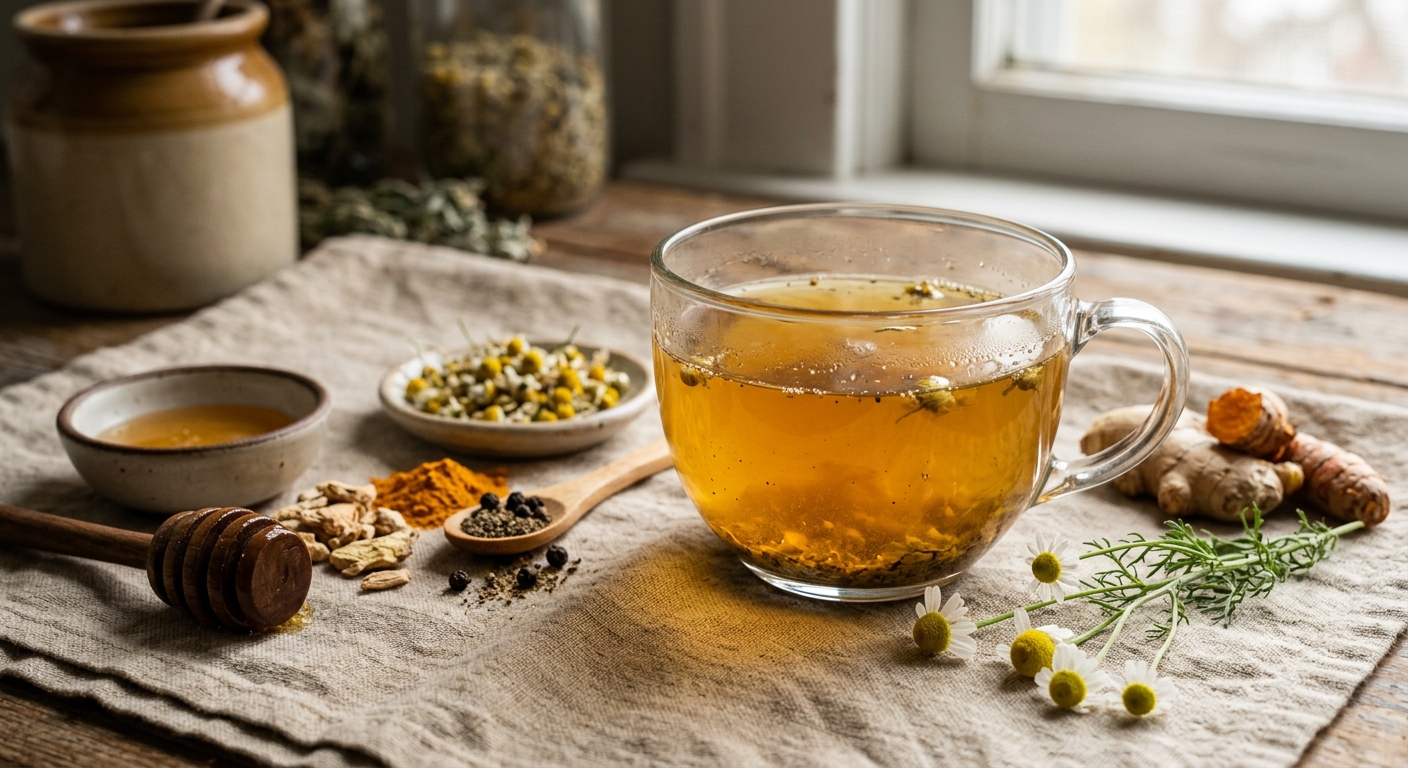
Endometriosis affects roughly 1 in 10 women of reproductive age worldwide, yet it remains one of the most underdiagnosed and undertreated chronic conditions in women’s health. Characterized by endometrial-like tissue growing outside the uterus, it causes debilitating pelvic pain, heavy periods, and systemic inflammation. While herbal tea is not a cure, plant medicine has long offered genuine comfort to those navigating this condition, with a rich tradition spanning Ayurvedic, Traditional Chinese Medicine, and European herbalism that recognized the power of warming, anti-spasmodic, and hormone-modulating botanicals long before clinical trials caught up.
This blend centers on three powerful herbs: ginger root, turmeric, and chamomile. Ginger and turmeric both belong to the Zingiberaceae family and have been used for thousands of years in South Asian and Southeast Asian medicine to manage pain and reduce systemic inflammation. Chamomile, revered in European folk medicine since at least the ancient Egyptians, adds a gentle antispasmodic action and soothes the nervous system, which is perpetually taxed by chronic pain. Together, they form a synergistic blend that addresses multiple pathways of endometriosis discomfort simultaneously.
What makes this particular combination so compelling for endometriosis is the way each herb contributes something distinct. Ginger inhibits prostaglandins, the hormone-like compounds that drive painful uterine contractions. Turmeric’s curcumin works through the NF-kB pathway to reduce the inflammatory signaling that fuels endometrial lesion activity. Chamomile’s apigenin calms the nervous system and relaxes smooth muscle. Brewed together into a golden, aromatic cup, this tea is as comforting to the senses as it is to the body, something that matters deeply when managing a condition as exhausting as endometriosis.
2
cups
Ingredients
- 1.5 tspdried ginger root (or 1 tsp freshly grated ginger)
- 1 tspground turmeric (or 1 tsp freshly grated turmeric root)
- 1 tspdried chamomile flowers
- 0.25 tspground black pepper (enhances curcumin absorption)
- 480 mlwater (95°C / 203°F)
- —raw honey or maple syrup to taste (optional)
- —a small splash of coconut milk or oat milk (optional, increases turmeric absorption)
How to Brew
Click on an item below to shop for the recommended items for this recipe on Amazon.
As an Amazon Associate, we earn from qualifying purchases.
- Bring filtered water to 90 to 95°C (194 to 203°F) using an electric kettle with temperature control, or bring water to a boil and let it rest for 2 minutes before using.
- Add the dried ginger root, ground turmeric, dried chamomile flowers, and black pepper to a tea infuser, muslin bag, or small teapot strainer. If using freshly grated ginger or turmeric root, place it directly in the pot.
- Pour the hot water over the herbs and cover the infuser or teapot with a lid or small plate. Covering is essential to trap the volatile aromatic compounds that carry anti-inflammatory and antispasmodic properties.
- Steep for 10 to 12 minutes, tasting at 10 minutes. A longer steep intensifies the warming, spicy notes and increases the extraction of gingerols and curcumin.
- Remove the infuser and strain the tea through a fine mesh strainer into your mug, especially important if using ground turmeric to remove any sediment.
- Add a small splash of coconut milk or oat milk to improve curcumin bioavailability, then sweeten with raw honey if desired. Sip slowly while warm.
- Slice 4 to 5 thin coins of fresh ginger root and 3 to 4 thin coins of fresh turmeric root. Fresh root works far better than ground spice in cold brew, as ground spices can create a murky, gritty texture when cold steeped.
- Combine the fresh ginger, fresh turmeric, dried chamomile flowers, and a pinch of black pepper in a clean glass jar. Pour 480 ml of room temperature filtered water over the herbs.
- Stir gently to ensure the chamomile flowers are fully submerged. Cover the jar with a lid or a small plate and let it sit at room temperature for 30 minutes to initiate extraction.
- Transfer the jar to the refrigerator and cold brew for 8 to 12 hours. Overnight is ideal. The slow, cold extraction produces a gentler, smoother flavor without the sharp bite of hot-brewed ginger.
- The next morning, strain the brew through a fine mesh strainer or cheesecloth into a clean glass or pitcher, pressing gently on the herbs to extract remaining liquid.
- Serve over ice with a squeeze of lemon and a small drizzle of maple syrup if desired. If you prefer a warmer serving temperature, allow the strained tea to come to room temperature before drinking, rather than reheating it, to preserve the cold brew’s smooth character.
- Use fresh ingredients for this method: slice 6 to 8 thin coins of fresh ginger root and 4 to 5 thin coins of fresh turmeric root (or use 2 tsp dried ginger root and 1.5 tsp dried turmeric root if fresh is unavailable). Add to a small saucepan with 600 ml of cold filtered water and a quarter teaspoon of black pepper.
- Place the saucepan over medium-low heat and bring the liquid up to a gentle simmer of 85 to 90°C (185 to 194°F). Do not allow a full rolling boil, which can break down some of the more delicate anti-inflammatory compounds.
- Simmer uncovered for 15 to 20 minutes, stirring occasionally. You will notice the liquid deepening to a rich golden orange color and the kitchen filling with a warm, spiced aroma. The liquid will reduce slightly, which concentrates the therapeutic constituents.
- Remove the saucepan from the heat and add the dried chamomile flowers directly to the hot liquid. Cover with a lid immediately and allow the chamomile to infuse during the resting phase for 5 minutes. This two-phase approach protects chamomile’s volatile oils while maximizing extraction from the roots.
- Strain the decoction through a fine mesh strainer lined with cheesecloth into a warmed mug or small teapot, pressing the herbs firmly to extract every last drop.
- Add a splash of warm coconut milk or oat milk, sweeten with raw honey to taste, and sip slowly. This preparation is more concentrated than the hot brew and can be diluted slightly with hot water if the flavor is too intense.
Health Benefits
Ginger’s gingerols and shogaols inhibit prostaglandin synthesis through the same pathway as NSAIDs like ibuprofen, making ginger a clinically studied natural alternative for primary dysmenorrhea. A 2015 clinical trial published in the Journal of Obstetrics and Gynaecology found ginger as effective as mefenamic acid and ibuprofen for reducing menstrual pain severity.
Curcumin from turmeric has been shown in multiple preclinical studies to suppress NF-kB, the master regulator of inflammatory gene expression that is chronically overactivated in endometriosis. Research published in Gynecological Endocrinology demonstrated that curcumin inhibits the proliferation and adhesion of endometrial cells, suggesting a direct impact on lesion behavior.
Chamomile’s apigenin exhibits mild phytoestrogenic and anti-estrogenic activity depending on context, and has shown the ability to modulate estradiol levels in vitro. Since endometriosis is an estrogen-dependent condition, gentle estrogen-modulating botanicals like chamomile may support hormonal equilibrium without the side effects of pharmaceutical hormone therapy.
Chronic pain from endometriosis activates the hypothalamic-pituitary-adrenal axis, creating a feedback loop of elevated cortisol and heightened pain sensitivity. Chamomile’s apigenin binds to GABA-A receptors in the central nervous system, producing a calming, anxiolytic effect that helps interrupt this stress-pain cycle and supports more restful sleep.
Up to 90% of people with endometriosis experience gastrointestinal symptoms including bloating, nausea, and bowel pain, particularly around menstruation. Ginger is one of the most well-researched herbal antiemetics and digestive motility agents, while chamomile’s bisabolol and flavonoids soothe intestinal inflammation and reduce gut cramping, offering meaningful relief to this commonly overlooked symptom cluster.
🧪 Key Bioactive Compounds
The Science Behind Ginger Root
The science behind this endometriosis tea blend is rooted in its multi-pathway approach to inflammation and pain. Ginger’s primary bioactive compounds, 6-gingerol and 6-shogaol, have been shown in numerous studies to inhibit cyclooxygenase (COX-1 and COX-2) enzymes and lipoxygenase (LOX) enzymes, the same molecular targets as common NSAIDs. This dual inhibition not only reduces prostaglandin production that causes uterine cramping but also suppresses leukotriene synthesis, addressing the broader inflammatory cascade that keeps endometrial lesions active and painful. A 2012 randomized controlled trial in Phytotherapy Research confirmed ginger’s clinical effectiveness at 750 mg to 2000 mg daily for reducing menstrual pain, validating what South Asian healers have known for centuries.
Curcumin, the principal curcuminoid in turmeric, targets inflammation at one of its most upstream regulatory points. By inhibiting the transcription factor NF-kB and suppressing the expression of pro-inflammatory cytokines including TNF-alpha, IL-6, and IL-1beta, curcumin addresses the chronic, low-grade inflammatory environment that allows endometrial tissue to implant and proliferate outside the uterus. Preclinical research has demonstrated that curcumin can reduce the size and vascularization of endometriotic lesions in animal models, and a growing body of cell culture research shows it can induce apoptosis in endometrial stromal cells while leaving healthy tissue unaffected. Critically, the addition of black pepper’s piperine increases curcumin bioavailability by up to 2000%, and fat-containing milks like coconut or oat milk further enhance absorption by leveraging curcumin’s lipophilic nature.
Chamomile’s flavonoid apigenin contributes to this blend’s efficacy through two distinct mechanisms. First, its anxiolytic action via GABA-A receptor binding helps downregulate the heightened central sensitization that characterizes chronic pelvic pain, a state where the nervous system essentially becomes hyperresponsive to pain signals over time. Second, apigenin has been identified in laboratory studies as a phytoestrogen with selective estrogen receptor modulator (SERM) activity, meaning it may compete with endogenous estrogen at receptor sites and partially dampen the estrogen-driven proliferation of endometrial tissue. While human clinical trials specifically on chamomile and endometriosis remain limited, the mechanistic evidence supports its inclusion in a therapeutic blend targeting this condition’s hormonal and inflammatory drivers.
Brewing Tips
- Brew this tea consistently for at least 4 to 6 weeks to experience its full anti-inflammatory benefit, as compounds like curcumin work cumulatively and are most effective with regular use rather than occasional consumption.
- For maximum pain relief during a menstrual flare, begin drinking one to two cups daily in the 3 to 5 days before your period is due, which is when prostaglandin levels begin to rise and pre-emptive anti-inflammatory support is most effective.
- Always use freshly grated ginger and turmeric root when you can source them, as fresh root contains a different and in some ways more bioavailable profile of active compounds compared to dried powder, and the flavor is noticeably brighter and more complex.