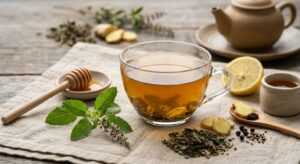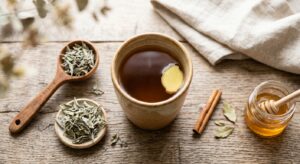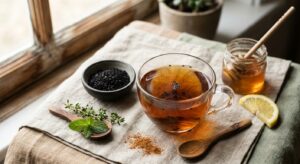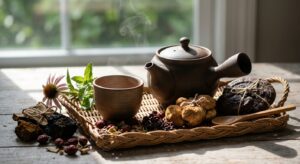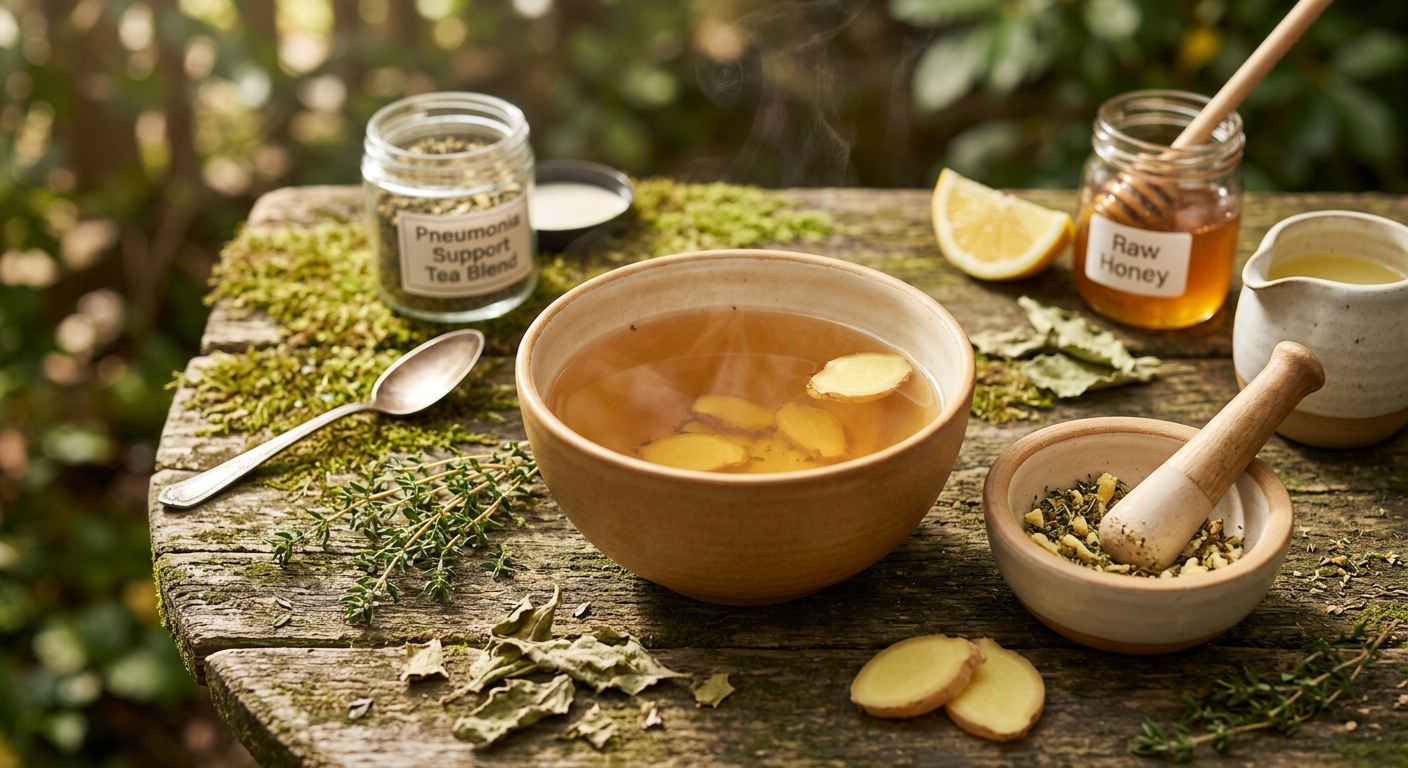
Pneumonia is a serious lung infection that taxes the body’s immune defenses and leaves the airways inflamed, congested, and struggling to clear. While conventional medical treatment is essential and should never be skipped, herbal teas have been used for centuries as supportive remedies to ease the discomfort of respiratory illness, promote expectoration, and strengthen the body’s natural healing response. Cultures from ancient Greece to medieval Europe to traditional Chinese medicine have relied on lung-supportive herbs long before antibiotics existed, and modern researchers are now validating many of these traditional uses.
This blend centers on three powerhouse herbs: thyme, mullein leaf, and ginger root. Thyme has been revered since antiquity as a pulmonary herb, valued for its antimicrobial volatile oils and its ability to relax bronchial muscles and loosen stubborn mucus. Mullein leaf, a tall roadside wildflower with soft, felt-like leaves, has a particularly rich history in lung medicine. Native American healers smoked and steeped mullein for chest complaints, and 19th-century American Eclectic physicians prescribed it routinely for bronchitis and pneumonia recovery. Ginger brings warming anti-inflammatory compounds that improve circulation to the lungs and help the body mount a stronger immune response.
This tea is not a cure for pneumonia, and it is important to stress that anyone experiencing symptoms of pneumonia should seek medical diagnosis and follow their doctor’s treatment plan. What this blend offers is genuine, evidence-informed support: softer breathing, reduced bronchospasm, thinner mucus that is easier to clear, and a warm, comforting ritual that helps the body rest and recover. Sipped two to three times daily during recovery, it can be a meaningful complement to medical care.
2
cups
Ingredients
- 2 tspdried thyme leaf
- 2 tspdried mullein leaf
- 4 slicesfresh ginger root (or 1 tsp dried ginger)
- 480 mlwater (95°C / 203°F)
- —raw honey to taste (optional, supports throat soothing)
- —fresh lemon juice to taste (optional)
How to Brew
Click on an item below to shop for the recommended items for this recipe on Amazon.
As an Amazon Associate, we earn from qualifying purchases.
- Bring 480 ml of fresh filtered water to just below a full boil, around 93 to 96°C (200 to 205°F). If using an electric kettle without temperature control, boil fully and let it rest for 30 seconds.
- Place the dried thyme, dried mullein leaf, and fresh ginger slices into a tea infuser, muslin bag, or directly into a heatproof teapot. If using dried ginger, add it with the other herbs.
- Pour the hot water over the herbs and cover the vessel immediately with a lid, saucer, or folded cloth. Covering is important – it traps the aromatic volatile oils from thyme that would otherwise escape with the steam.
- Steep for 10 to 15 minutes. Taste at 10 minutes for a milder brew; go the full 15 for a more potent, medicinal-strength infusion.
- Strain carefully through a fine-mesh strainer or cheesecloth, as mullein leaf has fine hairs that should be fully filtered out before drinking.
- Pour into a mug, add raw honey and fresh lemon juice if desired, and sip slowly while warm. Inhaling the steam before each sip also delivers aromatic benefit directly to the airways.
- Measure out the dried thyme, dried mullein leaf, and ginger slices (or dried ginger) and place them in a clean glass jar or pitcher.
- Pour 480 ml of filtered room-temperature water over the herbs. Do not use hot water – this is a true cold extraction designed to draw out mucilaginous compounds without volatile oil loss.
- Stir gently to ensure all herbs are submerged. Cover the jar with a lid or breathable cloth secured with a rubber band to keep it clean.
- Let the jar sit at room temperature for 1 hour to begin the extraction, then transfer to the refrigerator and allow to infuse for a total of 8 to 12 hours, ideally overnight.
- Strain the finished infusion through a fine-mesh strainer lined with cheesecloth or a coffee filter to thoroughly remove mullein leaf hairs and herb sediment.
- The cold brew can be consumed at room temperature or gently warmed in a small saucepan over low heat before drinking. Do not microwave aggressively, as this degrades delicate polysaccharides. Sweeten with honey and lemon as desired. Store any remainder in the refrigerator for up to 24 hours.
- Bring 480 ml of filtered water to a full rolling boil, then remove from heat. Use a wide, heatproof ceramic bowl or a large mug for this method rather than a teapot, as you will be leaning over it.
- Add the dried thyme, dried mullein leaf, and ginger directly to the bowl or mug. Thyme’s volatile thymol and carvacrol are released abundantly at higher temperatures, making a full boil ideal for steam inhalation.
- Allow the herbs to steep uncovered for 2 minutes so the water cools just slightly and releases maximum aromatic steam.
- Place a large towel over your head and lean over the bowl at a comfortable distance of about 25 to 30 cm, keeping your eyes closed. Breathe deeply and slowly through your nose and mouth for 5 to 10 minutes, pausing as needed if the steam feels too intense. This delivers antimicrobial and mucolytic compounds directly into the bronchial passages.
- After the inhalation session, allow the liquid to cool to a comfortable drinking temperature, around 60 to 65°C (140 to 150°F).
- Strain thoroughly through a fine-mesh strainer and cheesecloth to remove mullein hairs and herb matter, then pour into a mug and sip as a warm tea. Add honey and lemon to taste. The combination of direct inhalation followed by drinking provides both topical and systemic benefit.
Health Benefits
Mullein’s saponin glycosides act as natural expectorants, thinning and loosening mucus plugs in the bronchioles so the cilia can sweep debris more efficiently. Thymol compounds further relax bronchial smooth muscle, reducing bronchospasm that traps mucus in the lower airways.
Thyme’s volatile oils, particularly thymol and carvacrol, have been shown in multiple in vitro studies to inhibit common respiratory pathogens including Streptococcus pneumoniae and Haemophilus influenzae. When inhaled as steam or consumed as tea, these compounds make direct contact with upper and lower airway mucous membranes.
Rosmarinic acid from thyme and 6-gingerol from ginger both suppress inflammatory signaling pathways in lung tissue, reducing the painful swelling and irritation that accompany pneumonia. A 2011 randomized trial found thyme-ivy extract significantly improved acute bronchitis symptoms compared to placebo.
Ginger’s gingerols and shogaols stimulate the proliferation of immune cells and enhance macrophage activity, strengthening the body’s ability to fight off the causative organisms. Verbascoside from mullein adds antiviral support, particularly relevant when pneumonia has a viral component.
Mullein leaf contains mucilaginous polysaccharides that coat the mucous membranes of the throat and trachea, creating a physical protective barrier that reduces pain from coughing and breathing. Raw honey, when added, contributes additional antimicrobial and soothing properties.
🧪 Key Bioactive Compounds
The Science Behind Thyme
The respiratory-supporting action of this blend is grounded in the chemistry of its three core herbs. Thyme (Thymus vulgaris) owes its medicinal reputation largely to two phenolic monoterpenes: thymol and carvacrol. These volatile compounds have demonstrated broad-spectrum antimicrobial activity against gram-positive and gram-negative bacteria in numerous in vitro studies, with particular efficacy against pathogens associated with lower respiratory tract infections. Beyond their antimicrobial action, thymol and carvacrol act as direct bronchodilators by inhibiting calcium influx in airway smooth muscle cells, reducing the bronchospasm that worsens breathing difficulty during chest infections. The polyphenol rosmarinic acid in thyme adds another layer of anti-inflammatory activity by downregulating COX-2 enzyme expression, reducing the production of prostaglandins that drive airway swelling and pain.
Mullein leaf (Verbascum thapsus) contributes two distinct mechanisms to this blend. Its saponin glycosides act as surfactants in the bronchial lining, reducing the surface tension of thick mucus and making it easier to expel through coughing. This is the same basic principle behind pharmaceutical expectorants, though achieved through plant chemistry rather than synthetic compounds. Mullein also contains verbascoside, a phenylethanoid glycoside that has shown antiviral activity against several respiratory viruses in laboratory studies, as well as anti-inflammatory and antioxidant properties that may help protect lung tissue during the oxidative stress of active infection. Research published in the Journal of Ethnopharmacology has confirmed the antimicrobial activity of mullein extracts against clinical isolates of respiratory pathogens.
Ginger (Zingiber officinale) rounds out the blend as both an immune modulator and an anti-inflammatory agent. The phenolic compound 6-gingerol, present in highest concentrations in fresh root, inhibits the production of TNF-alpha, IL-1 beta, and IL-6, three major pro-inflammatory cytokines that drive the excessive immune response responsible for much of the tissue damage in pneumonia. A 2013 study published in the Journal of Ethnopharmacology found that fresh ginger extract inhibited human respiratory syncytial virus attachment to respiratory epithelial cells, suggesting direct antiviral activity in the airway. Together, these three herbs create a blend with genuinely complementary, synergistic actions across multiple dimensions of respiratory illness support.
Brewing Tips
- Always cover your mug or teapot during steeping to trap the volatile oils from thyme, which are responsible for much of its antimicrobial and bronchodilating benefit. Without a cover, a significant portion of the most active compounds escape with the steam.
- Use fresh ginger root rather than dried when available. Fresh root contains higher concentrations of 6-gingerol, the most bioactive form of ginger’s phenolic compounds, while dried ginger is higher in shogaols, which have somewhat different pharmacology. For respiratory support, fresh root provides the most potent immune-modulating effect.
- For severely congested airways, double the thyme in the blend and use this stronger infusion specifically for the steam inhalation method. The increased thymol concentration in the steam reaches the bronchial passages directly and can provide noticeable relief within minutes. Follow the inhalation by drinking the strained tea for continued systemic benefit.
- Strain all mullein preparations meticulously through at least two layers of cheesecloth or a coffee filter. The fine trichome hairs on mullein leaves are harmless but scratchy and can cause throat irritation if consumed, which is the last thing you want during a respiratory illness.