Work stress is one of the most pervasive wellness challenges of modern life, and for thousands of years, herbal traditions around the world have answered it with carefully chosen plants. Ayurvedic practitioners in ancient India turned to ashwagandha root to build resilience against mental and physical strain. European herbalists brewed lemon balm, a fragrant member of the mint family, to lift the spirits and calm nervous tension. And indigenous healers across North and South America revered passionflower as a remedy for anxious thoughts and sleeplessness. This blend brings all three traditions together in a single, practical cup.
What makes this combination especially effective is the way the herbs complement each other. Ashwagandha works at a deeper, systemic level as an adaptogen, helping the body regulate its cortisol response over time. Lemon balm acts more immediately, calming the nervous system and easing that wired, irritable feeling that often follows a demanding workday. Passionflower bridges the two, gently quieting mental chatter without inducing the heavy sedation associated with stronger sleep herbs like valerian. The result is a blend that helps you decompress in the evening while still leaving you functional enough to enjoy your night.
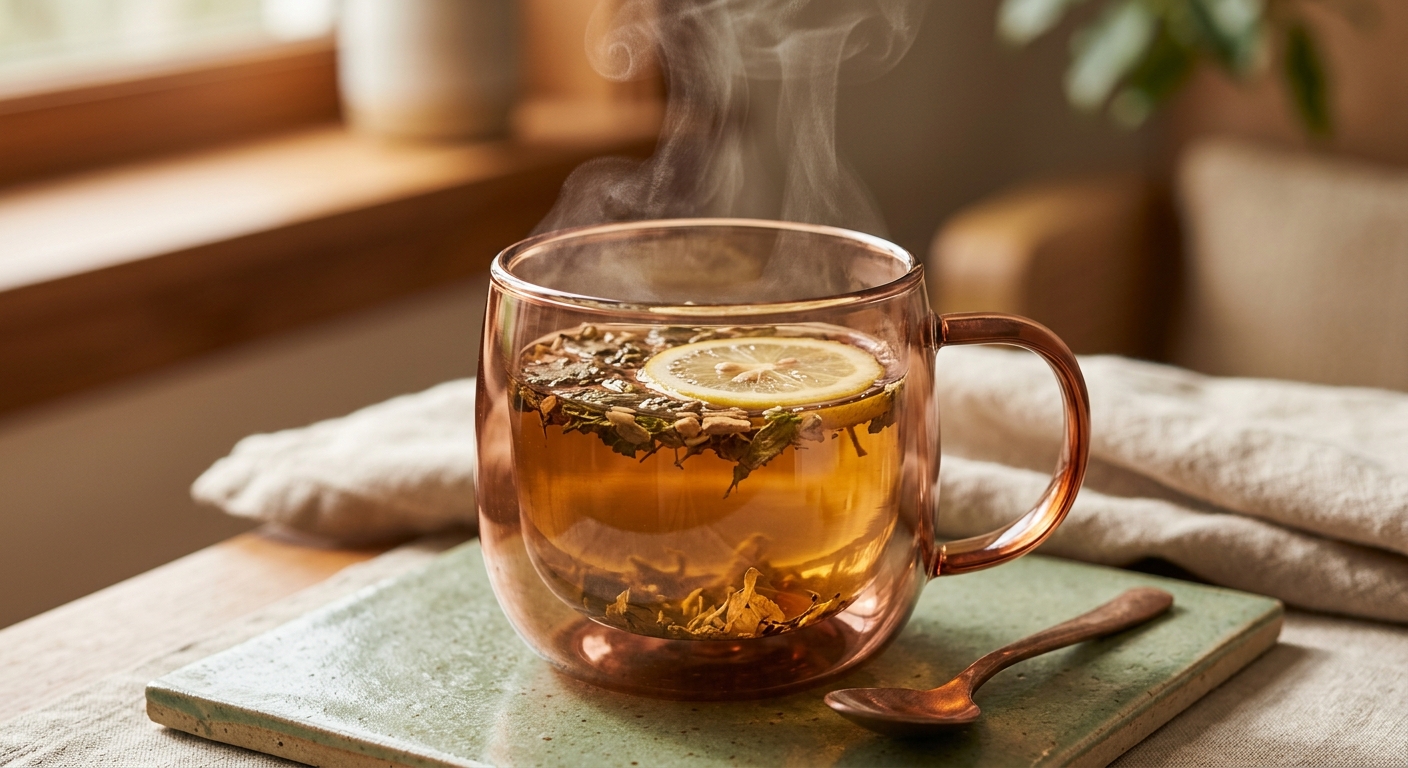
Sensory pleasure is part of what makes herbal tea such a reliable stress ritual. Lemon balm lends this blend a bright, citrusy fragrance that is immediately uplifting, while passionflower contributes a subtle earthiness and ashwagandha adds a warming, slightly nutty depth. Sweetened with a spoonful of raw honey and sipped slowly, this tea turns the act of winding down into something genuinely restorative rather than just another item on the to-do list.
2
cups
Ingredients
- 2 tspdried lemon balm leaves
- 1 tspashwagandha root powder
- 1 tspdried passionflower herb
- 480 mlwater (90°C / 194°F)
- —raw honey to taste (optional)
- —thin lemon slice for garnish (optional)
How to Brew
Click on an item below to shop for the recommended items for this recipe on Amazon.
As an Amazon Associate, we earn from qualifying purchases.
- Heat 480 ml of filtered water to 90 to 95°C (194 to 203°F). Avoid a full rolling boil as high heat can degrade the delicate volatile oils in lemon balm, dulling its citrusy aroma.
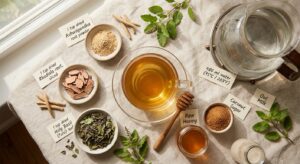
- Add the dried lemon balm leaves and dried passionflower herb to a fine-mesh infuser or teapot strainer basket. Place the ashwagandha root powder directly into the bottom of your teapot or cup, as it will not be fully caught by a standard infuser.
- Pour the hot water over both the infuser and the ashwagandha powder. Stir briefly with a spoon to disperse the powder evenly through the water.
- Cover the cup or teapot with a lid or small saucer to trap the aromatic volatile compounds in the steam. Steep for 7 to 10 minutes. A longer steep will draw out more of the bitter, nervine compounds from the passionflower.
- Remove the infuser and stir the cup thoroughly to reincorporate the ashwagandha that may have settled at the bottom.
- Add raw honey if desired. Hold the warm mug in both hands for a moment before drinking, allowing the lemon balm aroma to serve as a brief, intentional decompression ritual.
- Dissolve the ashwagandha root powder in 60 ml of warm water (not boiling), whisking until fully incorporated. Allow it to cool to room temperature before proceeding.
- Place the dried lemon balm leaves and dried passionflower herb into a clean glass jar. Pour in the cooled ashwagandha mixture, then top up with 420 ml of cold filtered water to reach a total of 480 ml.
- Stir gently, seal the jar with a lid, and leave at room temperature for 1 hour to begin the extraction. Then transfer the jar to the refrigerator.
- Refrigerate for a total of 10 to 12 hours or overnight. The cold, slow extraction produces a noticeably smoother, less astringent brew with a naturally sweet lemon character.
- Strain through a fine-mesh strainer into glasses filled with ice. Taste before sweetening, as cold brew often requires little or no honey. Garnish with a fresh lemon slice and serve immediately.
- Double all herb quantities: use 4 tsp of dried lemon balm, 2 tsp of ashwagandha root powder, and 2 tsp of dried passionflower for this batch, which will yield approximately 4 servings of concentrate.
- Heat 480 ml of filtered water to 95°C (203°F). Add the lemon balm and passionflower to a teapot or heat-safe jug. Stir the ashwagandha powder into the hot water directly in the vessel.
- Cover and steep for 15 to 20 minutes, stirring halfway through. The extended steep and higher herb-to-water ratio will produce a strong, slightly bitter concentrate. This intensity will be diluted at serving time.
- Strain through a fine-mesh strainer lined with a paper coffee filter to remove all herb material and ashwagandha sediment. Press the spent herbs gently with a spoon to extract the remaining liquid.
- Allow the concentrate to cool, then pour into a sealed glass jar and refrigerate for up to 5 days.
- To serve, combine 120 ml of concentrate with 120 ml of hot water for a warm evening cup, or with 120 ml of cold sparkling water over ice for a refreshing afternoon drink. Sweeten to taste.
Health Benefits
Multiple randomized controlled trials have shown that ashwagandha supplementation significantly reduces serum cortisol levels and self-reported stress scores. A 2019 study published in Medicine found that 240 mg of ashwagandha extract daily produced a 23 percent reduction in cortisol compared to placebo.
Lemon balm has been studied in several human trials for its anxiolytic effects. A 2014 study in Nutrients found that a single dose of lemon balm extract significantly improved mood and reduced anxiety in healthy adults, with effects measurable within 1 to 3 hours of consumption.
Passionflower has a long history as a treatment for generalized anxiety, and a 2001 randomized trial published in the Journal of Clinical Pharmacy and Therapeutics found it comparable to oxazepam for treating generalized anxiety disorder, with fewer side effects including less impairment of job performance.
The combination of GABA-modulating compounds from passionflower and lemon balm helps prepare the nervous system for sleep without full sedation. Lemon balm in combination with valerian has been studied extensively for insomnia, and the mechanisms identified are also present in this blend.
Unlike pharmaceutical anxiolytics that provide only acute relief, ashwagandha’s adaptogenic action builds cumulative resilience over 4 to 8 weeks of consistent use, training the HPA axis to produce a more proportionate stress response to everyday pressures.
🧪 Key Bioactive Compounds
The Science Behind Lemon Balm
The stress-relieving power of this blend is rooted in its action on the hypothalamic-pituitary-adrenal (HPA) axis, the system that governs the body’s cortisol-driven stress response. Ashwagandha’s withanolides are the star players here. These steroidal lactones have been shown in multiple human clinical trials to downregulate the excessive HPA activity that sustains chronic stress, effectively lowering the baseline level of physiological alarm the body operates at. Unlike adaptogens that merely dull perception of stress, withanolides appear to recalibrate the system at a hormonal level, which is why consistent, daily use for several weeks produces more pronounced results than a single cup.
Lemon balm works through a different but complementary pathway. Its primary active compound, rosmarinic acid, inhibits GABA transaminase, the enzyme responsible for breaking down gamma-aminobutyric acid (GABA) in the brain. GABA is the nervous system’s primary inhibitory neurotransmitter, and higher GABA activity translates directly into reduced anxiety, lower muscle tension, and a quieter mind. This mechanism is similar in principle to how benzodiazepine drugs work, though rosmarinic acid is far milder and non-habit-forming. The flavonoid apigenin, also present in lemon balm, adds a second layer of GABA-receptor binding activity that reinforces this calming effect.
Passionflower completes the picture with its own GABA-modulating flavonoids, particularly chrysin and vitexin. Chrysin binds directly to GABA-A receptor sites, the same receptor complex targeted by pharmaceutical anti-anxiety drugs, but with a much gentler, sub-sedative effect at the concentrations found in a well-brewed cup of tea. A notable feature of this mechanism is its particular effectiveness against the cognitive dimension of anxiety, specifically the rumination, intrusive thoughts, and mental restlessness that characterize work-related stress. Together, these three herbs create a layered pharmacological effect that addresses stress at the level of hormones, neurotransmitters, and neural receptor activity simultaneously.
Brewing Tips
- For the most effective results, drink this blend at the same time each evening, ideally 60 to 90 minutes before bed. Consistency helps ashwagandha’s adaptogenic compounds build their cumulative cortisol-regulating effect over time.
- If you find the ashwagandha taste too earthy or bitter, try whisking the powder into a small amount of warm oat milk before adding your brewed lemon balm and passionflower tea. The natural sweetness of oat milk rounds out the flavor profile beautifully.
- Store dried passionflower and lemon balm in airtight glass jars away from direct light. These herbs are particularly sensitive to oxidation, and degraded herbs will produce a noticeably less fragrant and therapeutically weaker cup within just a few months of poor storage.