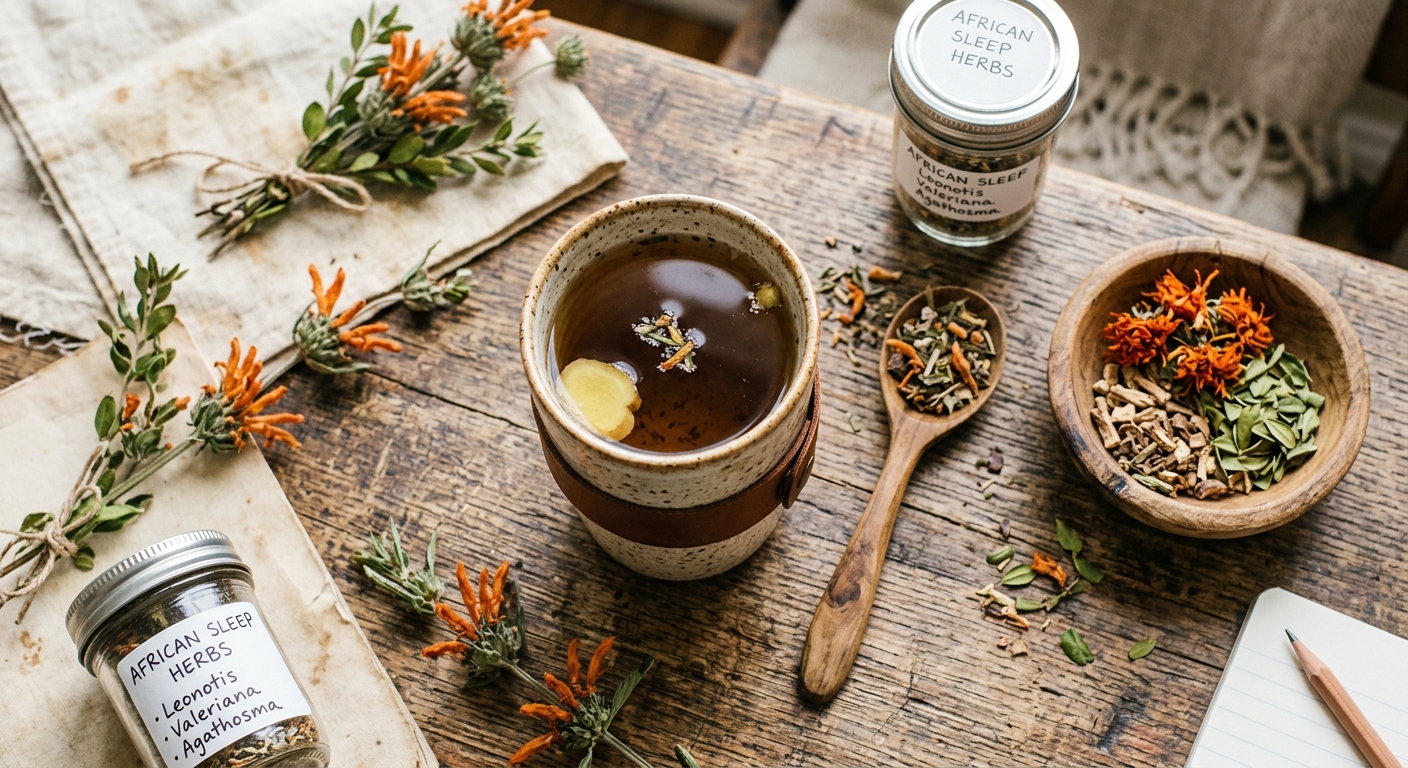
Long before modern pharmacology, healers across sub-Saharan Africa, the Cape regions, and East African highlands were crafting sleep remedies from the land around them. Plants such as Leonotis leonurus (wild dagga), Valeriana capensis (African valerian), and Agathosma betulina (buchu) were gathered and prepared as evening teas, steam baths, and infusions to soothe restless minds and prepare the body for sleep. These traditions were passed down through generations of traditional healers known as izinyanga and izangoma in Southern Africa, and their botanical knowledge forms the foundation of this blend.
What makes African sleep herbs particularly compelling is their ecological and chemical diversity. The Cape Floristic Region alone is one of the world’s six recognized floral kingdoms, producing an extraordinary concentration of unique medicinal plants with documented sedative, anxiolytic, and muscle-relaxing properties. Wild dagga, with its striking orange blooms, has long been used by the Khoikhoi and Zulu peoples to relieve tension and encourage calm. African valerian shares a functional kinship with its European relative but carries its own distinct alkaloid and valerenic acid profile shaped by the South African highveld. Buchu, revered as a sacred healing plant among the Khoisan, rounds out the blend with its distinctive blackcurrant-and-mint aroma and gentle antispasmodic action on the digestive system, which often holds the key to true relaxation.
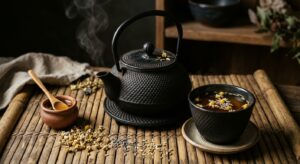
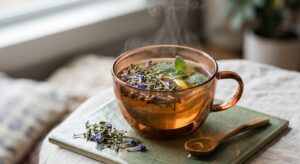
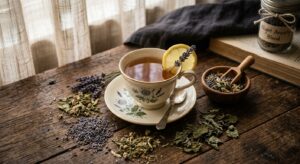
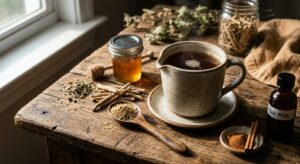
This tea is designed to be consumed as part of a mindful evening ritual. Its flavor is complex and grounding, with earthy bass notes from the valerian, a softly herbal and slightly sweet body from the wild dagga flowers, and bright aromatic top notes courtesy of the buchu. Brewed correctly, it produces a deep amber cup that invites slow sipping and signals to your nervous system that the day is done.
2
cups
Ingredients
- 2 tspdried wild dagga flowers and leaves (Leonotis leonurus)
- 1 tspdried African valerian root (Valeriana capensis), lightly crushed
- 0.5 tspdried buchu leaves (Agathosma betulina)
- 480 mlwater (90°C / 194°F)
- —raw honey or coconut sugar to taste (optional)
- —a slice of fresh ginger (optional, for warming depth)
How to Brew
Click on an item below to shop for the recommended items for this recipe on Amazon.
As an Amazon Associate, we earn from qualifying purchases.
- Measure 2 tsp dried wild dagga, 1 tsp lightly crushed African valerian root, and 0.5 tsp dried buchu leaves into a tea infuser or small teapot. Lightly crushing the valerian root with the back of a spoon helps open up the cell structure and improves extraction.
- Heat filtered water to 90 to 95°C (194 to 203°F). If you do not have a temperature-controlled kettle, bring water to a full boil and allow it to rest off the heat for 2 to 3 minutes before pouring.
- Pour 480 ml of hot water directly over the herbs, ensuring all plant material is submerged. Cover the teapot or mug with a lid or small plate to trap the volatile aromatic compounds as the tea steeps.
- Steep for 10 to 12 minutes. The longer steep allows the harder valerian root material to fully release its actives alongside the more delicate flower and leaf constituents. Begin checking at 10 minutes.
- Remove the infuser or strain the tea through a fine-mesh sieve into two mugs. Add raw honey or coconut sugar to taste if desired. Sip slowly in a dimly lit space 30 to 45 minutes before bed.
- Combine 3 tsp dried wild dagga, 1.5 tsp lightly crushed African valerian root, and 1 tsp dried buchu leaves in a clean glass jar. The ratios are increased slightly compared to hot brew because cold water extracts less efficiently, particularly from root material.
- Add 600 ml of cold, filtered water to the jar. Stir gently to ensure all the herb material is moistened and submerged. Do not crush or bruise the herbs further at this stage.
- Cover the jar with a lid and leave it at room temperature for 1 hour to allow initial extraction to begin, then transfer to the refrigerator.
- Allow the tea to cold brew in the refrigerator for 8 to 10 hours, or overnight. The slow, cold extraction draws out a gentler range of compounds, reducing the sharpness of the valerian while preserving the buchu’s aromatic oils beautifully.
- Strain the finished tea through a fine-mesh sieve or cheesecloth-lined strainer into a pitcher or directly into two glasses over ice. Sweeten with liquid honey if desired. Gently warm one cup in a small saucepan if you prefer a warm drink before bed without re-brewing.
- Place 1.5 tsp crushed African valerian root and 480 ml of cold, filtered water into a small saucepan. Starting the root in cold water and bringing the temperature up gradually encourages deeper, more complete extraction of the root’s active constituents.
- Bring the water and valerian root up to a gentle simmer over medium heat. Once small bubbles are consistently rising (approximately 85 to 90°C), reduce the heat to low and maintain a gentle simmer for 15 minutes. Do not allow a full rolling boil, as this degrades heat-sensitive compounds.
- After 15 minutes, add 2 tsp dried wild dagga flowers and leaves and 0.5 tsp dried buchu leaves directly to the saucepan. These more delicate aerial parts need only minimal exposure to heat and should not be simmered for the full duration.
- Continue a very gentle simmer for a further 5 minutes, then remove the saucepan from the heat entirely. Cover with a lid and allow the blend to rest and steep off the heat for an additional 5 minutes. This resting phase allows the volatile aromatic oils of the buchu to infuse without being driven off by heat.
- Strain the decoction through a fine-mesh sieve into two mugs, pressing the spent herbs gently with the back of a spoon to extract the remaining liquid. Add honey to taste. The decoction will be noticeably richer and more potent than the hot brew, so begin with a smaller serving if you are new to this blend.
Health Benefits
The combination of valerenic acid from African valerian and apigenin from wild dagga flowers acts on GABA and benzodiazepine receptor sites in the central nervous system, reducing the neural excitability that delays sleep onset. Traditional use and emerging phytochemical research both support this blend’s role as a gentle, non-habit-forming sleep aid.
Leonurine and apigenin together provide a mild anxiolytic effect by modulating inhibitory neurotransmitter pathways, helping quiet the racing thoughts and physiological arousal that prevent restful sleep. Ethnobotanical records from Southern Africa document the consistent use of wild dagga specifically for anxiety and emotional distress.
Buchu’s diosphenol content gives this blend meaningful antispasmodic properties, relaxing smooth muscle in the gastrointestinal tract. This addresses the common but often overlooked link between evening digestive discomfort, including bloating and cramping, and disrupted sleep.
The smooth muscle-relaxing alkaloids in wild dagga, particularly leonurine, extend their action beyond the digestive system to skeletal muscle groups, helping to release the physical tension that accumulates throughout the day and that many people carry into sleep.
Beyond their direct pharmacological effects, the act of preparing and slowly consuming a warm herbal tea activates the parasympathetic nervous system through warmth, aroma, and mindful repetition. Studies on pre-sleep routines consistently show that consistent sensory cues before bed improve sleep quality over time by anchoring the body’s circadian signaling.
🧪 Key Bioactive Compounds
The Science Behind Wild Dagga (Leonotis Leonurus)
The sedative mechanism of this blend operates primarily through GABAergic modulation, the same pathway targeted by many pharmaceutical sleep aids, but with a broader, gentler pharmacological footprint. Valerenic acid from African valerian root has been shown in multiple in vitro and animal studies to inhibit the enzyme GABA transaminase, which is responsible for breaking down gamma-aminobutyric acid in the synaptic cleft. By slowing this degradation, valerenic acid effectively prolongs the calming, inhibitory signal of GABA without directly binding to the receptor in the way that benzodiazepines do. This distinction is thought to be why valerian-type herbs do not produce the dependency, tolerance, or morning grogginess commonly associated with prescription sedatives.
Wild dagga contributes complementary chemistry through its flavonoid and alkaloid content. Apigenin, well-studied in chamomile, is also present in Leonotis leonurus flowers and has demonstrated direct binding affinity for the benzodiazepine site of the GABA-A receptor complex in multiple clinical and in vitro models. Leonurine, the plant’s signature alkaloid, adds smooth muscle relaxation and mild cardiovascular calming effects that broaden the herb’s sedative action beyond the central nervous system into the body’s peripheral tension network. A 2013 study published in the Journal of Ethnopharmacology documented the anxiolytic behavior of Leonotis leonurus extracts in rodent models, validating its long-standing traditional use.
Buchu’s contribution is more aromatic and antispasmodic in nature, but its role in sleep is not trivial. The gut-brain axis is now well-established in neuroscience, with enteric nervous system signaling playing a direct role in mood regulation and sleep pressure. By relaxing smooth muscle in the gastrointestinal tract through the action of diosphenol and related monoterpenoids, buchu removes a common physiological barrier to sleep onset. The aromatic compounds in buchu, released during brewing, also engage the olfactory system, which connects directly to the limbic structures governing emotional regulation and memory, meaning that the ritual of smelling and tasting this tea may itself trigger a learned relaxation response over repeated use.
Brewing Tips
- Always lightly crush dried African valerian root before brewing. The root’s dense, fibrous structure resists water penetration and crushing dramatically improves the extraction of valerenic acid and other active compounds.
- Buchu leaves are potent and aromatic. Measure carefully and resist the temptation to add more, as too much buchu can overpower the blend and introduce an overly medicinal, camphorous quality that masks the pleasant floral notes of the wild dagga.
- For best results, begin your sleep tea ritual 45 to 60 minutes before your intended bedtime. Pair the tea preparation with dimming lights and reducing screen exposure to compound the tea’s sedative effect through environmental sleep cues.