
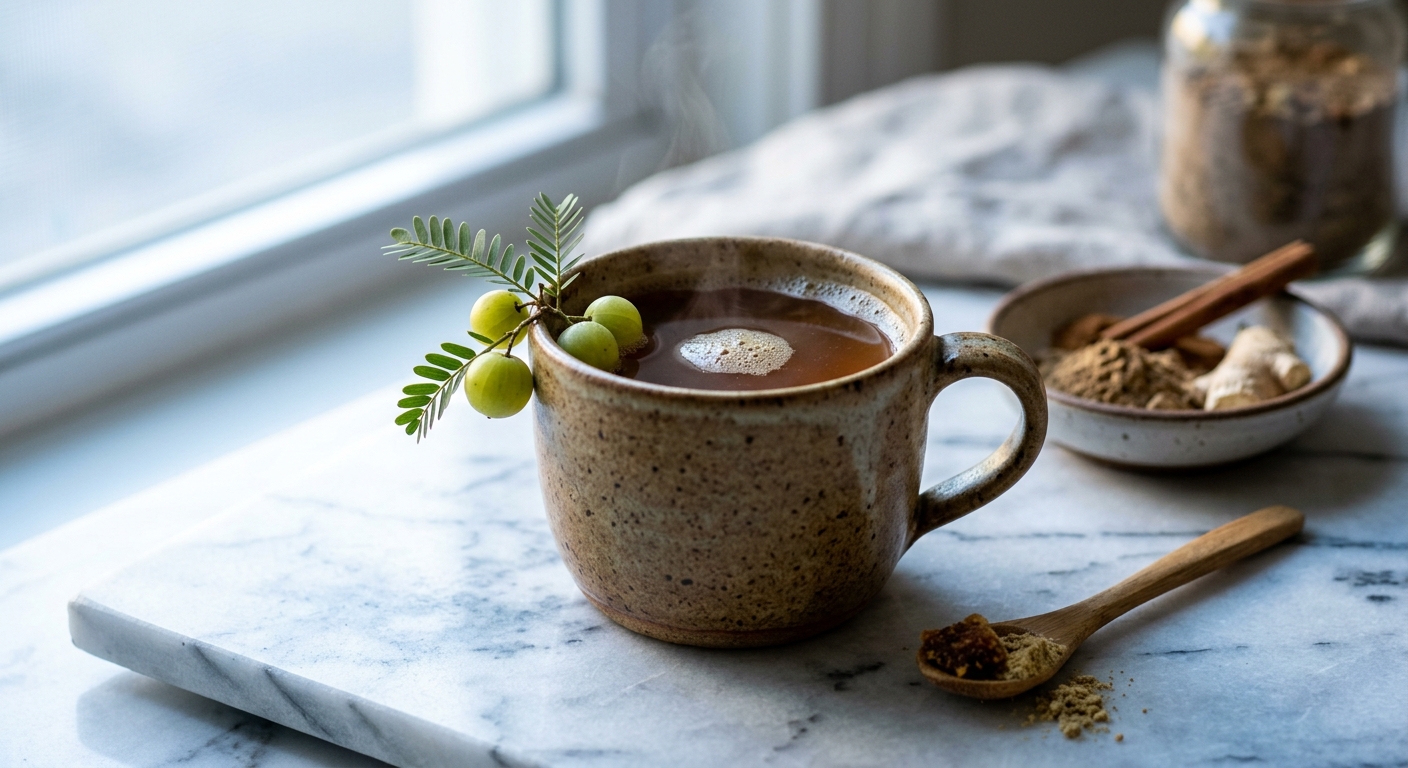
Triphala, meaning ‘three fruits’ in Sanskrit, is one of Ayurveda’s most celebrated and enduring formulas. Composed of three dried fruits – amalaki (Emblica officinalis), bibhitaki (Terminalia bellirica), and haritaki (Terminalia chebula) – this ancient blend has been prescribed by Ayurvedic practitioners for over 2,500 years to balance all three doshas, support digestion, and fortify the immune system. Its name appears in classical texts such as the Charaka Samhita and the Sushruta Samhita, where it was lauded as a rasayana, a rejuvenating tonic capable of promoting longevity and vitality.
What makes Triphala so remarkable is not just the power of each fruit individually, but the synergy created when they are combined. Amalaki is one of the richest plant sources of vitamin C on earth, providing potent antioxidant protection. Bibhitaki offers powerful antimicrobial and anti-inflammatory compounds that support respiratory health, while haritaki contributes tannins and chebulic acid with adaptogenic properties that help the body cope with stress and seasonal illness. Together, they create a tonic greater than the sum of its parts, offering a full-spectrum approach to immune resilience that modern science is only beginning to understand.
Brewed as a tea, Triphala delivers these bioactive compounds in a highly bioavailable form. The taste is complex and deeply herbal – earthy, astringent, mildly bitter with a subtle sweet finish from the amalaki. It is not a delicate or floral drink, but a purposeful one. Sipped warm in the morning or cooled over ice, Triphala Immune Tea is a ritual of nourishment with deep roots in one of the world’s oldest healing traditions.
2
cups
Ingredients
- 2 tsptriphala powder or churna
- 500 mlwater (95°C / 203°F)
- —raw honey or jaggery to taste (optional)
- —a pinch of ground ginger (optional, for extra warmth)
- —a pinch of cinnamon (optional, for sweetness and depth)
How to Brew
Click on an item below to shop for the recommended items for this recipe on Amazon.
As an Amazon Associate, we earn from qualifying purchases.
- Bring 500 ml of filtered water to approximately 95°C (203°F). Because triphala’s tannins and chebulic acids are heat-stable, using near-boiling water is appropriate and encourages full extraction of its bioactive compounds.
- Add 2 teaspoons of triphala churna (powder) directly into a small saucepan or heat-safe pitcher. Avoid using a standard tea infuser, as the fine powder will pass straight through most mesh sizes.
- Pour the hot water over the triphala powder, stirring vigorously with a spoon to disperse the powder evenly throughout the liquid. The water will immediately begin to deepen to a rich amber-brown color.
- Allow the mixture to steep uncovered for 10 to 15 minutes, stirring once or twice during steeping to ensure full extraction. A longer steep will produce a more potent, more astringent brew.
- Strain the tea through a fine-mesh sieve or a piece of cheesecloth into two mugs, pressing gently to extract all liquid. Discard the remaining sediment.
- Taste the tea before sweetening. If desired, stir in a small amount of raw honey or jaggery. Add a pinch of ground ginger or cinnamon for additional warming and flavor complexity. Drink warm.
- Measure 2 teaspoons of triphala churna into a clean glass jar with a lid. For cold brewing, filtered or spring water is strongly recommended, as the long steep time makes any chlorine taste more noticeable.
- Pour 500 ml of room-temperature water over the powder. Stir thoroughly with a long spoon to disperse the powder as evenly as possible, then seal the jar.
- Allow the jar to sit at room temperature for 30 minutes to initiate extraction, then transfer it to the refrigerator. Let it steep for 8 to 12 hours, or overnight.
- The following morning, remove the jar and give it a final stir. The liquid will have turned a deep, reddish-brown amber. Strain through a double layer of cheesecloth or a very fine-mesh sieve into a clean jar or pitcher, pressing gently.
- Pour over a glass of ice, or drink chilled. Sweeten lightly with honey if desired. Cold-brewed triphala tea will keep refrigerated for up to 48 hours.
- Combine 2 teaspoons of triphala churna with 750 ml of cold filtered water in a small saucepan. Starting with cold water allows the compounds to begin dissolving gradually as the temperature rises, improving extraction.
- Place the saucepan over medium heat and bring the mixture to a full boil, stirring occasionally. Once boiling, reduce the heat to a gentle simmer.
- Simmer uncovered for 20 to 25 minutes, stirring every 5 minutes. The liquid will reduce and concentrate, shifting from a pale brown to a deep, dark amber. The goal is to reduce the original 750 ml down to approximately 400 to 500 ml of concentrated decoction.
- Remove from heat and allow the decoction to cool for 5 minutes. Strain through a fine-mesh sieve lined with cheesecloth into two mugs, pressing the residue firmly to extract every drop of the concentrated liquid.
- Taste before adding anything. The kashaya will be significantly more potent and astringent than a simple hot brew. Stir in a small amount of raw honey (added after cooling slightly, to preserve honey’s enzymes) and a pinch of ginger or long pepper (pippali) if desired, in keeping with the classical Ayurvedic preparation. Drink warm, ideally on an empty stomach in the morning.
Health Benefits
The combined polyphenols and tannins in triphala, particularly gallic acid, ellagic acid, and chebulagic acid, stimulate immune cell activity and reduce systemic inflammation. A 2017 review in the Journal of Ethnopharmacology confirmed triphala’s broad immunomodulatory effects across multiple studies.
Amalaki alone is one of the most antioxidant-rich foods in the world, and its unique emblicanin compounds are heat-stable, surviving the brewing process. Regular consumption of triphala tea helps neutralize free radicals that damage immune cells and accelerate aging.
Roughly 70 percent of the immune system resides in the gut, and triphala has been shown to act as a gentle prebiotic, promoting beneficial gut bacteria while inhibiting pathogenic species. Clinical studies have demonstrated its efficacy in reducing intestinal inflammation and improving bowel regularity, both of which underpin a strong immune response.
Bibhitaki has a long history of use in Ayurvedic medicine for respiratory conditions, and its key compounds, including bellericoside and gallic acid, demonstrate antimicrobial activity against common respiratory pathogens. The tea can help ease congestion and support recovery from seasonal colds and upper respiratory infections.
Haritaki’s adaptogenic properties help regulate cortisol and oxidative stress, two key factors that suppress immune function during periods of chronic stress or illness. Traditional Ayurvedic use as a rasayana aligns with emerging research showing triphala supports resilience at the cellular level.
🧪 Key Bioactive Compounds
The Science Behind Triphala
The therapeutic power of Triphala lies in one of the most complex and well-studied collections of polyphenols found in any herbal preparation. The three constituent fruits collectively contain hydrolysable tannins, including gallic acid, ellagic acid, chebulinic acid, and chebulagic acid, alongside unique compounds like amalaki’s emblicanins A and B, which are not found anywhere else in the plant kingdom. These compounds work through multiple overlapping mechanisms: scavenging free radicals, inhibiting pro-inflammatory cytokines, and directly interfering with microbial and viral replication cycles. A 2020 study published in Frontiers in Pharmacology highlighted chebulagic acid’s ability to block viral entry into host cells by interfering with cell surface receptors used by several common pathogens.
Gut immunity is another key area where triphala’s science is particularly compelling. Research published in the Journal of Alternative and Complementary Medicine found that triphala acts as a prebiotic, selectively promoting the growth of Lactobacillus and Bifidobacterium species while suppressing harmful bacteria such as E. coli and Staphylococcus aureus. Since the gut-associated lymphoid tissue (GALT) is responsible for coordinating a major portion of the body’s immune responses, triphala’s ability to optimize the gut microbiome has direct, meaningful implications for systemic immunity. The tannins in triphala also reinforce the intestinal mucosal lining, reducing permeability and limiting the translocation of pathogens into the bloodstream.
Amalaki’s vitamin C content deserves special mention in the context of immune support. Unlike ascorbic acid from synthetic supplements, the vitamin C in amalaki is bound within a matrix of tannoids and bioflavonoids that appear to dramatically slow its oxidation and enhance its bioavailability. Studies comparing synthetic ascorbic acid to amalaki extracts found the latter to be significantly more stable and effective as an antioxidant over time. When brewed as a tea, particularly at temperatures below boiling or through cold brewing, a meaningful portion of this vitamin C complex survives into the cup, making the choice of brewing method more than a matter of preference – it can genuinely affect the nutritional profile of your daily brew.
Brewing Tips
- Use cold brew if your primary goal is maximizing vitamin C content from amalaki, as lower temperatures preserve heat-sensitive compounds better than hot or decoction methods.
- Take triphala tea on an empty stomach, ideally first thing in the morning or just before bed, as Ayurvedic tradition and modern research both suggest this timing optimizes its digestive and immune benefits.
- If the taste is too astringent for your palate, add a small amount of jaggery rather than white sugar, as jaggery contains trace minerals and is considered complementary to triphala in classical Ayurvedic formulation.
- Source your triphala churna from a reputable Ayurvedic supplier that provides third-party testing for heavy metals, as triphala products have occasionally been found to contain contamination when sourced without quality controls.