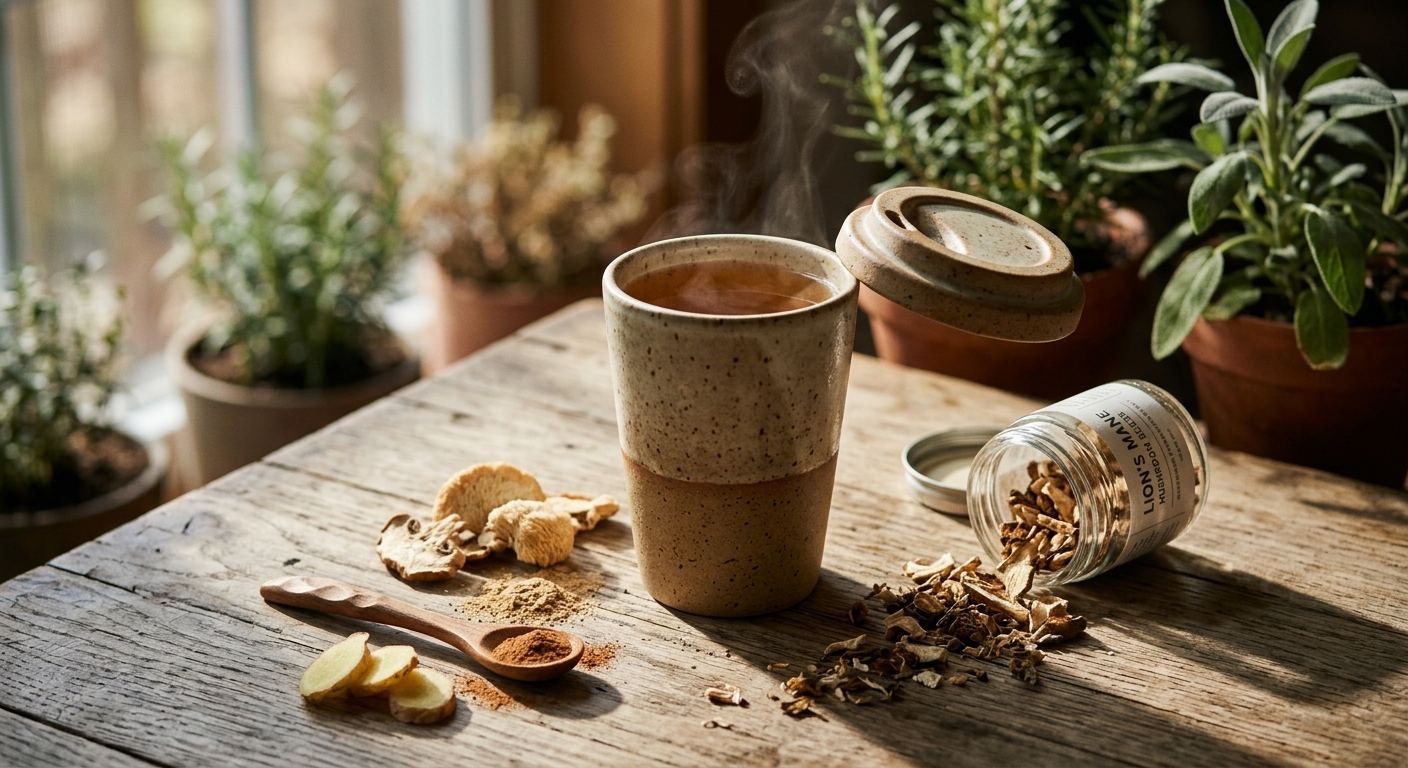
Long before neuroscientists began studying its effects on brain-derived neurotrophic factor, lion’s mane mushroom (Hericium erinaceus) was revered in traditional Chinese and Japanese medicine as a tonic for the mind and digestive system. Buddhist monks reportedly consumed it to sharpen their concentration during meditation, and it earned poetic names across Asia, including “mountain priest mushroom” and “monkey head mushroom.” Its cascading white tendrils resemble the flowing mane of a lion, making it one of the most visually striking fungi in the natural world.
What sets lion’s mane apart from other adaptogenic herbs and mushrooms is its remarkable affinity for the nervous system. Unlike caffeine-driven focus boosters that force alertness through stimulation, lion’s mane works by nourishing the brain at a cellular level. It contains a unique class of compounds, hericenones and erinacines, that have been shown in laboratory and clinical studies to stimulate the production of nerve growth factor (NGF), a protein essential for the growth, maintenance, and survival of neurons. This makes it a genuinely distinctive ingredient in the world of herbal tea.
As a tea, lion’s mane offers an experience unlike any floral or leafy herbal brew. The flavor is mild, slightly savory, and faintly reminiscent of seafood or shiitake mushroom, with a clean, woodsy finish. It lacks the bitterness of many medicinal mushrooms, making it approachable on its own or blended with warming spices like ginger or cinnamon. Whether you are preparing for a deep work session, looking for sustained mental energy without the jitters, or simply exploring the rich tradition of mushroom medicine, lion’s mane tea is a rewarding ritual worth building into your day.
2
cups
Ingredients
- 10 gdried lion’s mane mushroom slices or powder
- 500 mlwater (filtered preferred)
- 1 tspraw honey or maple syrup (optional)
- —pinch of cinnamon or fresh ginger slice (optional)
How to Brew
Click on an item below to shop for the recommended items for this recipe on Amazon.
As an Amazon Associate, we earn from qualifying purchases.
- Measure 10 g of dried lion’s mane mushroom slices (or 1 heaping teaspoon of powder) per 500 ml of water.
- Bring filtered water to 90°C (194°F). Avoid a full rolling boil, as very high heat can degrade some of the delicate bioactive compounds over a long steep.
- Add the lion’s mane slices to a small saucepan or heat-safe pot and pour the hot water over them. Cover with a lid to trap volatile aromatics.
- Allow the mushroom to steep for 20 to 30 minutes, maintaining a gentle simmer if using slices. For powder, remove from heat and steep covered for 10 minutes.
- Strain through a fine mesh strainer or cheesecloth into your mug. Press the slices gently to extract as much liquid as possible.
- Add honey, maple syrup, or a pinch of cinnamon if desired. Sip slowly and enjoy within 30 minutes for the freshest flavor.
- Measure 12 g of dried lion’s mane slices or 1.5 teaspoons of powder per 500 ml of cold, filtered water. Slightly more mushroom is used to compensate for the lower extraction rate of cold water.
- Combine the lion’s mane and cold water in a clean glass jar. Stir briefly to ensure all the mushroom material is submerged.
- Seal the jar and leave it at room temperature for 1 hour to begin the extraction process, then transfer to the refrigerator.
- Steep in the refrigerator for a total of 10 to 14 hours, or overnight. The slow, cold extraction produces a noticeably smoother and slightly sweeter flavor compared to hot brewing.
- Strain the liquid through a fine mesh strainer lined with cheesecloth into a clean jar or pitcher. Discard the spent mushroom solids.
- Serve over ice or chilled as-is. Stir in a few drops of maple syrup and a squeeze of lemon juice for a refreshing focus drink. Store in the refrigerator for up to 3 days.
- Add 15 g of dried lion’s mane slices to 750 ml of filtered water in a small stainless steel or ceramic saucepan. Do not use aluminum cookware.
- Bring the water to a gentle boil over medium heat, then immediately reduce to a steady low simmer. The liquid should bubble gently but not vigorously.
- Cover the saucepan with a lid slightly ajar to allow some steam to escape while preventing too much evaporation. Simmer for 45 to 60 minutes.
- Check the liquid level periodically. If it drops below 300 ml, add a small amount of hot water to maintain volume.
- After simmering, remove from heat and allow to rest covered for 10 minutes. This resting period allows remaining compounds to fully dissolve into the liquid.
- Strain through a fine mesh strainer lined with cheesecloth, pressing the mushroom pieces firmly to extract all liquid. You should yield approximately 400 ml of rich, concentrated decoction.
- Serve in small cups (100 to 150 ml) as a potent concentrate, or dilute with hot water to taste. A spoonful of ghee or coconut oil can be blended in to support fat-soluble compound absorption.
Health Benefits
Hericenones and erinacines stimulate NGF production, which supports the maintenance and function of cholinergic neurons critical to attention and working memory. A 2009 double-blind clinical trial published in Phytotherapy Research found significant improvements in cognitive function scores in adults who took lion’s mane extract over 16 weeks.
The NGF-stimulating compounds in lion’s mane have been studied for their potential to support peripheral nerve regeneration after injury, with animal studies showing accelerated recovery of nerve function when lion’s mane extract was administered.
A randomized, double-blind placebo-controlled study published in Biomedical Research (2010) found that women who consumed lion’s mane cookies for four weeks reported significantly lower scores for anxiety, irritability, and concentration difficulties compared to the placebo group.
Amyloban and other polysaccharide fractions have demonstrated neuroprotective effects in cell studies, specifically protecting neurons from oxidative stress and amyloid-beta toxicity, suggesting potential long-term benefits for brain aging.
Lion’s mane has a long history of use as a digestive tonic in traditional Chinese medicine. Modern research has identified anti-inflammatory effects on gastric mucosa, with studies in animals showing protection against gastric ulcers and improvements in gut microbiome diversity.
🧪 Key Bioactive Compounds
The Science Behind Lion’S Mane Mushroom
The central story of lion’s mane science revolves around two families of bioactive compounds: hericenones, found in the fruiting body, and erinacines, concentrated in the mycelium. Both compound families have been shown in multiple studies to cross the blood-brain barrier and stimulate the biosynthesis of nerve growth factor, a protein first discovered by Nobel laureate Rita Levi-Montalcini. NGF plays an indispensable role in the survival, maintenance, and regeneration of neurons, particularly cholinergic neurons in the basal forebrain that are closely tied to learning, memory, and attention. The ability of a dietary substance to meaningfully influence NGF production is rare, which is why lion’s mane has attracted significant interest from neuroscientists studying cognitive aging and neurodegeneration.
Clinical human trials remain limited but are promising. A landmark double-blind, placebo-controlled trial conducted in Japan and published in Phytotherapy Research in 2009 enrolled 30 adults aged 50 to 80 with mild cognitive impairment. Participants who received 250 mg lion’s mane tablets three times daily for 16 weeks showed significantly higher scores on the Revised Hasegawa Dementia Scale compared to the placebo group. Importantly, cognitive scores declined again after supplementation stopped, suggesting the effects are ongoing and require continued use. More recent research has focused on erinacine A in particular, which has demonstrated the strongest NGF-stimulating activity in animal models and has been shown to reduce amyloid-beta plaque accumulation in mouse models of Alzheimer’s disease.
Beyond cognitive function, lion’s mane’s beta-glucans contribute to immune modulation by binding to pattern recognition receptors on immune cells, activating macrophages and natural killer cells without triggering excessive inflammation. These same polysaccharides appear to support gut health by acting as prebiotics and exerting anti-inflammatory effects on the gastric lining, which aligns with the mushroom’s long traditional use as a digestive remedy. Researchers have also noted that the gut-brain axis may be one pathway through which lion’s mane influences mood and cognition, as improvements in gut microbiome composition can influence neurotransmitter production, including serotonin and dopamine precursors.
Brewing Tips
- Source your lion’s mane from a reputable supplier that specifies whether the product is made from the fruiting body, the mycelium, or both. Fruiting body extracts are higher in hericenones, while mycelium products tend to be richer in erinacines. A full-spectrum product combining both offers the broadest range of compounds.
- Consistency matters more than dose with lion’s mane. Research suggests its cognitive benefits accumulate with daily use over several weeks rather than providing an immediate effect like caffeine. Build it into your morning or pre-work routine for best results.
- Pair lion’s mane tea with rhodiola rosea or ginkgo biloba for a complementary focus blend. Rhodiola reduces mental fatigue while lion’s mane supports underlying neuronal health, creating a synergistic combination that addresses both short-term alertness and long-term brain resilience.