
Known as Lingzhi in Chinese and Reishi in Japanese, Ganoderma lucidum has been revered in East Asian medicine for over 2,000 years. Ancient texts describe it as the “mushroom of immortality,” a tonic reserved for emperors and nobility who sought longevity, vitality, and spiritual clarity. Depicted in silk paintings and carved into temple doorways, reishi occupied a place in Chinese culture that was equal parts botanical medicine and sacred symbol. It was classified in the highest tier of traditional Chinese materia medica, shang pin, meaning superior herbs that nourish life without causing harm.
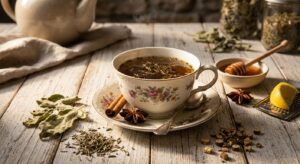
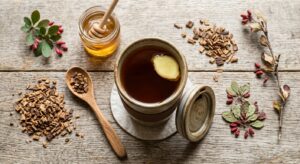
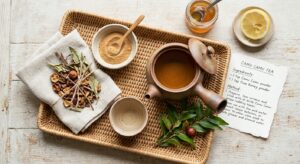
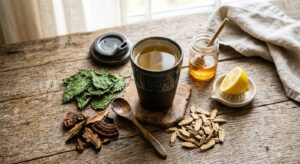
Unlike culinary mushrooms, reishi has a woody, cork-like texture and an intensely bitter flavor that makes it unsuitable for eating raw. Its power lies in a long, slow extraction. Traditional practitioners simmered sliced or powdered reishi for hours, coaxing out the full spectrum of its bioactive compounds. This decoction method remains the gold standard today and is the most effective way to unlock the immune-supporting beta-glucans and liver-protective triterpenoids locked within its tough cell walls. Modern herbalists sometimes blend it with warming spices like cinnamon and ginger to balance its bitterness and enhance absorption.
Contemporary research has given scientific weight to what ancient healers observed empirically. Studies have identified over 400 bioactive compounds in reishi, with polysaccharides and triterpenes receiving the most attention for their effects on immune modulation, inflammation, stress adaptation, and sleep quality. Whether you are brewing it as a daily wellness ritual or turning to it during cold and flu season, reishi immune tea is a deeply nourishing drink that connects you to one of the longest-standing herbal traditions on earth.
2
cups
Ingredients
- 10 gdried reishi mushroom slices (or 1 tsp reishi powder)
- 500 mlwater (filtered)
- —1 cinnamon stick (optional, to soften bitterness)
- —2 to 3 slices fresh ginger (optional, for warmth)
- —raw honey or dates to taste (optional)
How to Brew
Click on an item below to shop for the recommended items for this recipe on Amazon.
As an Amazon Associate, we earn from qualifying purchases.
- Place 10 g of dried reishi slices (or 1 tsp reishi powder) into a small saucepan with 500 ml of filtered water.
- Add the optional cinnamon stick and ginger slices now if using, as they benefit from the same long decoction.
- Bring the water to a full boil over medium-high heat, then immediately reduce the heat to a gentle simmer. The surface should bubble softly, not vigorously.
- Simmer uncovered for 25 to 45 minutes, allowing the liquid to reduce by roughly one-quarter. The brew will deepen to a rich amber or mahogany color.
- Remove from heat and strain the liquid through a fine mesh strainer or cheesecloth into your mug, pressing the reishi pieces gently to extract remaining liquid.
- Allow to cool slightly to drinking temperature, then sweeten with raw honey or a pitted date if desired. Serve immediately and sip slowly.
- Add 1.5 to 2 tsp of reishi mushroom powder to a clean glass jar with 500 ml of cold filtered water. Stir briskly for 30 seconds to disperse the powder.
- Cover the jar loosely and leave it at room temperature for 2 hours to allow initial hydration and early extraction of water-soluble polysaccharides.
- Move the jar to the refrigerator and allow it to steep for an additional 10 to 16 hours (overnight is ideal).
- When ready, stir the contents again, then strain through a fine mesh strainer lined with a paper coffee filter or cheesecloth into a pitcher, pouring slowly to separate fine powder sediment.
- Serve over ice or chilled straight from the jar. Add a few drops of liquid honey or a squeeze of orange juice to complement the earthiness. This cold brew keeps refrigerated for up to 48 hours.
- Combine 30 g of dried reishi slices with 1 liter of filtered water in a medium saucepan. For a richer, more complex concentrate, add 1 cinnamon stick, 4 slices of ginger, and 3 pitted dates.
- Bring to a full boil over medium heat, then reduce to a low simmer. The liquid should reduce steadily but not boil aggressively, which can degrade some heat-sensitive compounds.
- Simmer uncovered for 60 to 90 minutes, allowing the liquid to reduce to approximately 300 to 350 ml of dark, syrupy concentrate. Check periodically and add a splash of water if it reduces too quickly.
- Remove from heat and strain through a fine mesh strainer lined with cheesecloth, pressing firmly on the mushroom pieces to extract every drop of liquid.
- Allow the concentrate to cool completely, then pour into a sterilized glass jar or bottle. Store in the refrigerator for up to 7 days.
- To serve, mix 2 to 3 tablespoons of concentrate into 200 ml of hot water, warm oat milk, or vegetable broth. Adjust the dilution ratio to your preferred strength and sweeten if desired.
Health Benefits
Reishi’s beta-glucans bind to pattern recognition receptors on immune cells such as macrophages and natural killer cells, priming them for faster, more coordinated responses to pathogens. Multiple clinical trials suggest regular consumption can increase markers of immune activity in both healthy individuals and those undergoing immune stress.
Ganoderic acids and other triterpenoids inhibit the production of pro-inflammatory cytokines including tumor necrosis factor-alpha and interleukin-6. This anti-inflammatory action may support individuals with autoimmune tendencies, seasonal allergies, or chronic low-grade inflammation.
Reishi is classified as an adaptogen, meaning it helps regulate the body’s stress response via the hypothalamic-pituitary-adrenal axis. Adenosine and certain polysaccharides have been shown in animal studies to increase total non-REM sleep time, and traditional Chinese medicine has long used reishi to calm the shen, or spirit.
Ganoderic acids have demonstrated hepatoprotective effects in several studies, helping to shield liver cells from oxidative damage and supporting detoxification enzyme activity. Reishi has traditionally been used in cases of chronic fatigue and liver stagnation in East Asian herbal practice.
Reishi contains a broad spectrum of antioxidants including polyphenols and triterpenoids that neutralize free radicals and reduce oxidative stress. Regular consumption may help protect cells from the cumulative damage associated with aging and environmental toxin exposure.
🧪 Key Bioactive Compounds
The Science Behind Reishi Mushroom
The most extensively studied compounds in reishi are its high-molecular-weight polysaccharides, particularly the beta-1,3 and beta-1,6-D-glucans. These molecules act as biological response modifiers, binding to toll-like receptors and dectin-1 receptors on the surface of innate immune cells. This binding triggers a signaling cascade that activates macrophages and natural killer cells, increases phagocytic activity, and upregulates the production of protective cytokines such as interferon-gamma and interleukin-2. This is not a crude stimulation of the immune system but a sophisticated modulation, which is why reishi is considered an immunomodulator rather than simply an immunostimulant. It can prime an underactive immune system while simultaneously helping to regulate an overactive or dysregulated one.
Reishi’s triterpenoids, primarily the ganoderic acids, operate through different mechanisms. These lanostane-type compounds inhibit the enzyme NF-kB, a master regulator of inflammatory gene expression, reducing the transcription of pro-inflammatory cytokines in activated immune cells. Ganoderic acids have also demonstrated direct antiviral activity by inhibiting neuraminidase, an enzyme that several respiratory viruses rely on to replicate and spread between cells. This dual action of immune priming and direct pathogen inhibition gives reishi a layered profile of protection that is particularly valuable during cold and flu season.
Emerging research has begun to illuminate reishi’s effects on the gut-immune axis. Reishi polysaccharides appear to act as prebiotics, selectively feeding beneficial bacterial genera including Bifidobacterium and Lactobacillus while suppressing the growth of potentially harmful species. Since approximately 70 percent of immune tissue resides in and around the gastrointestinal tract, this gut-modulating effect may be one of the key mechanisms through which reishi exerts its systemic immune benefits. A 2019 study published in Nature Communications found that reishi polysaccharides reduced gut dysbiosis and adipose tissue inflammation in mouse models, adding further credibility to this pathway.
Brewing Tips
- Never discard your reishi slices after the first decoction. The same slices can be simmered two or three more times, yielding progressively lighter but still bioactive brews. Store used slices in the refrigerator between uses.
- If you find the bitterness of reishi difficult, add 2 to 3 pitted medjool dates directly to the saucepan during simmering. Dates add natural sweetness, complement the earthy flavor, and are themselves a traditional pairing in Chinese tonic preparation.
- For a daily immune ritual, prepare a large batch of reishi concentrate on Sunday and store it in the refrigerator. Each morning, stir 2 to 3 tablespoons into warm water, bone broth, or a mushroom latte with cacao and oat milk.