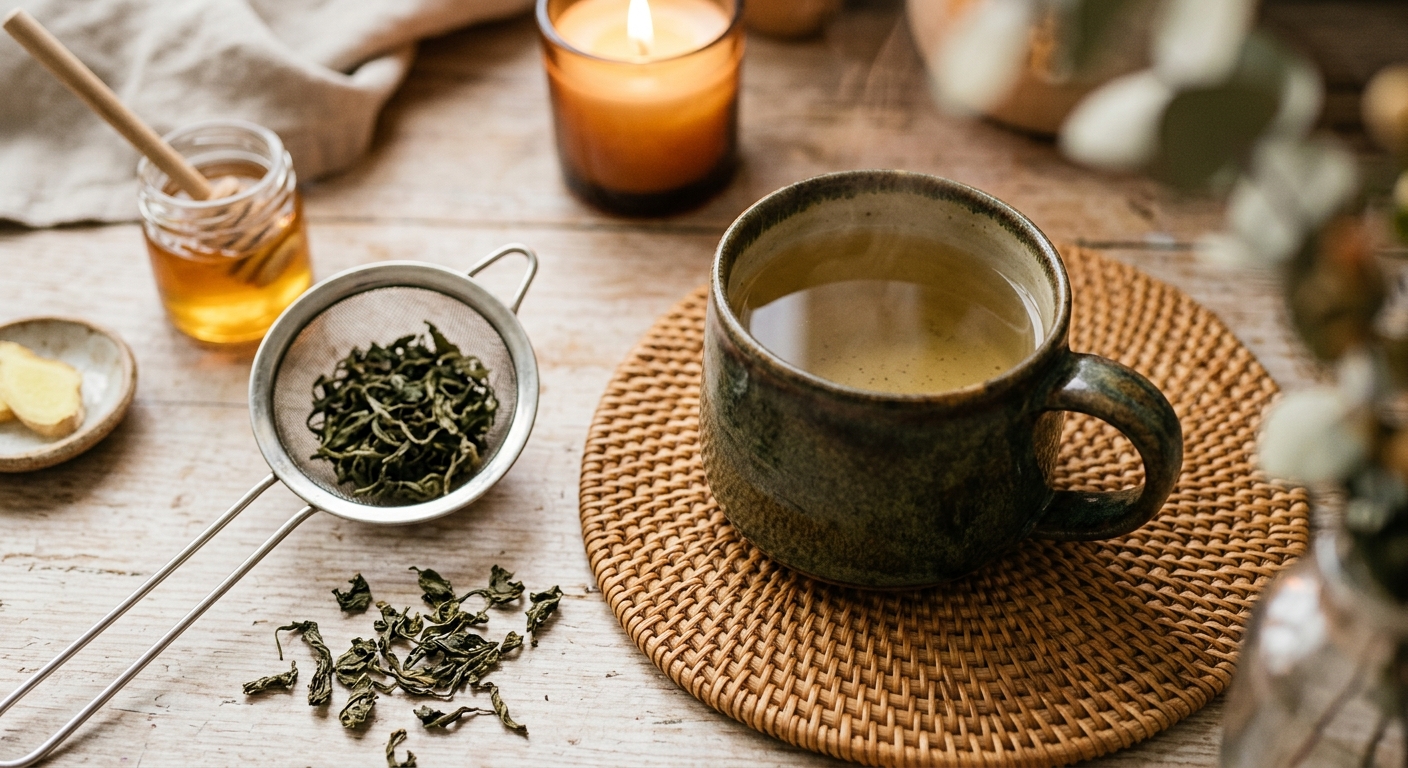
Deep in the mountainous regions of southern China, northern Vietnam, and Korea, a climbing vine known as Gynostemma pentaphyllum has been quietly earning a legendary reputation for centuries. Villagers in the Guizhou province of China noticed something remarkable about the people who regularly drank tea brewed from its leaves: they seemed to live unusually long, active lives well into their eighties and nineties. This observation eventually earned jiaogulan the poetic nickname “xiancao,” meaning the herb of immortality. While longevity claims are always to be taken with measured scepticism, modern science has begun unravelling why this humble vine has commanded such reverence across generations of Asian herbalists and mountain communities.
Jiaogulan belongs to the cucumber and gourd family, Cucurbitaceae, and its leaves contain a remarkable collection of saponins called gypenosides. Fascinatingly, over a hundred of these gypenosides are structurally similar or even identical to the ginsenosides found in Panax ginseng, which is why jiaogulan is sometimes called “southern ginseng” or “poor man’s ginseng.” It was formally catalogued in Chinese materia medica during the Ming Dynasty but remained largely outside the Western herbal tradition until research interest surged in the 1970s and 1980s. Today, it holds a respected place in the canon of adaptogenic herbs, valued for its ability to help the body regulate stress responses, support cardiovascular health, and promote balanced, clean-feeling energy.
What makes jiaogulan particularly appealing for an energy and focus formula is that it contains no caffeine whatsoever, yet many drinkers report a calm, grounded alertness after a cup. The tea has a pleasant, mildly grassy and slightly sweet flavour with a subtle bitterness that deepens on longer steeps. It brews into a beautiful pale jade green or golden-green liquor depending on the preparation, and it carries a quiet, herbaceous aroma reminiscent of fresh green leaves with a faint cucumber-like note. For anyone seeking a sustainable daily tonic that supports both mental performance and physical resilience, jiaogulan deserves a prominent place on the shelf.
2
cups
Ingredients
- 2 tspdried jiaogulan leaves
- 480 mlwater (80°C / 176°F)
- —raw honey or a few drops of stevia to taste (optional)
- —thin slice of fresh ginger (optional, for warmth and complexity)
How to Brew
Click on an item below to shop for the recommended items for this recipe on Amazon.
As an Amazon Associate, we earn from qualifying purchases.
- Heat your water to 75 to 85°C (167 to 185°F). If you don’t have a temperature-controlled kettle, bring water to a full boil then allow it to rest uncovered for 3 to 4 minutes to cool to the right range.
- Measure 1 teaspoon of dried jiaogulan leaves per 240 ml of water and place them into a tea infuser, strainer basket, or directly into a teapot.
- Pour the cooled water gently over the leaves, covering them completely. Place a lid or small saucer over the cup or teapot to trap the aromatic steam and retain heat during steeping.
- Steep for 3 minutes for a lighter, sweeter cup or up to 5 minutes for a more robust, slightly bitter expression. Taste at the 3-minute mark and adjust to your preference.
- Remove the infuser or strain the leaves. If desired, add a small amount of raw honey or a thin slice of fresh ginger while the tea is still hot. Sip slowly and enjoy the gentle, clarifying warmth.
- Note that jiaogulan leaves are excellent for multiple infusions. The second steep at 80 to 85°C for 4 to 6 minutes often reveals a sweeter, smoother flavour than the first.
- Measure 1 heaped teaspoon of dried jiaogulan leaves per 240 ml of cold, filtered water. For a 500 ml batch, use approximately 2 to 2.5 teaspoons of leaves.
- Place the leaves directly into a clean glass jar or a cold brew pitcher fitted with a filter basket. Add the cold or room-temperature filtered water and stir gently to ensure all the leaves are submerged.
- Seal the jar with a lid or cover the pitcher. Allow it to steep at room temperature for the first 30 minutes, then transfer to the refrigerator.
- Steep in the refrigerator for a minimum of 6 hours and up to 10 hours. Overnight steeping is ideal and produces the most flavourful, balanced result.
- When steeping is complete, strain the leaves through a fine mesh strainer or remove the filter basket. Taste the cold brew before adding any sweetener – cold steeping often brings out a natural, subtle sweetness that needs nothing added.
- Serve over ice in a tall glass. Cold brew jiaogulan keeps well in the refrigerator for up to 48 hours. Shake or stir gently before serving if it has been sitting.
- Choose a clear glass jar with a lid. Make sure it is thoroughly clean, as sun tea is steeped at temperatures too low to kill bacteria and hygiene is important.
- Add 1 teaspoon of dried jiaogulan leaves per 240 ml of cold, filtered water directly to the jar. For a 1-litre batch, use 4 to 5 teaspoons of leaves.
- Seal the jar and place it in a sunny spot outdoors or on a sun-facing windowsill. Position it where it will receive at least 2 to 3 hours of uninterrupted direct sunlight.
- Allow the tea to steep for 2 to 4 hours. The brew will gradually shift from clear to a pale jade or golden-green. Check the colour and taste it at the 2-hour mark to gauge strength.
- Once it has reached your desired strength, bring the jar indoors and immediately refrigerate it to halt the steeping and bring the temperature down to a safe, cold range.
- Strain out the leaves before serving. Pour over ice and garnish with a sprig of fresh mint or a thin cucumber slice to complement the herb’s subtle vegetal sweetness. Consume within 24 hours and do not store sun tea at room temperature.
Health Benefits
Unlike stimulant herbs, jiaogulan produces a calm, grounded alertness through its adaptogenic gypenosides, which help balance the body’s stress hormones and support mitochondrial energy production at the cellular level. Several small clinical studies have noted improvements in exercise endurance and mental performance in participants taking standardised jiaogulan extracts.
Jiaogulan’s gypenosides interact with the hypothalamic-pituitary-adrenal axis, helping to regulate cortisol output and normalize the body’s response to both physical and psychological stressors. This bidirectional modulating effect, which calms overactive stress responses while supporting energy under fatigue, is the hallmark of a true adaptogen.
Multiple studies, including randomised controlled trials in Chinese medical literature, indicate that jiaogulan extract can help lower elevated blood pressure and reduce LDL cholesterol while raising HDL cholesterol. The mechanism involves stimulation of nitric oxide synthesis, which promotes vasodilation and improved blood flow.
The rich flavonoid content of jiaogulan, particularly rutin, quercetin, and associated polyphenols, provides significant free-radical scavenging activity. Regular consumption has been associated in preclinical research with reduced markers of lipid peroxidation, suggesting a protective role against age-related cellular damage.
Emerging research suggests that jiaogulan may improve insulin sensitivity and support healthy glucose metabolism, with some studies showing modest reductions in fasting blood sugar in individuals with mild type 2 diabetes. These effects are thought to be mediated by its activation of the AMPK pathway, the same metabolic switch targeted by metformin.
🧪 Key Bioactive Compounds
The Science Behind Jiaogulan
The scientific story of jiaogulan begins with its extraordinary saponin content. Researchers have identified over 170 distinct gypenosides in Gynostemma pentaphyllum, and more than 80 of these share structural similarity with the ginsenosides that make Panax ginseng so pharmacologically active. This is remarkable, given that the two plants are not botanically related. Gypenosides have been shown in both animal models and some human trials to activate AMPK, adenosine monophosphate-activated protein kinase, often called the body’s “master metabolic switch.” AMPK activation promotes cellular energy efficiency, glucose uptake in muscle tissue, mitochondrial biogenesis, and suppression of inflammatory pathways, which collectively explain many of jiaogulan’s observed benefits on energy, metabolism, and longevity-associated markers.
From a neurological standpoint, the adaptogenic effects of jiaogulan appear to involve modulation of the hypothalamic-pituitary-adrenal axis. When the body is under stress, cortisol output can become dysregulated, leading to fatigue, cognitive fog, and mood disturbances. Gypenosides have demonstrated the ability to attenuate excessive cortisol release while also supporting baseline energy production during periods of low physiological arousal. This bidirectional, normalising action is the defining characteristic of a true adaptogen and is why jiaogulan produces alertness in the fatigued drinker while also calming anxiety in the overstimulated one. A notable 2014 study published in PLOS ONE demonstrated that a standardised jiaogulan extract significantly improved insulin sensitivity in patients with non-alcoholic fatty liver disease, a finding mediated almost entirely through AMPK pathway activation.
The cardiovascular benefits of jiaogulan have been among its most clinically studied properties. Research, particularly from Chinese and Korean institutions, has shown that gypenosides stimulate endothelial production of nitric oxide, a gaseous signalling molecule that causes smooth muscle relaxation in blood vessel walls and thereby reduces peripheral vascular resistance and blood pressure. Several randomised trials in Chinese medical journals have reported statistically significant reductions in systolic and diastolic blood pressure with jiaogulan supplementation over 4 to 8 weeks. The herb’s flavonoids, especially rutin and quercetin, add a complementary layer of vascular protection by reducing oxidative modification of LDL cholesterol and maintaining capillary integrity, painting a picture of an herb with genuinely multifaceted cardiovascular-protective chemistry.
Brewing Tips
- Purchase whole dried jiaogulan leaves from a reputable supplier rather than pre-ground powder, as whole leaves retain their aromatic oils and gypenoside content better and allow you to control your steep strength more precisely.
- Jiaogulan leaves are exceptionally well-suited to multiple infusions. After your first steep, re-steep the same leaves two or three more times, increasing the temperature slightly (by about 5°C) and the time by a minute with each subsequent infusion to continue extracting the herb’s rich compound profile.
- For a focused morning ritual, combine jiaogulan with a pinch of tulsi (holy basil) leaves. Both are adaptogens with complementary mechanisms and the pairing produces a rounded, mildly spiced cup that supports both cognitive clarity and calm energy throughout the morning without any caffeine dependence.