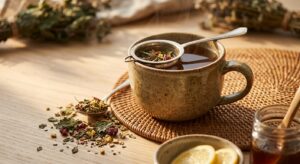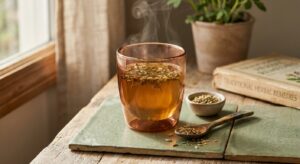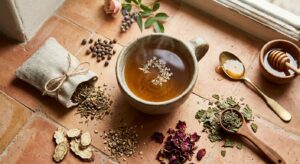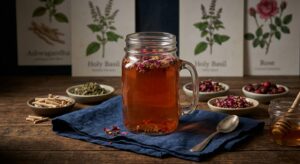
Vitex agnus-castus, commonly known as chaste tree or monk’s pepper, has been revered in Mediterranean and European herbal traditions for over 2,500 years. Ancient Greek physicians including Dioscorides and Hippocrates documented its use for menstrual complaints and postpartum recovery, and the plant was cultivated in monastery gardens throughout the Middle Ages, where monks reportedly used it to suppress libido, lending the herb its evocative common names. Today, vitex berry remains one of the most extensively studied herbal medicines for women’s hormonal health, bridging ancient wisdom and modern phytotherapy.
The small, reddish-brown berries of the chaste tree carry a warm, peppery aroma reminiscent of allspice and black pepper, with subtle bitter undertones that reflect the plant’s rich concentration of iridoid glycosides, flavonoids, and diterpenes. Unlike many herbal teas that deliver immediate sensory comfort, vitex is a slow-acting adaptogen for the endocrine system. Practitioners of traditional European herbal medicine emphasize that its benefits accumulate over weeks and months of consistent use, making the daily tea ritual as important as the herb itself.
Vitex works primarily through the hypothalamic-pituitary axis, where it is believed to modulate dopamine and prolactin pathways. This indirect hormonal influence sets it apart from phytoestrogenic herbs like red clover or black cohosh. Vitex does not supply or mimic hormones but rather gently encourages the body’s own regulatory mechanisms, making it a favored choice for addressing premenstrual syndrome, luteal phase defects, irregular cycles, and the hormonal fluctuations of perimenopause. A cup of vitex berry tea, sipped daily with intention, is both a therapeutic practice and a quiet act of care for the female body across its many seasons of life.
2
cups
Ingredients
- 2 tspdried vitex berries, lightly crushed
- 480 mlwater (95°C / 203°F)
- —raw honey or licorice root to taste (optional)
- —cinnamon stick or ginger slice for warmth (optional)
How to Brew
Click on an item below to shop for the recommended items for this recipe on Amazon.
As an Amazon Associate, we earn from qualifying purchases.
- Place 1 teaspoon of dried vitex berries per cup into a mortar and pestle or a small zip-lock bag. Crush them gently with a few firm presses – you want cracked skins and exposed seed, not a fine powder.
- Bring fresh filtered water to just below a full boil, around 95°C (203°F). A rolling boil is acceptable for these hard berries, as the robust seed coat requires higher heat for full extraction.
- Place the crushed berries into a fine mesh tea infuser or a small saucepan. Pour the hot water directly over the berries and cover immediately to trap the aromatic volatile compounds.
- Steep for 10 to 15 minutes. The longer steep will yield a stronger, more medicinal brew with pronounced bitterness. If you are new to vitex, begin at 10 minutes and increase gradually.
- Strain the tea thoroughly through a fine mesh strainer into your mug. The berries will swell and soften during steeping, and a second straining with a cloth or paper filter ensures a clean cup.
- Sweeten with raw honey or a small piece of licorice root if desired. Drink one cup daily, ideally in the morning, as some practitioners note that its mild dopaminergic action is best taken early in the day.
- Lightly crush 2 teaspoons of dried vitex berries using a mortar and pestle or by pressing them firmly with the back of a spoon. Cold water extracts more slowly, so cracking the seed coat is especially important to ensure adequate extraction at low temperatures.
- Place the crushed berries into a clean glass jar. Add 480 ml of cold, filtered water. Stir briefly to ensure all berries are submerged.
- Cover the jar with a lid or cloth and leave it at room temperature for the first 2 hours, then transfer to the refrigerator to steep overnight, for a total of 12 to 18 hours.
- The following morning, strain the infusion through a fine mesh strainer lined with a small piece of cheesecloth or a coffee filter to remove all fine berry particles. Press the spent berries gently with the back of a spoon to extract remaining liquid.
- Pour over ice or enjoy straight from the refrigerator. The flavor will be noticeably smoother and less bitter than the hot brew, with a subtle earthy sweetness. Stored in a sealed jar, the cold brew keeps for up to 48 hours in the refrigerator.
- For added flavor and synergistic benefit, add a few slices of fresh cucumber or a sprig of fresh mint before serving. Drink one glass daily as part of your morning hormone-support routine.
- Add 1 tablespoon of whole or lightly crushed dried vitex berries to a small stainless steel or ceramic saucepan. Add 600 ml of cold filtered water. Starting in cold water allows gradual, even extraction as the temperature rises.
- Place the saucepan over medium heat and bring slowly to a gentle but active simmer, around 100°C (212°F). Do not allow it to boil vigorously, as excessive turbulence can degrade some of the more volatile aromatic constituents.
- Reduce heat to low and maintain a steady, gentle simmer for 20 to 25 minutes. Cover the pot partially to retain moisture while still allowing slight evaporation, which concentrates the brew. Watch to ensure the water does not reduce below 300 ml.
- At the 20-minute mark, taste the decoction. It should be deeply earthy, peppery, and quite robust. If you prefer a milder flavor, remove from heat now. For a more medicinal concentration, allow a full 25 minutes.
- Remove from heat and strain immediately through a fine mesh strainer into a heat-proof measuring cup. Press the softened berries firmly with a spoon to recover all liquid. You should yield approximately 400 to 480 ml of finished decoction.
- Divide into two mugs or store half in a sealed glass jar in the refrigerator for up to 24 hours. Sweeten with honey or a cinnamon stick if desired. The decoction is best consumed warm, once daily, as the primary therapeutic preparation for cycle-support protocols.
Health Benefits
Multiple randomized controlled trials have found vitex effective in normalizing cycle length in women with irregular menstruation. Its dopaminergic compounds reduce elevated prolactin, which in turn allows the pituitary to release adequate luteinizing hormone for timely ovulation.
A large multicenter trial published in the British Medical Journal found that a standardized vitex extract significantly reduced PMS symptoms including irritability, mood changes, headache, and breast tenderness compared to placebo. The mechanism involves both prolactin modulation and interaction with opioid receptors.
Vitex has been shown in clinical studies to lengthen short luteal phases by normalizing the LH surge and supporting progesterone production in the second half of the menstrual cycle. This makes it particularly relevant for women experiencing spotting before periods or difficulty conceiving.
Women with mildly elevated prolactin levels, which can cause irregular cycles, breast tenderness, and difficulty with conception, have shown measurable reductions in serum prolactin after consistent vitex supplementation in clinical research. The diterpene rotundifuran is largely credited with this dopamine-agonist effect.
Emerging research and long-standing traditional use support vitex as a gentle aid during perimenopause, where fluctuating hormonal signaling causes irregular cycles and mood disruption. Its modulating action on the hypothalamic-pituitary axis helps smooth the erratic hormonal fluctuations of this transitional phase.
🧪 Key Bioactive Compounds
The Science Behind Vitex Berry
Vitex agnus-castus exerts its hormonal influence not by supplying phytohormones but by acting upstream on the hypothalamic-pituitary axis. The key mechanism involves dopaminergic diterpenes, particularly rotundifuran and related compounds, that bind to dopamine D2 receptors on lactotroph cells in the anterior pituitary gland. Dopamine is the primary inhibitory regulator of prolactin secretion, so when vitex compounds activate these receptors, they mimic the prolactin-suppressing action of dopamine itself. Elevated prolactin, a condition called hyperprolactinemia, suppresses the pulsatile release of luteinizing hormone (LH) and follicle-stimulating hormone (FSH), disrupting ovulation and shortening the luteal phase. By normalizing prolactin, vitex restores the conditions for healthy ovulation and adequate progesterone production in the second half of the cycle.
The iridoid glycosides aucubin and agnuside contribute additional anti-inflammatory activity and serve as the standardization markers in clinical extracts. The polymethoxylated flavonoid casticin has demonstrated affinity for both estrogen receptor subtypes in laboratory studies, which may account for some of the herb’s broader cycle-regulating and PMS-relieving effects. Notably, vitex also interacts with mu-opioid receptors, and this activity may contribute to its well-documented ability to reduce breast tenderness and mood-related PMS symptoms, as opioidergic pathways play a role in the central modulation of hormonal signals and pain perception.
Clinical research has moved beyond anecdote to provide meaningful evidence. A 2001 randomized, double-blind, placebo-controlled trial published in the British Medical Journal involving 178 women demonstrated that a standardized vitex extract significantly outperformed placebo across all primary PMS outcome measures. A 2017 systematic review in the journal Phytomedicine analyzing multiple randomized controlled trials concluded that vitex preparations are superior to placebo and comparable to conventional treatments including pyridoxine for PMS symptom relief. Research into luteal phase deficiency has shown measurable improvements in serum progesterone levels and luteal phase length following 3 months of consistent vitex use, with the greatest benefits observed in women with documented short luteal phases and elevated baseline prolactin. These findings collectively support a therapeutic role for vitex tea as part of a long-term hormonal wellness strategy.
Brewing Tips
- Crush vitex berries before every brewing method, not just decoction. The hard woody seed coat significantly impedes extraction of active compounds, and even a light press with a mortar and pestle will noticeably improve the color, flavor, and therapeutic yield of your brew.
- Consistency matters far more than dose with vitex. Drinking one cup daily for 3 to 6 months produces more meaningful hormonal shifts than drinking several cups sporadically. Set a morning ritual around it to build the habit.
- Track your cycle while using vitex. Many women notice changes in cycle length, luteal phase duration, or PMS severity after 6 to 8 weeks. Keeping a simple symptom diary helps you observe progress and decide whether to continue, adjust, or discontinue the protocol.