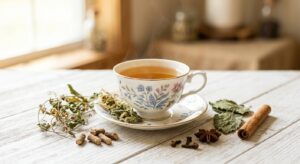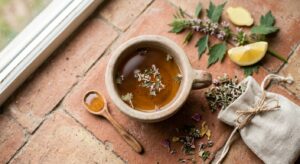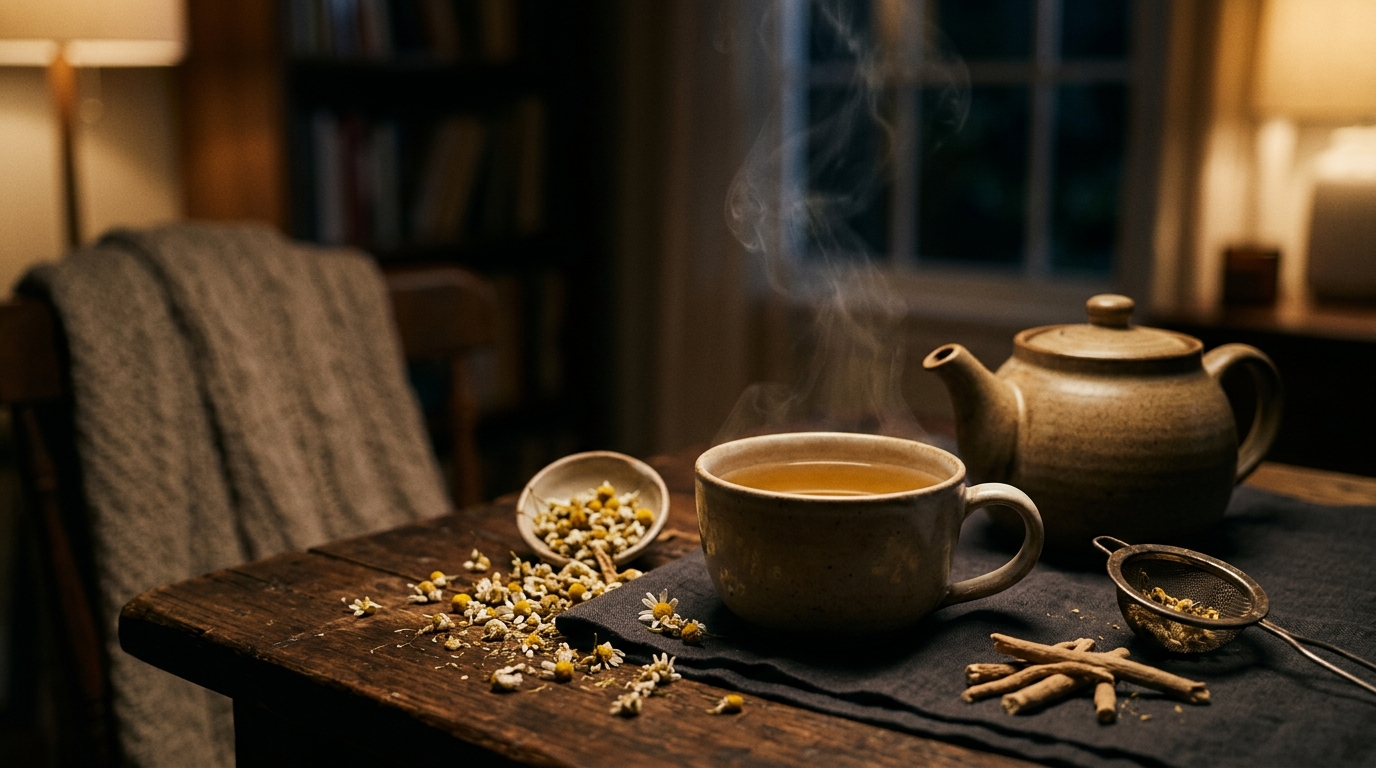
Chamomile has been steeped for well over two thousand years. Ancient Egyptians dedicated it to the sun god Ra, Greek physicians such as Dioscorides recorded its use for fevers and digestive complaints, and its name comes from the Greek khamaimelon, meaning ‘earth apple,’ a nod to the fruity fragrance of the fresh blossoms. Today the small daisy-like flowers of German chamomile (Matricaria chamomilla) remain the world’s best-known bedtime herb, valued for a soft, honeyed, faintly apple-like cup that signals the day is done.
Ashwagandha (Withania somnifera) comes from a different tradition entirely. In Ayurveda, the root has been used for centuries as a rasayana, a rejuvenating tonic. Its Sanskrit name is often translated as ‘smell of the horse,’ a reference to its distinctly earthy aroma and the strength it was said to confer. Its species name, somnifera, means ‘sleep-inducing,’ and traditional practitioners reached for it when a person was worn thin by overwork, worry, and restless nights.
What makes this pairing special is how the two herbs complement one another. Chamomile works on the quieter, more immediate side of relaxation, soothing the body and mind in the hour before bed. Ashwagandha is an adaptogen, a plant thought to help the body modulate its response to stress over time. Combined in one cup, they offer a bridge between daytime stress and nighttime sleep, with chamomile’s floral sweetness softening ashwagandha’s deep, malty, slightly bitter character.
2
cups
Ingredients
- 2 tbspdried chamomile flowers
- 1 tspdried ashwagandha root pieces (or 1/2 tsp ashwagandha root powder)
- 480 mlwater (95°C / 203°F)
- —raw honey or maple syrup to taste (optional)
- —a small strip of orange peel or a pinch of cinnamon (optional)
How to Brew
Click on an item below to shop for the recommended items for this recipe on Amazon.
As an Amazon Associate, we earn from qualifying purchases.
- Measure the dried chamomile flowers and ashwagandha root pieces into a teapot or a large mug fitted with a fine mesh infuser. If you are using ashwagandha powder, place it in a reusable tea bag or filter so it does not cloud the cup.
- Bring fresh water to a boil, then let it rest for about 30 seconds to reach roughly 95°C (203°F). Pour the water over the herbs.
- Cover the pot or mug with a saucer or lid immediately. This traps the volatile aromatic oils in chamomile, which otherwise escape with the steam.
- Steep for 10 to 12 minutes. The long steep is deliberate: ashwagandha root is dense and needs the extra time to release its earthy flavor and water-soluble compounds.
- Strain into cups, pressing the infuser gently against the side to release the last of the liquid. Stir in honey or maple syrup if you like, then sip slowly about 30 to 60 minutes before bed.
- Combine 3 tablespoons of dried chamomile flowers and 1 tablespoon of ashwagandha root pieces in a clean glass jar. Use slightly more herb than the hot method, since cold water extracts more slowly.
- Pour in 1 liter of cold, filtered water and stir once to wet all the plant material. Seal the jar with its lid.
- Refrigerate for 8 to 10 hours, or overnight. Gently shake the jar once or twice if you happen to be nearby.
- Strain through a fine mesh sieve lined with a piece of muslin or a coffee filter to catch the fine ashwagandha particles.
- Serve over ice, or pour a glass and let it sit for a few minutes to take the chill off. Add a slice of orange or a drizzle of honey if desired.
- Combine the ashwagandha root pieces with 240 ml of water and 240 ml of milk (dairy, oat, or almond) in a small saucepan. Do not add the chamomile yet.
- Bring the mixture to a gentle simmer over medium-low heat, then reduce the heat to low. Simmer uncovered for about 15 minutes, stirring occasionally and keeping the liquid from boiling hard or scorching.
- Remove the pan from the heat, add the chamomile flowers, and stir them in. Cover and let steep for 5 minutes.
- Strain through a fine mesh sieve into mugs. Sweeten with honey or maple syrup, and add a pinch of cinnamon, nutmeg, or cardamom for a warming, golden-milk style finish.
- Drink warm while the aroma is at its fullest, ideally in a quiet, dimly lit space.
Health Benefits
Chamomile’s apigenin acts on GABA-related pathways to promote relaxation, and small clinical studies have linked chamomile extract to modest improvements in sleep quality. Ashwagandha has also shown improvements in sleep onset and quality in several randomized trials.
Multiple randomized controlled trials report that standardized ashwagandha extract lowers self-reported stress and serum cortisol. Chamomile has shown benefit for generalized anxiety symptoms in clinical research as well.
Chamomile has a long traditional and some clinical record as a carminative and antispasmodic, helping settle a stress-tightened stomach. This is a quiet but useful benefit when anxiety shows up in the gut.
The act of preparing and slowly sipping a warm drink cues the body to wind down. Pairing that ritual with calming herbs reinforces consistent sleep habits, which are central to good sleep hygiene.
Both herbs contain polyphenols and other antioxidant compounds that help neutralize free radicals, though the effect from a single cup of tea is modest compared with whole-diet patterns.
🧪 Key Bioactive Compounds
The Science Behind Chamomile
The calming reputation of chamomile rests largely on apigenin, a flavonoid that has been shown to bind to benzodiazepine-like sites on the GABA-A receptor. This interaction is much milder than that of pharmaceutical sedatives, which fits chamomile’s gentle, non-habit-forming character. Other constituents, including alpha-bisabolol and chamazulene, contribute anti-inflammatory and antispasmodic effects. Chamazulene is not present in the fresh flower but forms from the precursor matricin during steeping and distillation, which is why a good hot infusion can take on a faint blue-green tint in its aromatic oils.
Ashwagandha’s actions center on its withanolides, a family of steroidal lactones. Clinical trials, including several randomized, double-blind, placebo-controlled studies, have reported that standardized root extracts can reduce perceived stress and lower morning serum cortisol compared with placebo. The proposed mechanism involves modulation of the hypothalamic-pituitary-adrenal (HPA) axis, the body’s central stress-response system, along with possible GABAergic activity. Several trials also report improvements in sleep quality, particularly in people with higher baseline stress or insomnia.
It is worth being candid about the limits of the evidence. Most ashwagandha research uses concentrated, standardized extracts at defined doses, and a cup of tea made from a teaspoon of root delivers a smaller and less predictable amount of withanolides. Likewise, chamomile studies often use concentrated extracts. A tea should be understood as a gentle, supportive ritual rather than a substitute for clinical treatment. Its real strength may lie in combining mild pharmacological activity with the consistent, calming habit of an evening cup.
Brewing Tips
- Cover your cup or pot while steeping so chamomile’s volatile aromatic oils stay in the tea rather than drifting off in the steam.
- Choose whole dried chamomile flowers over dusty tea-bag fannings. Whole flowers hold more aromatic oil and taste noticeably sweeter and fresher.
- If ashwagandha tastes too earthy at first, begin with half the amount and increase gradually, or lean on cinnamon, orange peel, or honey to balance the flavor.
- Drink this tea about 30 to 60 minutes before bed rather than right as you lie down, giving the calming effect time to settle in and avoiding a late-night bathroom trip.
- Store both herbs in airtight, opaque containers away from heat, light, and moisture. Dried chamomile is best used within a year, and ashwagandha root keeps its character for a similar span.