Long before hops found fame in the brewing of ale and lager, herbalists across Europe and Asia were steeping its papery, cone-shaped flowers into calming teas meant to quiet the mind and ease the body into sleep. The plant, known botanically as Humulus lupulus, has a rich medicinal history stretching back to at least the 9th century, when Benedictine monks in German monasteries cultivated it not only for brewing but for its remarkable sedative properties. Traditional European folk medicine frequently prescribed hops pillows, sachets, and teas to soldiers, laborers, and the restless alike, recognizing what modern science would later confirm: this humble climbing vine carries potent calming chemistry within its delicate, resinous cones.
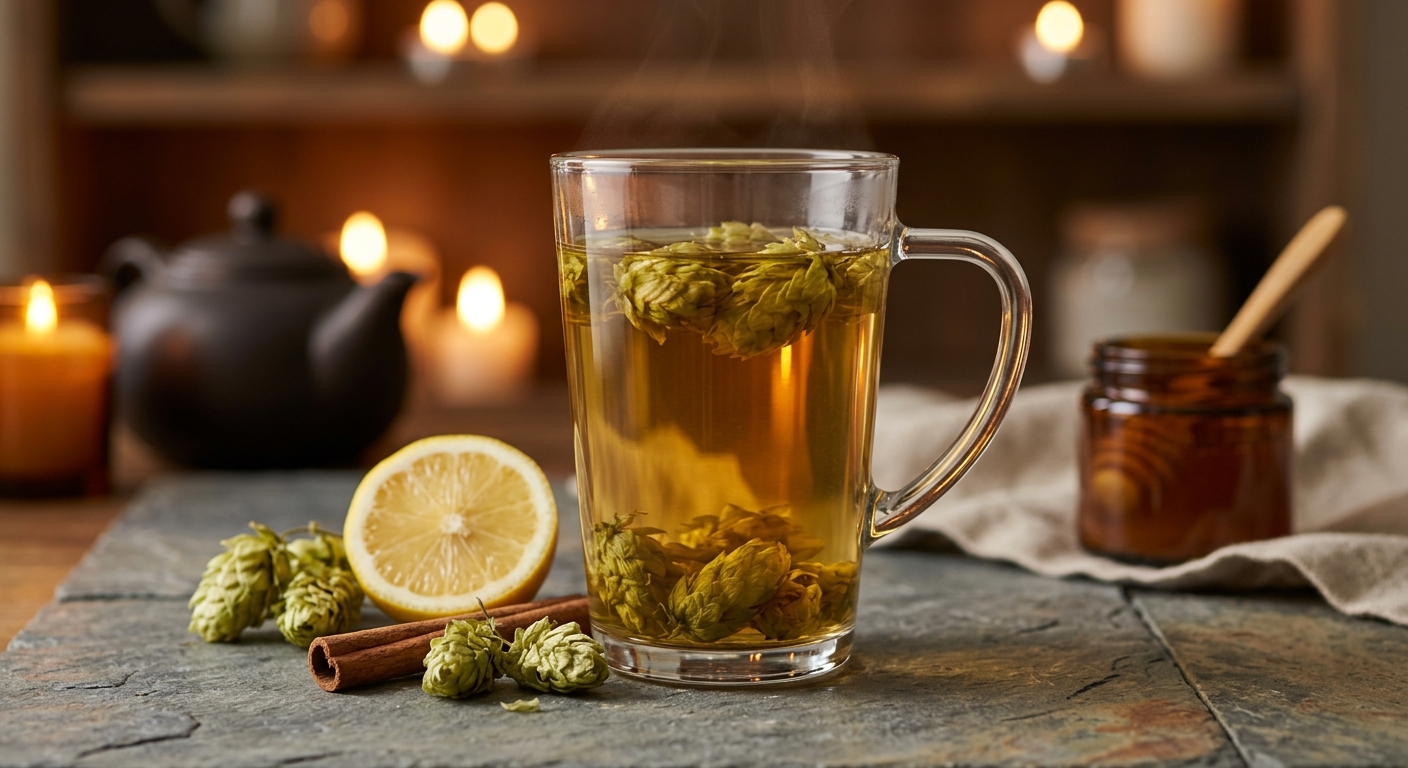
Hops strobiles, the technical name for the hop flower cones used in herbal medicine, contain a complex array of bitter acids, flavonoids, and volatile compounds that interact directly with the brain’s sleep and relaxation pathways. The dried flowers carry a distinctive aroma that is simultaneously earthy, herbal, and faintly floral, with an undeniable bitterness that sets hops tea apart from more delicately flavored herbal infusions. This is not a tea for those who prefer sweet and subtle. It is bold, resinous, and unmistakably medicinal, more akin to a craft herbal bitter than a floral tisane, and it is all the more effective for it.
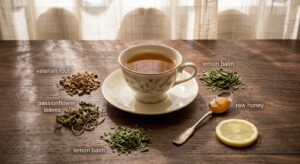
What makes hops particularly fascinating from a botanical standpoint is its close relationship to cannabis. Both plants belong to the family Cannabaceae, and while hops contains no psychoactive cannabinoids, it does share a family resemblance in its resinous trichomes and its interaction with the nervous system. Hops tea is most commonly consumed in the evening as part of a wind-down ritual, often blended with fellow sleep herbs like valerian, passionflower, or lemon balm to create layered, synergistic formulas. Taken on its own, however, it offers a quietly powerful sedative experience that generations of herbalists have sworn by, and that a growing body of clinical research is beginning to substantiate.
2
cups
Ingredients
- 2 tspdried hops strobiles (hop cones)
- 480 mlwater (85°C / 185°F)
- —raw honey or maple syrup to taste (recommended to balance bitterness)
- —lemon slice (optional, brightens flavor)
How to Brew
Click on an item below to shop for the recommended items for this recipe on Amazon.
As an Amazon Associate, we earn from qualifying purchases.
- Heat filtered water to 85°C (185°F). If you do not have a temperature-controlled kettle, bring water to a full boil and allow it to rest off the heat for 4 to 5 minutes before using.
- Place 1 teaspoon of dried hops strobiles per cup (approximately 2 tsp for 2 servings) into a tea infuser, muslin bag, or French press. Lightly crush the cones between your fingers before adding them to help release their resinous lupulin glands, which carry the primary active compounds.
- Pour the hot water over the hops and cover the vessel immediately with a lid or saucer to trap volatile aromatic compounds. This step significantly improves both the flavor and the therapeutic potency of the tea.
- Steep for 10 to 15 minutes. A longer steep draws out more bitter acids and increases sedative potency. Start at 10 minutes if you are new to hops tea and find the bitterness challenging.
- Remove the infuser and discard the spent strobiles. Stir in raw honey or maple syrup to counteract the natural bitterness, then add a squeeze of lemon if desired. Drink 30 to 60 minutes before bedtime for best results.
- Measure 3 teaspoons of dried hops strobiles per 480 ml of cold, filtered water. Cold brew requires a slightly higher herb-to-water ratio than hot brew because cool water extracts compounds more slowly and less completely.
- Combine the hops strobiles and cold water in a clean glass jar with a tight-fitting lid. Give the jar a gentle shake to ensure the cones are fully submerged. You do not need to crush the cones for cold brew since the long steep time handles extraction gradually.
- Leave the jar at room temperature for the first hour to allow initial hydration of the dried plant material, then transfer to the refrigerator. Steep for a total of 8 to 12 hours, or overnight for convenience.
- Strain the liquid through a fine mesh strainer lined with cheesecloth or a nut milk bag to remove all plant material and fine particles. The cold brew will appear pale golden with a slight green tint.
- Serve over ice in a tall glass, sweeten lightly with honey simple syrup if desired, and garnish with a sprig of fresh mint or a slice of cucumber for a refreshing evening drink. Refrigerated cold brew keeps well for up to 3 days.
- Measure 4 teaspoons of dried hops strobiles and add them to a small saucepan. Lightly crush the strobiles with the back of a spoon to maximize surface area and lupulin release.
- Add 240 ml of filtered water heated to 85°C (185°F). Do not boil. Place the saucepan over the lowest possible heat setting to maintain a gentle warmth (not a simmer) throughout the steep, or simply remove from heat entirely and cover tightly.
- Steep covered for 20 to 25 minutes, stirring once halfway through. The extended steep time at a consistent low temperature draws a concentrated payload of bitter acids, flavonoids, and 2-methyl-3-buten-2-ol without scorching the volatile compounds.
- Strain through a fine mesh strainer, pressing the spent strobiles gently with a spoon to extract the remaining liquid. You should have approximately 180 to 200 ml of dark, richly aromatic concentrate.
- To serve, combine 60 ml of concentrate with 180 ml of warm water, warm chamomile tea, or steamed oat milk. Sweeten with raw honey and add a pinch of cinnamon or cardamom for a warming, complex nightcap. Store remaining concentrate in a sealed glass jar in the refrigerator for up to 5 days.
Health Benefits
Multiple clinical studies, including a 2012 trial published in Acta Physiologica Hungarica, found that dietary consumption of non-alcoholic hop products significantly improved sleep efficiency, reduced nighttime awakenings, and decreased the time needed to fall asleep. The compound 2-methyl-3-buten-2-ol is believed to be the primary driver of this effect through GABA-A receptor activation.
Hops has a long ethnobotanical tradition as a nervine herb, calming anxious thoughts and physical restlessness. Research published in PLOS ONE in 2017 found that participants who consumed hops extract daily for four weeks showed significant reductions in depression, anxiety, and stress scores compared to placebo, supporting its use as a gentle daily anxiolytic.
The prenylflavonoid 8-prenylnaringenin (8-PN) found in hops is one of the strongest phytoestrogens identified in any plant. Clinical research has explored its potential to ease menopausal symptoms including hot flashes, poor sleep, and mood disturbances by binding to estrogen receptors, offering a plant-based alternative worth discussing with a healthcare provider.
Xanthohumol and other polyphenols in hops strobiles exhibit significant free-radical scavenging activity and inhibit pro-inflammatory enzymes including COX-2. While most robust evidence comes from preclinical studies, these compounds suggest hops tea may contribute to long-term cellular protection when consumed regularly.
The bitter acids humulone and lupulone stimulate bile production and digestive enzyme secretion when consumed before or after meals, a traditional use documented in European herbal pharmacopeias. This action can ease bloating, mild indigestion, and sluggish digestion, making a light hops tea a useful post-dinner remedy.
🧪 Key Bioactive Compounds
The Science Behind Hops Flower
The sedative reputation of hops is not merely folklore. It is rooted in a specific and well-characterized phytochemical mechanism. The most important compound for sleep is 2-methyl-3-buten-2-ol, a volatile alcohol that is not present in large amounts in the fresh plant but forms as a metabolite when the hop cone’s alpha acids, particularly humulone, are oxidized during drying and storage. Once ingested, 2-methyl-3-buten-2-ol is absorbed and acts on GABA-A receptors in the central nervous system, the same receptor system targeted by benzodiazepine drugs, producing a gentle calming and sleep-promoting effect without the dependency risk associated with pharmaceutical sedatives. Studies using rodent models have demonstrated measurable reductions in locomotor activity and increases in sleep duration following hops extract administration, with effects comparable to low doses of established sedative compounds.
Beyond its direct sedative action, hops carries an impressive complement of bioactive flavonoids that add breadth to its pharmacological profile. Xanthohumol, a prenylated chalcone unique to Humulus lupulus, has attracted substantial scientific interest for its antioxidant potency and its ability to modulate neuroinflammatory pathways. In vitro and animal research suggests xanthohumol can inhibit the activation of NF-kB, a key transcription factor in inflammatory cascades, and may exert neuroprotective effects relevant to long-term brain health. Its structural cousin 8-prenylnaringenin (8-PN), formed from xanthohumol through metabolic conversion, has been identified as the most potent phytoestrogenic compound known, with binding affinity for estrogen receptors that exceeds other well-studied plant phytoestrogens like those found in soy and red clover. This makes hops tea a subject of active clinical interest for menopausal symptom management.
The bitter acids of hops, humulone (alpha acid) and lupulone (beta acid), contribute both to the tea’s distinctive flavor and to its physiological effects beyond the nervous system. Humulone in particular has demonstrated antimicrobial activity against gram-positive bacteria including Staphylococcus aureus and Mycobacterium tuberculosis in laboratory settings, a property that historically may have contributed to hops’ role in preserving beer. In the context of herbal tea, the bitter acids stimulate the bitter taste receptors of the digestive tract, triggering a reflex increase in gastric acid and bile secretion that supports the breakdown and absorption of dietary fats and proteins. This combination of nervine, phytoestrogenic, antioxidant, and digestive bitter activity makes hops strobiles a remarkably multifaceted medicinal herb whose full therapeutic potential continues to be explored by modern researchers.
Brewing Tips
- Purchase hops strobiles from a reputable herbal supplier rather than a homebrew shop. Brewing hops are often treated with sulphur dioxide or other preservatives not intended for human consumption as tea.
- Store dried hops in an airtight container away from light and heat. Hops degrade faster than most dried herbs due to their high volatile oil content, losing potency within 6 to 12 months of drying. Older hops will taste stale and flat.
- The bitterness of hops tea increases significantly with steep time and water temperature. If you find the taste overpowering, reduce your steep to 8 minutes, drop your water temperature to 80°C (176°F), and add a generous measure of honey immediately after brewing before the tea cools.