Few remedies are as universally beloved as honey and lemon tea. Across cultures and centuries, from ancient Egyptian medicinal texts praising honey as a gift from the gods to the traditional folk medicine of Europe and Asia, this humble combination has been trusted to soothe raw throats, ease coughs, and restore vitality during illness. What makes it remarkable is not just its simplicity but the fact that modern science has validated much of what our ancestors intuitively knew: both honey and lemon carry genuine, measurable therapeutic properties that work beautifully in tandem.
Lemon brings a bright, tart intensity to the cup, delivering a concentrated dose of vitamin C, flavonoids, and citric acid that stimulate immune function and create an inhospitable environment for pathogens. Raw honey contributes natural antimicrobial agents, notably hydrogen peroxide and defensin-1, alongside a rich sweetness that coats and calms irritated mucous membranes. Together they form a synergistic blend where the acidity of the lemon may actually enhance the bioavailability of honey’s polyphenols, making the combination more potent than either ingredient alone.
Beyond its medicinal reputation, honey and lemon tea is a deeply sensory experience. The steam carries a sharp, citrus-forward aroma softened by the warm floral sweetness of honey, and the first sip delivers that familiar balance of tart and sweet that feels almost instinctively comforting. Whether you are fighting off a winter cold, supporting your daily immune routine, or simply craving something warming and restorative, this tea belongs in every herbal repertoire.
2
cups
Ingredients
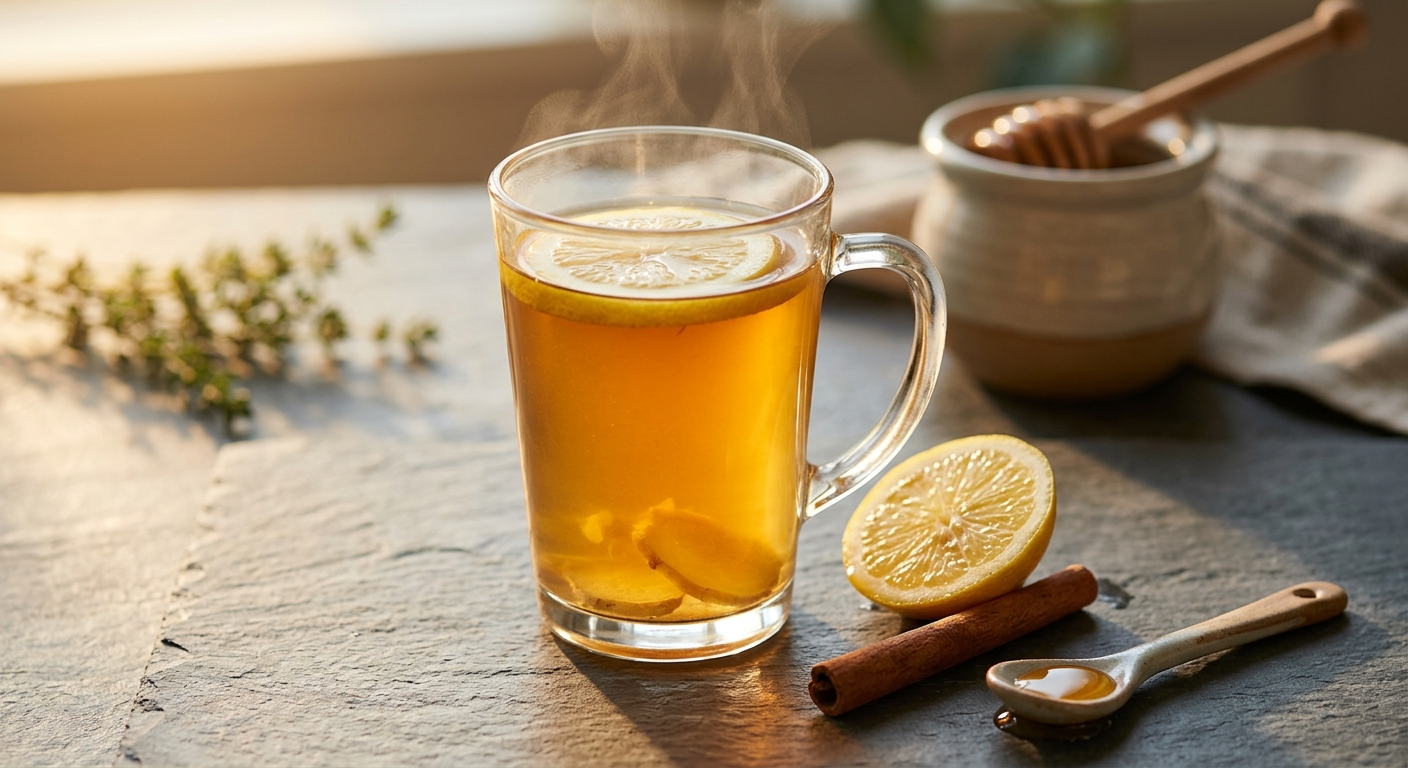
- 1 wholefresh lemon (juice of, approximately 30ml)
- 2 tspraw honey (per serving, adjust to taste)
- 480 mlwater (85°C / 185°F)
- —lemon slices for garnish (optional)
- —pinch of cayenne pepper (optional, for immune boost)
- —fresh ginger slices (optional, 2 to 3 slices per cup)
How to Brew
Click on an item below to shop for the recommended items for this recipe on Amazon.
As an Amazon Associate, we earn from qualifying purchases.
- Heat 480ml of water to approximately 85°C (185°F). If you do not have a temperature-controlled kettle, bring water to a boil and allow it to rest for 2 to 3 minutes before using.
- Slice one fresh lemon in half and squeeze the juice from both halves directly into a heat-safe pitcher or teapot, catching any seeds with a fine strainer or your fingers. You are aiming for approximately 30ml of fresh juice per serving.
- Pour the hot water over the lemon juice and allow the mixture to rest for 5 to 8 minutes. This brief infusion period allows the lemon’s volatile aromatic oils to bloom into the water, creating a fuller, more rounded flavor.
- Add 2 teaspoons of raw honey per serving and stir gently until fully dissolved. Taste and adjust the honey or lemon ratio to your preference.
- Pour into warmed mugs and garnish with a thin lemon slice. Add optional ginger slices or a pinch of cayenne if desired. Serve immediately while hot.
- Slice one whole lemon into thin rounds, approximately 6 to 8 slices, leaving the peel on. The peel contains fragrant limonene and flavonoids that infuse beautifully into cold water over time, contributing depth the juice alone cannot provide.
- Place the lemon slices into a clean glass jar and lightly muddle them with a spoon to release a small amount of juice without fully squeezing them. This slow-release approach creates a milder, more balanced cold infusion.
- Pour 480ml of room-temperature filtered water over the lemon slices. Stir briefly, seal the jar with a lid, and refrigerate for 6 to 8 hours, or leave overnight for a more pronounced citrus flavor.
- Remove the jar from the refrigerator and strain out the lemon slices through a fine mesh strainer into a clean pitcher or directly into glasses.
- Add 1.5 to 2 teaspoons of raw honey per serving to the cold infusion. Stir well for at least 30 seconds, as honey dissolves more slowly in cold liquid. Serve over ice in tall glasses and garnish with a fresh lemon slice.
- Peel and thinly slice a 3 to 4cm piece of fresh ginger root (approximately 15 to 20 thin slices). Place the ginger slices into a small saucepan with 600ml of cold water. Starting in cold water allows the ginger’s gingerols and shogaols to extract gradually as the water heats.
- Bring the ginger water to a full boil over medium heat, then reduce to a gentle simmer. Simmer uncovered for 15 to 20 minutes, until the liquid has reduced slightly and taken on a golden color with a sharp, spicy aroma. The longer you simmer, the more potent and warming the ginger base becomes.
- Remove from heat and allow the ginger decoction to cool for 3 to 4 minutes, until the temperature drops to approximately 85°C (185°F). This cooling step is critical before adding lemon juice and honey.
- Strain the ginger decoction through a fine mesh strainer into a heat-safe pitcher, discarding the spent ginger slices.
- Squeeze the juice of one fresh lemon into the warm ginger decoction and stir to combine. Add 2 teaspoons of raw honey per serving and stir until fully dissolved.
- Pour into mugs and serve immediately. For extra warmth and immune support, add a small pinch of cayenne pepper or a light dusting of ground turmeric to each cup.
Health Benefits
Raw honey coats the mucous membranes of the throat with a viscous, antimicrobial film that physically soothes irritation and suppresses the cough reflex. A 2007 study published in the Archives of Pediatrics and Adolescent Medicine found buckwheat honey more effective than dextromethorphan (a common cough suppressant) for nighttime cough relief in children.
The vitamin C in fresh lemon juice is well-established as an immunostimulant, supporting the proliferation and function of lymphocytes and phagocytes. Regular moderate intake of vitamin C has been shown in meta-analyses to reduce the duration of cold symptoms by 8 to 14 percent in the general population.
Both honey and lemon contribute independent antimicrobial mechanisms. Honey’s hydrogen peroxide, defensin-1, and low water activity inhibit a wide range of bacteria including Staphylococcus aureus and Streptococcus pyogenes, while lemon’s limonene and citric acid add additional pathogen-suppressing acidity.
Fresh lemon juice and raw honey together contribute a diverse spectrum of polyphenols, flavonoids, and vitamin C that neutralize free radicals and reduce oxidative stress. Chronic oxidative stress is a known suppressor of immune function, so regular antioxidant intake indirectly supports immune readiness.
Adequate hydration is one of the most evidence-supported interventions for managing colds and respiratory infections, as it thins mucus secretions and supports lymphatic clearance. Honey and lemon tea makes warm water palatable and appealing, encouraging fluid intake in individuals who may not feel like drinking plain water when unwell.
🧪 Key Bioactive Compounds
The Science Behind Lemon And Raw Honey
The therapeutic reputation of honey and lemon tea is not merely the stuff of folklore. Lemon juice is one of the richest readily available sources of ascorbic acid (vitamin C), delivering approximately 30 to 40mg per half lemon, alongside meaningful quantities of hesperidin and eriocitrin, two flavonoids concentrated in the peel and pith. Vitamin C acts as a cofactor for the synthesis of collagen in the epithelial lining of the respiratory tract and directly stimulates the production and chemotactic activity of neutrophils, the immune system’s first responders. The flavonoid hesperidin has been shown in cell studies and animal models to inhibit the replication of several respiratory viruses and to reduce the production of pro-inflammatory cytokines, suggesting a complementary mechanism to vitamin C’s direct immune support.
Raw honey’s therapeutic profile is remarkably complex. Glucose oxidase, an enzyme bees add during honey production, catalyzes the slow generation of hydrogen peroxide when honey is diluted with water or bodily fluids, creating a sustained low-level antimicrobial effect. Defensin-1, a bee-derived antimicrobial peptide found in royal jelly and present in honey, has demonstrated activity against antibiotic-resistant bacterial strains including MRSA in laboratory research. Critically, raw and minimally processed honey retains these enzymatic and protein-based compounds far more fully than commercially pasteurized honey, which is why the choice of raw honey is therapeutically meaningful rather than merely a matter of taste. The polyphenol content of honey, including caffeic acid and quercetin, also contributes significant antioxidant capacity that complements lemon’s own polyphenol profile.
The decision to keep water temperature below 90°C when preparing this tea has a sound scientific basis. Vitamin C is a heat-labile compound and begins to degrade meaningfully above 70°C with extended exposure, while the enzymatic proteins in raw honey including glucose oxidase and defensin-1 are susceptible to denaturation at temperatures above 40 to 50°C. Practically speaking, a cup of hot tea will cool rapidly in the mouth and throat, meaning these compounds still reach mucosal tissues intact when the tea is prepared correctly. Brewing at 85°C represents a practical compromise between aromatic extraction, flavor balance, and nutrient preservation, making the temperature guideline both scientifically grounded and easy to follow at home.
Brewing Tips
- Always use freshly squeezed lemon juice rather than bottled lemon juice. Bottled juice is often pasteurized and may contain preservatives that reduce its flavor complexity and antioxidant content significantly.
- Choose raw, unfiltered honey from a local producer whenever possible. Local raw honey may contain trace pollens from regional plants, which some practitioners of traditional medicine believe can support tolerance to local allergens over time.
- If you are making this tea to soothe a sore throat, let the cup cool to a comfortably warm rather than hot temperature before drinking. Very hot beverages can further irritate already inflamed throat tissue, while a warm tea allows the honey to coat the mucous membranes more effectively without causing discomfort.