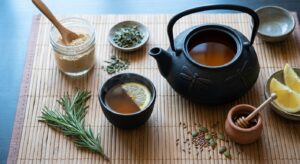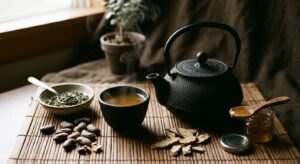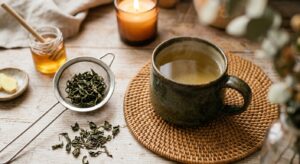
Long before the age of espresso shots and synthetic pre-workouts, healers across Asia, the Americas, and the Mediterranean were crafting botanical blends designed to restore deep, cellular vitality. Roots like ashwagandha and eleuthero were prescribed not for a fleeting jolt, but for the kind of sustained energy that comes from a body functioning at its best. These adaptogens have been central to Ayurvedic and Traditional Chinese Medicine for thousands of years, revered for their ability to help the body resist physical and mental fatigue while supporting the organs that generate life force itself.
Cellular Energy Herbal Tea is built around this ancient wisdom. The blend typically features ashwagandha root, eleuthero (Siberian ginseng), green tea (or its whole-leaf counterpart gyokuro), schisandra berry, and nettle leaf. Together, they address energy at its source, supporting the adrenal glands, mitochondrial efficiency, oxygen utilization, and micronutrient status. Nettle alone delivers a remarkable density of iron, magnesium, and B-vitamin cofactors that are essential for ATP synthesis, the very process your cells use to generate energy.
What makes this blend genuinely special is its layered approach to fatigue. Rather than masking tiredness with stimulants, it addresses the underlying physiological conditions that allow real energy to flourish: balanced cortisol rhythms, robust red blood cell production, efficient oxidative metabolism, and a calm, focused nervous system. Brewed as a hot tea in the morning, a cold-steeped tonic over ice, or as a concentrated herbal base you can keep in the fridge all week, this is a tea meant to be woven into daily life as a ritual of restoration.
2
cups
Ingredients
- 1.5 tspdried ashwagandha root (sliced or powdered)
- 1 tspeleuthero root (dried, sliced)
- 1 tspschisandra berries (dried, lightly crushed)
- 1 tspnettle leaf (dried)
- 0.5 tspgreen tea leaves (whole leaf or sencha)
- 500 mlwater (95°C / 203°F for roots, 80°C / 176°F added after for green tea)
- —raw honey or maple syrup to taste (optional)
- —a thin slice of fresh ginger (optional, for warmth)
How to Brew
Click on an item below to shop for the recommended items for this recipe on Amazon.
As an Amazon Associate, we earn from qualifying purchases.
- Add the ashwagandha root, eleuthero root, schisandra berries, and ginger (if using) to a small saucepan. Pour in 500 ml of cold water and bring slowly to a gentle simmer over medium heat. Do not boil vigorously.
- Once simmering, reduce heat to low and decoct the roots uncovered for 10 to 15 minutes, until the liquid has reduced slightly and turned a deep reddish-amber. The schisandra berries will bleed a lovely ruby tone into the brew.
- Remove the saucepan from heat and allow the temperature to drop to around 80°C (176°F). You can check with a thermometer or simply wait 4 to 5 minutes. Add the dried nettle leaf and green tea leaves directly to the hot liquid.
- Cover the saucepan and steep the nettle and green tea for exactly 2 to 3 minutes. Do not exceed this time or the green tea will turn bitter.
- Strain the entire blend through a fine mesh strainer into two mugs. Add raw honey or maple syrup to taste. Serve immediately for the fullest aroma and maximum bioavailability of water-soluble compounds.
- Place the ashwagandha root, eleuthero root, schisandra berries, nettle leaf, and green tea leaves into a clean glass jar. Skip any added ginger for cold brew, as it can become sharp and overpowering overnight.
- Pour 600 ml of cold, filtered water over the herbs. The increased water volume compensates for the lower extraction efficiency of cold temperatures and yields two generous 300 ml servings.
- Stir gently with a long spoon to ensure all herbs are fully submerged. Place the lid on the jar and leave at room temperature for 1 hour, then transfer to the refrigerator.
- Steep in the refrigerator for 12 to 16 hours. A 16-hour steep will produce a richer, more concentrated tonic; 12 hours yields a lighter, brighter brew with more of the green tea’s grassy sweetness.
- In the morning, strain through a fine mesh strainer or nut milk bag into a pitcher or two glasses. Serve over ice. Sweeten with a small drizzle of honey or a splash of unsweetened pomegranate juice, which complements the schisandra beautifully.
- Scale the root ingredients up to a full batch: use 3 tbsp ashwagandha root, 2 tbsp eleuthero root, and 2 tbsp schisandra berries. Omit the green tea and nettle entirely from the concentrate, as they will be added fresh each day.
- Combine the roots with 1 liter of cold filtered water in a medium saucepan. Bring to a gentle simmer over medium heat, then reduce to the lowest setting that maintains a steady, quiet simmer.
- Simmer uncovered for 25 to 30 minutes, stirring occasionally. The liquid should reduce to approximately 600 to 700 ml. The color will deepen to a rich mahogany-red and the aroma will become roasted and earthy.
- Remove from heat and allow to cool for 10 minutes. Strain through a fine mesh strainer, pressing the spent roots gently to extract all remaining liquid. Discard the roots.
- Pour the cooled concentrate into a glass jar and refrigerate. It will keep for up to 5 days. To serve each day, combine 80 to 100 ml of concentrate with 200 ml of hot water (80°C / 176°F), then add a pinch of nettle leaf and a small measure of green tea and steep for 2 minutes. Sweeten to taste and enjoy.
Health Benefits
Unlike caffeine alone, the combination of eleutherosides and withanolides supports adrenal regulation and oxygen utilization, providing energy that builds over time without the sharp rise and fall associated with stimulants. Clinical trials on eleuthero have shown significant reductions in fatigue scores in athletes and chronically stressed adults after 30 days of use.
The L-theanine in green tea works synergistically with its mild caffeine to produce a state of alert calm, well-supported by human EEG studies. Schisandrin B adds to this effect by supporting neurotransmitter balance and reducing the cognitive impact of stress hormones.
Schisandrin B has been shown in cell and animal studies to increase mitochondrial membrane efficiency and reduce oxidative damage to mitochondria. Magnesium from nettle is a critical cofactor for ATP synthase, the enzyme responsible for assembling ATP from ADP in the mitochondria.
Ashwagandha’s withanolides have been evaluated in multiple double-blind, placebo-controlled human trials, with consistent findings of reduced serum cortisol, lower perceived stress scores, and improved sleep quality. By moderating the stress response, this herb helps the body stop wasting energy on chronic fight-or-flight activation.
Nettle leaf delivers iron, magnesium, vitamin C, and B-vitamins in a single herb. Iron-deficiency is one of the most common and under-recognized causes of fatigue worldwide, and vitamin C from nettle enhances non-heme iron absorption from the blend itself.
🧪 Key Bioactive Compounds
The Science Behind Ashwagandha Root
The science behind cellular energy teas begins at the mitochondria. Every cell in the body generates ATP (adenosine triphosphate) through a process called oxidative phosphorylation, and the efficiency of this process depends heavily on cofactors like magnesium, iron, and B vitamins, as well as the absence of excessive oxidative stress. Schisandrin B, the primary lignan in schisandra berry, has been shown in multiple in vitro and animal studies to increase mitochondrial membrane potential and reduce the production of reactive oxygen species (ROS) within the mitochondrial electron transport chain. In plain terms, it makes your cells’ power generators run cleaner and more efficiently.
Adaptogens like ashwagandha and eleuthero influence energy not by injecting stimulants into the system, but by modulating the hypothalamic-pituitary-adrenal (HPA) axis, the hormonal command center that governs your stress and energy responses. Cortisol, released during stress, is profoundly catabolic: it breaks down muscle, disrupts sleep architecture, and impairs insulin sensitivity. Withanolides in ashwagandha have been shown in peer-reviewed randomized controlled trials to reduce morning cortisol levels by up to 27.9% compared to placebo, which translates directly into less energy wasted on the physiological stress response and more available for physical and mental performance. Eleutherosides B and E, meanwhile, have demonstrated the ability to improve VO2 max (maximal oxygen uptake) in athletes, a direct measure of how efficiently the body converts fuel into cellular energy.
Green tea contributes a uniquely balanced stimulant profile through the interplay of L-theanine and caffeine. L-theanine is a non-protein amino acid that crosses the blood-brain barrier and increases activity in GABA, serotonin, and dopamine pathways while also promoting alpha brainwave states associated with relaxed alertness. Controlled studies using EEG monitoring have confirmed that the L-theanine and caffeine combination found in green tea produces measurably greater sustained attention and reaction time performance compared to caffeine alone, without the anxiety or cardiovascular side effects. When this is combined with the adrenal support of ashwagandha and eleuthero, the result is a layered, physiologically coherent approach to energy that addresses both the fuel supply and the body’s capacity to use it effectively.
Brewing Tips
- Lightly crush schisandra berries with the back of a spoon before brewing. The thin skin of dried schisandras limits extraction; cracking them open exposes the seed interior where the highest concentrations of schisandrins are found.
- Drink this blend in the morning or early afternoon. Ashwagandha is generally well-tolerated at any time, but the mild caffeine from green tea and the stimulating eleutherosides can interfere with sleep onset if consumed within 6 hours of bedtime.
- Allow at least 3 to 4 weeks of consistent daily use before evaluating the full effects of this blend. Adaptogens are not acute stimulants; their energy-supporting and cortisol-modulating benefits accumulate gradually through sustained use.