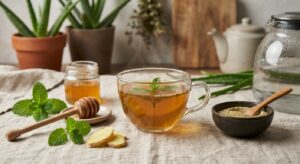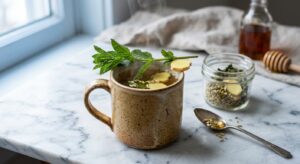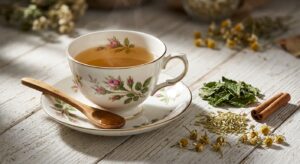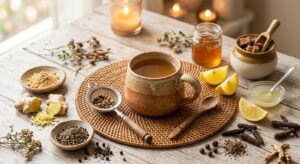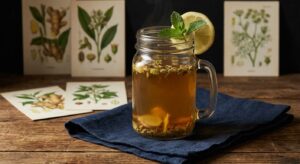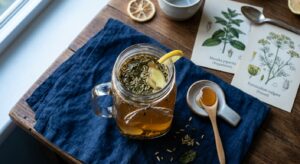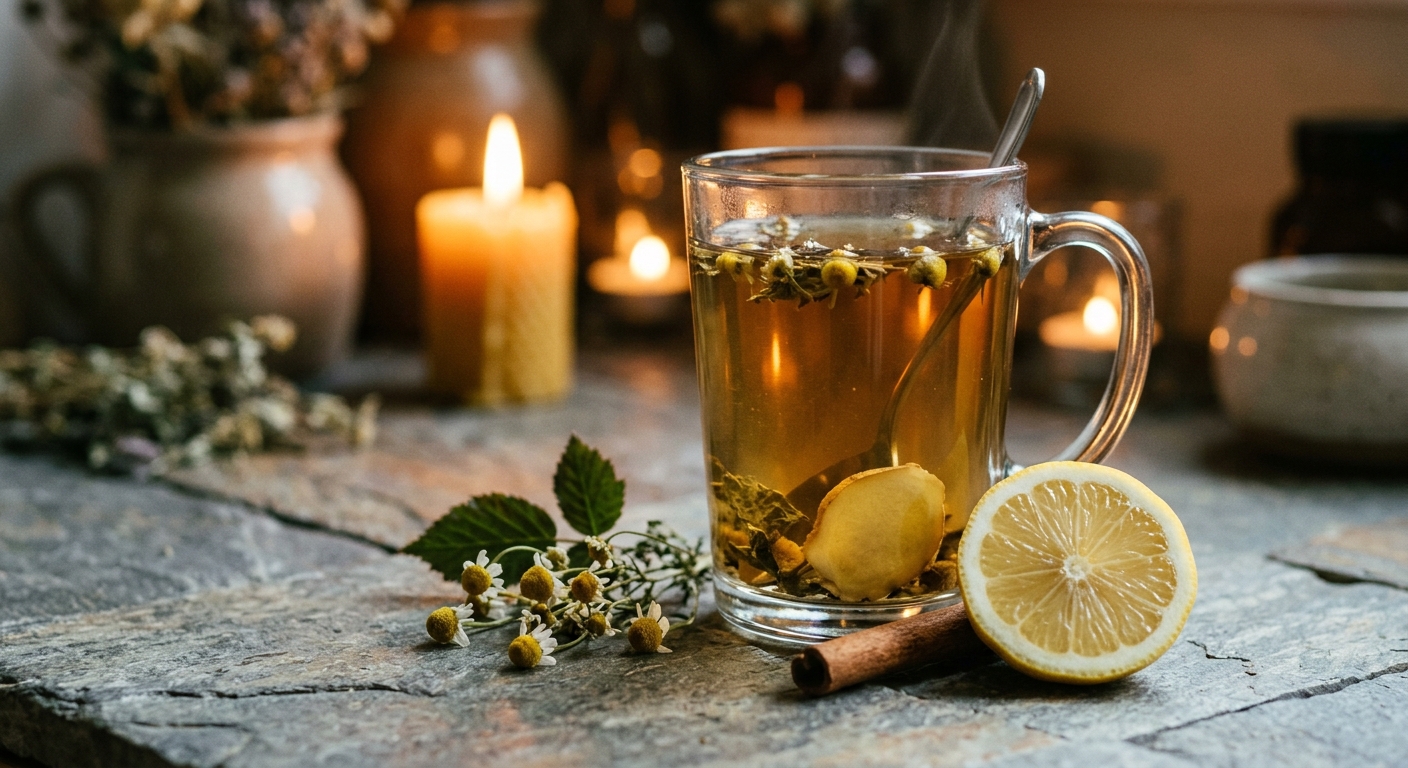
Long before pharmacies lined every street corner, herbalists across Europe, Asia, and the Americas turned to tannin-rich plants and warming spices to quiet upset bowels and soothe inflamed intestinal walls. Blackberry leaf has been used in Western folk medicine for centuries as a trusted astringent remedy for diarrhea, appearing in records from ancient Rome all the way through Victorian-era herbal manuals. Paired with ginger root, one of the most studied digestive herbs on the planet, and the gentle anti-spasmodic power of chamomile, this blend addresses diarrhea from multiple angles at once.
The logic behind combining these three herbs is deeply practical. Blackberry leaf supplies tannins that literally tighten and tone the mucous membranes lining the intestine, reducing excess fluid secretion into the gut. Ginger calms the muscular contractions that drive cramping and urgency, while chamomile softens inflammation and eases the nervous tension that so often accompanies a sensitive stomach. Together, they form a tea that is both therapeutic and genuinely pleasant to drink, with an earthy, slightly fruity warmth that feels nurturing when your body needs it most.
This post will walk you through the history and science of each herb, show you exactly how to brew this blend using three different methods, and give you practical tips for getting the most out of every cup. Whether you are dealing with a bout of traveler’s diarrhea, a stress-triggered flare, or general digestive instability, this herbal tea offers a time-honored and evidence-supported path toward relief.
2
cups
Ingredients
- 2 tspdried blackberry leaf
- 1 tspdried ginger root (or 3 fresh slices)
- 1 tspdried chamomile flowers
- 480 mlwater (95°C / 203°F)
- —raw honey to taste (optional)
- —a squeeze of fresh lemon juice (optional)
How to Brew
Click on an item below to shop for the recommended items for this recipe on Amazon.
As an Amazon Associate, we earn from qualifying purchases.
- Heat 480 ml of filtered water in your kettle to 93 to 95°C (200 to 203°F). Avoid a full rolling boil, which can degrade the delicate volatile oils in chamomile.
- Add 2 tsp dried blackberry leaf, 1 tsp dried ginger root, and 1 tsp dried chamomile flowers to your tea infuser or place them directly into a warmed teapot.
- Pour the hot water over the herbs and cover the vessel immediately with a lid or a small plate. Covering is essential to trap the volatile aromatic compounds from the ginger and chamomile inside the cup.
- Steep for 10 to 15 minutes. Start tasting at 10 minutes. The longer the steep, the more astringent and therapeutically potent the tea will become.
- Strain the herbs and pour into two mugs. Add a small amount of raw honey if desired. Honey has mild antimicrobial properties and can soothe an irritated gut lining.
- Sip slowly and steadily. For acute diarrhea, drink one cup every 3 to 4 hours, up to 3 cups per day.
- Combine 2 tsp dried blackberry leaf, 1 tsp dried ginger root, and 1 tsp dried chamomile flowers in a clean glass jar.
- Add 480 ml of cold filtered water. Stir gently to ensure all herbs are submerged and in contact with the water.
- Seal the jar with a lid and leave it at room temperature for 1 hour to begin the extraction process, then transfer it to the refrigerator.
- Let the tea steep in the refrigerator for a total of 8 to 12 hours. Overnight is the most convenient timing.
- Strain the herbs through a fine mesh strainer or cheesecloth into a clean jar or pitcher. Press the herbs gently to capture the remaining liquid.
- Serve over a small amount of ice or at cool room temperature. The tea will keep refrigerated for up to 24 hours. Add honey or a few drops of lemon juice to taste before drinking.
- Add 600 ml of cold filtered water to a small saucepan. Add 2 tsp dried blackberry leaf and 1 tsp dried ginger root directly to the water. Do not add the chamomile yet.
- Bring the water to a gentle simmer over medium heat. Once it reaches 85 to 90°C (185 to 194°F), a steady but gentle bubbling, reduce the heat to low to maintain that temperature without reaching a full rolling boil.
- Simmer the blackberry leaf and ginger uncovered for 15 to 20 minutes, allowing the water to reduce slightly and concentrate the tannins and gingerols.
- Remove the saucepan from the heat. Add 1 tsp dried chamomile flowers to the hot liquid and cover the pot immediately with a lid.
- Allow the chamomile to infuse off the heat for an additional 5 minutes. Chamomile is too delicate to boil and must be added after simmering is complete to preserve its beneficial volatile oils.
- Strain the decoction through a fine mesh strainer into two mugs. Sweeten lightly with honey if desired and sip one cup at a time, slowly, every 3 to 4 hours.
Health Benefits
The ellagitannins in blackberry leaf bind to proteins in the intestinal mucosa, causing a mild tightening and toning effect that reduces the excessive fluid secretion characteristic of diarrhea. This is the same mechanism behind traditional use of strong black tea as a home remedy for loose bowels.
Ginger’s primary active compounds, particularly 6-gingerol and its derivatives, inhibit prostaglandin and leukotriene synthesis in the gut wall, softening the intense muscular contractions that drive cramping and the sudden urgency common in diarrhea episodes.
Chamomile’s apigenin acts on the enteric nervous system, the gut’s own neural network, helping to interrupt the stress-diarrhea feedback loop. This is especially valuable for those whose bowel symptoms are triggered or worsened by anxiety.
Both chamomile and blackberry leaf contain anti-inflammatory polyphenols that help reduce cytokine activity in the intestinal wall. A 2011 clinical study published in BMC Complementary Medicine found that chamomile extract significantly reduced inflammatory markers in gastrointestinal tissue.
While not an oral rehydration solution, a warm herbal tea encourages steady fluid intake during diarrhea episodes when dehydration is a real risk. Adding a small pinch of sea salt and honey mimics a basic electrolyte solution and can further support fluid balance during recovery.
🧪 Key Bioactive Compounds
The Science Behind Blackberry Leaf
The science behind this diarrhea relief blend centers on the concept of intestinal astringency and motility modulation. Blackberry leaf (Rubus fruticosus) contains a rich concentration of ellagitannins, a class of polyphenols that form complexes with mucous membrane proteins through a process called protein precipitation. When these tannins contact the intestinal lining, they cause a temporary, reversible tightening of the tissue that reduces abnormal fluid secretion into the bowel lumen. This directly counters the osmotic and secretory mechanisms behind loose, watery stools. Research published in the Journal of Agricultural and Food Chemistry has confirmed that Rubus species leaves are among the richest plant sources of these bioactive tannins in the European botanical tradition.
Ginger root (Zingiber officinale) contributes to this blend through an entirely different but complementary pathway. Its key phenolic compounds, primarily 6-gingerol and 6-shogaol, have been shown in multiple preclinical and clinical studies to inhibit the synthesis of prostaglandins and leukotrienes, the inflammatory signaling molecules that drive hypermotility in the gut. A 2014 review in the European Journal of Pharmacology highlighted ginger’s ability to slow intestinal transit time without causing the rebound constipation associated with some pharmaceutical antidiarrheal agents. This makes ginger an especially practical ingredient for this blend, addressing the urgency and cramping that often accompany diarrhea alongside the fluid loss itself.
Chamomile (Matricaria chamomilla) completes the triad by acting on the enteric nervous system, the extensive neural network embedded in the gut wall. Apigenin, chamomile’s principal flavonoid, has been shown to bind to benzodiazepine receptor sites on GABA-A receptors, producing a mild anxiolytic and spasmolytic effect in smooth muscle tissue throughout the digestive tract. For the significant subset of diarrhea sufferers whose symptoms are triggered or amplified by stress and anxiety, this action is not merely supportive but directly therapeutic. Alpha-bisabolol, chamomile’s primary terpene, further reduces mucosal inflammation and supports the repair of irritated intestinal tissue, helping the gut lining recover after a diarrhea episode has passed.
Brewing Tips
- Use dried blackberry leaf rather than fresh for a more concentrated tannin content. Fresh leaves contain significantly lower levels of the astringent compounds responsible for the tea’s therapeutic action.
- Steep covered at all times. Ginger and chamomile both contain volatile aromatic compounds that evaporate with steam. A lid or saucer placed over your mug during steeping preserves these active constituents and makes the tea noticeably more effective and aromatic.
- Do not add milk to this tea. Dairy proteins bind directly to tannins, neutralizing the astringent effect of the blackberry leaf and significantly reducing the blend’s therapeutic potency.
- For mild ongoing digestive sensitivity, drink one cup of the cold brew version each morning as a tonic. The gentler tannin extraction of the cold brew is easier on an already tender gut.
- If you cannot source dried blackberry leaf, dried raspberry leaf (Rubus idaeus) makes an excellent substitute with a very similar tannin profile and a slightly softer, more neutral flavor.