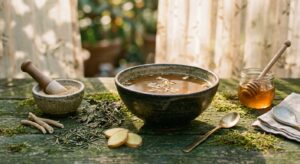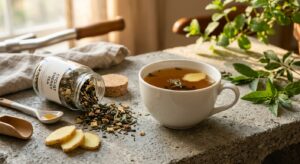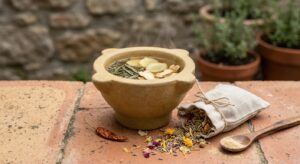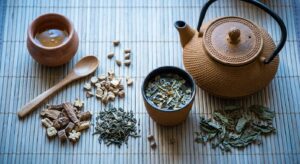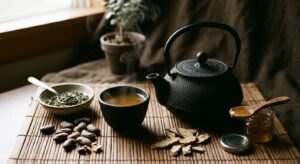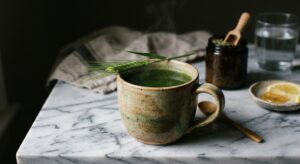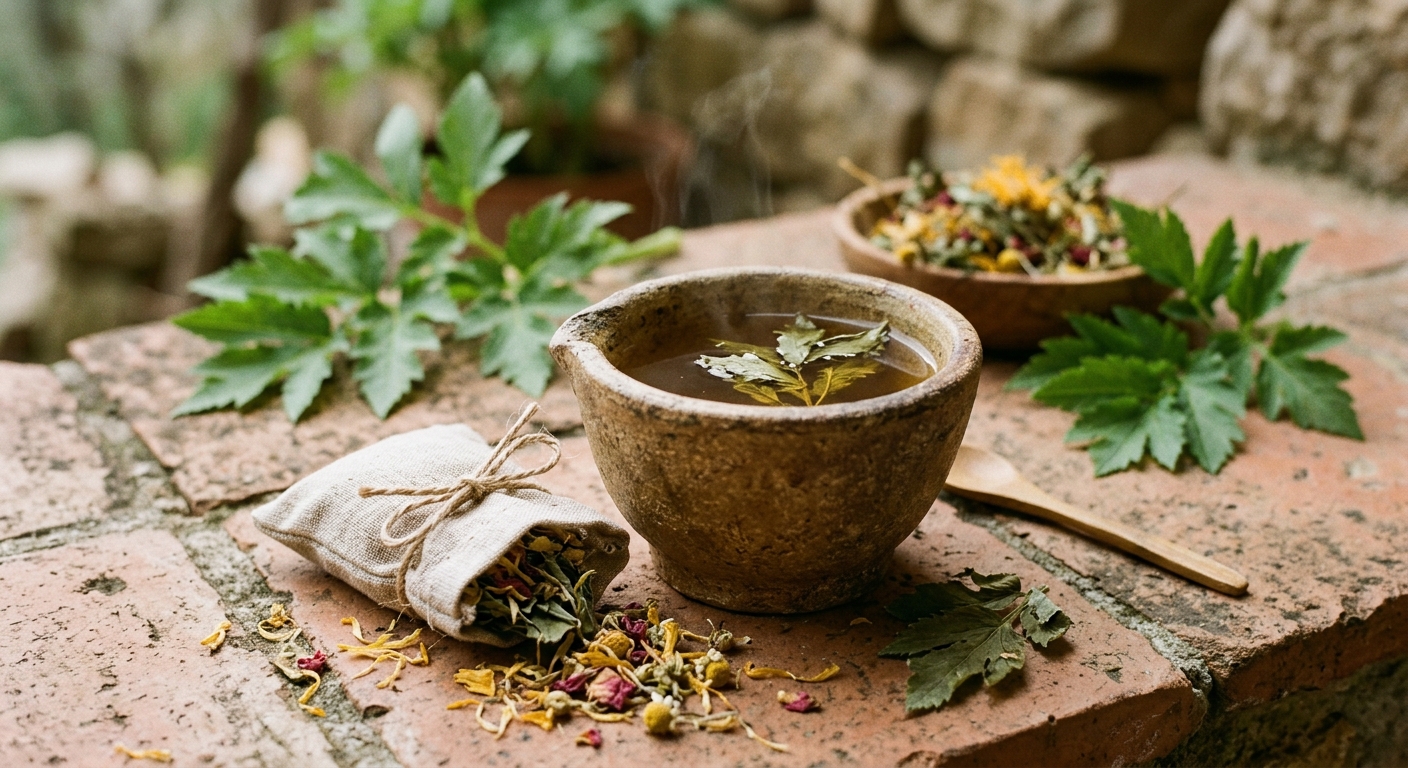
Along the rocky cliffs and volcanic coastlines of Japan’s Izu Islands, a remarkable plant pushes back within days of being harvested, its bright green leaves regenerating almost overnight. This plant is ashitaba, whose name literally translates to “tomorrow’s leaf” in Japanese, a name that speaks to both its extraordinary vitality and the longevity it is said to bestow upon those who consume it regularly. For centuries, the island communities of Hachijojima have credited ashitaba with their exceptional health and long lives, weaving the plant into daily meals, medicinal preparations, and ritual drinks.
In traditional Japanese Kampo medicine, ashitaba was prescribed as a tonic for fatigue, digestive weakness, and poor circulation. Healers prized the golden-yellow sap that seeps from the cut stem, a substance now known to contain xanthoangelol and 4-hydroxyderricin, two rare chalcone flavonoids found in very few plants on earth. Unlike stimulants that spike and crash, ashitaba was understood to build vitality gradually, nourishing the body at a foundational level rather than borrowing energy from future reserves. This reputation earned it a place among Japan’s most celebrated functional greens.
Today, ashitaba tea is gaining global attention as researchers investigate its bioactive compounds in the context of cellular autophagy, nerve growth factor stimulation, and metabolic support. The dried or fresh leaves brew into a verdant, slightly grassy tea with a pleasant mineral backbone and a faint sweetness that distinguishes it from other green herbal teas. Whether you are drawn to it for its remarkable history, its striking color in the cup, or its growing body of scientific evidence, ashitaba offers one of the most compelling reasons in the herbal world to slow down, brew intentionally, and drink with curiosity.
2
cups
Ingredients
- 2 tspdried ashitaba leaves (or 4 tsp fresh ashitaba leaves, finely torn)
- 480 mlwater (80°C / 176°F)
- —raw honey or a slice of fresh ginger to taste (optional)
How to Brew
Click on an item below to shop for the recommended items for this recipe on Amazon.
As an Amazon Associate, we earn from qualifying purchases.
- Bring filtered water to a full boil, then remove from heat and allow it to rest for 3 to 4 minutes until the temperature drops to approximately 80°C (176°F). Alternatively, use an electric kettle with temperature control set to 80°C.
- Measure 1 teaspoon of dried ashitaba leaves per 240 ml of water. If using fresh leaves, use 2 teaspoons per cup, tearing or lightly crushing them to open the cell walls and release the active compounds.
- Place the leaves in a tea infuser, mesh basket, or directly into a warmed teapot. Pour the measured hot water evenly over the leaves, making sure all of the plant material is fully submerged.
- Cover the vessel with a lid or a small saucer to trap the aromatic volatile compounds and maintain a stable steeping temperature. Steep for 5 to 7 minutes. Taste at 5 minutes: the tea should be grassy and lightly bitter. At 7 minutes, the flavor deepens with more mineral character.
- Remove the infuser or strain the leaves thoroughly. Pour into warmed cups and serve immediately. A small slice of fresh ginger or a few drops of raw honey can round out the bitterness and complement the vegetal notes beautifully.
- Measure 3 teaspoons of dried ashitaba leaves (or 5 to 6 teaspoons of fresh, torn leaves) for every 480 ml of filtered cold water. Cold brewing requires a higher leaf-to-water ratio than hot brewing because the extraction is slower and less complete at low temperatures.
- Combine the ashitaba leaves and cold filtered water in a clean glass jar. Stir gently with a long spoon to ensure the leaves are fully saturated and not clumped at the surface. Do not use warm or hot water at this stage.
- Seal the jar loosely with a lid or cover with a small plate. Leave at room temperature for the first 30 minutes to allow initial hydration of the plant material, then transfer to the refrigerator.
- Refrigerate for 10 to 14 hours, ideally overnight. The tea will gradually deepen to a clear, bright green or jade color. Check at the 10-hour mark: the flavor should be clean, lightly sweet, and gently grassy. Extend to 14 hours for a slightly more robust extraction.
- Strain the liquid through a fine mesh strainer or cheesecloth into a clean pitcher or bottle. Serve over ice in tall glasses. Cold brew ashitaba keeps well in a sealed glass container in the refrigerator for up to 48 hours.
- Choose a clear glass jar with a tight-fitting lid to maximize solar exposure and flavor clarity. Rinse the jar with cool water before use. Measure 3 teaspoons of dried ashitaba leaves for every 480 ml of room-temperature filtered water.
- Add the ashitaba leaves directly to the glass jar, then fill with fresh room-temperature filtered water. Secure the lid firmly. Shake gently once to combine the plant material and water evenly.
- Place the sealed jar in a sunny outdoor spot or a sunny windowsill that receives at least 3 to 4 hours of uninterrupted direct sunlight. The natural solar heat will gently warm the water and facilitate a slow, aromatic extraction. Avoid placing the jar in spots that alternate between shade and sun, as inconsistent temperature can affect the flavor.
- After 3 hours, check the color: the liquid should be a soft, golden-green. Taste a small amount. The flavor should be lighter and less bitter than a hot-brewed version, with a pleasant grassy sweetness. If you prefer more depth, return it to the sun for an additional hour.
- Once the desired strength is reached, strain through a fine mesh strainer into a clean pitcher. Discard the spent leaves. Refrigerate immediately and serve within 24 hours over ice. Add a sprig of fresh mint or a slice of lemon to complement the delicate green notes.
Health Benefits
Ashitaba’s chalcone compounds, particularly 4-hydroxyderricin, activate AMPK, a key enzyme that regulates cellular energy production at the mitochondrial level. This mechanism supports steady, clean energy rather than the spike-and-crash pattern associated with caffeine or stimulant herbs.
Xanthoangelol has demonstrated the ability to stimulate Nerve Growth Factor (NGF) synthesis in preliminary laboratory research, which plays a critical role in the maintenance and regeneration of neurons involved in learning, memory, and concentration.
A 2018 study published in Nature Communications found that the chalcones in ashitaba, particularly 4-hydroxyderricin and xanthoangelol, activate autophagy in yeast and human cell models. Autophagy is the cellular process of clearing damaged proteins and organelles, closely linked to longevity and metabolic health.
Both of ashitaba’s primary chalcones exhibit strong free-radical scavenging activity in vitro, helping to neutralize oxidative damage in tissues. Chronic low-grade inflammation and oxidative stress are closely linked to fatigue and cognitive decline, making this action highly relevant to ashitaba’s traditional use as an energy tonic.
Ashitaba has a long history in Kampo medicine as a bitter tonic that stimulates digestive secretions, supports liver function, and eases bloating. The bitter compounds in the leaves activate digestive enzyme release, which improves nutrient absorption and contributes to overall vitality and energy availability.
🧪 Key Bioactive Compounds
The Science Behind Ashitaba
The most scientifically significant compounds in ashitaba are its two unique chalcone flavonoids: 4-hydroxyderricin and xanthoangelol. Chalcones are a subclass of flavonoids found in only a small number of plants, and ashitaba contains them in exceptionally high concentrations relative to any other known food source. These compounds act primarily through the activation of AMP-activated protein kinase (AMPK), a master metabolic regulator that functions as a cellular energy sensor. When AMPK is activated, it triggers mitochondrial biogenesis, enhances glucose uptake, and shifts the body toward fat oxidation for energy, all of which contribute to the clean, sustained vitality that traditional users have long associated with this plant.
A landmark 2018 paper in Nature Communications brought considerable scientific attention to ashitaba by demonstrating that these chalcones induce autophagy across multiple organism models, including yeast, roundworms (C. elegans), and human cell lines. Autophagy is the biological process by which cells dismantle and recycle damaged or dysfunctional components, and its decline is strongly associated with aging, neurodegeneration, and metabolic disease. The study found that the chalcones extended the lifespan of yeast and worm models, providing a molecular basis for the longevity traditions surrounding this island herb. Xanthoangelol has additionally been studied for its capacity to stimulate Nerve Growth Factor (NGF) production in neuronal cell lines, suggesting a plausible pathway by which regular ashitaba consumption could support cognitive function, memory consolidation, and long-term brain health.
Beyond the chalcones, ashitaba also contributes meaningful amounts of chlorophyll, which supports detoxification and antioxidant activity, along with a range of furanocoumarins and phenolic acids that have been individually linked to anti-inflammatory and circulatory effects in the broader Angelica genus literature. The collective synergy of these compounds may explain why ashitaba’s effects feel broad and tonic in nature rather than narrowly targeted, making it more analogous to an adaptogen in practice than a single-pathway supplement. While most research remains at the preclinical stage, the consistency of the findings and the herb’s centuries-long safety record in traditional Japanese use offer a compelling foundation for further exploration.
Brewing Tips
- Always use water below boiling point, ideally around 80°C (176°F), to preserve the delicate chalcone compounds and prevent the brew from turning excessively bitter.
- If you have access to fresh ashitaba leaves, the golden sap that seeps from the cut stem contains the highest concentration of active chalcones. Include stem pieces in your brew for a more potent cup.
- Store dried ashitaba leaves in an airtight, opaque container away from light and heat, as exposure to both can degrade the chlorophyll and oxidize the bioactive flavonoids relatively quickly.
- Pair your morning ashitaba tea with a protein-rich breakfast rather than drinking it on an empty stomach, as the bitter compounds can occasionally cause mild nausea in sensitive individuals when consumed without food.
- For a focused, pre-work blend, combine ashitaba with a small amount of dried ginkgo biloba leaf to layer cognitive support compounds and create a more complex, botanically rich cup.