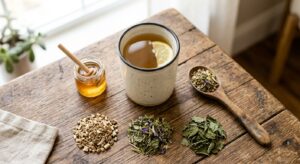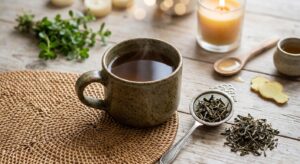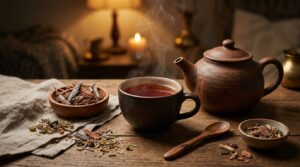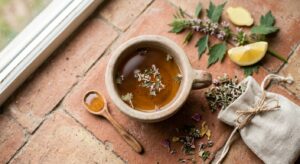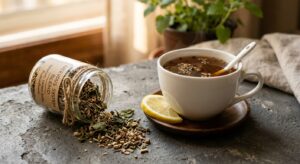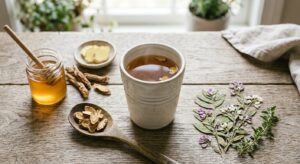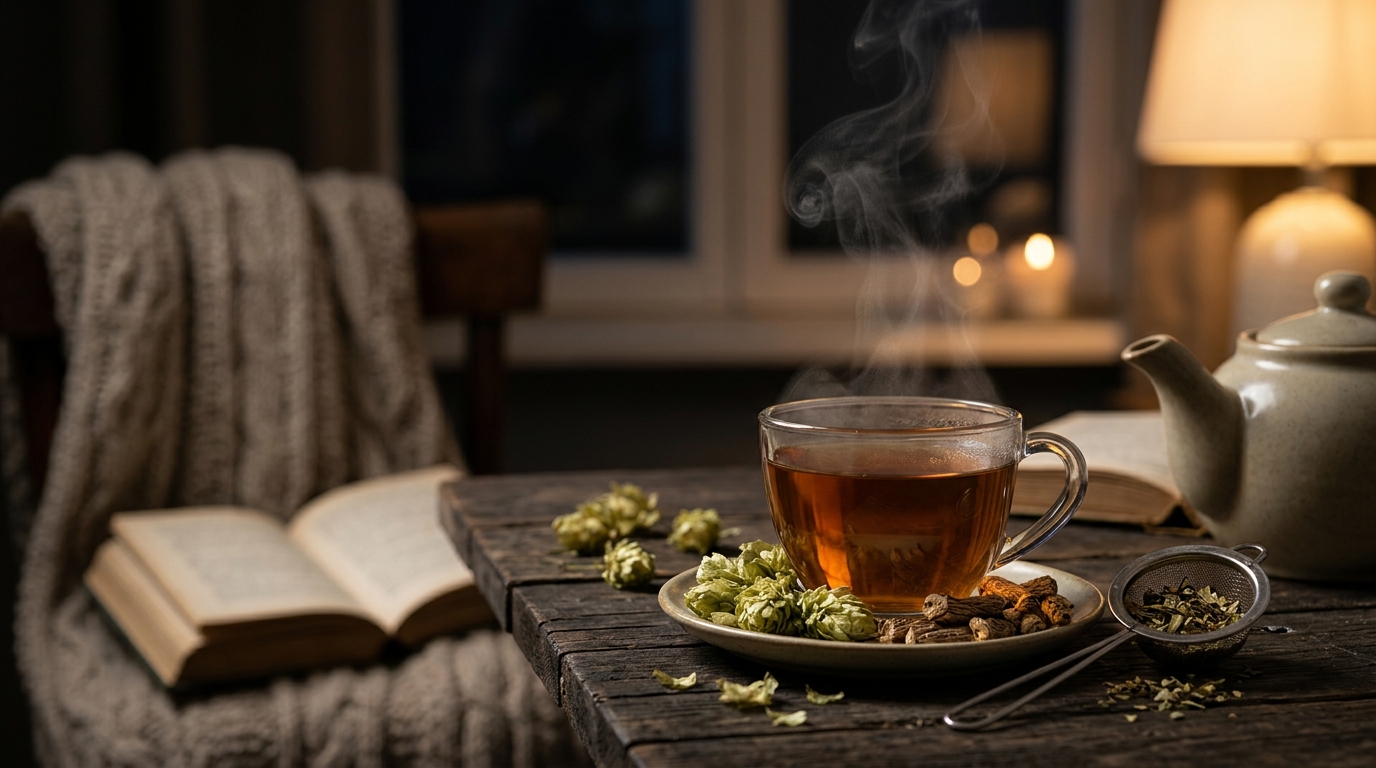
Long before sleep clinics and melatonin gummies, European herbalists kept two plants close to the bedside: valerian root and hops. Valerian (Valeriana officinalis) has been prescribed for restlessness since the time of Hippocrates, and the physician Galen later recommended it for insomnia. Medieval monks and country healers valued the pungent, pungent-smelling root so highly that it earned folk names like “all-heal” and “nature’s valium.”
Hops (Humulus lupulus) have a gentler origin story in the sleep world. The same papery green cones that bitter and preserve beer were noticed by 19th century hop pickers, who reportedly grew drowsy while harvesting them all day. Pillows stuffed with dried hops became a beloved remedy for sleeplessness, and legend holds that King George III of England slept on one to calm his nights. Herbal traditions across Europe and North America have since folded hops into nighttime blends for nervous tension and fitful sleep.
Combined, the two herbs make a classic pairing: valerian brings a deep, grounding, almost musky sedative quality, while hops adds a lighter, resinous bitterness and a calming, slightly sedating lift. The result is a tea that tastes unmistakably herbal, a little wild, and deeply associated with winding down. It is not the sweetest cup on the shelf, but for many people it is one of the most effective rituals at the end of a long day.
2
cups
Ingredients
- 2 tspdried valerian root, roughly chopped
- 1 tspdried hops cones or hops flowers
- 1 tspdried lemon balm leaf (optional, to soften the flavor)
- 480 mlwater (95°C / 203°F)
- —raw honey to taste (optional)
- —a small strip of lemon or orange peel (optional)
How to Brew
Click on an item below to shop for the recommended items for this recipe on Amazon.
As an Amazon Associate, we earn from qualifying purchases.
- Measure the valerian root, hops, and lemon balm (if using) into a teapot or large mug with an infuser. Roughly chopped root works best because fine powder turns silty and bitter.
- Bring fresh water to a near boil, then let it rest for about 30 seconds so it settles around 95°C (203°F). Fully boiling water can drive off some of the delicate hop aromatics.
- Pour the hot water over the herbs, then immediately cover the vessel with a saucer or lid to hold in the steam and volatile oils.
- Steep for 10 to 15 minutes. Start tasting at 10 minutes. A longer steep deepens the sedative character but also increases bitterness and the characteristic valerian funk.
- Strain thoroughly into a warm mug. Stir in honey and add a twist of citrus peel if you like, to round off the bitterness.
- Sip slowly about 30 to 45 minutes before bed, in dim light and away from screens, so the ritual itself helps signal the body to slow down.
- Combine 3 teaspoons of chopped valerian root, 1.5 teaspoons of hops, and 1 teaspoon of lemon balm in a clean glass jar. Cold water extracts more slowly, so this is a bit more herb than the hot method.
- Pour in 750 ml of cool, filtered water, stir gently with a spoon to wet all the herbs, and seal the jar with a tight lid.
- Place the jar in the refrigerator and let it infuse for 8 to 10 hours. Starting it after dinner means it is ready the next evening.
- Strain through a fine mesh strainer lined with a piece of muslin or a coffee filter to catch the small root particles, which can otherwise keep extracting and turn the tea bitter.
- Serve chilled over ice, or pour a glass and let it come to room temperature. Because the sedative effect builds gradually, drink it with your evening meal or an hour before bed rather than right at lights out.
- Keep leftovers refrigerated in a sealed container and finish within 48 hours for best flavor and freshness.
- Add 2 teaspoons of chopped valerian root to a small saucepan with 500 ml of cold water. Starting with cold water helps the root release its compounds gradually.
- Bring the pot slowly to a gentle simmer, then reduce the heat to low and cover. Simmer for 15 minutes, keeping the lid on to hold in the volatile oils. Avoid a rolling boil, which can turn the decoction harsh.
- Remove the pan from the heat. Add 1 teaspoon of hops and 1 teaspoon of lemon balm directly to the hot liquid and cover again.
- Let everything steep off the heat for another 10 minutes so the hops and lemon balm infuse without being cooked.
- Strain through a fine mesh sieve into a warm mug, pressing the herbs lightly with the back of a spoon to release the last of the liquid.
- Sweeten with a little honey and add a pinch of cinnamon or a slice of orange peel if you want to soften the deep, earthy flavor. Drink warm, about 30 to 45 minutes before bed.
Health Benefits
Several clinical studies suggest valerian may modestly shorten the time it takes to fall asleep and improve subjective sleep quality, likely through its action on GABA signaling. Results vary between studies, and effects tend to build over a couple of weeks of regular use.
Both herbs have a long traditional use for calming an overactive mind. Hops’ bitter acids and valerian’s valerenic acid interact with GABA pathways in ways that promote relaxation without strong next-day grogginess for most people.
Small trials of valerian and hops combinations have reported improvements in sleep quality and reduced nighttime waking compared with placebo. The pairing is thought to work better than either herb alone, though larger studies are still needed.
Valerian has traditionally been used as a mild antispasmodic, and its relaxing effect on smooth muscle may help ease the physical tightness that keeps people awake after a stressful day.
Hops are a classic digestive bitter, stimulating digestive secretions and soothing a tense stomach. This makes the tea a comfortable choice after a heavy evening meal.
🧪 Key Bioactive Compounds
The Science Behind Valerian Root
The sedative reputation of valerian rests largely on its interaction with the GABA system. GABA (gamma-aminobutyric acid) is the brain’s primary inhibitory neurotransmitter, and drugs like benzodiazepines work by amplifying its effects. Valerenic acid appears to bind to a specific subunit of the GABA-A receptor, while other constituents may inhibit the enzyme that breaks GABA down, leaving more of it available. Valerian may also interact with adenosine and serotonin receptors, which are involved in sleep pressure and mood regulation.
Hops contribute a different but complementary set of actions. The bitter acids humulone and lupulone, along with the volatile alcohol 2-methyl-3-buten-2-ol, have shown sedative activity in animal studies, and hops extracts appear to influence GABA signaling as well. Hops compounds may also interact with melatonin receptors, and some research suggests they can nudge the body’s circadian signaling in a sleep-friendly direction. Importantly, the sedative alcohol builds up as hops age and oxidize, which may explain why traditional hop pillows used dried, slightly aged cones.
The clinical evidence is encouraging but not definitive. Systematic reviews of valerian show modest benefits for sleep quality with considerable variation between preparations, doses, and study design. Trials of valerian and hops together, mostly using standardized extracts rather than tea, have generally reported improved sleep latency and quality. A cup of tea delivers a lower and less standardized dose than a concentrated supplement, so the effect is usually gentler, which many people prefer. Consistency matters: the benefits tend to appear after one to two weeks of regular evening use rather than from a single cup.
Brewing Tips
- Always cover your cup or teapot while steeping. Valerian and hops rely on volatile oils for much of their calming effect, and an open cup lets them escape.
- Buy valerian root that is cut or whole rather than powdered, and store it in an airtight, dark container. Old or stale root smells weaker and loses potency, while fresh root has a strong, earthy aroma.
- Start with half the amount of valerian and build up. The flavor is polarizing, and blending it with lemon balm, chamomile, or a strip of orange peel makes it far more approachable.
- Drink the tea 30 to 60 minutes before bed and pair it with a calming routine like dim lights and no screens, since the ritual and the herbs work best together.
- Use it as a short-term or occasional sleep aid and take breaks, rather than relying on it nightly for months without checking in with a healthcare provider.