Long before pharmaceutical sleep aids lined pharmacy shelves, herbalists on opposite sides of the Atlantic were reaching for two plants that would eventually be recognized as remarkably complementary. Skullcap (Scutellaria lateriflora), a member of the mint family native to North America, was used extensively by Indigenous nations including the Cherokee and Iroquois to calm nervous agitation, ease headaches, and support women during childbirth recovery. Passionflower (Passiflora incarnata), a breathtaking vine with otherworldly blooms, was embraced by Spanish missionaries in South America in the 16th century, who brought it back to Europe where it quickly became a celebrated remedy for sleeplessness and anxiety. Together, they form one of the most thoughtfully balanced blends in the herbal tea tradition.
What makes this pairing so compelling is that skullcap and passionflower approach relaxation from slightly different angles. Skullcap is considered a nervous system trophorestorative, meaning it nourishes and rebuilds frayed nerves over time rather than simply sedating them. It is particularly prized for the kind of anxiety that manifests as a racing mind, muscle tension, or difficulty switching off after a long day. Passionflower, by contrast, is more acutely calming, working quickly to quiet mental chatter and promote the transition into sleep. Used together, they create a rounded effect that addresses both the physical and mental dimensions of restlessness.
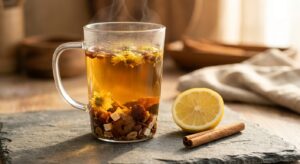
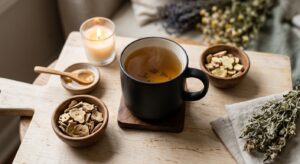
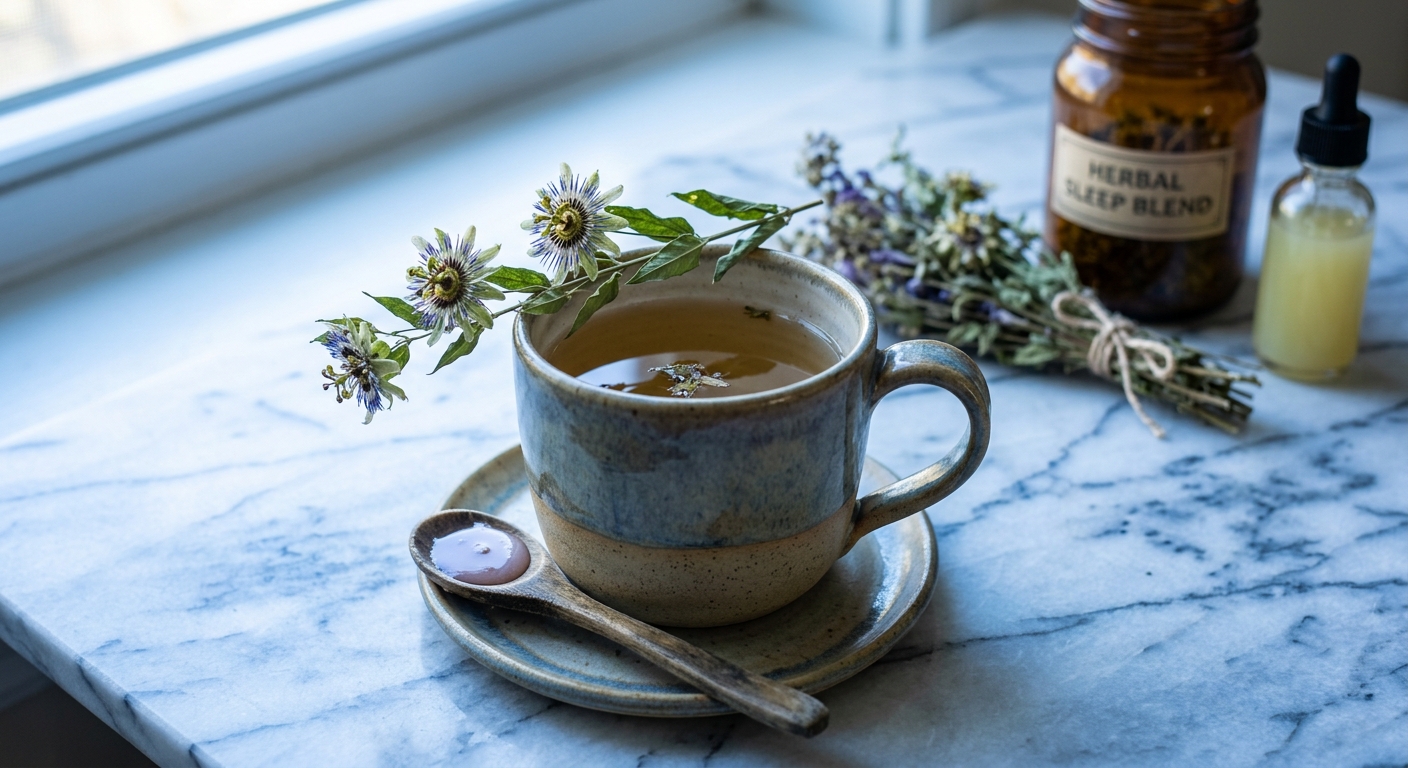
The sensory experience of this blend is as comforting as its reputation. Skullcap lends an earthy, slightly bitter base note reminiscent of green herbs and damp forest floor, while passionflower softens everything with a mild floral sweetness and a faint grassy undertone. The resulting brew is a muted golden-green in the cup, best enjoyed in the hour before bed with the lights dimmed and the phone set aside. Whether you are seeking relief from chronic stress, occasional sleeplessness, or simply a ritual that signals to your body that the day is done, this blend offers a gentle and time-tested invitation to rest.
2
cups
Ingredients
- 2 tspdried skullcap herb
- 2 tspdried passionflower herb
- 480 mlwater (90°C / 194°F)
- —raw honey or lavender honey to taste (optional)
- —a few drops of lemon juice to brighten flavor (optional)
How to Brew
Click on an item below to shop for the recommended items for this recipe on Amazon.
As an Amazon Associate, we earn from qualifying purchases.
- Bring filtered water to approximately 90°C (194°F). Avoid a full rolling boil, as very high temperatures can degrade some of the delicate flavonoids in passionflower. If you do not have a temperature-controlled kettle, boil the water and allow it to rest for 2 minutes before pouring.
- Measure 2 teaspoons of dried skullcap and 2 teaspoons of dried passionflower into your tea infuser or teapot. For a stronger therapeutic cup, you may increase each herb to 1 tablespoon without concern.
- Pour the hot water over the herbs and cover the vessel immediately with a lid or small plate. Covering is important: it traps the aromatic volatile compounds that would otherwise escape with the steam, preserving both the flavor and some of the herb’s active constituents.
- Steep for 10 to 15 minutes. Set a timer and resist the urge to rush the process. The brew will deepen in color and become more complex in flavor as the infusion progresses.
- Strain the herbs thoroughly using a fine-mesh strainer. Press or squeeze the spent herbs gently to extract the last of the infusion.
- Sweeten lightly with raw honey if desired. Drink warm, ideally 30 to 60 minutes before bed, in a calm and comfortable setting.
- Measure 3 teaspoons of dried skullcap and 3 teaspoons of dried passionflower into a clean glass jar. Cold brewing requires a slightly higher herb-to-water ratio than hot brewing because cool water extracts more slowly and less completely.
- Pour 480 ml of cool, filtered water over the herbs. Stir briefly with a long spoon to ensure all the plant material is submerged and wet.
- Cover the jar with a lid or stretch of cheesecloth secured with a rubber band. Leave the jar at room temperature for 1 hour to begin the extraction, then move it to the refrigerator.
- Allow the herbs to cold-infuse in the refrigerator for 8 to 12 hours, ideally overnight. The slow, cold extraction draws out a gentler, sweeter profile compared to hot steeping.
- When ready, strain the infusion through a fine-mesh strainer lined with cheesecloth into a second clean jar or pitcher. Press the herbs firmly to recover all the liquid.
- Serve over ice in a tall glass, or gently warm a portion in a small saucepan over low heat if you prefer it warm without the bitterness that can come from hot brewing. Store any remaining cold brew in the refrigerator and use within 48 hours.
- Measure 3 tablespoons of dried skullcap and 3 tablespoons of dried passionflower into a medium saucepan. This larger quantity of herbs will yield a concentrate roughly four times the strength of a standard infusion.
- Pour 480 ml of filtered water into the saucepan and heat gently until it reaches approximately 90°C (194°F). Do not allow the water to boil vigorously. Maintain a low simmer and keep the pan covered throughout the process to prevent volatile aromatic compounds from escaping.
- Steep, covered, over the lowest heat setting for 20 to 25 minutes. The liquid will reduce slightly and deepen to a rich amber-green color. Stir occasionally and check that the temperature stays below a gentle simmer.
- Remove from heat and allow to cool, still covered, for 5 minutes. Then strain through a fine-mesh strainer lined with cheesecloth into a clean glass jar, pressing the herbs firmly to extract all liquid.
- To use, combine 60 ml of the concentrate with 180 ml of hot water for a standard-strength cup, or stir it into warm oat milk or almond milk with a small spoon of honey for a calming herbal latte. Store the concentrate in a sealed glass jar in the refrigerator for up to 5 days.
- Shake or stir the jar gently before each use, as the concentrate may settle. Warm only what you need and never reheat the same portion more than once.
Health Benefits
Both passionflower and skullcap modulate GABAergic activity in the brain, reducing neuronal excitability and helping the nervous system transition into sleep. A 2011 randomized controlled trial published in Phytotherapy Research found that passionflower tea significantly improved overall sleep quality in adults compared to placebo, with participants reporting better sleep continuity and fewer nighttime awakenings.
Skullcap has a long tradition as a nervine trophorestorative, and modern research supports its use for anxiety. A 2014 study in Alternative Therapies in Health and Medicine found that skullcap enhanced global mood without reducing energy or cognition. Passionflower has been compared favorably to low-dose oxazepam for generalized anxiety in clinical research, suggesting meaningful anxiolytic activity in the blend.
Skullcap has been traditionally used to relieve muscle spasms and tension headaches rooted in nervous system overactivity. Its antispasmodic properties, attributed in part to baicalin and its effect on GABA receptors, help release physical tension that accompanies psychological stress, making this blend particularly useful for those who carry stress in their shoulders, jaw, or temples.
Unlike acute sedatives, skullcap is classified as a nervine tonic, meaning it nourishes and rebuilds the nervous system over time with consistent use. Herbalists recommend it specifically for nervous exhaustion, prolonged stress, and the kind of burnout where even rest feels unsatisfying. Pairing it with passionflower adds an immediate calming layer that makes each cup beneficial both in the short and long term.
The combination of GABA-modulating flavonoids from both herbs creates a synergistic effect on sleep onset and sleep quality. Passionflower’s vitexin and chrysin work alongside skullcap’s baicalin to calm the overactive mind that is one of the most common causes of difficulty falling asleep, particularly in people whose insomnia is driven by anxiety rather than physical discomfort.
🧪 Key Bioactive Compounds
The Science Behind Skullcap And Passionflower
The calming power of this blend is rooted in its shared affinity for the GABAergic system, the brain’s primary inhibitory signaling network. GABA (gamma-aminobutyric acid) is the neurotransmitter responsible for reducing neuronal excitability throughout the nervous system. When GABA levels are sufficient and receptors are properly stimulated, we experience calm, relaxed focus and, when the time is right, sleep. Both skullcap and passionflower contain flavonoids that interact with GABA-A receptors, the same receptor complex targeted by pharmaceutical anxiolytics and sleep aids, but through gentler and more selective mechanisms that do not carry the same risks of dependence or cognitive impairment.
Skullcap’s primary active constituent, baicalin, and its metabolite scutellarein have been shown in multiple preclinical studies to bind to benzodiazepine receptor sites on the GABA-A complex, producing anxiolytic effects without significantly impairing motor function or memory. A 2003 study published in Phytotherapy Research demonstrated that baicalin had measurable anxiolytic effects in animal models comparable to diazepam but without the sedative impairment at equivalent doses. Passionflower brings its own suite of GABAergic flavonoids, most notably chrysin, vitexin, and orientin. Chrysin in particular has been identified as a partial agonist at the benzodiazepine receptor site, while vitexin has shown mild monoamine oxidase (MAO) inhibiting activity in some preclinical models, which may contribute to mood-stabilizing effects by slowing the breakdown of serotonin and dopamine.
What makes the skullcap and passionflower combination particularly interesting from a pharmacological standpoint is the principle of synergy. The two herbs engage overlapping but non-identical pathways, meaning that together they may produce a more complete and balanced effect than either herb alone. Skullcap’s trophorestorative action, its ability to gradually strengthen nervous system function over repeated use, complements passionflower’s more acute, fast-acting calming profile. Research published in the journal Neurochemical Research has explored how combinations of flavonoids can produce additive or even synergistic effects at receptor sites, supporting the traditional herbalist’s instinct to blend rather than use single herbs in isolation. While large-scale human clinical trials on this specific combination remain limited, the individual evidence base for each herb is solid and growing, and their traditional co-use across centuries of herbal medicine provides a compelling empirical foundation.
Brewing Tips
- Always source dried skullcap from a supplier who provides third-party testing or a certificate of analysis. Skullcap is one of the most commonly adulterated herbs on the market, and substitution with germander can cause serious liver harm. Reputable bulk herb companies will be transparent about their sourcing and testing.
- For best results, drink this tea consistently for at least two weeks before evaluating its effect on your sleep. Skullcap in particular works cumulatively as a nervine tonic, and the full benefit of the blend is often most apparent after a period of regular use rather than occasional one-off cups.
- Store your dried skullcap and passionflower in separate airtight glass jars away from light and heat. Pre-mixed blends lose aromatic potency faster than herbs stored individually. Mix your desired ratio fresh at brewing time for the best flavor and efficacy.