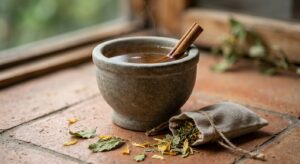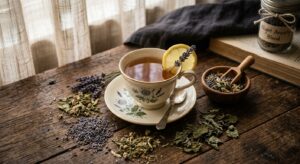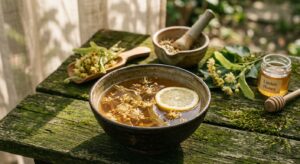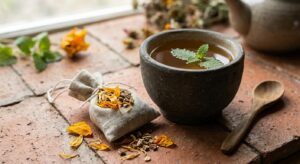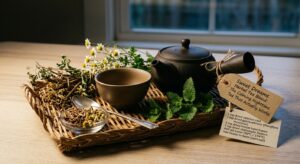
Long before pharmaceutical sedatives existed, herbalists across Europe, Asia, and the Americas turned to the plant kingdom for relief from nervous tension and sleeplessness. Valerian root was prescribed by Hippocrates in ancient Greece. Passionflower was used by indigenous peoples of the Americas to ease restlessness and was later adopted by European colonists as a gentle nerve tonic. Lemon balm, grown in monastery gardens throughout medieval Europe, was called the ‘gladdening herb’ and brewed into cordials to lift melancholy and quiet an anxious mind. Together, these three herbs form one of the most well-researched and time-honored nervine blends in Western herbal medicine.
What makes this blend particularly fascinating is that modern science has given us a precise explanation for what traditional healers understood through centuries of observation. Each herb in this formula contains compounds that interact directly with GABA (gamma-aminobutyric acid), the central nervous system’s primary inhibitory neurotransmitter. GABA works by slowing nerve impulses, reducing excitability, and creating the physiological conditions needed for relaxation and sleep. When GABA signaling is insufficient, anxiety, racing thoughts, and insomnia can take hold. This tea works not as a sedative hammer but as a gentle nudge toward the brain’s own calming chemistry.
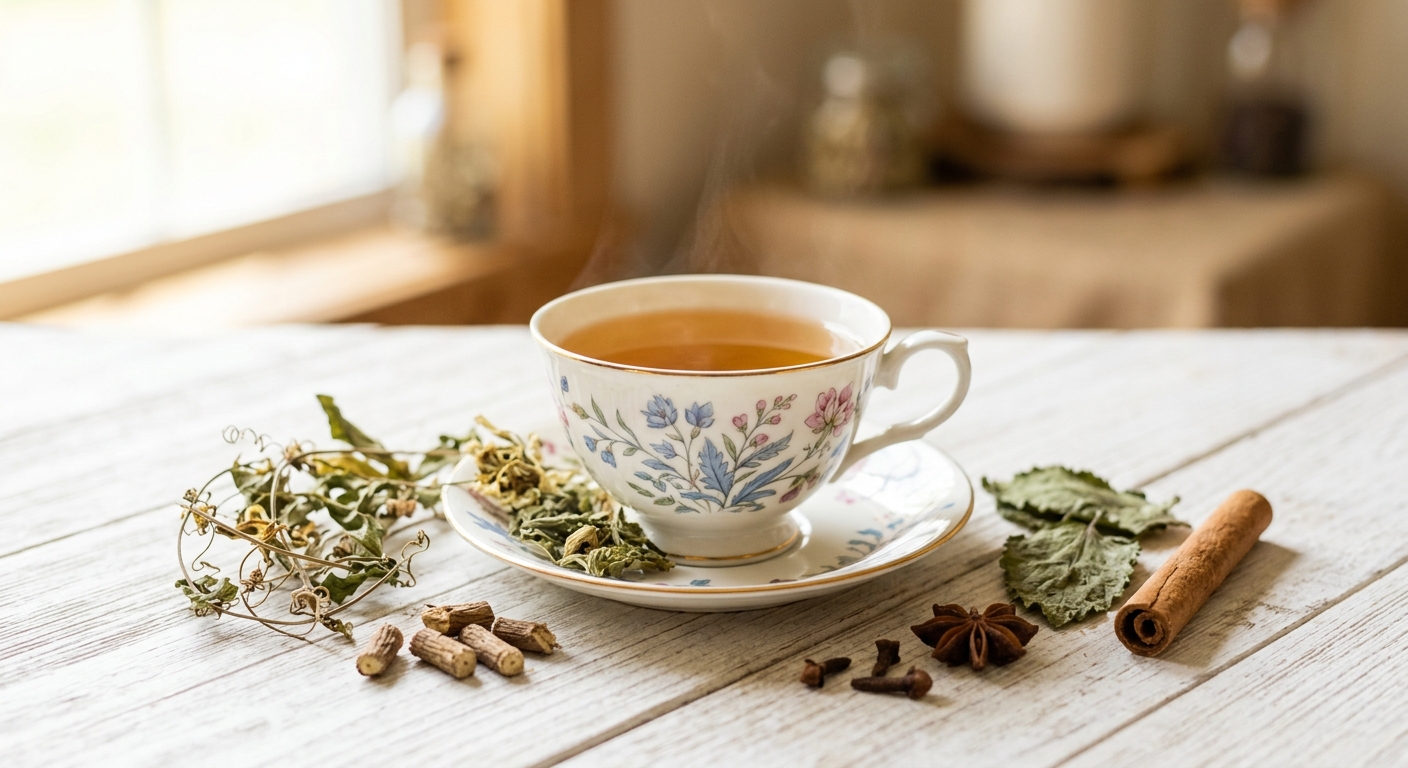
The sensory experience is equally inviting. Lemon balm contributes a clean, citrus-herb brightness. Passionflower adds subtle earthiness and a faint floral note. Valerian root, earthy and slightly pungent on its own, recedes into the background and anchors the blend with warmth. The result is a mellow, herbaceous cup that smells like a walk through a summer meadow and tastes like something your grandmother might have brewed on a restless evening. Sip it slowly, about an hour before bed, and let the ritual itself become part of the unwinding.
2
cups
Ingredients
- 1.5 tspdried valerian root
- 1 tspdried passionflower herb
- 1 tspdried lemon balm leaves
- 480 mlwater (90°C / 194°F)
- —raw honey to taste (optional)
- —a thin slice of fresh lemon (optional)
How to Brew
Click on an item below to shop for the recommended items for this recipe on Amazon.
As an Amazon Associate, we earn from qualifying purchases.
- Bring fresh filtered water to approximately 90 to 95°C (194 to 203°F). If you do not have a temperature-controlled kettle, bring water to a full boil and allow it to rest for 60 to 90 seconds.
- Combine 1.5 tsp of dried valerian root, 1 tsp of dried passionflower herb, and 1 tsp of dried lemon balm in a tea infuser or a small teapot with a built-in strainer.
- Pour 480 ml of hot water over the herbs, ensuring all plant material is fully submerged. Cover the vessel with a lid or a small saucer to trap volatile aromatic compounds that would otherwise escape as steam.
- Steep for 10 to 15 minutes. Taste at the 10-minute mark. A longer steep will amplify the earthy valerian character and increase potency; a shorter steep yields a lighter, more citrus-forward cup.
- Strain the herbs carefully, pressing gently to extract remaining liquid. Pour into two mugs, add raw honey if desired, and serve with a thin slice of lemon. Drink approximately 45 to 60 minutes before bedtime for best effect.
- Measure 2 tsp of dried valerian root, 1 tsp of dried passionflower, and 1 tsp of dried lemon balm directly into a clean glass jar. The larger jar surface area helps with even extraction at cold temperatures.
- Pour 480 ml of room-temperature filtered water over the herbs. Stir gently with a long spoon to ensure all plant material is saturated, then seal the jar with a lid.
- Allow the jar to sit at room temperature for the first 30 to 60 minutes, then transfer to the refrigerator and steep for a total of 8 to 12 hours, or overnight.
- In the morning, strain the liquid through a fine mesh strainer or a cloth strainer to remove all plant material. Press the spent herbs gently to recover any remaining liquid.
- Pour over ice if desired, sweeten lightly with honey or a small amount of agave, and serve chilled. The cold brew keeps refrigerated in a sealed container for up to 48 hours.
- Place 2 tsp of dried valerian root into a small stainless steel or ceramic saucepan. Add 600 ml of cold filtered water. Starting in cold water allows a more gradual, thorough extraction from the dense root material.
- Bring the water to a gentle simmer over medium-low heat. Do not allow a rolling boil. Maintain a steady, gentle simmer with small bubbles at 85 to 90°C (185 to 194°F) for 20 to 25 minutes. The liquid will reduce slightly and deepen in color to a dark amber.
- Remove the saucepan from heat entirely. Immediately add 1 tsp of dried passionflower and 1 tsp of dried lemon balm to the hot valerian decoction. Cover the pot with a lid.
- Allow the passionflower and lemon balm to infuse in the residual heat for 8 to 10 minutes. This two-stage approach ensures each herb is treated with the correct preparation technique for its structure and chemistry.
- Strain the liquid through a fine mesh strainer into two mugs, discarding the spent plant material. Sweeten with raw honey if desired. This decoction yields a notably more potent cup and is best reserved for evenings when sleep support is a priority.
Health Benefits
Multiple compounds in this blend, including valerenic acid, vitexin, and rosmarinic acid, work through complementary pathways to increase GABA availability and receptor sensitivity. This multi-compound approach to supporting the brain’s own inhibitory chemistry makes this blend more nuanced and well-rounded than any single herb alone.
A 2002 double-blind study published in Phytomedicine found that passionflower extract was as effective as the pharmaceutical drug oxazepam in treating generalized anxiety disorder, with significantly fewer side effects such as impaired job performance. Lemon balm has also shown reliable anxiolytic effects in multiple human trials, particularly at doses above 300 mg.
A meta-analysis of valerian root studies found consistent evidence that it reduces time to fall asleep and improves subjective sleep quality, particularly with regular use over two to four weeks. The combination with passionflower, which has shown improvements in sleep quality scores in randomized controlled trials, strengthens this effect significantly.
At lower doses and in daytime use, lemon balm in particular functions as a gentle adaptogenic nervine, reducing cortisol-driven mental agitation and improving mood and cognitive calmness without causing drowsiness. This makes light preparations of this blend potentially useful during periods of everyday stress, not only at bedtime.
Lemon balm has a long tradition of use for nervous dyspepsia, the digestive discomfort that accompanies anxiety and stress. It has demonstrated antispasmodic effects on smooth muscle in the gastrointestinal tract, and clinical trials have shown it effective for reducing symptoms of functional dyspepsia and irritable bowel syndrome when nervous tension is a contributing factor.
🧪 Key Bioactive Compounds
The Science Behind Valerian Root
The GABA system is the brain’s primary braking mechanism. When GABA binds to its receptors, particularly the GABA-A receptor family, it opens chloride ion channels that hyperpolarize neurons, making them less likely to fire. The result is a quieting of neural noise: reduced anxiety, slower thoughts, relaxed muscles, and the onset of drowsiness. Pharmaceutical drugs like benzodiazepines and barbiturates work by forcibly amplifying this system, which is why they are effective but also why they carry risks of dependence and next-day cognitive impairment. The herbs in this blend interact with the same system, but through gentler, more indirect mechanisms that appear to work with the brain’s natural regulation rather than overriding it.
Valerenic acid, the primary active constituent of valerian root, has been shown in multiple in vitro and animal studies to act as a positive allosteric modulator of GABA-A receptors, meaning it enhances the receptor’s response to GABA without activating the receptor directly. It also appears to inhibit the enzyme responsible for breaking down GABA, effectively increasing the amount available in synapses. Rosmarinic acid from lemon balm inhibits GABA transaminase through a different enzymatic pathway, making these two herbs complementary rather than redundant. Vitexin and chrysin from passionflower add a third layer, binding to benzodiazepine-sensitive sites on GABA-A receptors at low affinity, producing a mild, anxiety-reducing effect that clinical trials have validated in human subjects.
Importantly, none of these compounds appear to produce receptor downregulation or rebound anxiety with moderate use, which is one of the central risks associated with pharmaceutical GABAergic drugs. A 2014 review in the journal Phytotherapy Research noted that valerian root’s complex multi-compound profile may actually protect against tolerance, as the numerous minor constituents interact with receptor systems in a distributed way that does not overwhelm any single pathway. This emerging understanding of phytochemical synergy helps explain why traditional herbalists blended these plants rather than using them in isolation, and why whole-plant preparations in tea form remain relevant even in an era of isolated pharmaceutical compounds.
Brewing Tips
- Cover your mug or teapot while steeping to trap the volatile essential oils of lemon balm and passionflower, which evaporate readily in open steam and are responsible for a significant portion of the aromatic and calming experience.
- For consistent therapeutic results, use this tea as a nightly ritual for at least two weeks. Valerian root in particular has been shown in clinical research to produce stronger and more reliable effects with regular use, as its compounds appear to have a mild cumulative effect on sleep architecture.
- If the earthy, pungent quality of valerian is too assertive for your palate, reduce the valerian quantity by half and increase the lemon balm to 1.5 tsp. You will sacrifice some potency but gain a much brighter, more approachable cup that is easier to drink consistently.