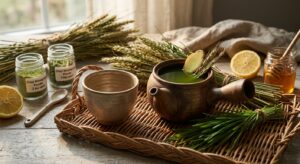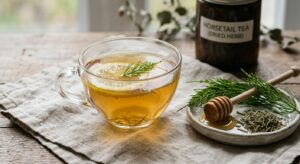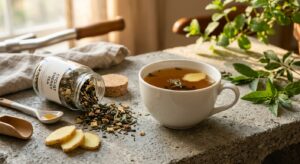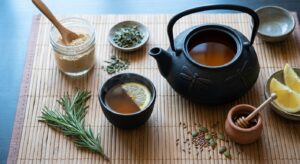
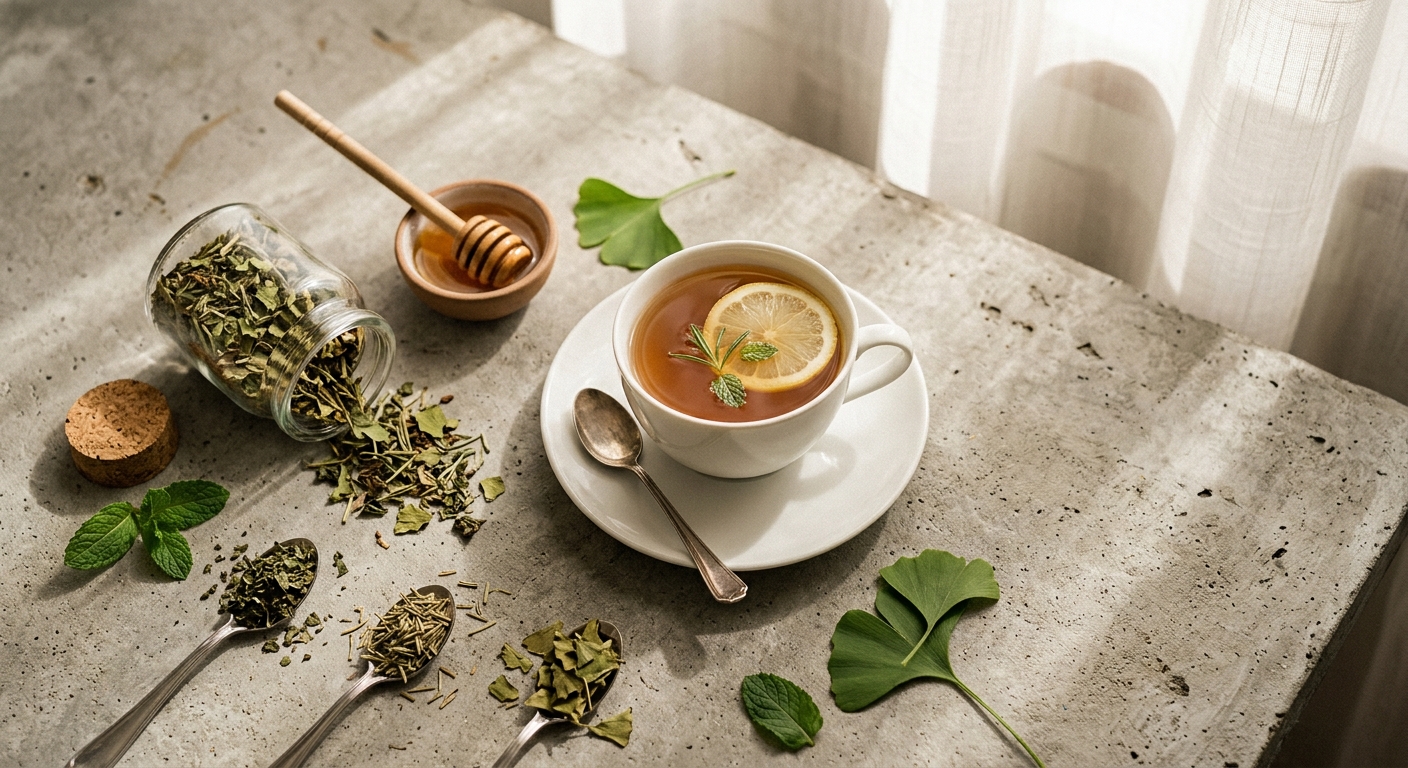
Long before the age of nootropic supplements and energy drinks, herbalists across Europe, Asia, and the Mediterranean were turning to the plant kingdom for mental sharpness. Rosemary was hung in Greek scholars’ studies to aid memory, peppermint was burned in Roman bathhouses to invigorate the mind, and ginkgo biloba had already spent thousands of years in Chinese medicine as a tonic for mental vitality. This productivity blend draws those traditions together into a single, aromatic cup designed for the moments when you need your mind to perform at its best.
What makes this blend genuinely functional rather than merely ritualistic is the complementary nature of its three primary herbs. Peppermint delivers a swift, cooling sensory lift through its menthol content, increasing alertness within minutes of inhalation alone. Rosemary contributes a warm, resinous depth and brings with it rosmarinic acid and 1,8-cineole, compounds with well-documented effects on acetylcholine pathways in the brain. Ginkgo biloba works more subtly and cumulatively, supporting cerebral blood flow and protecting neurons from oxidative stress. Together, they create a layered, multi-mechanism approach to focus that no single herb achieves alone.
This is not a caffeine-dependent stimulant tea. There is no crash, no jitteriness, and no dependency cycle. Instead, it offers a cleaner and more sustainable kind of cognitive support, ideal for deep work sessions, study periods, creative projects, or any task that demands sustained attention. Brew it hot when you need a grounding ritual to start your focus block, or cold brew it overnight for a crisp, ready-to-sip focus tonic you can reach for throughout the day.
2
cups
Ingredients
- 2 tspdried peppermint leaves
- 1 tspdried rosemary leaves
- 1 tspdried ginkgo biloba leaves
- 480 mlwater (90°C / 194°F)
- —raw honey to taste (optional)
- —lemon slice (optional)
How to Brew
Click on an item below to shop for the recommended items for this recipe on Amazon.
As an Amazon Associate, we earn from qualifying purchases.
- Heat filtered water to 90 to 95°C (194 to 203°F). Avoid a full rolling boil, as excessive heat can degrade the delicate volatile oils in peppermint that are responsible for its clarifying menthol aroma.
- Combine 2 tsp dried peppermint, 1 tsp dried rosemary, and 1 tsp dried ginkgo biloba leaves in a tea infuser or loose-leaf basket. For two servings, double the quantities and use a larger infuser or a teapot.
- Place the infuser in your mug or teapot and pour the hot water directly over the herbs. Cover the mug with a small plate or lid to trap the volatile aromatic compounds inside the cup during steeping.
- Steep for 5 minutes for a bright, minty cup with mild rosemary presence. Extend to 7 minutes to draw out more of the resinous rosemary depth and fuller ginkgo character. Do not exceed 8 minutes or the blend may turn bitter.
- Remove the infuser and allow the tea to cool for one minute before drinking. Add raw honey to soften any bitterness, or a slice of lemon to brighten the flavor and complement the herbal notes. Inhale slowly over the cup before your first sip to let the menthol vapors begin their clarifying work.
- Measure 3 tsp dried peppermint, 1.5 tsp dried rosemary, and 1.5 tsp dried ginkgo biloba leaves into a clean glass jar. Cold brewing requires a slightly higher herb-to-water ratio than hot brewing to compensate for the slower, lower-temperature extraction.
- Pour 500 ml of cold, filtered water over the herbs. Stir briefly to ensure all plant material is submerged, then seal the jar with a lid or cover tightly with plastic wrap.
- Allow the jar to sit at room temperature for 30 minutes to begin releasing the water-soluble compounds, then transfer to the refrigerator and steep for a further 8 to 12 hours. Overnight is ideal.
- In the morning, strain the liquid through a fine mesh strainer or cheesecloth into a clean bottle or pitcher, pressing the herbs gently to extract the last of the infusion.
- Serve over ice in a tall glass. Add a squeeze of fresh lemon juice and a sprig of fresh mint for an aromatic garnish that enhances the sensory focus-priming experience. This cold brew keeps refrigerated for up to 48 hours.
- Bring 250 ml of filtered water to 95°C (203°F). Use a smaller volume than a standard brew since this is a concentrate intended for dilution.
- Combine 4 tsp dried peppermint, 2 tsp dried rosemary, and 2 tsp dried ginkgo biloba in a small saucepan or teapot. This doubled herb ratio combined with a reduced water volume creates the concentrated extraction.
- Pour the hot water over the herbs, cover immediately, and steep for 12 to 15 minutes. The extended steep time is intentional here and will produce a more intense, slightly bitter concentrate. This bitterness will mellow significantly once diluted.
- Strain through a fine mesh strainer, pressing the herbs firmly to capture the full extraction. Allow the concentrate to cool to room temperature.
- Transfer the concentrate to a small glass bottle and refrigerate for up to 5 days. To serve, dilute 1 part concentrate with 1 to 2 parts hot water, sparkling water, or water poured over ice. Adjust dilution to personal taste and add honey or lemon as desired.
Health Benefits
The menthol in peppermint has been shown in multiple studies to improve sustained attention and processing speed. A 2016 study published in Nutritional Neuroscience found that peppermint aroma alone significantly enhanced memory, alertness, and mood in healthy adults.
Rosemary’s 1,8-cineole content inhibits the enzyme acetylcholinesterase, which breaks down acetylcholine, a neurotransmitter critical for memory formation. A 2012 study in Therapeutic Advances in Psychopharmacology found that higher blood plasma levels of 1,8-cineole following rosemary aromatherapy correlated directly with improved memory performance.
Ginkgo biloba’s ginkgolides support microcirculation in the brain by improving blood viscosity and dilating blood vessels, ensuring neurons receive a steady supply of oxygen and glucose. This effect is particularly relevant for sustained cognitive performance over long work sessions.
The combined antioxidant activity of rosmarinic acid and ginkgo flavonoids helps neutralize the oxidative stress that accumulates during intense cognitive activity. This supports longer periods of mental clarity without the burnout that accompanies stimulant-based focus aids.
Unlike caffeine, which drives stimulation through adenosine receptor blockade, this blend supports alertness through cholinergic and circulatory pathways. The result is a focused yet relaxed mental state more conducive to deep work than the anxious edge that stimulants can produce.
🧪 Key Bioactive Compounds
The Science Behind Peppermint
The cognitive effects of this blend operate through several complementary biological mechanisms rather than a single pathway. Peppermint’s primary active compound, menthol, activates TRPM8 thermoreceptors in the trigeminal nerve and nasal mucosa, producing the characteristic cooling sensation that is simultaneously a neurological signal for heightened arousal and attention. Research suggests that this receptor activation has downstream effects on the reticular activating system, the brain’s alertness gatekeeper. In parallel, both peppermint and rosemary contain meaningful concentrations of 1,8-cineole, a monoterpene that crosses the blood-brain barrier and inhibits acetylcholinesterase, the enzyme responsible for breaking down acetylcholine. By slowing this degradation, the blend effectively preserves the brain’s supply of a key neurotransmitter involved in attention, learning, and working memory consolidation.
Ginkgo biloba brings a distinct and well-researched mechanism to the blend. Its terpene lactones, particularly ginkgolides A and B and bilobalide, have been extensively studied for their neuroprotective and vascular effects. The ginkgolides act as potent antagonists of platelet-activating factor (PAF), a molecule that contributes to blood platelet aggregation and inflammation in cerebral vasculature. By inhibiting PAF, ginkgo reduces microvascular resistance and improves the delivery of oxygenated blood to brain tissue. This is not a stimulant effect but a structural support of the brain’s metabolic efficiency. Bilobalide adds a mitochondrial protective function, shielding the energy-producing organelles within neurons from oxidative damage, which is particularly relevant during periods of high cognitive demand when reactive oxygen species accumulate more rapidly.
The antioxidant profile of the blend, anchored by rosmarinic acid from rosemary and the flavonoid glycosides quercetin and kaempferol derivatives from ginkgo, provides a systemic anti-inflammatory backdrop that supports sustained cognitive function over time. Neuroinflammation is increasingly recognized as a contributor to brain fog and cognitive fatigue, and the polyphenol density of this blend directly addresses that mechanism. The result is a tea that works on the immediate sensory level through menthol arousal, on the neurotransmitter level through cholinergic support, and on the vascular and cellular level through ginkgo’s circulatory and neuroprotective compounds, making it one of the most scientifically coherent focus-supporting blends in the herbal tradition.
Brewing Tips
- Use dried ginkgo biloba leaves rather than ginkgo supplements or extract powders for this tea. Leaves provide a gentler, more balanced phytochemical profile than concentrated extracts and are appropriate for regular daily use.
- Store your herb blend in a sealed dark glass jar away from heat and light. Peppermint’s volatile menthol oils and rosemary’s aromatic terpenes degrade quickly when exposed to air and sunlight, which will noticeably reduce the sensory and functional potency of your brew.
- For best results, brew this tea 15 to 20 minutes before beginning a focus session rather than drinking it while already working. This gives the herbs time to be absorbed and allows you to use the brewing ritual itself as a mindful transition into your productive state.