Long before iron supplements lined pharmacy shelves, European herbalists, village healers, and Roman soldiers relied on stinging nettle to restore strength and vitality. Urtica dioica has been used medicinally for over two thousand years, appearing in the writings of Hippocrates, in Anglo-Saxon herbals, and in the plant medicine traditions of Native American tribes who used related species to treat fatigue and joint pain. Its reputation as a nourishing, fortifying herb is one of the most consistent threads running through the history of Western herbalism.
What makes nettle tea remarkable is not a single dramatic compound but a dense nutritional matrix that few herbs can rival. The dried leaf delivers meaningful amounts of iron, calcium, magnesium, potassium, and vitamins C and K, alongside chlorophyll, flavonoids, and plant sterols. This combination makes it genuinely useful as a daily tonic tea for people seeking sustained energy, particularly those with iron-deficiency fatigue, heavy menstrual cycles, or plant-based diets that can fall short on bioavailable minerals.
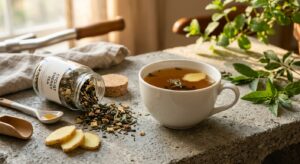
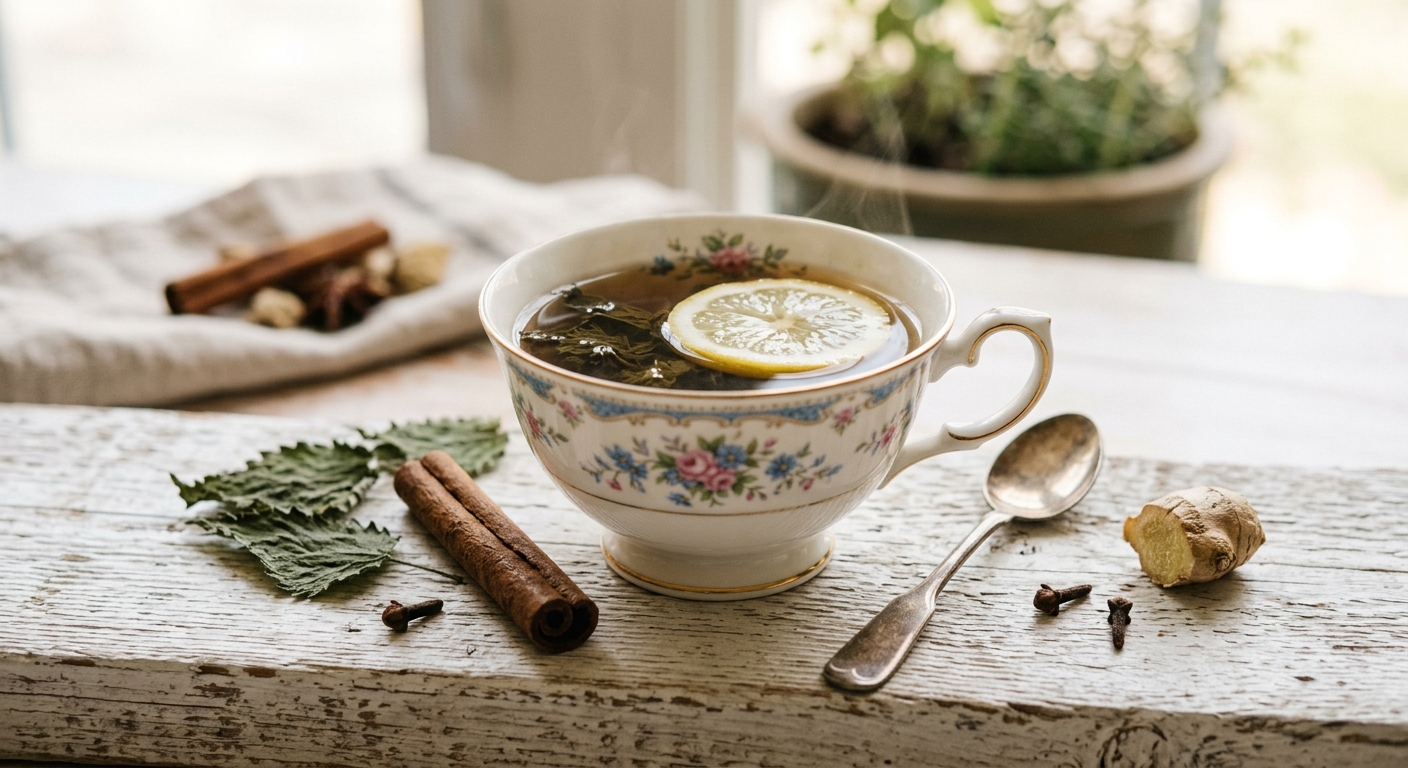
The flavor is earthy, green, and surprisingly rich, closer to a deep spinach broth than a floral herbal infusion. Once you strip away the sting through drying or heat, what remains is a grounding, savory-leaning cup that pairs beautifully with a squeeze of lemon or a slice of ginger. Nettle tea is not trying to be chamomile. It is bold, mineral, and unapologetically nutritive, which is exactly why generations of herbalists have called it the most nourishing plant in the hedgerow.
2
cups
Ingredients
- 2 tspdried nettle leaf (per cup)
- 240 mlwater (90°C / 194°F)
- —fresh lemon slice or juice (optional)
- —raw honey or ginger to taste (optional)
How to Brew
Click on an item below to shop for the recommended items for this recipe on Amazon.
As an Amazon Associate, we earn from qualifying purchases.
- Measure 2 teaspoons of dried nettle leaf per 240 ml of water. For a more medicinal, mineral-rich infusion, increase to 1 tablespoon per cup.
- Heat fresh filtered water to 90 to 95°C (194 to 203°F). Avoid a full rolling boil, as very high heat can degrade some of the delicate chlorophyll and vitamin C content.
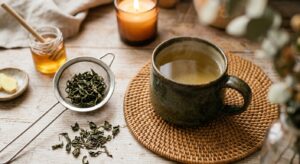
- Place the nettle leaf in a tea infuser, strainer, or directly into a heatproof mug. Pour the hot water over the leaves and cover immediately with a lid or small saucer to trap the volatile aromatics and steam.
- Steep for 5 to 10 minutes depending on your preferred strength. At 5 minutes the tea is light and grassy. At 10 minutes it becomes darker, earthier, and noticeably more mineral.
- Remove the infuser or strain out the leaves thoroughly. Nettle left to over-steep can become slightly bitter and astringent.
- Add a squeeze of fresh lemon juice to brighten the flavor and increase iron absorption by pairing the plant’s non-heme iron with vitamin C. Sweeten lightly with raw honey if desired, and serve immediately.
- Measure 3 to 4 teaspoons of dried nettle leaf per 480 ml of cold filtered water. Cold brewing requires a higher leaf-to-water ratio than hot brewing because extraction is slower and less aggressive.
- Combine the nettle leaf and cold water in a glass jar or cold brew pitcher. Stir gently to ensure all leaves are submerged, then seal with a lid.
- Leave the jar at room temperature for the first 30 minutes to allow the initial extraction to begin, then transfer to the refrigerator.
- Steep in the refrigerator for 8 to 12 hours, ideally overnight. The slow, cold extraction draws out minerals and chlorophyll while leaving behind much of the tannin-related bitterness.
- Strain the liquid through a fine mesh strainer into a clean glass or pitcher, pressing the leaves lightly to release any remaining liquid.
- Serve over ice with a squeeze of lemon or a few mint leaves. The cold brew keeps refrigerated for up to 48 hours. Shake or stir before pouring if it has been sitting, as natural sediment may settle.
- Measure 1 full ounce (approximately 28 to 30 grams) of dried nettle leaf and place it loosely into a 1-liter glass jar or heatproof French press. This is a much higher leaf ratio than standard brewing and is intentional for maximum nutritional extraction.
- Heat fresh filtered water to 90 to 95°C (194 to 203°F) and pour it over the nettle leaves, filling the jar completely to the top. Seal tightly with a lid or press the French press plunger just above the leaves to keep them submerged.
- Wrap the jar in a thick towel or place it inside a small insulated bag to retain heat and slow the temperature drop. This prolonged warmth is essential for drawing out minerals that require extended contact time to fully dissolve into the water.
- Allow the infusion to steep undisturbed for a minimum of 4 hours, with 8 hours being the traditional target. Many herbalists prepare this before sleep and strain it in the morning.
- Strain the liquid thoroughly through a fine mesh strainer or cheesecloth, squeezing the spent leaves firmly to extract every drop of the deeply colored, mineral-dense liquid.
- Drink 1 to 2 cups of the nourishing infusion per day. The flavor is bold, dark, and intensely green. A squeeze of lemon and a small amount of apple cider vinegar are traditional additions that both improve the taste and enhance mineral bioavailability. Store remaining liquid in the refrigerator and consume within 24 hours.
Health Benefits
Dried nettle leaf contains meaningful concentrations of non-heme iron alongside vitamin C, which significantly enhances iron absorption. Regular consumption is used in herbal medicine to address fatigue, pallor, and low energy linked to insufficient iron, particularly in menstruating individuals and those following plant-based diets.
A randomized double-blind study published in Planta Medica found that freeze-dried nettle leaf was rated moderately effective at relieving allergy symptoms by 58% of participants. Quercetin and other flavonoids in nettle inhibit the enzyme histidine decarboxylase and block histamine receptors, reducing nasal inflammation and irritation.
Nettle contains multiple anti-inflammatory compounds including scopoletin, caffeic acid derivatives, and beta-sitosterol, which collectively inhibit pro-inflammatory cytokines including interleukin-1 beta and TNF-alpha. Topical and internal use have both been studied for osteoarthritis pain relief with positive findings.
Nettle has a well-established diuretic effect in traditional European herbalism and is supported by modern evidence showing it increases urine output and reduces fluid retention. It is used alongside conventional treatments for benign prostatic hyperplasia due to its beta-sitosterol content, which helps reduce urinary frequency.
Beyond iron, dried nettle leaf is notably rich in magnesium, calcium, potassium, and B vitamins, all of which play essential roles in cellular energy metabolism, nerve function, and muscle performance. Unlike caffeine-based energy, nettle’s effect is cumulative and nutritive, building over days and weeks of consistent use.
🧪 Key Bioactive Compounds
The Science Behind Stinging Nettle
The energizing reputation of nettle tea is rooted in its exceptionally dense mineral content rather than any single dramatic bioactive compound. Dried Urtica dioica leaf provides measurable quantities of iron, magnesium, and calcium per serving, nutrients that sit at the foundation of mitochondrial energy production. Magnesium, for instance, is a cofactor in over 300 enzymatic reactions, including every step of the ATP synthesis pathway that generates cellular energy. A diet chronically low in magnesium is one of the most common hidden contributors to persistent fatigue, brain fog, and poor physical endurance.
On the anti-inflammatory front, nettle’s flavonoids and phenolic acids have been studied extensively in vitro and in several clinical trials. Quercetin, one of the most bioactive compounds in the leaf, inhibits both cyclooxygenase enzymes (COX-1 and COX-2) and lipoxygenase pathways, which are the same inflammatory cascades targeted by common non-steroidal anti-inflammatory drugs. Separately, caffeic acid malic ester (caffeoylmalic acid) has been identified as a potent inhibitor of NF-kB signaling, a master switch for inflammatory gene expression. This multi-pathway anti-inflammatory action helps explain nettle’s traditional use across so many seemingly different conditions, from joint pain to allergy to urinary inflammation.
Nettle’s antihistamine mechanism is particularly well understood. Research has shown that the freeze-dried leaf inhibits the enzyme histidine decarboxylase, which converts histamine from its amino acid precursor, meaning less histamine is produced in the first place. Quercetin also stabilizes mast cell membranes, reducing the release of pre-formed histamine during allergic responses. This dual-action approach makes nettle one of the more scientifically plausible herbal options for seasonal allergy relief, with a 1990 randomized trial in Planta Medica providing early clinical evidence that has since been supported by further mechanistic laboratory research.
Brewing Tips
- Buy nettle from a reputable supplier that tests for heavy metals, as nettle is a known hyperaccumulator of minerals from the soil and can absorb contaminants from polluted growing sites.
- For the nourishing long infusion method, always use a glass jar rather than a metal container. Prolonged contact with metal can affect the flavor and potentially react with the herb’s mineral-rich, slightly acidic liquid.
- Pair nettle tea with a small serving of vitamin C-rich food, such as an orange, kiwi, or bell pepper, to significantly boost your body’s absorption of the tea’s non-heme iron content, which is particularly useful for those addressing fatigue.