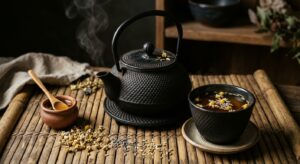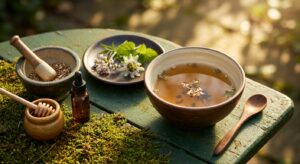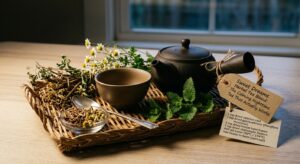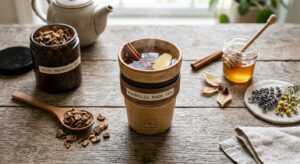
Long before melatonin supplements lined pharmacy shelves, herbalists across Europe, Asia, and the Americas were brewing nighttime teas from the plants that grew outside their doors. Valerian root was recorded in ancient Greek texts as a remedy for insomnia and nervousness. Passionflower was used by Indigenous peoples of the southeastern United States to treat restlessness and was later adopted by European colonizers who brought it back to the Old World. Lemon balm, a fragrant member of the mint family, has been cultivated in monastery gardens since the Middle Ages specifically for its calming and sleep-supporting qualities. Together, these three herbs form one of the most time-honored combinations in Western herbalism.
What makes this blend exceptional is not just the power of each individual herb, but the way they work together through overlapping and complementary mechanisms. Valerian root acts on GABA receptors much like a mild sedative, while passionflower modulates GABA activity through its own unique alkaloids. Lemon balm rounds out the blend by inhibiting GABA transaminase, an enzyme that breaks down calming neurotransmitters, effectively extending and deepening their effects. The result is a tea that feels noticeably different from any single-herb remedy: warmer, more settled, and gently persuasive in the direction of sleep.
Beyond the biochemistry, there is real value in the ritual itself. Stepping away from screens, heating water, measuring herbs by hand, and sitting quietly with a warm cup is a practice in decompression that signals to your nervous system that the day is ending. The earthy, slightly sweet aroma rising from the mug begins working on your senses before the first sip. This post will walk you through the history, science, and full sensory experience of building your own nighttime tea ritual, complete with three brewing methods to suit every preference and season.
2
cups
Ingredients
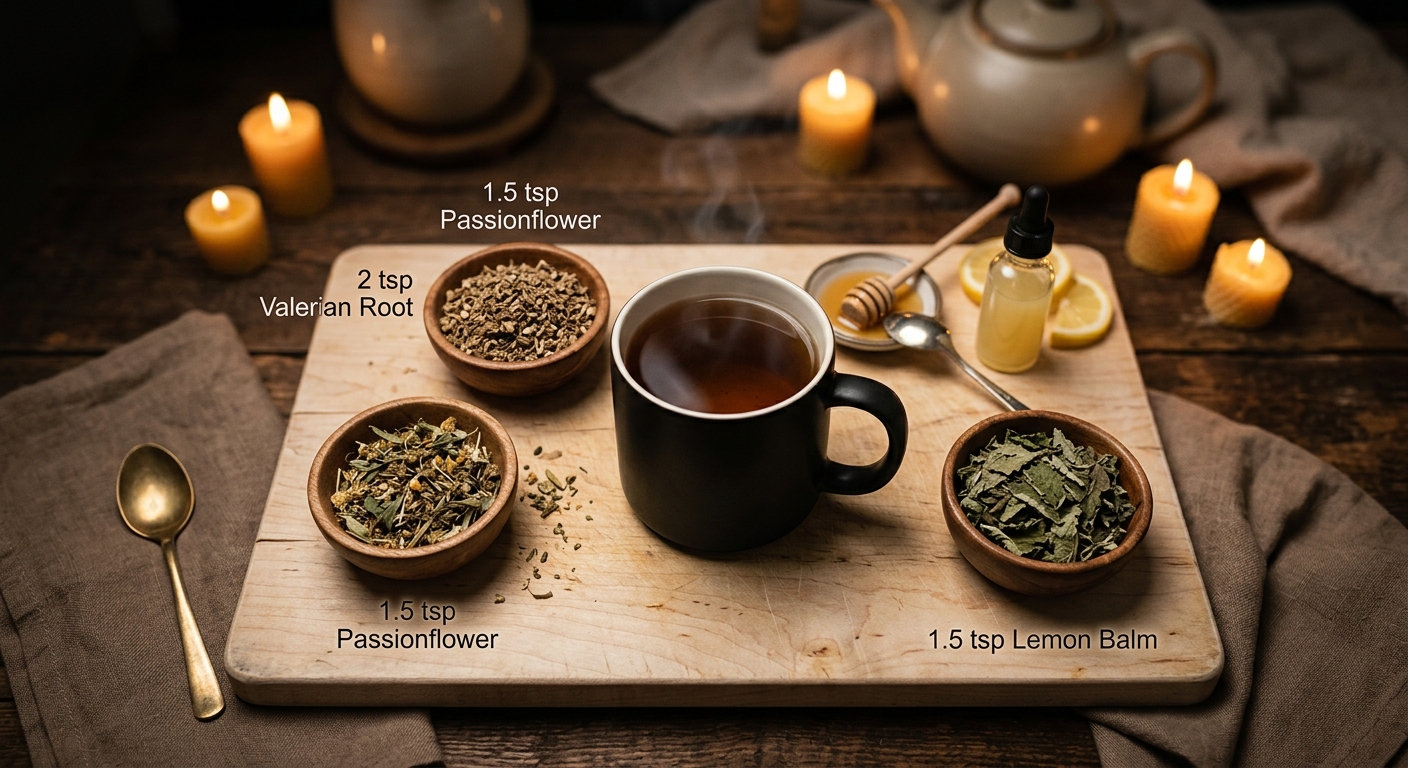
- 2 tspdried valerian root (chopped)
- 1.5 tspdried passionflower herb
- 1.5 tspdried lemon balm leaves
- 480 mlwater (95°C / 203°F)
- —raw honey to taste (optional)
- —a few drops of lemon juice (optional)
How to Brew
Click on an item below to shop for the recommended items for this recipe on Amazon.
As an Amazon Associate, we earn from qualifying purchases.
- Heat 480 ml of water to 95°C (203°F). If using a standard kettle without temperature control, bring to a full boil and allow it to rest for 30 seconds before pouring.
- Combine the dried valerian root, passionflower, and lemon balm in a tea infuser or place them directly into a teapot. For the best extraction, use a slightly larger infuser that allows the herbs room to expand and circulate.
- Pour the hot water over the herbs. Cover the teapot or mug with a small plate or lid to trap the aromatic volatile oils that would otherwise escape with the steam.
- Steep for 10 to 15 minutes. Begin with 10 minutes for a milder, more floral cup. Go to 15 minutes for a deeper, more sedative brew with a pronounced earthy character.
- Remove the infuser or strain through a fine mesh strainer. Add raw honey if desired, stirring gently until dissolved. Sip slowly within 30 to 45 minutes of your intended bedtime.
- Measure out double the standard herb amounts: 4 tsp dried valerian root, 3 tsp passionflower, and 3 tsp lemon balm. Cold water extracts compounds more slowly, so a higher ratio of herbs compensates for the gentler process.
- Place all herbs into a clean glass jar. Pour 480 ml of cool, filtered room-temperature water over the herbs. Do not use warm or hot water for this method.
- Stir gently to ensure all the plant material is fully saturated. Set the jar on the counter at room temperature for 1 hour to begin the initial extraction, then seal with a lid and transfer to the refrigerator.
- Allow the jar to steep in the refrigerator for 8 to 12 hours, ideally overnight. The extended cold extraction draws out valerian’s valerenic acids and passionflower’s flavonoids without the bitterness that can come from heat.
- Strain the cold brew through a fine mesh strainer or cheesecloth into a clean container. For a single serving, gently warm 240 ml in a small saucepan over low heat until just steaming, do not boil. Add honey and lemon juice if desired, then drink 45 minutes before bed.
- Place 480 ml of cold filtered water into a small saucepan. Add only the dried valerian root (2 tsp) and passionflower (1.5 tsp) to the cold water before applying heat. Starting in cold water encourages a fuller, more gradual extraction of the root’s active compounds.
- Bring the mixture to a gentle simmer over medium heat. Once simmering, reduce the heat to low and maintain a steady but gentle simmer for 20 to 25 minutes. Do not let the liquid reach a rolling boil, as aggressive boiling can degrade certain heat-sensitive compounds and will evaporate too much liquid.
- After 20 to 25 minutes, remove the saucepan from the heat. The liquid should have reduced by roughly one-fifth and will appear as a rich, dark amber. Now add the dried lemon balm (1.5 tsp) to the hot decoction.
- Cover the saucepan immediately and allow the lemon balm to infuse off the heat for 10 minutes. This two-phase approach extracts the robust compounds from the root through decoction while protecting the delicate volatile oils in lemon balm from boiling away.
- Strain the decoction through a fine mesh strainer into a mug, pressing the spent herbs gently with the back of a spoon to recover all the liquid. Sweeten with raw honey if the earthiness of valerian is too strong. Drink slowly and unhurriedly about 30 to 45 minutes before sleeping.
Health Benefits
Multiple clinical trials have found that valerian root supplementation significantly reduces sleep latency (the time it takes to fall asleep) and improves sleep quality scores. A 2002 meta-analysis in the American Journal of Medicine reviewed 16 studies and concluded that valerian may improve sleep quality without producing side effects, with effects comparable to some pharmaceutical sleep aids at therapeutic doses.
Passionflower has been evaluated in several clinical trials for generalized anxiety disorder. A 2001 double-blind study published in the Journal of Clinical Pharmacy and Therapeutics found passionflower extract to be as effective as oxazepam for treating generalized anxiety, with significantly fewer side effects including impaired job performance. Lemon balm further amplifies this effect by boosting available GABA in the brain.
Lemon balm has been specifically studied for its ability to reduce mental rumination and cognitive arousal at night. A 2014 study in Nutrients found that lemon balm extract significantly improved mood, calmness, and memory performance in healthy volunteers under laboratory-induced psychological stress, supporting its traditional use as a nervine tonic.
Valerian root has demonstrated mild antispasmodic properties in smooth muscle tissue, which may help relieve the physical tension and restless leg sensations that can interfere with sleep onset. This action is thought to be separate from its GABAergic effects and may involve direct calcium channel modulation in muscle cells.
All three herbs in this blend have demonstrated adaptogenic or nervine properties that help regulate the hypothalamic-pituitary-adrenal axis over time. Regular use of lemon balm in particular has been associated with reduced cortisol reactivity, suggesting the nightly ritual may offer cumulative benefits for daytime stress resilience, not just acute sleep support.
🧪 Key Bioactive Compounds
The Science Behind Valerian Root
The sleep-supporting power of this three-herb blend comes down to a shared focus on gamma-aminobutyric acid, the brain’s primary inhibitory neurotransmitter. GABA works by slowing neural firing, quieting the chatter of an active mind, and shifting the nervous system out of sympathetic fight-or-flight mode toward the parasympathetic rest-and-digest state required for quality sleep. Valerian root’s principal active compound, valerenic acid, has been shown in mechanistic studies to directly modulate GABA-A receptor complexes, similar in principle to how benzodiazepine drugs work, but with a gentler, more partial action that does not carry the same risk of dependency or morning grogginess. Isovaleric acid, another constituent of valerian, adds a secondary layer of mild central nervous system depression through a different pathway, reinforcing the root’s overall sedative character.
Passionflower approaches the same GABAergic system from a distinct angle. Its flavonoids, particularly vitexin and chrysin, bind to benzodiazepine receptor sites on the GABA-A complex. Chrysin was one of the first plant-derived compounds identified as a benzodiazepine receptor ligand, and while its bioavailability from tea is lower than from standardized extracts, the research supports the traditional use of passionflower as an anxiolytic and sleep-promoting herb. Lemon balm completes the triad through an elegant enzymatic mechanism: its high rosmarinic acid content inhibits GABA transaminase, the enzyme responsible for breaking down GABA in the synaptic cleft. Rather than stimulating GABA receptors directly, lemon balm preserves and extends the activity of GABA that is already present, making it a natural and precise complement to the receptor-binding actions of valerian and passionflower.
Emerging research also points to the role of aromatic compounds in the sedative effects of these herbs. Inhalation of lemon balm’s citral and geranial volatiles has shown anxiolytic effects in animal models independent of oral ingestion, which suggests that simply inhaling the steam from a freshly brewed mug of this blend may begin activating calming pathways before the first sip. This aligns with longstanding aromatherapy traditions and helps explain why so many people report feeling noticeably more relaxed during the ritual of preparation itself. The multidimensional interaction among valerenic acid, passionflower flavonoids, rosmarinic acid, and volatile terpenes represents one of the more well-understood examples of herbal synergy in the botanical medicine literature.
Brewing Tips
- Store your dried herb blend in a sealed amber glass jar away from light and heat; valerian root’s volatile compounds are particularly susceptible to degradation when exposed to air, and a fresh, well-stored batch will produce a noticeably more potent and aromatic cup than stale herbs.
- Drink this tea consistently for two to three weeks before evaluating its full effect on your sleep. Valerian root in particular is thought to build cumulative benefit, with some clinical studies showing that its sleep-promoting effects become more pronounced after regular nightly use rather than as a single-dose remedy.
- If the earthy bitterness of valerian is too strong for your palate, try reducing the valerian root to 1 tsp per serving and increasing the lemon balm to 2 tsp. You will sacrifice some sedative intensity but gain a brighter, more pleasant cup that is still meaningfully calming and easier to drink as a nightly ritual.