Long before vitamin C was isolated in a laboratory in 1928, herbalists and traditional healers across Europe, the Middle East, and the Americas were brewing teas from rosehips, hibiscus, and dried citrus peel to ward off illness and restore vitality. Scandinavian foragers harvested rosehips from wild Rosa canina after the first frost, knowing instinctively that these ruby-red fruits held something restorative. West African and Caribbean communities steeped dried hibiscus calyces into bright crimson tisanes for both ceremonial and medicinal purposes. What these traditions shared was a centuries-old intuition that plants could guard the body against sickness, an intuition that modern science has since confirmed in remarkable detail.
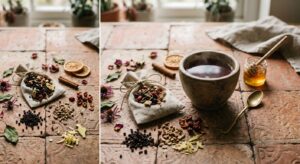
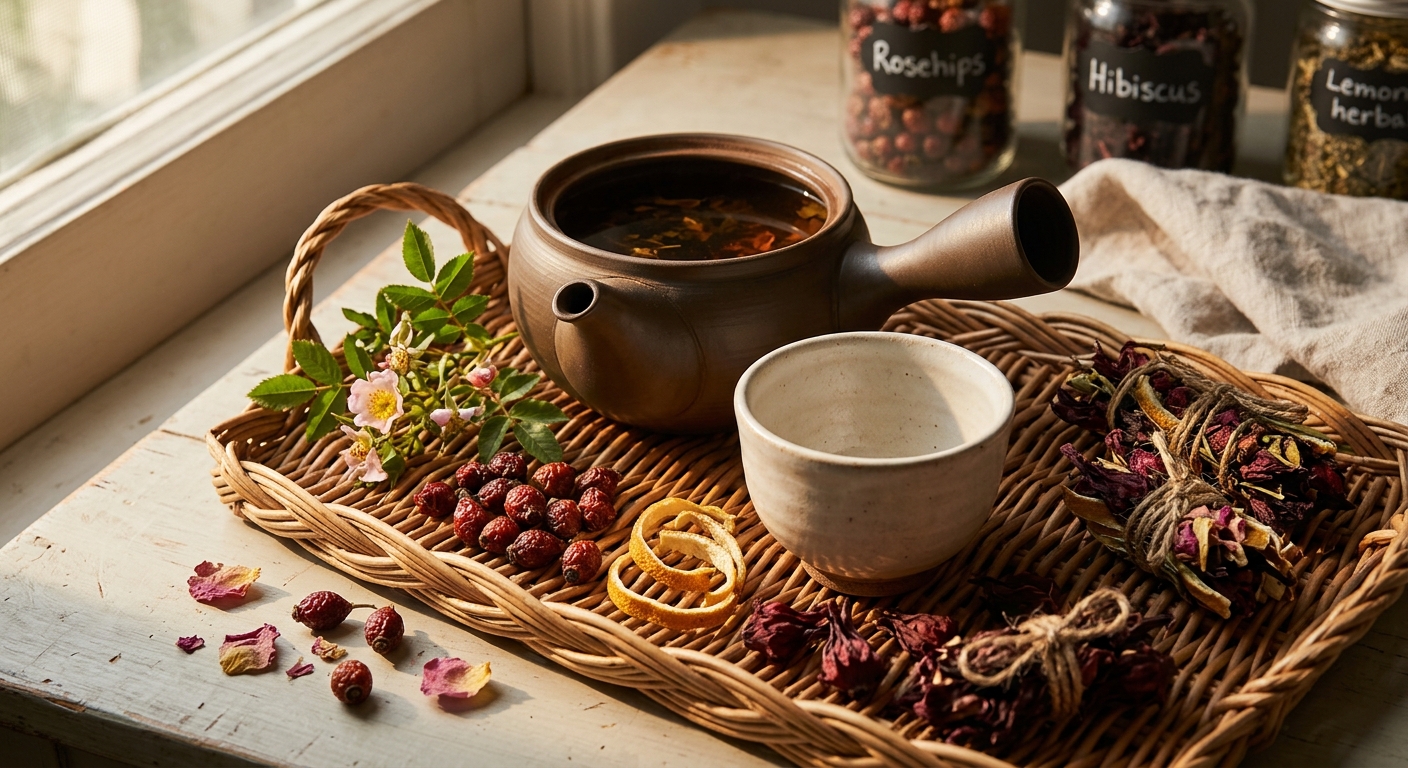
Vitamin C herbal tea is not a single herb but a thoughtfully assembled blend designed to maximize natural ascorbic acid content while creating a flavor profile that is genuinely enjoyable to drink. Dried rosehips are the star ingredient, offering gram for gram more vitamin C than fresh oranges. Hibiscus flowers deepen the color to a gorgeous jewel red and contribute their own antioxidant polyphenols alongside a pleasingly tart, cranberry-like flavor. Lemon peel, rose petals, and sometimes elderberries or amla round out the blend, adding complexity, fragrance, and additional immune-supporting compounds.
What makes this tea especially appealing is how versatile it is across the seasons. Served hot on a cold winter morning it warms the chest and sharpens the senses. Poured over ice in summer it becomes a refreshing ruby-red cooler that rivals any lemonade. The sensory experience alone, that vivid scarlet liquor, the tart citrus-meets-berry aroma, and the clean, slightly astringent finish, feels inherently revitalizing. Whether you are reaching for it as a daily wellness ritual or as comfort during the first sign of a cold, this tea is one of the most time-honored and evidence-backed choices in the herbal world.
2
cups
Ingredients
- 2 tbspdried rosehips (whole or lightly crushed)
- 1 tbspdried hibiscus calyces
- 1 tspdried lemon peel
- 1 tspdried rose petals (optional)
- 500 mlwater (90°C / 194°F)
- —raw honey or maple syrup to taste (optional)
- —fresh lemon slice to serve (optional)
How to Brew
Click on an item below to shop for the recommended items for this recipe on Amazon.
As an Amazon Associate, we earn from qualifying purchases.
- Lightly crush the dried rosehips using a mortar and pestle or the back of a spoon. This breaks the skin slightly and dramatically improves extraction of both flavor and vitamin C.
- Combine the crushed rosehips, hibiscus calyces, dried lemon peel, and rose petals in a tea infuser or teapot.
- Heat filtered water to 90 to 95°C (194 to 203°F). Avoid a full rolling boil, as excessive heat can degrade some ascorbic acid. If your kettle boils fully, allow it to rest for 60 to 90 seconds before pouring.
- Pour the water over the herb blend and cover the teapot or mug with a lid or small plate to trap the volatile aromatic compounds and retain heat during steeping.
- Steep for 10 to 15 minutes. The liquor should deepen to a vivid ruby red. Taste at the 10-minute mark and steep longer if you prefer a more intense, tart flavor.
- Strain into warmed mugs, sweeten lightly with raw honey if desired, and serve immediately with a slice of fresh lemon.
- Lightly crush the dried rosehips to help release their contents, then combine all dry ingredients (rosehips, hibiscus, lemon peel, and rose petals) in a clean glass jar.
- Add 600 ml of cold, filtered water per 2 servings. Because cold water extracts more slowly, use a slightly higher water volume and a slightly larger quantity of herbs than you would for hot brew (about 20 percent more herb by volume).
- Stir gently to ensure all plant material is submerged. Do not seal the jar airtight if steeping at room temperature first. Allow the jar to sit at room temperature for 1 hour before transferring to the refrigerator.
- Refrigerate for a minimum of 8 hours and up to 12 hours. The slow, cold extraction preserves more of the heat-sensitive ascorbic acid while developing a clean, silky sweetness that contrasts beautifully with the hibiscus tartness.
- Strain through a fine mesh sieve into a pitcher or individual glasses over ice. Taste and adjust with a squeeze of fresh lemon or a small drizzle of agave syrup. Serve within 48 hours for peak flavor and nutrient content.
- Triple the standard herb quantities: use 6 tablespoons of crushed rosehips, 3 tablespoons of hibiscus, 3 teaspoons of lemon peel, and 3 teaspoons of rose petals. Combine them in a medium saucepan.
- Add 500 ml of filtered water (not yet heated) to the saucepan with the herbs. Allow the herbs to soak in the cold water for 15 minutes before applying heat. This cold pre-soak draws out water-soluble compounds before any heat degradation can occur.
- Bring the mixture slowly to 90 to 95°C (194 to 203°F) over medium heat – do not allow it to reach a rolling boil. Maintain this gentle temperature for 20 to 25 minutes, stirring occasionally. The liquid will reduce and deepen in both color and intensity.
- Remove from heat, cover the saucepan, and allow the concentrate to cool for 10 minutes before straining through a fine mesh sieve or cheesecloth into a sterilized glass bottle or jar.
- Stir in 2 to 3 tablespoons of raw honey while the concentrate is still warm if you wish to add sweetness and extend shelf life slightly. Seal and refrigerate immediately.
- To serve, dilute approximately 60 to 80 ml of concentrate with 180 ml of hot water, cold sparkling water, or blend into a smoothie. Each batch provides roughly 6 to 8 servings.
Health Benefits
Rosehips are among the richest plant sources of vitamin C on Earth, containing up to 400 mg per 100 g of dried fruit. Vitamin C stimulates the production and function of lymphocytes and phagocytes, the white blood cells that defend against pathogens, and meta-analyses of supplementation trials suggest it reduces both the duration and severity of common colds.
The combination of vitamin C, anthocyanins from hibiscus, and flavonoids from rose petals and lemon peel creates a broadly protective antioxidant matrix. These compounds neutralize reactive oxygen species that damage cells and contribute to chronic disease and premature aging.
The galactolipid GOPO found in rosehips has been the subject of several randomized controlled trials showing measurable reductions in inflammatory markers including CRP. Hibiscus anthocyanins also suppress pro-inflammatory cytokines including IL-6 and TNF-alpha, giving this blend meaningful systemic anti-inflammatory potential.
Hibiscus extract has been studied extensively for its ability to reduce systolic and diastolic blood pressure in people with mild hypertension. A 2010 randomized trial published in the Journal of Nutrition found that daily hibiscus tea consumption lowered systolic blood pressure by an average of 7 mmHg compared to placebo.
Vitamin C is an essential cofactor for the enzymes that synthesize collagen, the structural protein responsible for skin elasticity and wound healing. Regular consumption of high-vitamin-C botanical teas may support skin integrity, speed minor wound healing, and reduce the visible effects of UV-related oxidative stress.
🧪 Key Bioactive Compounds
The Science Behind Rosehips
The immune-supporting reputation of rosehip and hibiscus tea is firmly grounded in modern phytochemistry. Rosehips (Rosa canina) contain ascorbic acid concentrations of 300 to 400 mg per 100 g of dried fruit, making them one of the most concentrated whole-food sources of vitamin C available in nature. Unlike synthetic ascorbic acid supplements, the vitamin C in rosehips is accompanied by bioflavonoids including rutin, quercetin, and tiliroside, which appear to enhance its bioavailability and extend its antioxidant activity within the body. Vitamin C functions as a water-soluble free-radical scavenger, regenerates oxidized vitamin E, and serves as a rate-limiting cofactor in the biosynthesis of collagen, carnitine, and key neurotransmitters.
Hibiscus sabdariffa calyces contribute a distinct class of polyphenols called anthocyanins, particularly delphinidin-3-sambubioside and cyanidin-3-sambubioside, which are responsible for the tea’s vivid crimson color and many of its reported cardiovascular benefits. These compounds inhibit angiotensin-converting enzyme (ACE) in a mechanism similar to pharmaceutical ACE inhibitors, which helps explain the documented blood-pressure-lowering effect confirmed in multiple human trials. Separately, hibiscus polyphenols downregulate the expression of pro-inflammatory transcription factors including NF-kB, reducing the cascade of inflammatory cytokines that underpins both acute infections and chronic systemic inflammation.
Perhaps the most pharmacologically interesting compound in this blend is GOPO, a glycoside of the galactolipid class found specifically in rosehip powder. GOPO has been shown in double-blind randomized trials to inhibit migration of peripheral blood polymorphonuclear cells and to reduce circulating levels of C-reactive protein (CRP) and interleukin-6 (IL-6). A 2010 systematic review in Phytomedicine concluded that rosehip preparations significantly reduced joint pain and stiffness in patients with osteoarthritis, rivaling some over-the-counter NSAIDs without their gastrointestinal side effects. Together, the compounds in this blend create a synergistic effect that extends well beyond the sum of their individual actions, making vitamin C herbal tea one of the most comprehensively supported immune and anti-inflammatory herbs in the Western botanical tradition.
Brewing Tips
- Always crush or lightly crack dried rosehips before brewing. Their tough outer skin is the primary barrier to extraction, and even a brief press with a mortar and pestle can increase vitamin C yield by 30 to 50 percent.
- Store your dried herb blend in an airtight glass jar away from heat, light, and moisture. Vitamin C is particularly sensitive to oxidation and light degradation, so a dark cupboard or amber jar will preserve potency significantly longer than a clear container left near the stove.
- Avoid sweetening this tea with refined white sugar, which can blunt immune function. Raw honey is the ideal sweetener as it adds trace enzymes and antimicrobial compounds, or use a small amount of pure maple syrup or a single Medjool date blended into cold brew for natural sweetness.