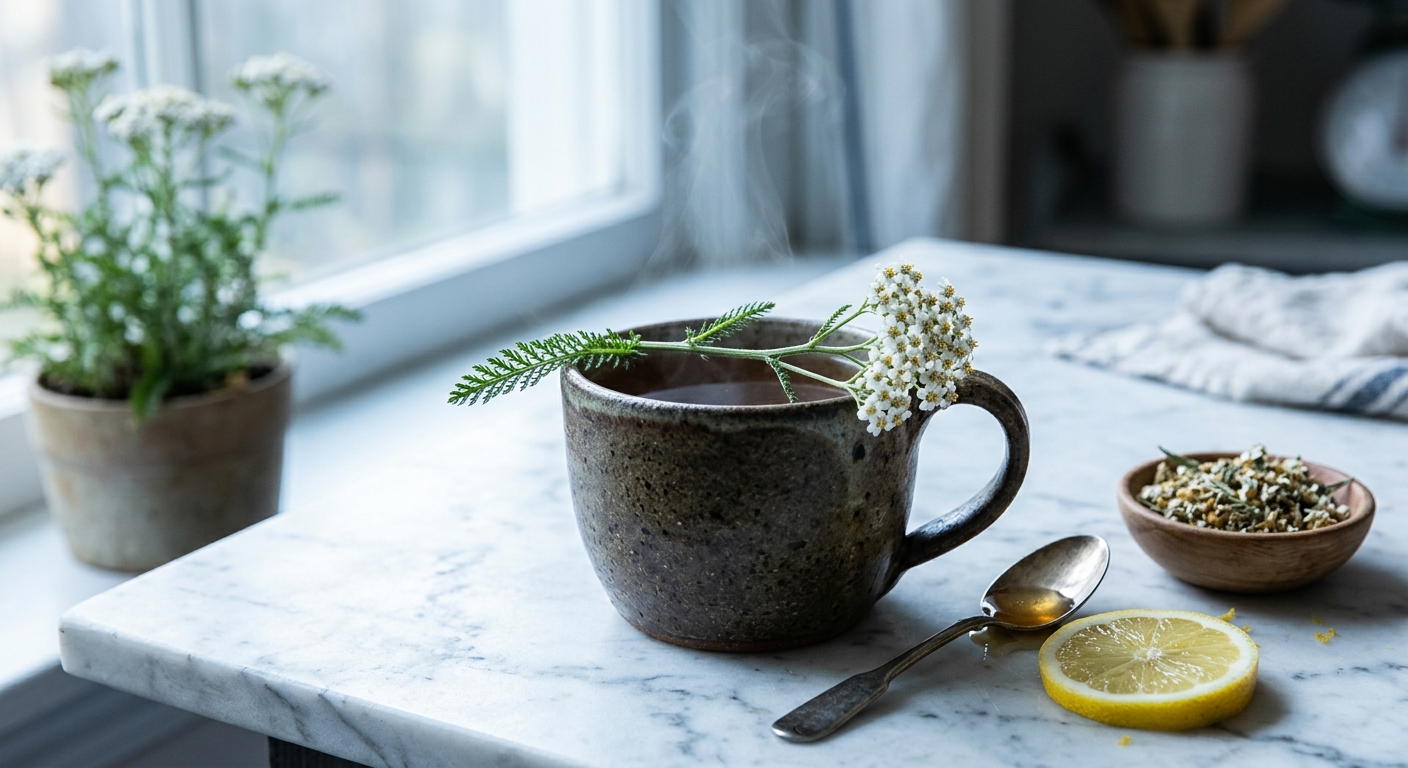
Few herbs carry a history as storied and battle-tested as yarrow. Named after the Greek hero Achilles, who according to legend used the plant to staunch the bleeding wounds of his soldiers at Troy, Achillea millefolium has been a cornerstone of folk medicine across Europe, Asia, and the Americas for at least three thousand years. Native healers from the Cherokee to the Ojibwe used yarrow poultices and teas to treat wounds, fevers, and respiratory complaints, while European herbalists from Dioscorides to Nicholas Culpeper praised it as one of the most versatile plants in the apothecary’s garden.
As a tea, yarrow reveals a complex, almost paradoxical character. It is simultaneously bitter and aromatic, with a faintly medicinal edge softened by warm floral and grassy notes. That bitterness is no accident: it signals the presence of a rich cocktail of sesquiterpene lactones, flavonoids, and volatile oils that give yarrow its remarkable therapeutic profile. Traditional herbalists prescribed yarrow tea specifically during the acute phase of a cold or flu, using its diaphoretic properties to encourage a productive sweat that helps the body regulate and ultimately break a fever.
Today, yarrow occupies a respected place in both Western herbal medicine and emerging clinical research. Its anti-inflammatory, antimicrobial, and immunomodulatory actions make it a compelling choice when your immune system needs a capable ally. Whether you are sipping it at the first sign of a sniffle or brewing a gentle daily cup to keep your defenses primed, yarrow tea is one of nature’s most honest and hardworking remedies.
2
cups
Ingredients
- 2 tspdried yarrow flowers and leaves
- 480 mlwater (90°C / 194°F)
- —raw honey to taste (optional)
- —fresh lemon slice (optional)
- —pinch of dried ginger (optional, enhances diaphoretic effect)
How to Brew
Click on an item below to shop for the recommended items for this recipe on Amazon.
As an Amazon Associate, we earn from qualifying purchases.
- Bring filtered water to 90 to 95°C (194 to 203°F). Avoid a full rolling boil, as excessive heat can degrade yarrow’s delicate volatile oils.
- Measure 1 teaspoon of dried yarrow flowers and leaves per 240 ml of water and place them into a tea infuser or directly into your mug.
- Pour the hot water over the yarrow and immediately cover the mug with a small plate or lid. This is a critical step that traps the aromatic essential oils inside the brew rather than allowing them to evaporate into the air.
- Steep for 10 to 15 minutes. For a milder, less bitter cup, aim for 10 minutes. For maximum therapeutic potency when fighting a cold or fever, steep the full 15 minutes.
- Remove the infuser or strain the loose herb through a fine mesh strainer. Press the spent herb gently against the strainer with the back of a spoon to release any remaining liquid.
- Sweeten with raw honey if desired and add a squeeze of lemon. Drink hot, ideally while wrapped in a blanket if you are using yarrow as a diaphoretic to break a fever.
- Measure 2 teaspoons of dried yarrow flowers and leaves per 480 ml of cold, filtered water. Use a slightly higher ratio than hot brewing to compensate for slower cold-water extraction.
- Combine the yarrow and water in a clean glass jar. Stir gently to ensure all the plant material is fully saturated, then place a lid or cover on the jar.
- Leave the jar at room temperature for the first hour to allow initial extraction to begin, then transfer it to the refrigerator.
- Steep in the refrigerator for a total of 8 to 12 hours, or overnight. The cold temperature slows extraction and selectively draws out the sweeter flavonoids and lighter aromatic compounds while leaving behind some of the harsher bitter notes.
- Strain the infusion through a fine mesh strainer or cheesecloth into a clean glass or pitcher, pressing the spent herb to extract all the liquid.
- Serve over ice or chilled straight from the refrigerator. Add a slice of lemon or cucumber for freshness. The cold brew will keep refrigerated for up to 48 hours.
- In the morning, measure 3 teaspoons of dried yarrow flowers and leaves per 480 ml of cold, filtered water and combine them in a large clear glass jar. A clear jar is essential so sunlight can penetrate throughout the vessel.
- Seal the jar loosely with a lid or cover it with a clean cloth secured with a rubber band to allow slight ventilation while keeping debris out.
- Place the jar in a sunny outdoor spot or a south-facing windowsill that receives direct sunlight. The ambient temperature of the infusion should rise gently over the steeping period.
- Allow the yarrow to steep in the sun for 3 to 5 hours, checking periodically. The tea is ready when it has taken on a soft golden-green color and smells pleasantly herbal and floral.
- Bring the jar indoors and strain the infusion through a fine mesh strainer into a clean pitcher or glasses filled with ice.
- Taste before sweetening. Sun-brewed yarrow has a gentler, more floral character than a hot brew and often needs little or no sweetening. Garnish with a fresh yarrow sprig or a slice of lemon if available. Drink the same day for best flavor and safety.
Health Benefits
Yarrow has been used for centuries as a diaphoretic herb, meaning it promotes perspiration to help the body release heat and regulate a fever. This action is attributed to volatile oils and isovaleric acid compounds, and is most effective when the tea is drunk hot while the body is kept warm.
Yarrow’s flavonoids, particularly apigenin and luteolin, modulate immune signaling by reducing excessive inflammatory responses while supporting the body’s innate defenses. Early in vitro studies suggest yarrow extracts may inhibit the replication of certain respiratory pathogens.
The combination of luteolin’s antihistamine-like properties and camphor’s expectorant action makes yarrow tea useful for easing sore throats, nasal congestion, and irritated mucous membranes associated with colds and seasonal allergies.
Yarrow’s bitter sesquiterpene lactones stimulate the release of bile and digestive enzymes, improving digestion and relieving cramping, bloating, and nausea. This makes it particularly helpful when illness-related inflammation affects the gut as well as the respiratory tract.
Yarrow is a rich source of polyphenols and flavonoids that neutralize free radicals generated during immune activation and oxidative stress. Regular consumption of yarrow tea as part of a wellness routine may help protect cells from cumulative inflammatory damage.
🧪 Key Bioactive Compounds
The Science Behind Yarrow
The pharmacological activity of yarrow tea is driven by a complex matrix of bioactive compounds spread across several chemical classes. Its flavonoids, principally apigenin and luteolin, are among the most well-studied immune-modulating compounds in the plant world. Luteolin has been shown in multiple in vitro studies to inhibit NF-kB signaling, a master regulatory pathway that controls the transcription of pro-inflammatory cytokines including TNF-alpha and IL-6. By dampening this pathway, luteolin helps prevent the kind of runaway inflammation that makes cold and flu symptoms feel so severe, without fully suppressing the immune response needed to clear the infection.
Yarrow’s volatile oil fraction tells a second story. The sesquiterpene azulene, which forms from its precursor matricine when yarrow is exposed to heat or steam, is a potent anti-inflammatory and antimicrobial agent found in several well-known medicinal plants including German chamomile. In yarrow tea, covering the mug during steeping helps retain these volatile aromatic compounds within the brew rather than losing them to evaporation. The monoterpenes camphor and borneol, also present in the volatile oil, act on the respiratory mucosa to thin and mobilize mucus secretions, providing a mild expectorant effect that complements yarrow’s broader anti-inflammatory action in the airways.
The herb’s traditional use as a diaphoretic, meaning an agent that induces therapeutic sweating to break a fever, is supported by the combined action of several constituents including isovaleric acid and certain flavonoids that appear to act on peripheral circulation and thermoregulatory mechanisms. A fever is one of the body’s primary immune tools, and yarrow does not simply suppress it but rather appears to help the body complete the febrile process more efficiently and resolve it sooner. This nuanced interaction with the immune system, supporting rather than overriding the body’s own defenses, reflects the sophisticated phytochemical intelligence that has made yarrow a trusted plant ally in human medicine for millennia.
Brewing Tips
- Always cover your mug or pot while yarrow steeps. The aromatic volatile oils responsible for much of its therapeutic activity evaporate quickly, and a simple plate placed over the cup can make a meaningful difference in the potency of your final brew.
- Harvest or source yarrow by the flower head when possible. The white or pale yellow flowers contain the highest concentration of azulene precursors and flavonoids. If using homegrown or foraged yarrow, dry it quickly in a single layer away from direct sunlight to preserve its volatile oil content.
- If yarrow’s bitterness is a barrier, blend it with naturally sweet herbs such as licorice root or spearmint in a 2:1 ratio of yarrow to the softening herb. This preserves the therapeutic character of the brew while making it far more approachable for everyday drinking.