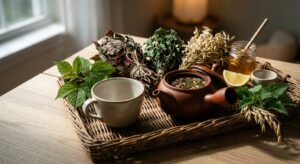
Perimenopause, the transitional phase leading up to menopause, can span anywhere from two to twelve years and brings with it a cascade of hormonal changes that affect sleep, mood, body temperature, and overall well-being. Long before pharmaceutical interventions existed, women across cultures turned to the plant world for support. In European folk medicine, sage was considered the premier herb for ‘female complaints’ and excessive sweating, while red clover thrived in meadows across Asia and Europe and was prized by traditional healers for its gentle estrogenic action. Lemon balm, meanwhile, has been used since at least the Middle Ages to calm the nerves and lift the spirits during times of stress and transition.
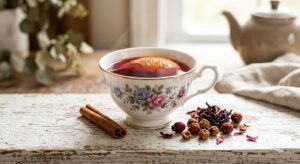
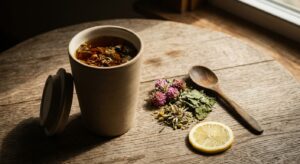
This perimenopause tea brings these three time-honored herbs together in a blend that addresses the full spectrum of perimenopausal symptoms. Red clover contributes isoflavones that gently mimic estrogen in the body, helping to buffer the erratic hormonal swings that cause hot flashes, night sweats, and mood dips. Sage lends its potent antihidrotic (sweat-reducing) and estrogenic properties, while lemon balm soothes the nervous system, easing the anxiety and sleep disruption that so often accompany this life stage. Together, they create a tea that is both medicinally purposeful and genuinely pleasurable to drink.
Herbalists often refer to perimenopause not as a disorder to be treated but as a rite of passage to be supported, and this blend reflects that philosophy. Rather than suppressing symptoms with a single powerful compound, it works synergistically, supporting the body’s own regulatory systems with a gentle, cumulative approach. Most women who use herbal support for perimenopause find that consistency matters more than potency: drinking one to two cups daily over several weeks tends to yield far greater results than occasional use, making this a tea worth building into your daily ritual.
2
cups
Ingredients
- 2 tspdried red clover blossoms
- 1 tspdried sage leaves (Salvia officinalis)
- 1 tspdried lemon balm leaves
- 480 mlwater (90°C / 194°F)
- —raw honey or a few drops of stevia to taste (optional)
- —a thin slice of fresh lemon (optional)
How to Brew
Click on an item below to shop for the recommended items for this recipe on Amazon.
As an Amazon Associate, we earn from qualifying purchases.
- Heat filtered water to 90 to 93°C (194 to 200°F). If you do not have a temperature-controlled kettle, bring water to a boil and allow it to rest for 2 to 3 minutes before using.
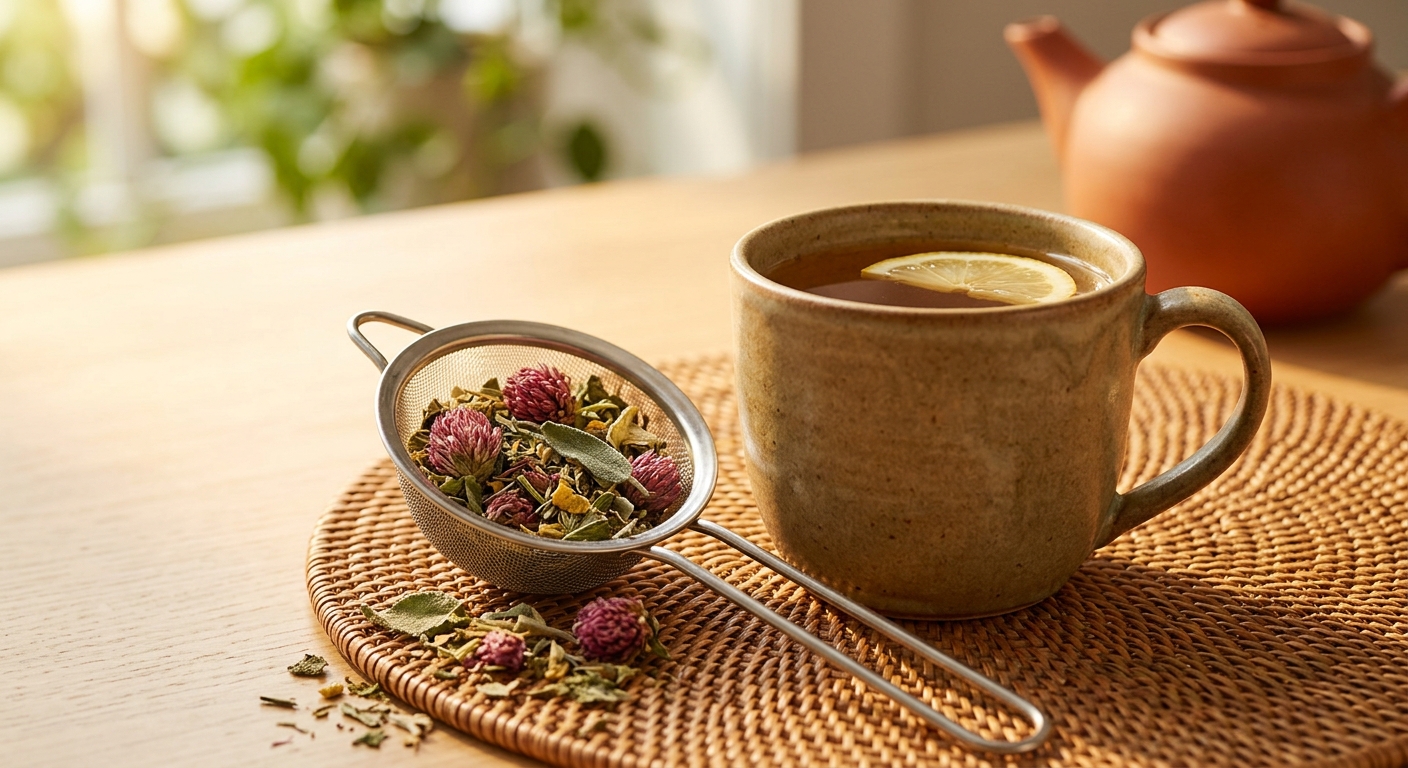
- Add 2 teaspoons of dried red clover blossoms, 1 teaspoon of dried sage leaves, and 1 teaspoon of dried lemon balm to a roomy tea infuser or teapot strainer. Make sure the herbs have space to expand and release their compounds freely.
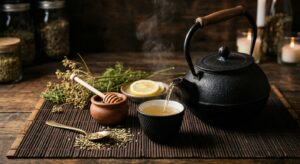
- Pour 480 ml of hot water over the herbs, cover the cup or teapot with a lid or small saucer, and steep for 7 to 10 minutes. Covering the vessel traps the volatile aromatic oils, preserving both flavor and therapeutic potency.
- Remove the infuser and gently press the herbs with the back of a spoon to extract the last of the isoflavone-rich liquor from the red clover blossoms.
- Taste the tea before sweetening. The natural mild sweetness of red clover often means no added sweetener is needed. Add a thin slice of lemon or a small drizzle of honey if desired, and sip slowly while warm.
- Measure 2 teaspoons of dried red clover blossoms, 1 teaspoon of dried sage leaves, and 1 teaspoon of dried lemon balm into a clean glass jar. For cold brew, increase your water ratio slightly, using 600 ml of cold filtered water per serving batch to account for slower extraction.
- Pour cold filtered water over the herbs, stir briefly to ensure all plant material is submerged, and place a loose lid or a piece of cloth over the jar to keep it clean.
- Leave the jar at room temperature for the first 30 minutes to allow initial extraction to begin, then transfer to the refrigerator and steep for a further 8 to 12 hours, or overnight.
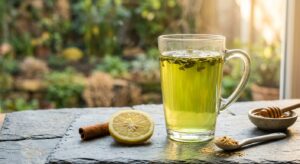
- In the morning, strain the cold brew through a fine mesh strainer or cheesecloth, pressing the herbs lightly to extract remaining liquid. The result should be a clear, pale amber-gold tea with a noticeably softer and sweeter character than the hot-brewed version.
- Serve over ice in a tall glass with a slice of cucumber or fresh lemon, or gently warm a portion in a small saucepan if you prefer a warm cup without the bitterness that comes from reheating a hot brew. Refrigerate remaining cold brew and consume within 48 hours.
- On a warm, sunny day, measure 3 teaspoons of dried red clover blossoms, 1.5 teaspoons of dried sage leaves, and 1.5 teaspoons of dried lemon balm into a large, clear glass jar. The larger herb ratio compensates for the gentler extraction temperature and produces a well-rounded infusion.
- Fill the jar with 700 to 750 ml of cold filtered water and stir gently to wet all the herbs. Seal the jar with a tight-fitting lid and place it in a sunny spot outdoors or on a south-facing windowsill where it will receive at least 3 to 4 hours of direct sunlight.
- Allow the jar to steep in the sun for 3 to 5 hours. The gentle warmth will gradually deepen the color from pale straw to a warm amber-gold as the isoflavones, volatile oils, and rosmarinic acid slowly diffuse into the water.
- Bring the jar indoors, taste the infusion, and decide whether you prefer it at this strength or would like to steep it an additional 30 to 60 minutes. The flavor should be noticeably sweeter and more floral than a hot brew, with a honey-meadow quality from the red clover.
- Strain the tea through a fine mesh strainer into a clean pitcher, pressing the herbs gently. Serve immediately over ice with a sprig of fresh lemon balm or a few fresh mint leaves as a garnish. Refrigerate any leftovers and drink within 24 hours, as the lower brew temperature means sun tea should not be stored as long as cold brew.
Health Benefits
Red clover isoflavones, particularly formononetin and biochanin A, have been studied in multiple randomized controlled trials. A 2007 study published in Gynecological Endocrinology found that women taking red clover isoflavones experienced a 44% reduction in daily hot flashes compared to placebo. The sage component amplifies this effect by directly acting on thermoregulatory centers in the hypothalamus.
Sage has been used as an antihidrotic herb for over 500 years and modern research supports this traditional use. A 2011 clinical trial published in Advances in Therapy found fresh sage leaf extract significantly reduced night sweats in menopausal women. Lemon balm compounds concurrently ease sleep onset by reducing anxious arousal, creating a compound effect on overnight sleep quality.
Rosmarinic acid in lemon balm inhibits the enzyme GABA transaminase, which breaks down the calming neurotransmitter GABA, thereby increasing its availability in the brain. A double-blind, placebo-controlled study found that lemon balm extract significantly reduced scores on anxiety and mood questionnaires within four weeks, making it particularly relevant to the mood lability common in perimenopause.
As estrogen levels decline, a woman’s cardiovascular risk profile shifts significantly. Red clover isoflavones have been shown to improve arterial elasticity and favorably modify lipid profiles, with some studies noting modest reductions in LDL cholesterol and improvements in HDL cholesterol after 12 weeks of consistent use. Ursolic acid in sage also contributes mild anti-inflammatory and cardioprotective effects.
Estrogen plays a critical role in bone density regulation, and its decline during perimenopause accelerates bone resorption. Phytoestrogens such as formononetin and biochanin A have demonstrated the ability to bind to bone cell estrogen receptors and slow osteoclast (bone-resorbing cell) activity, offering modest but meaningful support for bone health when combined with adequate dietary calcium and weight-bearing exercise.
🧪 Key Bioactive Compounds
The Science Behind Red Clover
The therapeutic action of this perimenopause blend centers largely on the phytoestrogens in red clover, particularly the isoflavones formononetin and biochanin A. These compounds are classified as selective estrogen receptor modulators (SERMs), meaning they bind to estrogen receptors in the body but with a tissue-selective effect that is much weaker than endogenous estradiol. Critically, they show preferential binding to estrogen receptor beta (ERbeta) over the alpha subtype (ERalpha). This distinction matters clinically because ERbeta is more abundant in the brain, bones, cardiovascular tissue, and urinary tract, precisely the systems most affected by perimenopausal estrogen decline, while ERalpha is more prominent in breast and uterine tissue. This selective binding profile is why phytoestrogens are generally considered to offer symptomatic relief with a more favorable safety profile than synthetic estrogen for most healthy women.
Sage’s contribution to hot flash relief operates through a distinct and complementary mechanism. The volatile compounds thujone and camphor in Salvia officinalis appear to act centrally on the hypothalamus, the brain region responsible for thermoregulation. Estrogen normally helps stabilize the hypothalamic ‘thermostat,’ and its decline during perimenopause narrows the thermoneutral zone, making the body hypersensitive to small temperature increases and triggering the cascade of vasodilation, flushing, and sweating that characterizes a hot flash. Sage helps recalibrate this sensitivity. Additionally, rosmarinic acid found in both sage and lemon balm inhibits the enzyme GABA transaminase, effectively slowing the breakdown of gamma-aminobutyric acid and raising its availability in the nervous system. GABA is the brain’s primary inhibitory neurotransmitter, and this effect produces measurable anxiolytic and sedative outcomes, supporting the mood-stabilizing and sleep-promoting dimensions of this blend.
Lemon balm also contains a rich array of flavonoids including luteolin, apigenin, and naringenin, which have demonstrated binding affinity to GABA-A receptors in preclinical models. Apigenin in particular has been studied for its ability to reduce sleep onset latency and increase slow-wave (deep) sleep duration, a finding of direct relevance to perimenopausal women who frequently report fragmented sleep and early waking. The cumulative picture that emerges from the research is one of elegant synergy: red clover addresses the hormonal root of vasomotor symptoms, sage moderates the thermoregulatory hypersensitivity they produce, and lemon balm soothes the neurological downstream effects on mood, anxiety, and sleep. This is why traditional herbalists have long favored blended formulas over single-herb approaches for the complex hormonal landscape of perimenopause.
Brewing Tips
- Consistency is the most important factor with phytoestrogen-rich herbs. Drink one to two cups of this blend daily for at least four to six weeks before assessing its effect on hot flash frequency, as isoflavones work cumulatively by gently modulating receptor activity over time rather than producing immediate relief.
- Source your red clover blossoms and sage from a reputable organic supplier. Sage in particular accumulates pesticide residues readily given its resinous surface, and since you will be drinking this tea daily over an extended period, organic sourcing is well worth the investment.
- Keep a simple symptom journal when you begin this tea routine, noting hot flash frequency, sleep quality, and mood on a scale of one to ten each morning. Many women are surprised to discover measurable improvements they might otherwise attribute to chance, and having a record helps you and your healthcare provider make informed decisions about your herbal protocol.