
Eleuthero (Eleutherococcus senticosus), sometimes called Siberian ginseng, has been a cornerstone of Traditional Chinese Medicine for over two thousand years, where it was known as ci wu jia and prized as a tonic for longevity, endurance, and mental clarity. Soviet scientists rediscovered its remarkable potential in the mid-twentieth century when they began searching for natural substances that could help athletes, cosmonauts, and soldiers perform at peak capacity under extreme physical and psychological stress. What they found was a root that didn’t simply stimulate the body, but rather trained it to respond to stress more efficiently and recover more gracefully.
What sets eleuthero apart from stimulants like caffeine or even its botanical cousin American ginseng is its classification as a true adaptogen. Adaptogens are a small and elite category of plants that help the body maintain homeostasis by modulating the hypothalamic-pituitary-adrenal (HPA) axis, the central command system of your stress response. Rather than flooding your system with a borrowed burst of energy, eleuthero builds resilience over time, making it an ideal companion for anyone navigating chronic fatigue, demanding work schedules, athletic training, or the mental fog that follows illness.
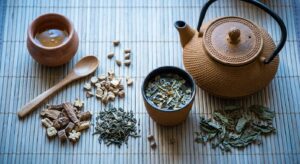
As a tea, eleuthero root delivers a deeply earthy, slightly woody, and mildly bitter flavor that feels grounding and substantive. The dried root requires a proper decoction or a long, hot infusion to fully extract its active eleutherosides, which means patience is rewarded with a more potent and medicinally rich cup. Many herbalists blend it with warming spices like cinnamon or ginger, and a touch of honey softens its naturally assertive bitterness into something genuinely pleasurable. Whether you are looking to replace your morning coffee, support athletic recovery, or simply bring more sustained focus to your day, eleuthero root tea offers a centuries-tested foundation for doing exactly that.
2
cups
Ingredients
- 2 tbspdried eleuthero root (cut and sifted)
- 480 mlfiltered water
- 1 small stickcinnamon (optional, for warmth)
- 2 slicesfresh ginger root (optional)
- —raw honey or maple syrup to taste (optional)
How to Brew
Click on an item below to shop for the recommended items for this recipe on Amazon.
As an Amazon Associate, we earn from qualifying purchases.
- Combine 2 tablespoons of dried, cut-and-sifted eleuthero root with 480 ml of cold filtered water in a small saucepan. If using cinnamon or ginger, add them to the pot now so they decoct alongside the root.
- Bring the water to a full rolling boil over medium-high heat, then immediately reduce the heat to a gentle simmer. You want small, steady bubbles, not a vigorous boil that would cause too much evaporation.
- Simmer uncovered for 20 to 25 minutes, stirring occasionally. The liquid will darken noticeably to a deep amber or warm brown color as the eleutherosides and other compounds release into the water.
- Remove the saucepan from heat and allow the decoction to rest for 5 minutes. This brief resting period lets any remaining compounds diffuse from the root material into the liquid.
- Pour the decoction through a fine-mesh strainer into two mugs, pressing gently on the root material with the back of a spoon to extract the last of the liquid.
- Sweeten with raw honey or maple syrup to taste. Drink one cup in the morning and, if desired, a second cup in the early afternoon. Avoid drinking close to bedtime for your first few sessions as you gauge your individual response.
- Measure 3 tablespoons of dried cut-and-sifted eleuthero root into a clean glass jar. A coarser grind or whole sliced root pieces work better than powder for cold brewing, as they are easier to strain and less likely to produce a murky result.
- Pour 500 ml of cold, filtered water over the root material. Stir gently to ensure all root pieces are fully submerged. If you like, add a cinnamon stick or two thin slices of fresh ginger to the jar at this stage for added complexity.
- Cover the jar loosely with a lid or cloth and allow it to sit at room temperature for 2 hours. This initial ambient-temperature phase jump-starts the extraction before refrigeration slows the process.
- Transfer the jar to the refrigerator and allow it to steep for a further 12 to 16 hours, ideally overnight. The slow, cold extraction draws out a mellower flavor profile with less of the tannin-driven bitterness you get from heat.
- Strain the cold brew through a fine-mesh strainer lined with a cheesecloth into a clean pitcher or jar, pressing the root material firmly to capture all liquid.
- Serve over ice in a tall glass. Sweeten with a liquid sweetener such as honey syrup or agave, which dissolves more easily in cold liquid than granulated sugar. The cold brew keeps refrigerated for up to 3 days.
- Combine 4 tablespoons of dried eleuthero root with 600 ml of cold filtered water in a heavy-bottomed saucepan. Add any supporting herbs or spices you enjoy, such as a cinnamon stick, a few slices of astragalus root, or a small knob of ginger, as these will also concentrate alongside the eleuthero.
- Bring to a full boil over medium-high heat, then reduce to the lowest simmer your stove will maintain. Place a lid on the saucepan, slightly ajar, to allow some steam to escape while minimizing evaporation.
- Simmer on this very low heat for 40 to 50 minutes, checking periodically to ensure the liquid has not reduced too aggressively. You are aiming to reduce the original 600 ml down to approximately 250 to 300 ml of deeply colored, concentrated liquid.
- Remove from heat and allow to cool to room temperature with the lid on. This additional passive steep extracts remaining compounds as the liquid cools through the temperature gradient.
- Strain through a fine-mesh strainer lined with cheesecloth into a clean glass jar with a tight-fitting lid, pressing firmly on the root material to capture every drop of the concentrate.
- Label the jar with the date and store it in the refrigerator for up to 5 days. To serve, measure 60 to 90 ml of concentrate into a mug and top with 150 to 180 ml of hot water, oat milk, or your preferred liquid base. Sweeten to taste.
Health Benefits
Multiple human clinical trials have found that eleuthero supplementation significantly reduces both physical exhaustion and cognitive fatigue, particularly in individuals under chronic stress. Its eleutherosides appear to support mitochondrial energy production and blunt the cortisol spike associated with sustained exertion.
Eleutheroside E has demonstrated neuroprotective effects in research settings, and several studies involving human subjects show improvements in attention, memory, and processing speed following consistent eleuthero supplementation. The adaptogenic effect on the HPA axis helps sustain mental clarity during periods of high cognitive demand.
Eleuthero has a well-documented history of use as an immune tonic, and modern research supports this, showing enhanced natural killer cell activity and increased lymphocyte counts in study participants. It is particularly valued for maintaining immune function during periods of high stress, when immunity is most likely to dip.
Soviet sports researchers in the 1970s and 1980s documented significant improvements in endurance, oxygen uptake, and recovery time among athletes taking eleuthero. More recent studies confirm that it may increase cardiovascular efficiency and reduce lactate accumulation during exercise, translating to better performance and faster post-workout recovery.
Compounds in eleuthero, including the acanthosides, have been shown to support insulin sensitivity and moderate post-meal blood glucose fluctuations. This glucose-stabilizing effect helps prevent the energy dips and brain fog associated with blood sugar swings, contributing to the steady, even energy for which this herb is so well known.
🧪 Key Bioactive Compounds
The Science Behind Eleuthero
The medicinal activity of eleuthero root is driven primarily by a family of compounds called eleutherosides, a chemically diverse group of glycosides that includes phenylpropanoids, lignans, coumarins, and polysaccharides. The most extensively studied of these are eleutheroside B (syringin) and eleutheroside E, both of which have demonstrated meaningful effects on the body’s central stress-regulatory system. Syringin, in particular, appears to modulate the hypothalamic-pituitary-adrenal (HPA) axis by blunting the adrenal cortex’s cortisol output in response to stressors, which means the body experiences stress but mounts a more proportionate, less draining hormonal response. This is fundamentally different from how stimulants like caffeine work, which suppress the sensation of fatigue without addressing the underlying physiology.
Eleutheroside E contributes a neuroprotective dimension to the herb’s profile. Research published in peer-reviewed journals has shown that this lignan glycoside can reduce neuroinflammation, protect hippocampal neurons from oxidative damage, and support the synthesis of key neurotransmitters involved in memory consolidation and sustained attention. Alongside these primary eleutherosides, the polysaccharide fraction of eleuthero root has been shown to meaningfully stimulate both innate and adaptive immunity, increasing the production of natural killer cells and activating macrophage activity, which explains the herb’s long-standing reputation as an immune tonic in both Chinese and Russian traditional medicine.
From a metabolic perspective, eleuthero’s capacity to support blood glucose stability is mediated through its phytosterols and acanthoside compounds, which appear to enhance insulin receptor sensitivity and slow hepatic glucose output. This mechanism is clinically significant because unstable blood sugar is one of the most underappreciated drivers of mid-day energy crashes and cognitive fog. By smoothing glucose availability across several hours, eleuthero tea contributes to the kind of clean, uninterrupted mental energy that users consistently describe as qualitatively different from caffeine, more like a baseline lift than a spike and fall. Bioavailability of these compounds is best achieved through full decoction of the root, as the woody plant matrix requires sustained heat to release eleutherosides into the brewing water.
Brewing Tips
- Source eleuthero root from a reputable supplier that provides third-party testing, as quality varies significantly between brands and adulteration with other roots has been documented in the market. Look for cut-and-sifted root rather than powder for better control over brewing and a cleaner final cup.
- For maximum adaptogenic effect, drink eleuthero tea consistently every morning for at least three to four weeks before evaluating its impact. Adaptogens work cumulatively by training the stress response system over time, and a single cup will not demonstrate the full benefit the herb is capable of delivering.
- Pair eleuthero decoctions with a small amount of healthy fat, such as a handful of nuts or a splash of oat milk, as some of its bioactive compounds are partially lipid-soluble and may be better absorbed in the presence of dietary fat.