Long before pharmaceutical sleep aids lined pharmacy shelves, herbalists across Europe and North America turned to the humble oat plant for something far more subtle and nourishing: the milky oat tops of Avena sativa. Harvested at a precise moment in the plant’s life cycle, when the developing seed head exudes a white, milk-like sap if squeezed, these soft green tops have been used for centuries as a restorative tonic for the nervous system. Traditional European herbalism classified milky oats as a premier nervine, a category of herbs that feed, calm, and rebuild the nerves themselves rather than simply sedating them. American Eclectic physicians of the 19th century prescribed oat preparations widely for nervous exhaustion, insomnia, and what they called “nervous debility,” the state of depletion that follows prolonged stress or illness.
What makes milky oats so special is their reputation not as a quick fix, but as a slow, nutritive restorer. Herbalists often distinguish between milky oat tops and regular rolled oats or oatstraw, noting that the milky stage captures a unique concentration of steroidal saponins, alkaloids, and nourishing minerals that are far less present once the seed has fully dried and matured. This is an herb for the person who has been running on empty for too long, the overworked professional, the anxious mind that cannot settle at night, or the individual recovering from burnout. Its action is gentle, cumulative, and deeply grounding, making it a cornerstone of any serious herbal sleep and stress protocol.
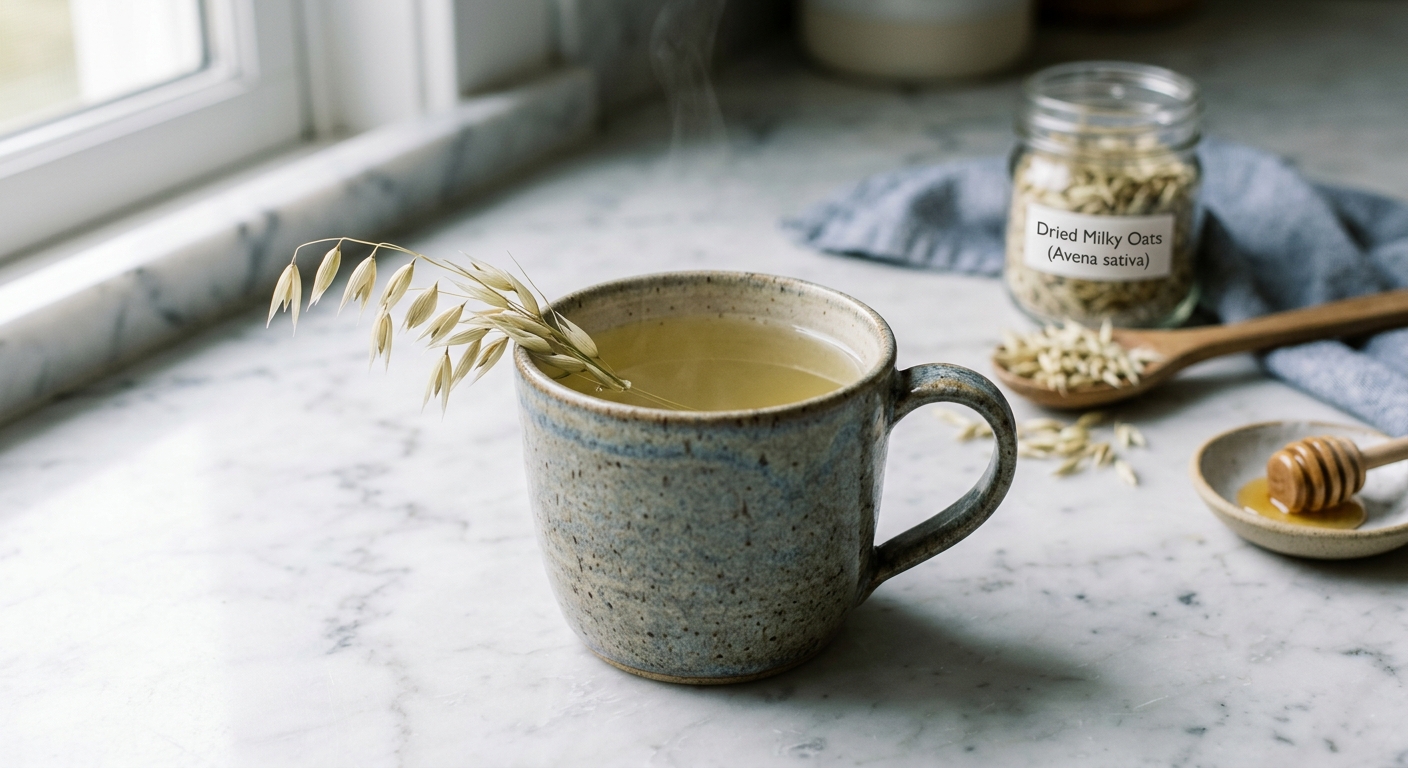
As a tea, milky oats offer a mild, straw-like sweetness that is earthy and comforting, reminiscent of a warm grain field in late summer. The brew is light and pale, easy to drink even for those new to herbal medicine, and it pairs beautifully with complementary herbs like passionflower, lemon balm, or lavender. Whether you are sipping a warm cup before bed or preparing a cold-brewed overnight infusion to sip throughout a stressful day, milky oats tea has a quiet, dependable quality that rewards consistent use and a little patience.
2
cups
Ingredients
- 2 tbspdried milky oat tops (Avena sativa)
- 480 mlwater (90°C / 194°F)
- —raw honey or maple syrup to taste (optional)
- —splash of oat milk to taste (optional)
How to Brew
Click on an item below to shop for the recommended items for this recipe on Amazon.
As an Amazon Associate, we earn from qualifying purchases.
- Measure 1 tablespoon of dried milky oat tops per 240 ml of water and place them into a tea infuser or directly into a teapot. Slightly crushing the tops between your fingers first helps release more of their beneficial compounds.
- Heat filtered water to 90 to 95°C (194 to 203°F). Avoid a full rolling boil, as excessive heat can degrade some of the delicate alkaloids. An electric kettle with temperature control works best here.
- Pour the hot water directly over the milky oat tops, making sure all the plant material is fully submerged. Cover the teapot or mug with a small plate or lid to trap the steam and prevent volatile aromatic compounds from escaping.
- Steep for a full 15 to 20 minutes. Milky oats are a nutritive herb and benefit from a longer infusion than most teas. Set a timer and allow the brew to deepen in color and flavor.
- Strain thoroughly, pressing the spent oat tops gently against the strainer with the back of a spoon to extract every last bit of the infusion. Sweeten lightly with honey or a splash of oat milk if desired, then sip slowly in the 30 to 60 minutes before bed.
- Use a slightly higher ratio than hot brewing: add 1.5 tablespoons of dried milky oat tops per 240 ml of cold, filtered water. This compensates for the slower extraction rate of cold water.
- Combine the milky oat tops and cold water in a clean glass jar. Stir gently to ensure all the plant material is fully saturated, then seal the jar with a lid.
- Allow the jar to sit at room temperature for 1 hour to begin extraction, then transfer it to the refrigerator. Let it infuse for a further 7 to 11 hours, for a total cold steep time of 8 to 12 hours. Overnight preparation works perfectly.
- When ready, strain the infusion through a fine mesh strainer or cheesecloth into a clean glass, pressing the oat tops firmly to extract the full infusion. The resulting liquid will be very pale gold and noticeably silky in texture.
- Serve over ice or drink chilled. Add a thin slice of cucumber or a sprig of fresh mint for a refreshing daytime nerve tonic. Consume within 24 hours and keep refrigerated.
- Measure a generous 28 to 30 grams (approximately 1 ounce) of dried milky oat tops and place them into a 1-liter glass jar or French press. This is a much higher herb-to-water ratio than standard tea brewing and is intentional.
- Heat 1 liter of filtered water to 90 to 95°C (194 to 203°F) and pour it over the oat tops. Make sure all the plant material is submerged. If using a glass jar, seal it tightly with a lid immediately to trap all the steam and volatile compounds within the infusion.
- Allow the covered jar to sit at room temperature and steep for a minimum of 4 hours, or ideally overnight for up to 8 hours. The infusion will darken significantly compared to a standard hot brew, turning a deeper amber-gold, and the liquid will develop a slightly thicker, more mineral-rich quality.
- Strain the infusion through a fine mesh strainer or cheesecloth, pressing the spent herb firmly to extract every drop. The resulting brew is nutritionally dense and has a more complex, earthy, almost grain-broth quality.
- Drink 1 to 2 cups of the nourishing infusion per day during periods of nervous depletion, stress recovery, or poor sleep. It can be gently rewarmed on the stovetop over low heat. Store remaining infusion in the refrigerator and consume within 48 hours for best potency.
Health Benefits
Milky oats have a long tradition of use for insomnia rooted in nervous exhaustion. Their combination of alkaloids, magnesium, and calming saponins works cumulatively to regulate the nervous system and ease the mind into restful sleep rather than forcing sedation.
Unlike acute sedatives, milky oats are classified as a trophorestorative nervine, meaning they are thought to nourish and restore nerve tissue over time. Herbalists recommend them specifically for burnout, adrenal fatigue, and chronic stress, where the nervous system has been chronically taxed.
Preliminary research on avenanthramides and oat alkaloids suggests anti-anxiety properties, supporting the traditional use of milky oats for nervous agitation, emotional overwhelm, and the kind of wired-but-tired exhaustion that makes both sleep and relaxation difficult.
The steroidal saponins in milky oat tops are believed to support adrenal gland function and modulate the body’s stress response. Regular consumption during high-stress periods may help buffer against cortisol surges and the resulting mood instability.
When brewed as a long nourishing infusion, milky oats release meaningful amounts of calcium, magnesium, and silica. These minerals are directly involved in nerve signal transmission, muscle relaxation, and the synthesis of calming neurotransmitters like GABA and serotonin.
🧪 Key Bioactive Compounds
The Science Behind Milky Oats
The scientific study of milky oats is still catching up to centuries of herbal tradition, but emerging research offers promising explanations for why this plant has such a strong reputation as a nerve tonic. The most thoroughly studied compounds in Avena sativa are the avenanthramides, a group of polyphenolic alkaloids unique to oats. A 2010 study published in Nutritional Neuroscience found that oat extract standardized to avenanthramides improved cognitive performance and mood in healthy older adults, pointing to a genuine neurological effect. These compounds inhibit pro-inflammatory enzymes and are believed to cross the blood-brain barrier, where they may interact with neurotransmitter pathways involved in stress and anxiety regulation.
The alkaloid gramine, present specifically in the green milky stage of the oat plant and largely absent in mature dried oats, has attracted interest from pharmacologists for its structural similarity to compounds that interact with serotonergic and dopaminergic systems. Though human clinical trials on gramine in milky oats specifically are limited, its presence helps explain why traditional herbalists insist on harvesting oats at precisely the milky stage rather than using any other part of the plant. The steroidal saponins concentrated in the milky sap are thought to support healthy adrenal cortex function, potentially helping the body regulate its cortisol output during chronic stress, which is one of the central mechanisms linking stress and sleep disruption.
From a nutritional perspective, the long nourishing infusion method makes a compelling case for milky oats tea as more than a simple herbal drink. Magnesium, extracted in meaningful quantities during extended steeping, is one of the most well-documented minerals for sleep quality. A 2012 randomized clinical trial published in the Journal of Research in Medical Sciences demonstrated that magnesium supplementation significantly improved sleep time, sleep efficiency, and early morning cortisol levels in elderly subjects with insomnia. Silica, another mineral abundant in oat tops, supports myelin sheath integrity, the protective coating around nerve fibers, providing a structural basis for the traditional claim that milky oats literally rebuild and restore the nervous system over time.
Brewing Tips
- Source your milky oat tops from a reputable organic herbal supplier rather than using rolled oats from the grocery store. The milky stage is specific to fresh or properly dried green oat tops and cannot be replicated with processed oat products.
- Milky oats work best as a tonic herb taken consistently over several weeks rather than as a single-dose sleep aid. Commit to drinking one or two cups daily for three to four weeks to experience the full nervine restorative effect.
- Always cover your mug or teapot while steeping milky oats. The cover traps steam and returns condensed water back into the brew, which preserves the volatile aromatic compounds and ensures you are getting the full spectrum of the plant’s benefits.