Long before sleep gummies and melatonin supplements lined pharmacy shelves, healers in China were steeping the pale, fleshy scales of the lily bulb to quiet restless minds and ease night-time anxiety. Known as Bai He (百合) in Traditional Chinese Medicine (TCM), lily bulb has been documented in the Shennong Bencao Jing, one of the oldest pharmacological texts in recorded history, as a remedy for palpitations, insomnia, and what TCM practitioners call Heart and Lung Yin deficiency. This diagnosis captures a state of inner dryness and agitation that sounds remarkably like what modern medicine calls chronic stress and sleep disruption.
The bulbs used in herbal medicine come primarily from Lilium brownii, Lilium pumilum, and Lilium lancifolium, all cultivated across central and southern China. Unlike the ornamental lilies grown in Western gardens, these species have a long culinary history as well, appearing in congee, stir-fries, and dessert soups across Chinese and Korean cuisine. The dried scales have a subtle sweetness, a gentle starchiness, and a faintly floral quality that makes the tea genuinely pleasant to drink, not merely medicinal.
What makes lily bulb particularly compelling to modern herbalists is the growing body of research validating what TCM practitioners observed centuries ago. Bioactive steroidal glycosides and polysaccharides isolated from Bai He have demonstrated sedative, anxiolytic, and anti-inflammatory effects in preclinical studies, offering a plausible mechanism for the herb’s calming reputation. Whether you approach it through the lens of ancient philosophy or contemporary phytochemistry, lily bulb tea is a deeply nourishing cup worth brewing slowly and drinking with intention.
2
cups
Ingredients
- 15 gdried lily bulb scales (Bai He)
- 500 mlwater (95°C / 203°F)
- —rock sugar or raw honey to taste (optional)
- —2 to 3 dried jujube dates (optional, for added sweetness and synergy)
How to Brew
Click on an item below to shop for the recommended items for this recipe on Amazon.
As an Amazon Associate, we earn from qualifying purchases.
- Rinse 15 g of dried lily bulb scales briefly under cold water to remove any dust or debris, then drain and set aside.
- Bring 500 ml of fresh, filtered water to a near-boil at 95 to 100°C (203 to 212°F) in a small saucepan or gooseneck kettle.
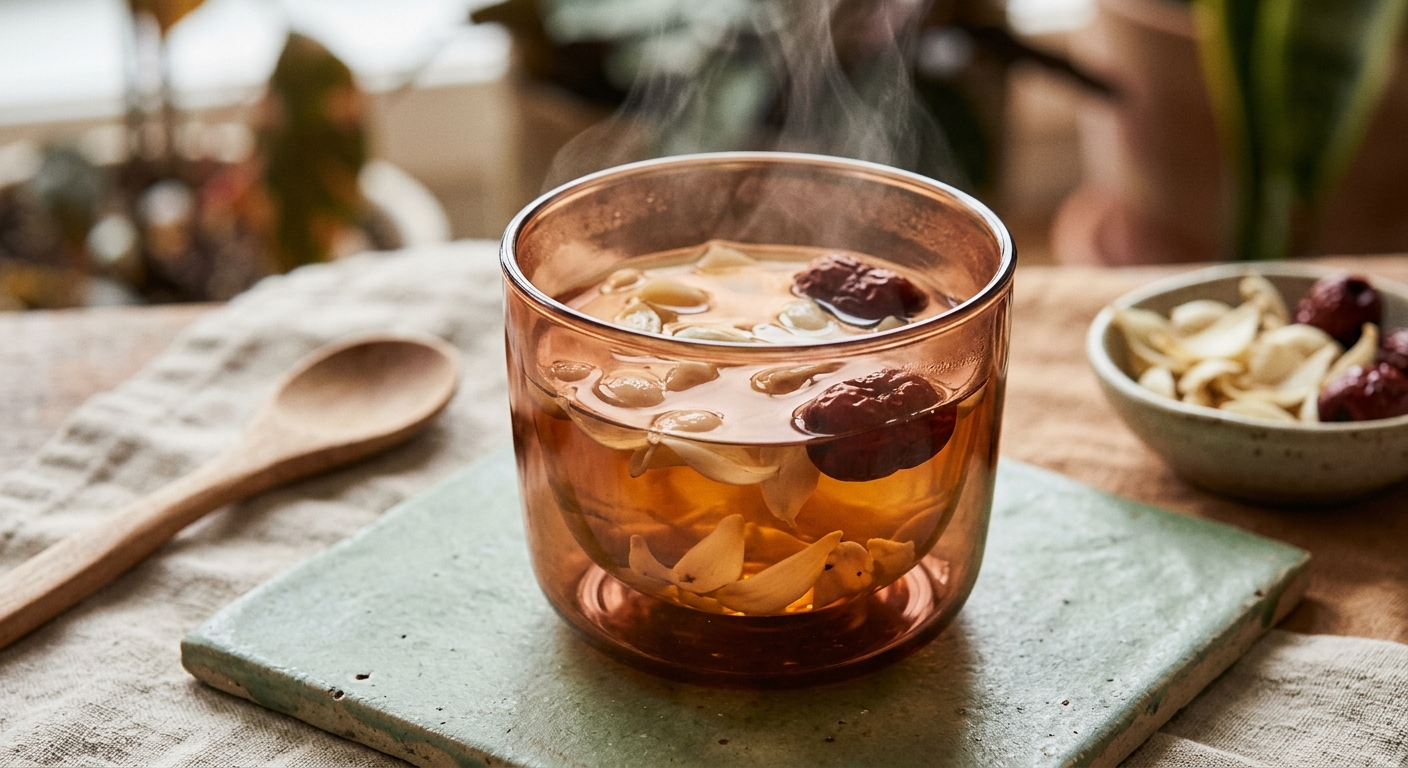
- Place the rinsed lily bulb scales directly into the hot water. If using optional jujube dates, add them at this stage as well.
- Cover the pot or mug and steep for 15 to 20 minutes, allowing the starchy scales to fully hydrate and release their polysaccharides and glycosides into the liquid.
- Strain the liquid through a fine-mesh strainer into two pre-warmed mugs, discarding or composting the spent scales.
- Sweeten with rock sugar or raw honey if desired, and drink warm within 30 minutes for the best calming effect before bedtime.
- Rinse 12 g of dried lily bulb scales under cool water, then place them into a clean glass jar or pitcher.
- Pour 500 ml of cold, filtered water over the scales, ensuring all pieces are fully submerged. Do not use hot water at this stage.
- Stir gently, cover the jar with a lid or plastic wrap, and leave it at room temperature for 1 hour to begin the extraction process.
- Transfer the jar to the refrigerator and allow it to steep for a further 9 to 11 hours, ideally overnight, for a total cold infusion time of 10 to 12 hours.
- Strain the cold brew through a fine-mesh strainer into glasses filled with ice or serve chilled directly from the jar.
- Sweeten lightly with honey stirred in beforehand or serve plain to appreciate the clean, faintly floral sweetness that cold brewing naturally draws out.
- Rinse 20 g of dried lily bulb scales under cold water, then place them in a ceramic or clay pot along with 600 ml of fresh, filtered water. Avoid aluminum cookware, as it can interact with herbal compounds.
- Bring the water to a gentle boil over medium heat, then immediately reduce the heat to maintain a low, steady simmer at approximately 85 to 90°C (185 to 194°F).
- Simmer uncovered for 25 to 30 minutes, allowing the liquid to reduce by roughly one-third. The scales will become translucent and very soft, which is a sign that the polysaccharides have been fully released.
- During the final 5 minutes, add rock sugar directly to the pot if sweetening, allowing it to dissolve fully into the decoction.
- Remove from heat and allow to cool for 3 to 5 minutes, then strain through a fine-mesh strainer into two small bowls or mugs, pressing gently on the softened scales to extract remaining liquid.
- Drink the warm decoction 45 to 60 minutes before bed. The concentrated nature of this preparation means a smaller serving of 150 to 200 ml per person is typically sufficient.
Health Benefits
The steroidal glycosides regalosides A and B have demonstrated sedative properties in preclinical research, consistent with the centuries-old TCM use of Bai He for insomnia. These compounds are thought to modulate serotonergic and GABAergic signaling pathways that govern the sleep-wake cycle.
In TCM, lily bulb is a primary herb for Bai He Disease, a classical syndrome characterized by restlessness, anxiety, and emotional instability. Modern studies support an anxiolytic mechanism, with lily bulb extracts reducing anxiety-like behaviors in rodent models at doses comparable to the traditional human therapeutic range.
Traditional Chinese medicine has long paired lily bulb with conditions involving a dry, irritated throat or dry cough, attributing this to its Lung Yin-nourishing properties. The herb’s mucilaginous polysaccharides coat and hydrate mucous membranes, offering gentle demulcent relief to the upper respiratory tract.
Lily bulb polysaccharides and phenylpropanoid compounds exhibit meaningful free-radical-scavenging activity in vitro, protecting cells from oxidative damage. This antioxidant capacity may contribute to the herb’s broader reputation in TCM as a tonic that nourishes and preserves vitality over time.
Bai He has traditionally been used to ease heart palpitations and a racing pulse associated with anxiety and overexertion. Emerging research suggests that lily bulb extracts may help regulate heart rate variability, likely through their central nervous system-calming and anti-inflammatory actions.
🧪 Key Bioactive Compounds
The Science Behind Lily Bulb
The therapeutic reputation of lily bulb in TCM is increasingly supported by modern phytochemical research. The most pharmacologically distinctive compounds are the steroidal glycosides known as regalosides, particularly Regaloside A and B, which appear to be unique to medicinal Lilium species. Studies conducted in China and South Korea have found that these glycosides modulate activity in serotonergic and GABAergic systems within the central nervous system. GABA is the brain’s primary inhibitory neurotransmitter, and compounds that enhance GABAergic tone, even gently, tend to produce the calm, drowsy, anxiety-reduced state that classical herbal traditions associate with Bai He. This mechanism is structurally different from, but functionally parallel to, the apigenin pathway found in chamomile, suggesting that the two herbs could complement each other in a sleep blend.
Lily bulb polysaccharides represent a second major area of scientific interest. These long-chain carbohydrate polymers have been isolated and studied for their immunomodulatory, antioxidant, and anti-fatigue properties. In animal models, oral administration of lily polysaccharides reduced markers of oxidative stress and improved endurance under physical and psychological stress loads. While this research is preliminary and largely preclinical, it aligns with the TCM concept of lily bulb as a Yin tonic, an herb that replenishes the body’s foundational resources rather than simply suppressing symptoms. The polysaccharides are also responsible for the tea’s characteristic silky mouthfeel, particularly noticeable in the decoction method, as heat and time break down the cell walls of the scales and release these compounds fully into the liquid.
Perhaps most intriguing is the emerging evidence around lily bulb’s influence on the hypothalamic-pituitary-adrenal (HPA) axis, the stress-response system that, when chronically overactivated, disrupts sleep architecture, elevates cortisol, and depletes neurotransmitter reserves. Preliminary studies suggest that lily bulb extracts may attenuate HPA axis hyperactivity, reducing cortisol output in stressed animal models. If this effect translates meaningfully to humans, it would offer a mechanistic explanation for why Bai He has historically been prescribed not just for isolated insomnia, but for the broader syndrome of anxiety, emotional fragility, and exhaustion that often underlies chronic sleep disruption. Research in this area is still evolving, and well-designed human clinical trials remain needed.
Brewing Tips
- Always buy dried lily bulb scales from a reputable Traditional Chinese Medicine supplier or Asian herbal pharmacy. Confirm the species is Lilium brownii, Lilium pumilum, or Lilium lancifolium, and never substitute ornamental garden lily bulbs, which can be toxic.
- The scales will turn translucent and very soft during a long hot brew or decoction. You can eat the softened scales after drinking the tea, as they have a pleasant, mild sweetness and are nutritious in their own right.
- Store dried lily bulb scales in an airtight container away from moisture and direct light. Properly stored, they will remain potent for 12 to 18 months. Discard any scales that develop an off smell or visible mold.