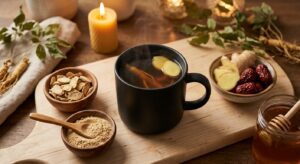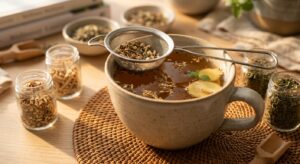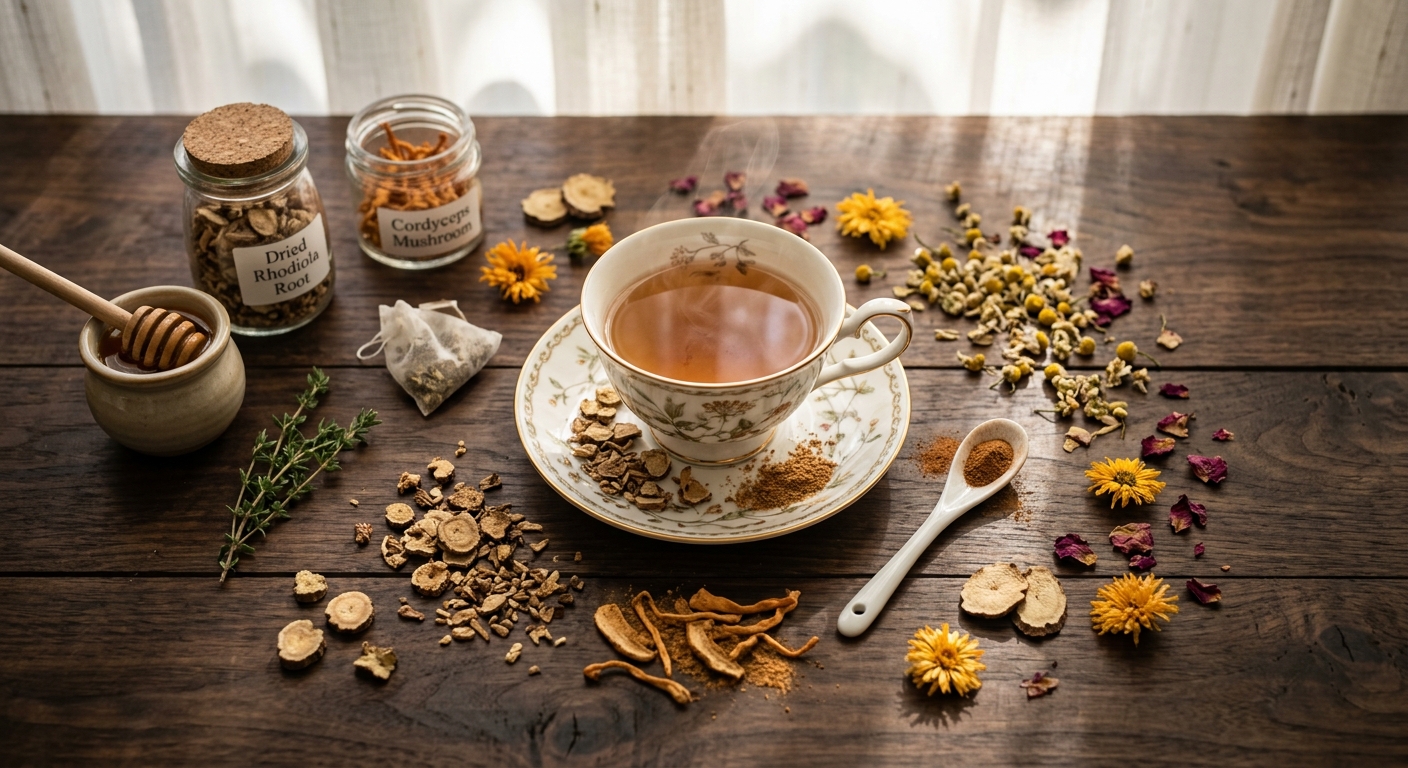
High on the wind-swept plateaus of Tibet and Siberia, two remarkable natural medicines have been revered for centuries by monks, athletes, and healers alike. Rhodiola rosea, known as the “golden root” in Siberian folk medicine, was traditionally given to Viking warriors before battle and to Sherpa guides preparing for high-altitude treks. Its reputation as a fatigue-fighter and stress-shield spans more than 3,000 years of recorded use across Russia, Scandinavia, and Central Asia. When combined with cordyceps, a parasitic fungus harvested from the high Himalayas and prized in Traditional Chinese Medicine for over a millennium, the result is a synergistic adaptogenic blend that has captivated both ancient healers and modern biohackers.
Cordyceps sinensis and its more accessible cultivated relative Cordyceps militaris have long been associated with stamina, vitality, and lung capacity in Chinese medical texts. Emperors valued it as a tonic for longevity, and Tibetan herders noticed their yaks became unusually vigorous after grazing on the wild fungus. Today, elite athletes and researchers are revisiting these claims with growing scientific interest, particularly around cordyceps’ ability to influence cellular energy production and oxygen utilization. When brewed together with rhodiola, the two create a complementary profile: rhodiola acting on the nervous system to buffer stress hormones, and cordyceps working at the cellular level to enhance ATP synthesis.
What makes this blend especially appealing as a tea is its sensory character. Rhodiola contributes a distinctively astringent, slightly bitter, and faintly rose-like note, while cordyceps adds an earthy, umami-rich depth reminiscent of a light mushroom broth. The result is a warming, grounding cup that feels purposeful rather than indulgent. Unlike caffeine-based energy drinks, this tea works with your body’s natural rhythms, offering lift without the inevitable crash. Whether you are facing a demanding workday, a creative project, or a long training session, this blend is worth making part of your morning ritual.
2
cups
Ingredients
- 1.5 tspdried rhodiola root (sliced or powdered)
- 1.5 tspdried cordyceps mushroom (powdered or sliced)
- 480 mlwater (90 to 95°C / 194 to 203°F)
- —raw honey or maple syrup to taste (optional)
- —a pinch of cinnamon (optional, enhances warmth and palatability)
How to Brew
Click on an item below to shop for the recommended items for this recipe on Amazon.
As an Amazon Associate, we earn from qualifying purchases.
- Measure 1.5 teaspoons of dried rhodiola root and 1.5 teaspoons of dried cordyceps into a small saucepan or a heatproof teapot. If using sliced root or whole dried cordyceps pieces, a light pre-rinse under cold water for 10 seconds can remove any surface dust and slightly soften the material before brewing.
- Heat filtered water to 90 to 95°C (194 to 203°F). Avoid a full rolling boil, which can degrade some of the more heat-sensitive polyphenols in rhodiola. If using an electric kettle, select the herbal or 90°C setting and allow it to stabilize for 30 seconds before pouring.
- Pour the hot water directly over the herbs in your teapot or infuser basket. Cover immediately with a lid or small plate to trap volatile aromatic compounds and prevent heat loss during the steep.
- Steep for 10 to 15 minutes. Taste at the 10-minute mark: the brew should be a deep amber with a clear earthy-astringent character. If you prefer a bolder, more medicinal flavour, extend to 15 minutes. Note that longer steeping will intensify the bitterness of rhodiola.
- Strain the tea through a fine mesh strainer into your mug, pressing gently on the spent herbs to extract the last of the liquid. Sweeten with raw honey or a small drizzle of maple syrup if desired. A pinch of cinnamon stirred in at this stage pairs well with the earthy mushroom notes.
- Add 2 teaspoons of dried rhodiola root and 2 teaspoons of dried cordyceps to a clean glass jar. The slightly higher ratio compared to hot brew compensates for the lower extraction efficiency of cold water over short periods.
- Pour 480 ml of cold, filtered water over the herbs. Stir gently with a long spoon to ensure the herbs are fully submerged and not clumped together. If using powdered cordyceps, whisk briefly to prevent settling into a dense layer at the bottom.
- Cover the jar loosely with a lid or cheesecloth secured with a rubber band. Leave it at room temperature for the first hour to allow initial hydration of the plant material, which improves cold extraction efficiency.
- Transfer the jar to the refrigerator and leave to steep for 12 to 16 hours, ideally overnight. The slow extraction at cold temperatures draws out polysaccharides and adaptogenic glycosides without excessive bitterness.
- In the morning, strain through a fine mesh strainer lined with a paper coffee filter to catch fine particulate, especially if powdered cordyceps was used. Serve over ice or chilled straight from the jar. Add a small amount of honey dissolved in a teaspoon of warm water first so it blends smoothly into the cold liquid.
- Combine 2 teaspoons of dried rhodiola root and 2 teaspoons of dried cordyceps in a small saucepan with 600 ml of cold, filtered water. Starting in cold water and bringing the herbs up to temperature gradually encourages a fuller extraction of cell-bound compounds such as cordycepin and beta-glucans.
- Place the saucepan over medium heat and bring the liquid slowly to a gentle simmer. Do not allow it to reach a vigorous boil. Once small bubbles begin rising consistently from the base of the pan, reduce the heat to low to maintain a gentle simmer at approximately 85 to 90°C (185 to 194°F).
- Simmer uncovered for 20 to 30 minutes, stirring occasionally. The liquid will reduce by approximately 20 to 25 percent and deepen in colour to a rich, dark amber. You will notice the earthy, mushroom-forward aroma intensifying as cordyceps compounds are released. If the liquid reduces too aggressively, add a small splash of hot water to maintain volume.
- Remove from heat and allow the decoction to rest uncovered for 5 minutes. This brief rest period allows suspended particles to settle slightly and the flavour to mellow from the peak bitterness that can occur right at the end of simmering.
- Strain through a fine mesh strainer into mugs, pressing the spent herbs firmly to extract all remaining liquid. The finished decoction will be noticeably more concentrated and medicinally potent than a standard hot brew. A small amount of raw honey, a slice of fresh ginger, or a few drops of lemon juice can be added to balance the intensity. For a traditional Tibetan-inspired preparation, stir in a small pat of unsalted butter or a teaspoon of coconut oil to aid fat-soluble compound absorption.
Health Benefits
Rhodiola rosea has been studied extensively in clinical trials involving physicians on night shifts, students during exam periods, and military cadets, with results consistently showing reduced mental fatigue, improved concentration, and faster reaction times. Cordyceps contributes an anti-fatigue effect at the cellular level by improving ATP resynthesis efficiency, meaning the body generates energy more effectively from available fuel.
Cordyceps is one of the few herbal medicines with documented effects on VO2 max and aerobic capacity. A randomized controlled trial published in the Journal of Alternative and Complementary Medicine found that cordyceps supplementation significantly improved aerobic performance in older adults. The adenosine content is believed to support bronchodilation and enhanced oxygen delivery to working muscles.
Both rhodiola and cordyceps are classified as adaptogens, meaning they help the body maintain homeostasis under physical, chemical, and biological stressors. Rhodiola’s salidroside and rosavins have been shown to regulate cortisol secretion by modulating the hypothalamic-pituitary-adrenal (HPA) axis, blunting the stress response without sedation.
Rhodiola has demonstrated nootropic effects in several human studies, improving short-term memory, attention capacity, and associative thinking, particularly under conditions of sleep deprivation or cognitive load. These effects are linked to its ability to increase the permeability of the blood-brain barrier to dopamine and serotonin precursors.
The beta-glucan polysaccharides in cordyceps are well-established immunomodulators that prime innate immune responses, including enhanced natural killer cell activity and macrophage activation. This immune support complements rhodiola’s stress-buffering properties, as chronic stress is known to suppress immune function.
🧪 Key Bioactive Compounds
The Science Behind Rhodiola Rosea
The adaptogenic activity of rhodiola rosea is primarily attributed to two classes of phytochemicals: the phenylpropanoid glycosides known as rosavins (rosavin, rosin, and rosarin), which are unique to this species and used as a marker of quality in standardized extracts, and salidroside, a phenolic glycoside that has emerged as one of the most pharmacologically active compounds in the plant. Together, these molecules influence multiple neurotransmitter systems. Salidroside activates AMP-activated protein kinase (AMPK), an enzyme often called the “master energy regulator” of the cell, while simultaneously dampening the release of stress hormones via the HPA axis. Rosavins appear to inhibit catechol-O-methyltransferase (COMT), an enzyme that breaks down dopamine and norepinephrine in the prefrontal cortex, meaning more of these focus-enhancing neurotransmitters remain available during mentally demanding tasks.
Cordyceps militaris and Cordyceps sinensis exert their primary biological effects through a complementary but distinct set of mechanisms. Cordycepin (3-deoxyadenosine) is a structural analogue of adenosine that is phosphorylated inside cells to form 3-deoxyadenosine triphosphate, which then interferes with poly(A) polymerase activity and modulates gene expression related to inflammation and cellular metabolism. More practically relevant to energy metabolism, cordyceps polysaccharides and adenosine improve mitochondrial efficiency and increase the rate of ATP regeneration from ADP, effectively allowing cells to produce energy more quickly from the same substrate. This is the mechanism most likely responsible for the reduced perceived exertion and improved endurance outputs observed in human trials.
When consumed together as a tea, rhodiola and cordyceps create a multi-target adaptogenic profile that is broader than either herb alone. Rhodiola modulates top-down neurological stress responses by buffering catecholamine activity and cortisol surges in the central nervous system, while cordyceps works bottom-up, enhancing the cellular machinery that generates the physical energy required to sustain those cognitive demands. The hot water extraction used in brewing releases water-soluble compounds including glycosides, polysaccharides, and purine nucleosides effectively, though a decoction maximises yield from the denser root and fungal material. Research remains ongoing, and most human trials have used standardized extracts at doses higher than those achievable through tea alone, meaning this blend is best understood as a supportive tonic rather than a therapeutic substitute for professional medical advice.
Brewing Tips
- Source rhodiola root that is standardized to contain at least 3 percent rosavins and 1 percent salidroside if buying powder, as quality varies enormously between suppliers and geographic origin significantly affects potency.
- For cordyceps, Cordyceps militaris grown on grain substrate is more widely available and significantly more affordable than wild-harvested Cordyceps sinensis, and research suggests militaris contains higher concentrations of cordycepin, making it an excellent choice for this blend.
- Start with smaller amounts of rhodiola (half a teaspoon per cup) if you are new to this herb. Some first-time users experience a mild, temporary increase in heart rate or a sensation of overstimulation until the body adapts to its stimulating adaptogenic effects over the first week or two of regular use.