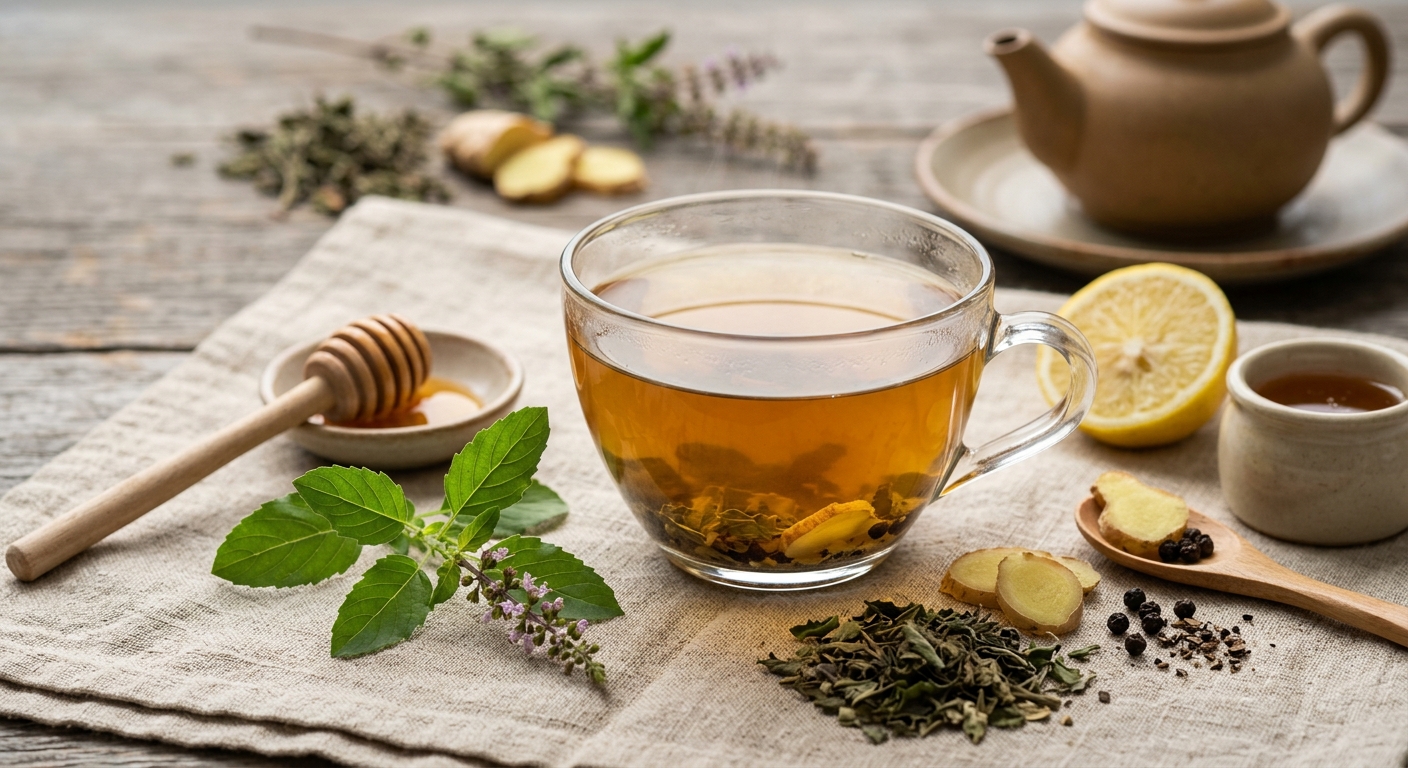
Few plants carry as much reverence as tulsi, known in Sanskrit as the ‘incomparable one.’ Ocimum tenuiflorum, also called holy basil, has been cultivated in India for more than 3,000 years and holds a central place in Ayurvedic medicine, Hindu spiritual practice, and traditional Southeast Asian healing. Every part of the plant, from leaf to seed to root, was considered sacred and medicinal. Families grew it in their courtyards not only as a spiritual guardian but as a living pharmacy, turning to it at the first sign of fever, cough, or congestion.
What makes tulsi so fascinating is that it sits at the intersection of the sacred and the scientific. Modern researchers have identified a rich array of bioactive compounds in its leaves, including eugenol, rosmarinic acid, ursolic acid, and a suite of volatile oils that collectively deliver antimicrobial, anti-inflammatory, and adaptogenic effects. Unlike many herbs whose traditional reputations outpace the evidence, tulsi has attracted serious scientific attention, with studies examining everything from its cortisol-lowering effects to its ability to modulate immune cell activity. It is one of the most studied adaptogens in the Ayurvedic pharmacopeia.
Tulsi immune tea is a natural way to bring this powerhouse herb into your daily wellness routine. Brewed hot, it releases a complex aroma reminiscent of clove, pepper, and fresh basil with a subtle sweetness underneath. It is warming without being harsh, spiced without being overwhelming, and deeply comforting when you are fighting off a cold or simply trying to keep your immune system resilient through the changing seasons. Whether you are new to adaptogens or a seasoned herbal tea drinker, tulsi is one herb that genuinely earns its legendary status.
2
cups
Ingredients
- 2 tspdried tulsi leaves (or 4 tsp fresh tulsi leaves)
- 1 tspdried ginger root, sliced or grated
- 0.5 tspwhole black peppercorns, lightly crushed
- 480 mlwater (95°C / 203°F)
- —raw honey or jaggery to taste (optional)
- —fresh lemon wedge (optional)
How to Brew
Click on an item below to shop for the recommended items for this recipe on Amazon.
As an Amazon Associate, we earn from qualifying purchases.
- Bring 480 ml of filtered water to a boil, then remove from heat and allow to rest for 30 seconds so it drops to approximately 90 to 95°C (194 to 203°F).
- Add the dried tulsi leaves, sliced ginger, and lightly crushed black peppercorns to a tea infuser or heatproof teapot.
- Pour the hot water over the herbs, cover the teapot or mug with a lid or small saucer to trap the volatile aromatic oils, and steep for 5 to 7 minutes. Taste at 5 minutes and extend steeping for a bolder, more medicinal cup.
- Remove the infuser or strain the tea through a fine mesh strainer into your mug.
- Add raw honey or jaggery to taste while the tea is still hot, and squeeze in a wedge of fresh lemon if desired. Sip slowly and inhale the steam for added respiratory benefit.
- Measure 3 tsp of dried tulsi leaves and 1 tsp of thinly sliced fresh or dried ginger into a clean glass jar. Skip the black pepper or reduce it to a pinch, as cold brew naturally amplifies spice intensity over a long steep.
- Add 480 ml of cool, filtered water to the jar. Give the contents a gentle stir to ensure the leaves are submerged and evenly distributed.
- Seal the jar with a lid and allow it to steep at room temperature for 1 hour to begin extraction, then transfer it to the refrigerator and steep for a further 7 to 11 hours (overnight is ideal).
- Strain the cold brew through a fine mesh strainer or cheesecloth into a clean pitcher or bottle, pressing the herbs gently to extract the last of the liquid.
- Serve over ice in a tall glass, garnish with a sprig of fresh tulsi or a slice of lemon, and sweeten lightly with liquid honey or a splash of agave if desired. The cold brew keeps refrigerated for up to 48 hours.
- Combine 600 ml of filtered water in a small saucepan with 2 tsp dried tulsi leaves, 1 tsp freshly grated ginger, 5 whole black peppercorns (lightly crushed), 2 whole cloves, and a small cinnamon stick or quarter teaspoon of ground cinnamon.
- Bring the mixture to a full boil over medium-high heat, then immediately reduce the heat to a gentle simmer. Allow the decoction to simmer uncovered for 15 to 20 minutes, stirring occasionally. The liquid will reduce by approximately one third, concentrating the medicinal compounds.
- Watch the color as it deepens from pale green-gold to a rich amber-brown. Taste at the 15-minute mark and continue simmering if you prefer a stronger, more concentrated decoction.
- Remove from heat and allow to cool for 2 to 3 minutes. Strain through a fine mesh strainer into a mug or small bowl, pressing the solids firmly to extract all the liquid.
- Stir in half a teaspoon of raw honey and a small pinch of turmeric for added anti-inflammatory benefit. Sip the kadha slowly in small sips, particularly effective at the onset of a cold or when feeling run down. Yields approximately two small servings of concentrated tonic.
Health Benefits
Tulsi has been shown in clinical studies to significantly increase natural killer cell activity and helper T-cell counts, both of which are critical frontline defenders against bacterial and viral infections. Regular consumption appears to prime the immune system for faster and more efficient responses.
The combination of eugenol, rosmarinic acid, and volatile oils gives tulsi broad-spectrum antimicrobial properties. A 2011 pilot study found that tulsi extract supplementation reduced the incidence of cold symptoms and shortened recovery time compared to placebo.
Chronic stress suppresses immune function by elevating cortisol, which inhibits the production of lymphocytes. Tulsi’s adaptogenic compounds, particularly ocimumosides and ursolic acid, help normalize cortisol levels, indirectly supporting immune resilience over time.
Tulsi has a long traditional use in Ayurveda for treating coughs, bronchitis, and congestion. Its camphor-like volatile oils act as a natural expectorant, helping loosen mucus, while its anti-inflammatory compounds reduce irritation and swelling in bronchial passages.
Oxidative stress during illness damages immune cells and prolongs recovery. Tulsi’s rich polyphenol content, including rosmarinic acid and vicenin-2, neutralizes free radicals and protects white blood cells from oxidative damage, helping the immune system maintain full function when it is needed most.
🧪 Key Bioactive Compounds
The Science Behind Tulsi (Holy Basil)
Tulsi’s immune-supporting reputation is increasingly backed by rigorous science. Its most studied compound, eugenol, is a phenylpropanoid that inhibits cyclooxygenase-2 (COX-2), the same enzyme targeted by common anti-inflammatory drugs. Unlike synthetic COX-2 inhibitors, however, eugenol exerts this effect without the cardiovascular risks associated with pharmaceutical alternatives, and it simultaneously disrupts the cell membranes of bacteria and fungi, explaining tulsi’s broad antimicrobial activity documented across numerous in vitro studies. Rosmarinic acid adds another layer of immune defense by suppressing pro-inflammatory cytokines including interleukin-6 and tumor necrosis factor-alpha, both of which drive the excessive inflammatory response that worsens many viral infections.
Tulsi’s status as a true adaptogen is supported by its effects on the hypothalamic-pituitary-adrenal (HPA) axis, the body’s central stress response system. Animal and human studies have shown that regular consumption of tulsi extract reduces serum cortisol levels and normalizes adrenal gland function during periods of chronic stress. This matters deeply for immunity because sustained cortisol elevation suppresses lymphocyte production and reduces the activity of natural killer cells. By moderating cortisol output, tulsi helps preserve the immune system’s capacity to mount rapid, effective responses to pathogens. The compounds most responsible for this effect appear to be ursolic acid and the unique flavonoid glycosides ocimumosides A and B, which are found almost exclusively in tulsi.
A 2011 randomized, placebo-controlled trial published in the Journal of Ayurveda and Integrative Medicine found that four weeks of tulsi leaf extract supplementation significantly increased the levels of helper T cells and natural killer cells in healthy adult participants, with no adverse effects reported. Separate research has demonstrated that aqueous extracts of tulsi, essentially a strong tea, retain meaningful concentrations of rosmarinic acid and flavonoids after brewing, confirming that you do not need a concentrated supplement to access many of these benefits. The traditional Ayurvedic practice of drinking tulsi tea daily as a preventive tonic is, in this light, a remarkably well-reasoned intervention that modern immunology is only now catching up to.
Brewing Tips
- Use Vana tulsi or Krishna tulsi varieties for the strongest medicinal profile and most complex flavor. Rama tulsi, the most common variety in Western markets, is milder and more suitable if you find the clove-pepper notes of the other varieties too intense.
- Store dried tulsi in an airtight glass container away from light and heat, and use within six months of purchase. Tulsi’s volatile oils dissipate quickly once the leaf is dried, so freshness makes a significant difference to both flavor and potency.
- Covering your mug or teapot while the tea steeps is not just tradition but good herbal practice. Tulsi’s most active aromatic compounds, including eugenol and linalool, are volatile and will escape with the steam if left uncovered, reducing both the fragrance and the medicinal value of your cup.