When a stubborn cough refuses to let go, nature’s pharmacy has long offered answers long before commercial syrups lined pharmacy shelves. For thousands of years, herbalists across Europe, Asia, and the Middle East turned to thyme, licorice root, and ginger as their first line of defense against respiratory ailments. Thyme was prescribed in ancient Greek medicine for chest complaints, licorice root appears in Egyptian medical papyri dating back over 3,000 years, and ginger has been a cornerstone of Ayurvedic and Traditional Chinese Medicine for treating cold and flu symptoms. Together, these three herbs form one of the most time-honored and effective cough-relief combinations in the herbal tradition.
What makes this blend so compelling is how each herb plays a distinct role. Thyme brings powerful antimicrobial and antispasmodic properties that target the root causes of coughs, whether bacterial, viral, or irritation-driven. Licorice root coats the throat and upper airways with soothing glycyrrhizin compounds, reducing inflammation and suppressing the cough reflex. Ginger adds warming circulation, cutting through congestion while contributing its own anti-inflammatory punch. The result is a tea that works on multiple levels: soothing, healing, and actively fighting the irritants that trigger coughing.
Beyond their therapeutic value, these herbs make a genuinely enjoyable cup. The blend is aromatic and warming, with a deep herbal complexity that feels restorative from the first sip. Whether you are dealing with a dry, scratchy cough, a chesty productive cough, or the lingering tickle that follows a cold, this tea meets you where you are. Brew it hot to open your airways with steam, sip it slowly throughout the day, and let the blend do its quiet, powerful work.
2
cups
Ingredients
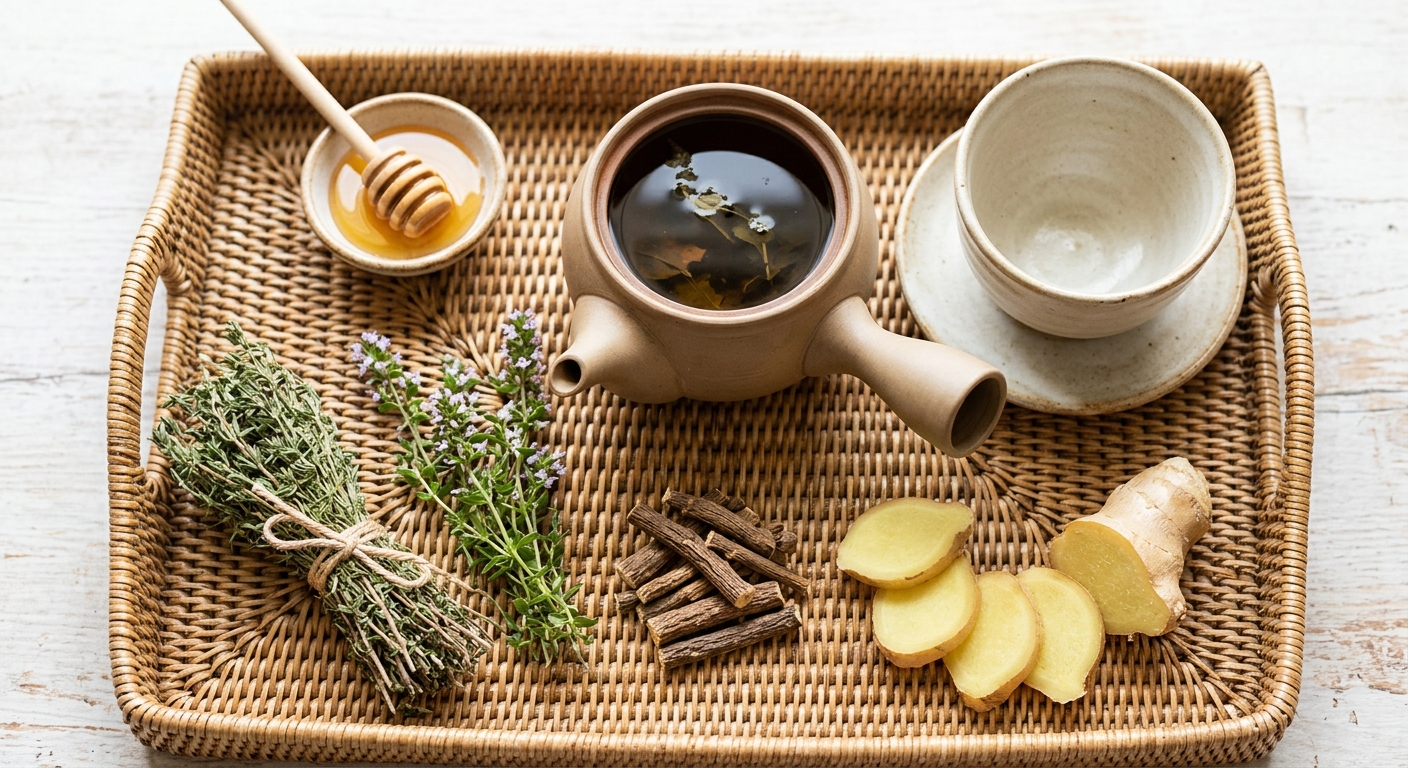
- 2 tspfresh or dried thyme leaves
- 1 tspdried licorice root pieces
- 4 slicesfresh ginger root (about 3mm thick)
- 500 mlwater (95°C / 203°F)
- —raw honey to taste (optional but recommended)
- —a squeeze of fresh lemon juice (optional)
How to Brew
Click on an item below to shop for the recommended items for this recipe on Amazon.
As an Amazon Associate, we earn from qualifying purchases.
- Bring 500ml of filtered water to 95°C (203°F). If you do not have a temperature-controlled kettle, bring water to a full boil and let it rest for 30 seconds before pouring.
- Place the licorice root pieces into a small saucepan with 500ml of water and bring to a gentle simmer over medium-low heat. Simmer for 5 minutes to begin extracting the deep glycyrrhizin compounds that require more heat to release fully.
- Add the fresh ginger slices to the saucepan and continue simmering for another 3 minutes, allowing the warming gingerols to infuse into the liquid.
- Remove from heat and add the thyme leaves directly to the hot liquid. Cover the saucepan with a lid and steep for 5 to 7 minutes. Covering is essential to prevent the volatile thymol oils from escaping with the steam.
- Strain the tea through a fine mesh strainer into two warmed mugs, discarding the spent herbs.
- Stir in raw honey to taste while the tea is still hot so it dissolves fully, then add a squeeze of fresh lemon juice if desired. Sip slowly and breathe in the steam between sips for added respiratory benefit.
- Peel and thinly slice the fresh ginger root into a clean glass jar. Add the dried thyme leaves and licorice root pieces directly on top.
- Pour 500ml of cool, filtered water (room temperature, approximately 20°C / 68°F) over the herbs. Stir gently with a long spoon to ensure all herbs are submerged.
- Seal the jar with a lid or cover tightly with plastic wrap. Allow the jar to sit at room temperature for 1 hour, then transfer it to the refrigerator.
- Let the tea cold-steep in the refrigerator for 10 to 12 hours, or overnight. The slow, cold extraction draws out the soothing polysaccharides from the licorice root and the gentle volatile oils from the thyme without releasing as much of the sharper compounds that emerge under heat.
- Strain the cold-brewed tea through a fine mesh strainer into a glass or pitcher. Taste and stir in honey or a splash of lemon juice if desired.
- Serve over ice for a cooling sore-throat soother, or gently warm a single portion in a saucepan over low heat (do not boil) if you prefer a warm drink. Store the remaining cold brew in a sealed container in the refrigerator for up to 48 hours.
- Combine the licorice root pieces and ginger slices in a small saucepan. Add 600ml of cold, filtered water and bring to a full rolling boil over medium-high heat.
- Once boiling, reduce the heat to a steady, gentle simmer. Allow the licorice root and ginger to decoct together for 15 minutes, stirring occasionally. You will notice the liquid gradually deepening in color to a rich amber.
- After 15 minutes, add the fresh or dried thyme leaves to the simmering liquid. Do not add the thyme too early, as prolonged boiling will destroy its delicate volatile thymol oils. Simmer with the thyme included for a further 5 to 7 minutes, keeping the lid ajar to reduce the liquid slightly while retaining most of the aromatic oils.
- Remove from heat and allow the decoction to sit, covered, for an additional 5 minutes to complete the infusion of the thyme.
- Strain firmly through a fine mesh strainer or muslin cloth into a heat-proof container, pressing the herbs gently with the back of a spoon to extract all the liquid.
- The yield will be approximately 400 to 450ml of concentrated tea. Sweeten with raw honey, which adds its own antibacterial and throat-coating properties. Consume 125 to 150ml per dose, two to three times per day. Store remaining decoction covered in the refrigerator for up to 24 hours and reheat gently before each use.
Health Benefits
Thymol and carvacrol from thyme act directly on bronchial smooth muscle as antispasmodics, reducing the frequency of spasmodic coughing, while glycyrrhizin from licorice root coats the throat lining and suppresses the cough reflex. A 2006 clinical trial published in Arzneimittelforschung found a thyme-based syrup to be as effective as an established pharmaceutical expectorant in resolving acute bronchitis.
All three herbs in this blend contribute anti-inflammatory compounds that target the swollen, irritated mucous membranes responsible for throat pain and persistent coughing. The 6-gingerol in ginger and rosmarinic acid in thyme both inhibit key inflammatory pathways including cyclooxygenase and lipoxygenase, reducing redness and swelling throughout the upper respiratory tract.
Thyme possesses well-documented antimicrobial activity due to thymol and carvacrol, which disrupt bacterial cell membranes and have shown efficacy against common respiratory pathogens including Streptococcus and Haemophilus influenzae. Glycyrrhizin from licorice root has also demonstrated antiviral activity in vitro against influenza and other respiratory viruses, helping address the underlying cause of illness rather than just symptoms.
Thyme and ginger both act as natural expectorants, helping to thin and mobilize mucus in the bronchial passages so it can be more easily cleared. The steam inhaled while sipping a hot brew adds a mechanical benefit, helping to hydrate and loosen dried or thickened mucus in the sinuses and upper airways.
Licorice root has a long tradition in herbal medicine as a demulcent, meaning it coats and protects irritated mucous membranes with a soothing film. This physical coating action reduces pain and irritation from repeated coughing, giving the throat tissue time to heal. When combined with the antibacterial honey often added to this tea, the effect on a raw, sore throat is significant and rapid.
🧪 Key Bioactive Compounds
The Science Behind Thyme
The cough-relief power of this blend rests on a foundation of well-characterized phytochemistry. Thyme’s most celebrated compounds, thymol and carvacrol, are monoterpene phenols that have been the subject of extensive antimicrobial research. These molecules penetrate and disrupt bacterial cell membranes, making them effective against a broad spectrum of respiratory pathogens. Beyond their antimicrobial action, both compounds have demonstrated antispasmodic effects on smooth muscle tissue in the bronchi, helping to calm the involuntary muscle contractions that drive a persistent, dry cough. Thyme also contains notable quantities of rosmarinic acid, a polyphenol antioxidant that reduces inflammatory signaling in airway tissues, addressing the underlying irritation that triggers coughing in the first place.
Licorice root’s primary bioactive molecule, glycyrrhizin, is a triterpenoid saponin that accounts for the root’s characteristic sweetness and much of its medicinal value. Glycyrrhizin is approximately 50 times sweeter than sucrose, which partly explains why the root has been used as a natural sweetener for centuries. More importantly for respiratory health, glycyrrhizin has been shown in both in vitro and animal studies to inhibit viral replication, modulate immune responses, and reduce the activity of inflammatory cytokines. Its demulcent properties come from the way saponin molecules interact with mucous membranes, forming a protective, slippery coating that physically shields irritated tissues and reduces the sensory signals that trigger the cough reflex.
Ginger contributes its own sophisticated anti-inflammatory chemistry through a family of compounds called gingerols, particularly 6-gingerol, and their heat-derived counterparts called shogaols. These phenolic ketones inhibit both the COX and LOX inflammatory enzyme pathways, effectively reducing the production of prostaglandins and leukotrienes that drive swelling and pain in the airways and throat. Ginger has also been studied for its effects on mucociliary transport, the mechanism by which tiny hair-like cilia in the airways move mucus upward and out of the respiratory tract. By stimulating and supporting this natural clearance mechanism, ginger helps the body expel the mucus and pathogens that accumulate during a respiratory infection, shortening recovery time and reducing the irritation that sustains a cough long after the acute infection resolves.
Brewing Tips
- Use fresh thyme rather than dried when possible, as the fresh herb contains significantly higher concentrations of volatile thymol oils that contribute most of the herb’s antispasmodic and antimicrobial activity. If using dried thyme, look for recently harvested stock with a strong, sharp aroma when rubbed between your fingers.
- Always cover your mug or saucepan while the thyme is steeping. Thymol and carvacrol are highly volatile compounds that evaporate readily with steam. A covered vessel keeps these precious therapeutic molecules in your cup rather than releasing them into the air.
- For a noticeably stronger decongestant effect, hold your face about 30cm above your mug of freshly brewed tea and drape a small towel over your head to create a tent. Inhale the aromatic steam for 30 to 60 seconds before drinking. The thymol-rich steam acts directly on the nasal passages and upper airways, helping to clear congestion alongside the internal benefits of drinking the tea.